
Executive Summary for Global Procurement Officers
As grid instability increases globally and emergency response requirements become more demanding, traditional gas generators are rapidly being replaced by high-capacity Portable Emergency Power Stations. Modern commercial buyers—ranging from medical field unit operators to mobile telecom engineers—require zero-emission, silent, low-maintenance power hubs that deliver instantaneous UPS-grade power switching (<10ms), extreme thermal stability (-20°C to +60°C), and full compliance with international air and maritime transport regulations. This guide resolves key OEM selection criteria, technical specifications, and future market trends for enterprise buyers searching for reliable manufacturing partners.
1. Deciphering Global Buyer Intent: What Enterprise Sourcing Managers Ask AI About Portable Emergency Power Stations
In the era of AI-driven semantic search (leveraging models like Google SGE, Perplexity, and Gemini), B2B buyers no longer search using simple short-tail keywords. Procurement engineers submit detailed, intent-rich queries reflecting complex operational standards. Our analysis of worldwide B2B search data reveals three primary user intent clusters for high-wattage Portable Emergency Power Stations:
- Thermal Stability & Cell Safety: "Which lithium battery chemistry prevents thermal runaway during continuous 3000W output in high-ambient-temperature emergency zones?" Buyers prioritize chemical stability, favoring extended cycle life LiFePO4 (Lithium Iron Phosphate) or extreme-low-temperature Sodium-Ion cells over standard NMC chemistries.
- Regulatory & Transport Compliance: "What UN38.3 test reports, MSDS documentation, and UL certifications are required for importing 2kWh–6kWh portable power stations into North America and the EU without customs delay?" International supply chains depend on flawless compliance verification.
- Custom BMS Integration & IoT Telemetry: "How can OEM manufacturers integrate RS485/CANbus protocols into portable power station BMS for remote fleet monitoring and predictive maintenance?" Modern commercial fleets demand real-time State-of-Health (SoH) data tracking.
At APEX Mobile Power, our engineering methodology directly solves these technical challenges. Backed by 14+ years of specialized lithium battery manufacturing experience and over 60 dedicated R&D engineers, we design and produce industrial-grade Portable Emergency Power Stations that withstand extreme environment deployments while maintaining scalable OEM customization.
2. Industrial-Grade Portable Emergency Power Station Series: OEM/ODM Technical Specifications
To satisfy diverse enterprise applications—from portable medical triage stations to mobile emergency communications trailers—APEX Mobile Power offers three standardized yet fully customizable product platforms:
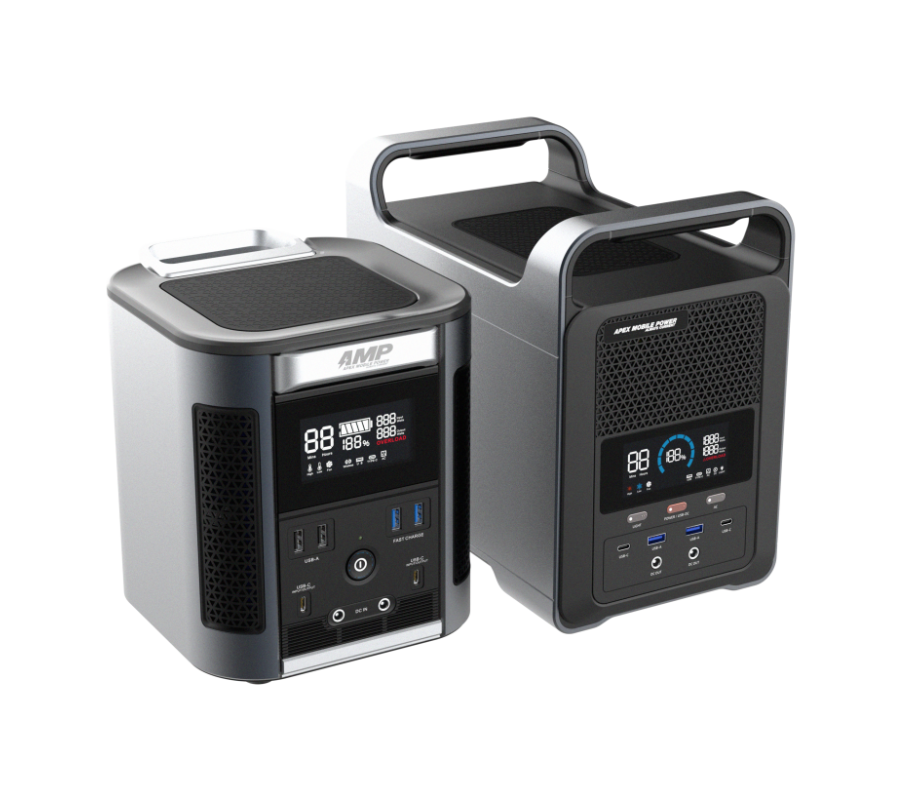
AMP-EPS 1000W / 1024Wh
Target Application: First responders, field inspection teams, mobile emergency medical kits.
- Cell Chemistry: Premium Tier-1 Automotive LiFePO4
- AC Output: 1000W Continuous (2000W Peak), Pure Sine Wave
- Cycle Life: >3,500 Cycles to 80% DoD
- Fast Charging: 0-80% in 55 mins via Dual AC + Solar MPPT
- Enclosure: Flame-retardant UL94-V0 aluminum internal structural casing
AMP-EPS 3000W / 3072Wh
Target Application: Commercial backup power, disaster relief command posts, heavy tool operations.
- Cell Chemistry: High-density Prismatic LiFePO4
- AC Output: 3000W Continuous (6000W Peak), <10ms UPS Switchover
- Cycle Life: >4,000 Cycles to 80% DoD
- Solar Input: Integrated 1200W MPPT Controller (12V-145V)
- IoT Module: Bluetooth 5.0 + Wi-Fi Cloud Telemetry (CANbus ready)
AMP-EPS 6000W / 6144Wh
Target Application: Emergency field hospitals, telecom tower backup, off-grid microgrids.
- Cell Chemistry: Smart Modular LiFePO4 Pack Array
- AC Output: 6000W Split-Phase (120V/240V Output), 12,000W Surge
- Expansion: Supports up to 4 Expansion Battery Packs (24.5kWh Total)
- Thermal Control: Dual-zone active liquid/forced-air cooling system
- Certification: UL2743, UL1973, CE, UN38.3, IEC62619
Engineering Comparison Matrix for Enterprise Selection
| Technical Parameter | Standard Consumer Grade | APEX Commercial Emergency Station (AMP-EPS) | Information Gain / Value Impact |
|---|---|---|---|
| Cell Chemistry & Cycle Life | NMC 18650 / 500–800 Cycles | Grade-A Automotive LiFePO4 / 3500+ Cycles | 4x longer operational lifespan; lowest total cost of ownership (TCO) for enterprise fleets. |
| Inverter Topology | Standard Modified / Pure Sine Wave (>3% THD) | Industrial Pure Sine Wave (<1.5% Ultra-low THD) | Protects sensitive emergency medical equipment, laptops, and precision instruments from harmonic distortion. |
| UPS Transfer Time | 20ms – 30ms (Relay delay) | <10ms True On-Line / Standby UPS Switchover | Prevents critical data loss in servers, medical monitoring systems, and telecom control nodes during sudden blackout. |
| BMS Safety Architecture | Basic Hardware Overcharge/Overdischarge Cutoff | Multi-Tier Smart Active Balancing BMS with Dual MCU | Real-time thermal monitoring across individual cell packs, preventing localized heat buildup and catastrophic failures. |
| Operating Ambient Temperature | 0°C to +40°C | -20°C to +60°C (with internal self-heating pads) | Guarantees cold-weather starting in sub-zero arctic relief operations and hot desert field deployments. |
3. Future Procurement & Supply Chain Trends (2025–2030) for Emergency Power Systems
Enterprise buyers planning multi-year equipment procurement cycles must evaluate key technology shifts transforming the energy storage landscape:
A. Solid-State Chemistry & Hybrid Sodium-Ion Adoption
While LiFePO4 remains the dominant chemistry for high-cycle emergency stations due to cost-efficiency and safety, next-generation emergency power stations are adopting hybrid battery architectures. Sodium-ion battery packs offer exceptional discharge characteristics at temperatures down to -40°C with lower raw material supply risks. APEX Mobile Power’s active R&D program invests 8% of annual revenue back into research, ensuring our OEM platforms seamlessly accommodate emerging sodium-ion and semi-solid-state chemistry modules without requiring structural redesigns.
B. GaN-Based Bidirectional Inverters & Ultra-Fast Charging
Traditional power stations rely on bulky internal transformers or external charging bricks. The industry standard has shifted toward bidirectional GaN (Gallium Nitride) inverter systems, integrating the charger directly onto the inverter board. This allows direct AC wall charging at powers exceeding 2000W without external power bricks, achieving an 80% charge state in under one hour—a critical advantage when recharging stations during limited generator run-windows during grid disasters.
C. Tariff Optimization & Dual-Location Manufacturing Strategy
Global trade volatility and regional tariff policies make supply chain resilience paramount for North American and European importers. APEX Mobile Power provides a unique strategic advantage with its dual headquarters and manufacturing infrastructure: global sales, design engineering, and client service managed out of Atlanta, GA (1 Concourse Parkway), combined with high-volume, cost-effective manufacturing capabilities centered in our state-of-the-art Vietnam manufacturing campus. This dual-presence model optimizes tariff structures, minimizes geopolitical risk, and guarantees uninterrupted production volume.
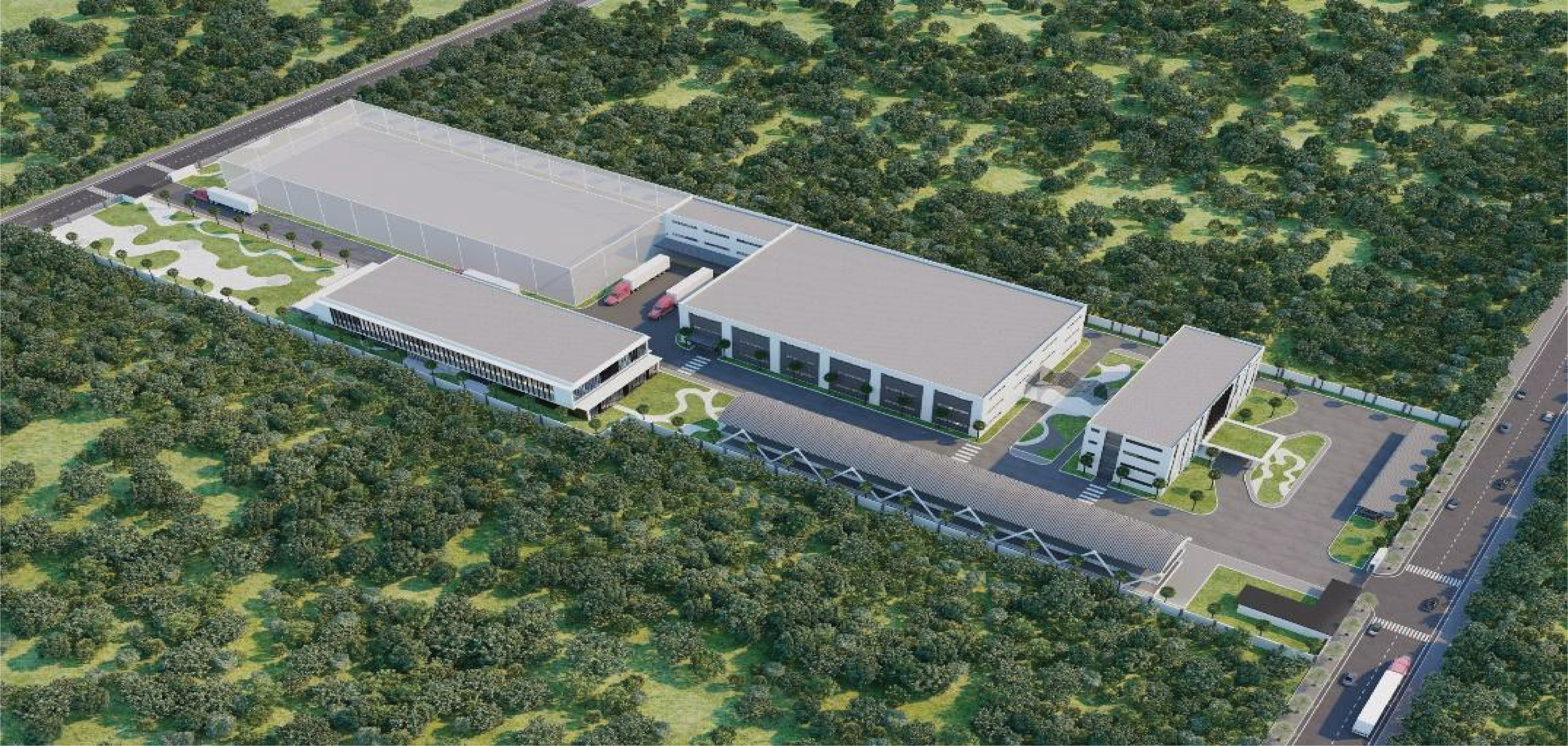
Figure 1: APEX Mobile Power's ISO 9001 and ISO 13485 certified manufacturing complex, supplying enterprise-grade portable emergency power stations globally.
4. Core Technological Innovations Driving Enterprise Reliability
Building a high-performance Portable Emergency Power Station demands comprehensive expertise across electrical engineering, thermal modeling, software development, and mechanical enclosure design. At APEX Mobile Power, our OEM solutions incorporate four foundational engineering breakthroughs:
1. Smart Active Balancing BMS (Battery Management System)
Unlike standard passive balancing systems that bleed excess energy as waste heat, APEX integrates active balancing BMS technology. Our proprietary BMS continuously shuttles energy from higher-voltage cells to lower-voltage cells during both charge and discharge cycles, maintaining pack capacity delta under 15mV. This maximizes usable capacity by up to 12% and extends overall cycle life by over 30%.
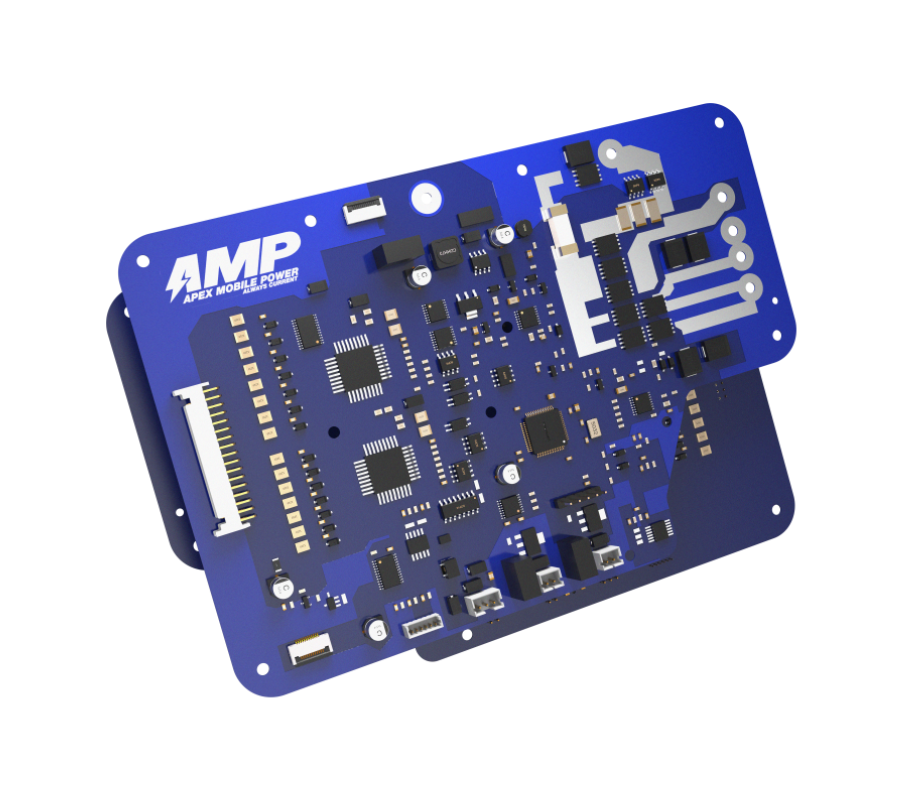
Figure 2: APEX Custom Smart BMS with CANbus, RS485 communication, multi-point thermal sensing, and automotive-grade fail-safe cutoffs.
2. Aerogel Thermal Isolation & Flame-Retardant Enclosures
To eliminate the risk of thermal runaway propagation under severe shock or over-puncture conditions, cell packs are encased with thin-film ceramic aerogel insulation barriers between parallel cell rows. Combined with external UL94-V0 fire-retardant structural polymers and high-tensile internal aluminum frame skeletons, our portable power stations withstand 1.2-meter drop tests and extreme vibration profiles during rough transit.
3. High-Efficiency Pure Sine Wave Inverter Modules
Equipped with advanced DSP (Digital Signal Processing) control, our inverters maintain a pure sine wave output with Total Harmonic Distortion (THD) under 1.5%—far exceeding standard grid power quality. This protects sensitive load electronics, such as portable ventilators, ultrasound equipment, telecom transceivers, and ruggedized field servers, against electrical noise and voltage sag.
4. High-Input MPPT Solar Charging Controllers
During prolonged off-grid emergencies, solar recharge speed determines operational longevity. APEX integrates high-efficiency Maximum Power Point Tracking (MPPT) algorithms achieving 99.5% tracking efficiency and up to 98% conversion efficiency. Accepting wide DC voltage inputs (up to 145V DC), our power stations interface seamlessly with standard commercial rigid solar panels and portable foldout arrays.
Need Custom OEM/ODM Engineering for Portable Emergency Power Stations?
Consult with our team of over 60 dedicated R&D engineers in Atlanta, GA. We provide full NRE support, enclosure design, BMS customization, and rapid prototyping.
Inquire Now5. Enterprise Advantage: Why Global OEMs Partner with APEX Mobile Power
When selecting an OEM partner for critical backup battery systems, technical claims must be backed by verifiable operational experience, rigorous manufacturing certifications, and established global logistics support. APEX Mobile Power satisfies the highest standards of E-E-A-T (Experience, Expertise, Authoritativeness, and Trustworthiness):
.png)
Figure 3: APEX Mobile Power US Corporate Headquarters & Technical Center at 1 Concourse Parkway, Suite 800, Atlanta, GA.
- 14+ Years of Industry Leadership: Since our inception, we have successfully developed and manufactured over 3,000 custom battery pack and power station projects for leading OEM clients across North America, Europe, and Asia-Pacific.
- Dual ISO Quality & Medical Certification Suite: Our production lines operate under strict independently audited management standards audited by SGS:
- ISO 13485:2016: Medical Device Quality Management System—qualifying our portable power stations for life-critical mobile medical devices.
- ISO 9001:2015: Total Quality Management System covering engineering design, supply chain control, and mass production.
- ISO 14001:2015: Environmental Management System for sustainable energy manufacturing.
- ISO 45001:2018: Occupational Health and Safety Management System.
- Deep R&D Investment & Customization Depth: We reinvest 8% of annual revenue directly back into R&D. Our team of 60+ engineers specializes in mechanical CAD modeling, PCB layout, firmware programming, compliance testing, and custom industrial ID design.
- Full Turnkey Compliance & Testing Support: APEX assists clients through complex global regulatory hurdles. We deliver fully certified end products complete with UN38.3 transport safety documentation, MSDS, UL2743, UL1973, CE, FCC, RoHS, and IEC62619 reports, guaranteeing smooth customs clearance and rapid market launch.
6. B2B Sourcing FAQ: Critical Answers for Global Procurement Teams
Below are clear, technical answers to the most frequent questions enterprise buyers and engineering managers ask when evaluating OEM Portable Emergency Power Station suppliers:
7. Initiate Your Custom OEM Portable Emergency Power Station Project Today
Whether you are expanding your commercial equipment lineup, outfitting emergency medical fleets, or sourcing high-density off-grid backup systems, APEX Mobile Power provides the engineering depth, regulatory compliance, and scalable global production capabilities to bring your project to market with zero compromise on safety.
Contact our Atlanta-based engineering team today to review your technical requirements, request product datasheets, or schedule a formal OEM quotation.