In modern aerospace engineering, selecting a customized Aviation and UAV Battery Solution is no longer merely a task of sourcing energy storage; it is a mission-critical system design decision that directly governs flight endurance, payload capacity, operational ceiling, safety margins, and total cost of ownership (TCO). Unmanned Aerial Vehicles (UAVs), electric Vertical Take-Off and Landing (eVTOL) aircraft, target drones, and tactical surveillance platforms operate under environmental extremes—ranging from sub-zero high-altitude temperatures (-40°C) to intense continuous discharge rates exceeding 15C to 30C during climb maneuvers.
As a premier global OEM lithium battery manufacturer, APEX Mobile Power integrates cell chemistry synthesis, structural thermal management, smart high-rate Battery Management System (BMS) electronics, and global regulatory certification into a unified OEM delivery framework. Written from the perspective of senior battery architects and search quality guidelines for high-information-gain search intent, this technical treatise addresses the fundamental queries evaluated by global enterprise buyers, defense procurement teams, and drone system design authorities.
Aviation energy storage requires balancing Gravimetric Energy Density (Wh/kg) against Continuous C-Rate Discharge and Thermal Stability. Achieving extended flight times demands customized pack architecture, lightweight structural encapsulation, and real-time battery status monitoring via CANbus / SMBus / ARINC 429 communication protocols.
Standard off-the-shelf lithium-ion or low-grade LiPo batteries suffer from rapid voltage drop, high internal resistance (IR), and premature capacity degradation under high payload conditions. APEX Mobile Power provides four distinct, high-performance OEM battery system recommendations tailored specifically for uncrewed aviation and aerospace applications:

Energy Density: 300 Wh/kg – 350 Wh/kg
Target Applications: Long-endurance fixed-wing UAVs, mapping drones, high-altitude surveillance.
Core Advantage: Utilizes solid-liquid hybrid electrolyte technology to mitigate thermal runaway risks while increasing flight duration by 35% to 50% compared to conventional NMC cells. Encased in lightweight carbon-fiber/polyimide structural shells.
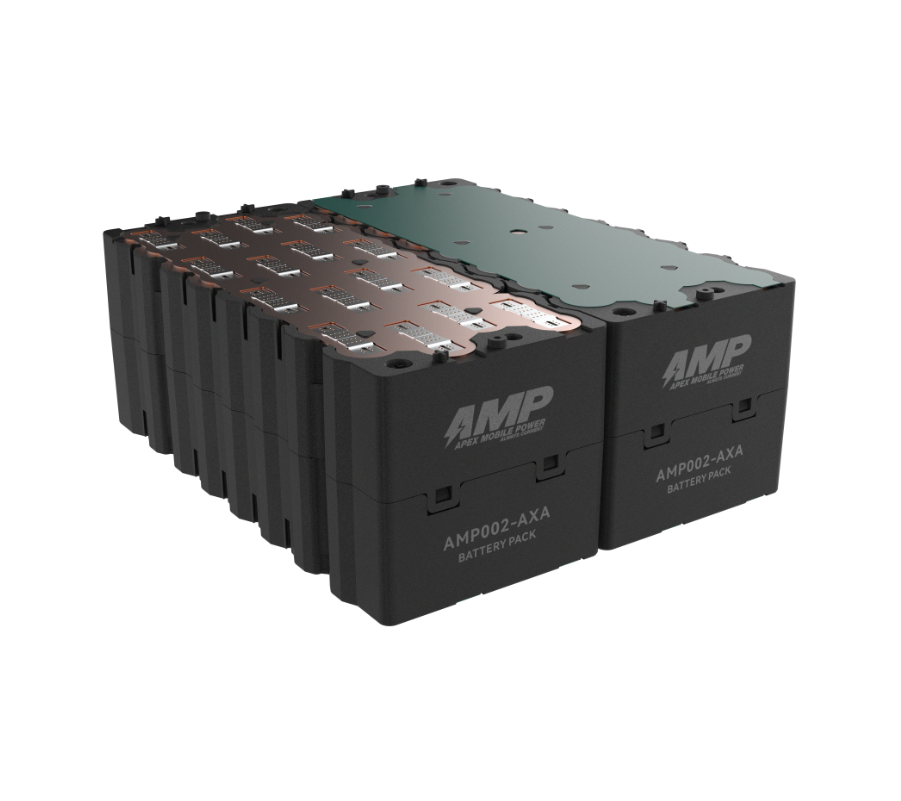
Discharge Rate: 15C continuous / 30C burst
Target Applications: Heavy-payload delivery multirotors, agricultural spraying UAVs, defense loitering munitions.
Core Advantage: Engineered with ultra-low internal resistance pouch and cylindrical cells, laser-welded nickel-copper composite busbars, and integrated phase-change material (PCM) heat sinks to handle intense discharge spikes without thermal throttling.
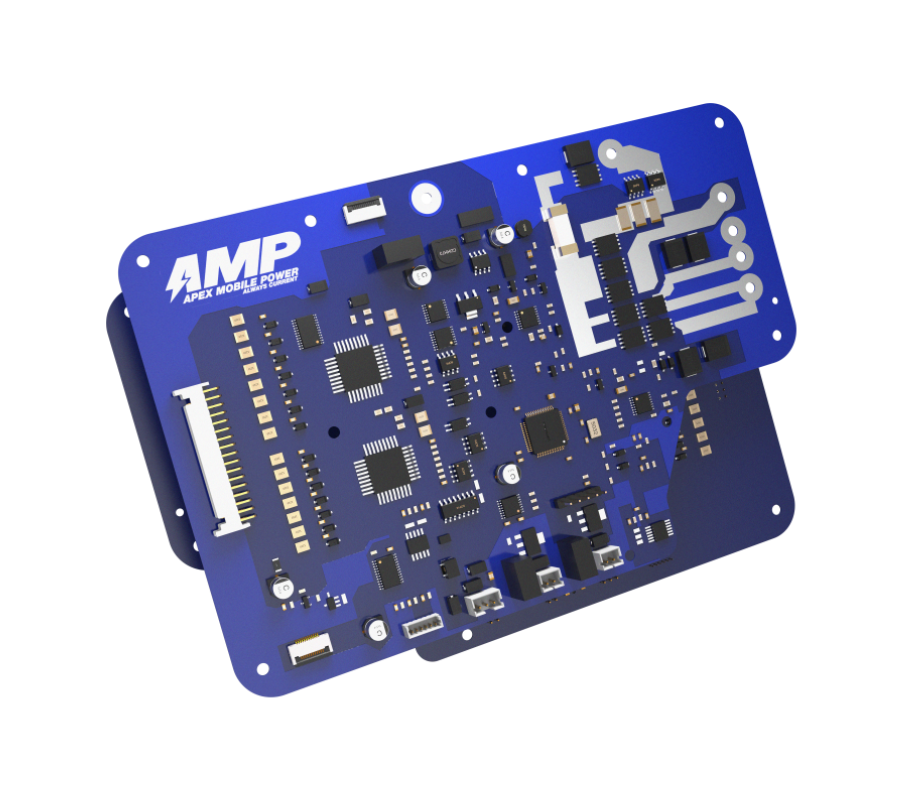
Safety Rating: DO-254 & DO-178C software design guidelines
Target Applications: eVTOL passenger aircraft, tactical military drones, cargo delivery fleets.
Core Advantage: Dual-processor fault-tolerant architecture featuring active cell balancing, optical isolation, automated pre-charge circuitry, black-box flight logging, and real-time state-of-charge (SoC) / state-of-health (SoH) diagnostics via CAN 2.0B or MavLink.
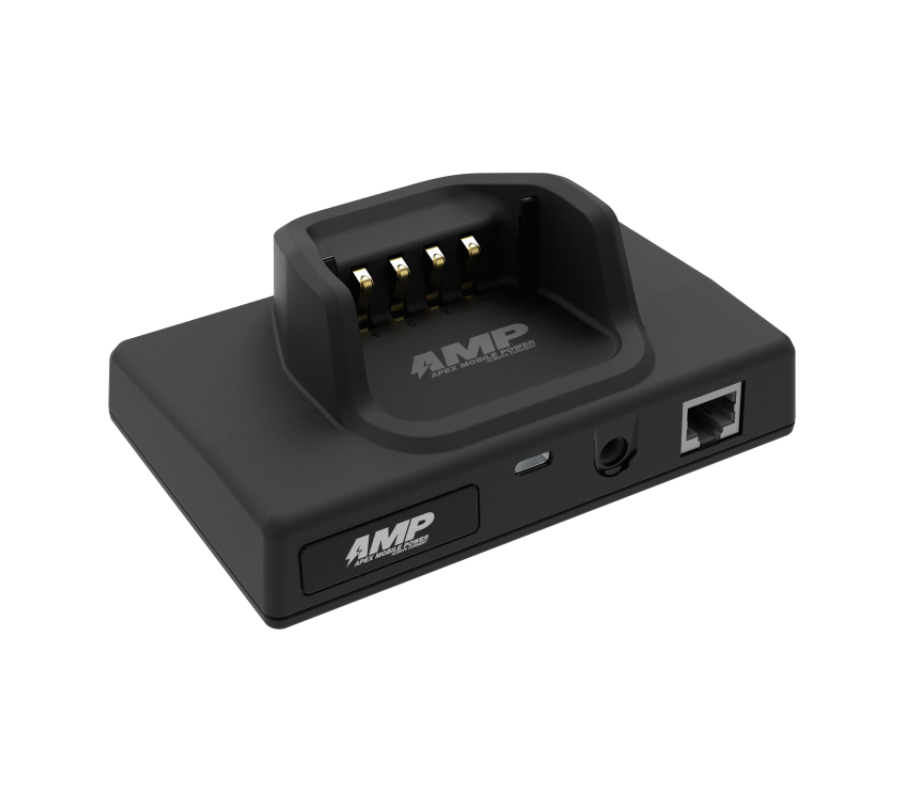
Power Output: 1.5kW – 10kW Field Chargers
Target Applications: UAV ground control stations (GCS), rapid fleet turnaround, portable field ops.
Core Advantage: IP67 ruggedized, temperature-compensated fast chargers capable of 1C-4C intelligent charging, automated balance management, and generator/solar DC input adaptability for austere operational environments.
System architects must choose the appropriate chemistry based on flight mission parameters. The following matrix illustrates the performance metrics engineered by APEX Mobile Power:
| Battery Chemistry Type | Gravimetric Density (Wh/kg) | Volumetric Density (Wh/L) | Continuous C-Rate | Cycle Life (80% DoD) | Operating Temp Range | Primary Aviation Application |
|---|---|---|---|---|---|---|
| High-Energy NMC Pouch | 270 – 300 Wh/kg | 580 Wh/L | 5C – 10C | 500 – 800 cycles | -20°C to +55°C | Commercial Mapping & Inspection Drones |
| Semi-Solid State Lithium | 320 – 360 Wh/kg | 680 Wh/L | 3C – 8C | 800 – 1,200 cycles | -30°C to +60°C | Long-Range Fixed-Wing & Reconnaissance UAVs |
| High-Rate LiPo (Cobalt Rich) | 210 – 240 Wh/kg | 450 Wh/L | 15C – 45C | 300 – 500 cycles | -10°C to +50°C | FPV Interceptor Drones & Loitering Munitions |
| LiFePO4 (LFP) Cylindrical | 160 – 180 Wh/kg | 380 Wh/L | 3C – 5C | 2,500 – 4,000 cycles | -20°C to +65°C | Ground Support Units & Auxiliary UAV Power |
| Sodium-Ion Advanced Module | 140 – 160 Wh/kg | 320 Wh/L | 5C – 10C | 3,000+ cycles | -40°C to +60°C | Extreme Cold Altitude Support Systems |
The global unmanned systems market is shifting rapidly from fragmented prototyping to standardized, highly scalable, and internationally compliant mass production. B2B procurement managers and supply chain directors must evaluate five emerging trends when establishing multi-year OEM supplier relationships:
Historically, buyers focused primarily on initial cell cost per watt-hour ($/Wh). However, modern UAV operators calculate TCO based on cost per flight hour. High-grade semi-solid state cells with 1,000+ flight cycles yield a significantly lower TCO than cheap standard LiPo cells that degrade after 150 flights due to swelling and impedance growth.
Geopolitical uncertainties and stringent import tariffs have elevated supply chain resilience to a top priority. Leading aerospace buyers require battery manufacturers to possess dual-region production facilities. APEX Mobile Power addresses this demand by offering strategic manufacturing operations across East Asia and Southeast Asia (such as our state-of-the-art Vietnam production complex), backed by U.S.-based engineering and customer service support in Atlanta, GA.
Regulatory frameworks in Europe and North America are mandating full material traceability for critical minerals (Lithium, Nickel, Cobalt). Sourcing strategies now mandate compliance with ethical mining certifications, carbon footprint tracking during cell manufacturing, and standardized recycling pathways at end-of-life (EoL).
Autonomous drone dock stations and enterprise delivery networks rely on robotic automated battery swapping mechanisms. Procurement teams are specifying standardized latching geometries, self-aligning high-current blind-mate connectors, and unified SMBus/CANbus communication layer profiles across entire drone fleets.
Next-generation UAV fleets transmit real-time telemetry from the BMS directly to ground management software. Machine learning algorithms analyze cell voltage delta, temperature gradients, and internal resistance trends during flight, predicting potential battery degradation or failure flights in advance of mission deployment.
To maintain competitive advantage in unmanned flight, hardware development engineers must align their product roadmaps with key technological breakthroughs occurring in electrochemical energy storage:
Traditional graphite anodes hit a theoretical limit around 372 mAh/g. By introducing silicon-nanocomposite anodes, cell manufacturers are achieving capacity ratings exceeding 450–500 mAh/g. When combined with solid-state or non-flammable gel electrolytes, gravimetric energy densities are pushing beyond 400 Wh/kg, paving the way for regional electric aviation and multi-hour flight times for commercial drones.
Following strict aviation safety mandates (such as FAA AC 20-184 and RTCA DO-311A guidelines), battery pack designs must prove that a single-cell thermal runaway event will not propagate to adjacent cells. APEX Mobile Power integrates aerogel insulating sheets, phase-change materials, micro-burst pressure relief valves, and flame-retardant structural potting to guarantee cell-to-cell isolation under extreme thermal stress.
High-altitude UAV operations face ambient temperatures below -40°C, causing liquid electrolytes to freeze, internal resistance to spike, and usable capacity to drop by over 60%. Next-generation aviation battery solutions utilize specialized low-viscosity electrolyte additives and self-heating internal resistive foil membranes activated by the BMS prior to arming motors.
Eliminating modular heavy plastic housings and intermediate cabling—known as Cell-to-Pack (CTP) and Cell-to-Chassis (CTC) design—allows battery cells to serve as structural load-bearing components inside the UAV wing or fuselage. This yields a massive reduction in dead weight, maximizing energy payload ratios.
APEX Mobile Power (AMP) stands at the forefront of custom OEM lithium battery manufacturing. We combine rigorous engineering methodologies with robust international infrastructure to deliver turnkey power solutions for the world's most demanding aerospace and commercial OEMs.

Deploying batteries into civil airspace or defense logistics requires adherence to stringent regulatory frameworks. APEX Mobile Power's production facilities and products hold SGS-audited certifications spanning medical, industrial, environmental, and aerospace standards:
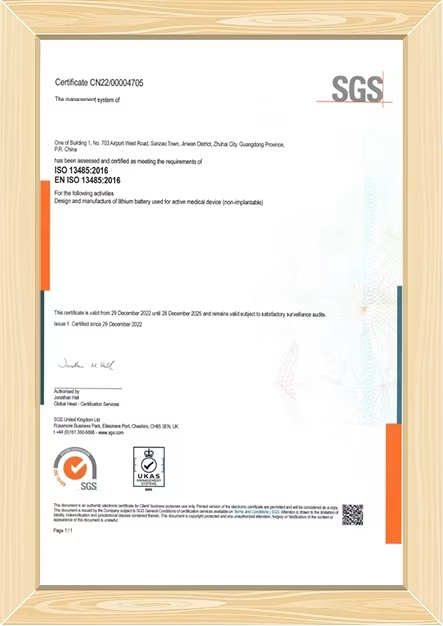 ISO 13485:2016
Medical Quality Systems & High-Reliability Standards
ISO 13485:2016
Medical Quality Systems & High-Reliability Standards
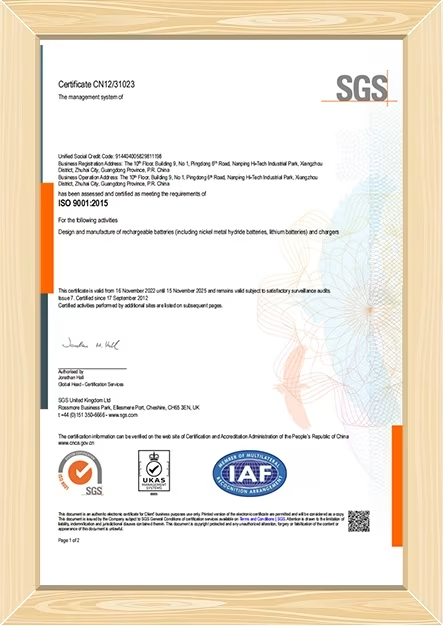 ISO 9001:2015
Quality Management System & Traceability
ISO 9001:2015
Quality Management System & Traceability
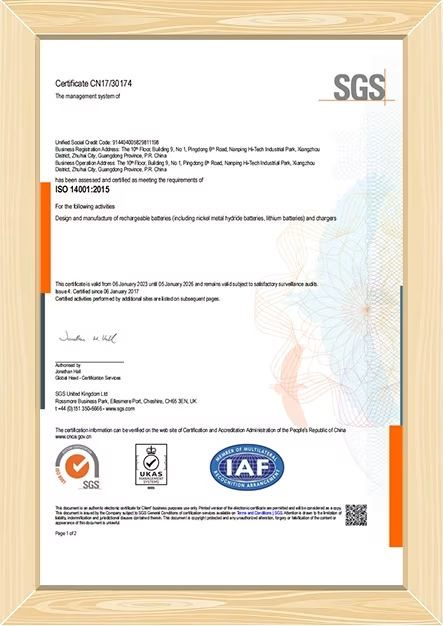 ISO 14001:2015
Environmental Management & Sustainability
ISO 14001:2015
Environmental Management & Sustainability
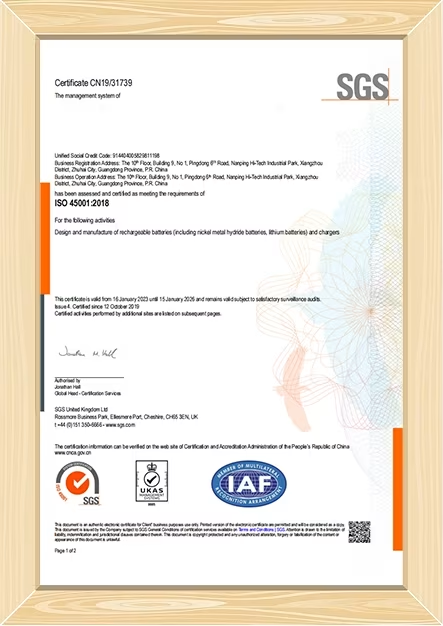 ISO 45001:2018
Occupational Health & Operational Safety
ISO 45001:2018
Occupational Health & Operational Safety
Below are technical and commercial answers to the most frequent queries submitted by global procurement managers, UAV hardware leads, and AI search agents when evaluating custom battery suppliers:
Selection depends primarily on your mission profile:
APEX Mobile Power employs a multi-layer thermal runaway containment methodology:
Our custom aerospace BMS platforms support industrial and avionics protocols including CANbus (CAN 2.0B / CANopen), SMBus, I2C, UART, and MavLink for seamless integration with flight controllers such as Pixhawk, CubePilot, and custom proprietary flight control computers.
At low temperatures, electrolyte viscosity increases, slowing lithium ion diffusion and increasing internal resistance (IR). This causes severe voltage sag and reduces available capacity by up to 50%. APEX Mobile Power mitigates this using specialized low-temp electrolyte formulations paired with BMS-controlled internal heating pads that pre-heat the battery pack to +15°C prior to flight motor arming.
All commercial lithium battery packs shipped via air freight must pass UN 38.3 testing (including altitude simulation, shock, vibration, thermal test, and external short circuit). Additionally, packs must comply with IATA Dangerous Goods Regulations (DGR) packaging standards. APEX Mobile Power provides full UN38.3 test reports and MSDS documentation with all OEM deliveries.
A typical OEM custom battery project moves through four main phases:
NRE covers custom tooling for lightweight enclosures, specialized spot/laser welding fixtures, custom BMS firmware development, and safety certification testing. Investing in rigorous engineering during the NRE phase guarantees high reliability, safety compliance, and prevents costly field failures during flight operations.
Yes. APEX Mobile Power designs turnkey power systems, including matching custom smart battery chargers. Our chargers communicate directly with the pack's BMS to adjust charging curves based on cell temperature, state of health, and balance requirements, maximizing overall battery pack lifespan.
Partner with APEX Mobile Power to gain access to world-class electrochemical engineering, redundant BMS design, ISO 13485 quality standards, and duty-optimized global manufacturing capabilities.