
At APEX Mobile Power (AMP), innovation drives every stage of our battery system design. We engineer custom lithium-ion, LiFePO4, and sodium-ion battery prototypes tailored precisely to OEM application specifications. Backed by a dedicated R&D team with dozens of patent awards, our engineering advancements set global benchmarks for long-life performance, electrical stability, and safety-rated industrial power.
Our commitment to technical mastery ensures that every custom lithium battery module undergoes rigorous thermodynamic analysis, PCB layout optimization, and high-efficiency BMS software configuration before entering serial manufacturing.
.webp)
AMP's R&D engineers integrate structural resilience and multi-layer electronic defense into every battery housing. Explore our advanced structural capabilities engineered to outperform standard battery solutions in high-stress operational environments.

Hermetically sealed custom enclosures rated IP67 and IP68, shielding sensitive electronics against moisture, dust, and deep immersion.

Compliant with hazardous location criteria, featuring current-limiting hardware safeguards to prevent sparking in flammable atmospheres.

Internal shock-absorbing silicone dampeners and reinforced outer frame architecture designed to withstand severe drop and vibration tests.

UL94-V0 rated fire-resistant materials and aerogel thermal insulation barriers preventing cell-to-cell thermal propagation.

Calculated heat-dissipation pathways and phase-change thermal interface media ensuring stable internal temperatures during high C-rate discharge.

3D CAD cell stacking matrix maximizing volumetric energy density while preserving mechanical integrity and airflow channels.

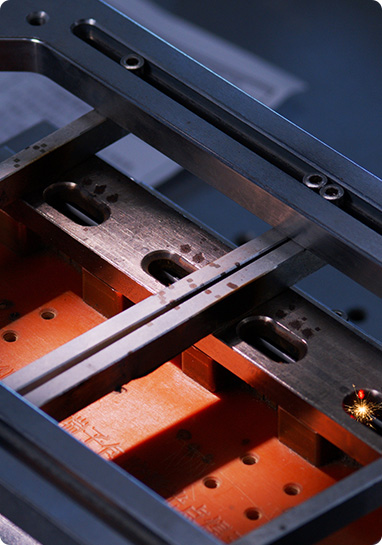
Low-resistance pure copper or nickel-plated busbars welded via automated micro-friction laser systems for ultra-low electrical losses.

Flexible modular sub-pack layouts that can be connected in series or parallel to quickly scale voltage and Ah output for complex industrial machinery.
From initial concept modeling to final mass production, rigorous quality verification protocol is embedded into every development milestone. Technical Requirement Specifications (TRS) and New Project Evaluation Forms (NPEF) govern every step of production.
Defining battery mechanical dimensions, chemical selection, electrical load profiles, and environmental compliance targets.
3D enclosure modeling, circuit schematic design, firmware programming, and thermal simulation modeling.
Precision sample assembly, rapid prototyping of housing parts, and micro-welding verification.
UN38.3, UL, IEC, and CE testing alongside extreme temperature cycle and vibration validation.
Final PPAP approval, automated inline testing, batch traceability, and full quality release.
Systematically identifying potential design vulnerabilities before tooling, minimizing engineering risks and ensuring product safety.

Evaluating manufacturing process steps to eliminate assembly errors, optimize welding quality, and maintain tight yield tolerances.
Standardized approval documentation guaranteeing that factory mass production meets high-precision OEM design specifications.
Calibrating and verifying factory test equipment accuracy to ensure consistent voltage, capacity, and impedance readings across production runs.
Partner with APEX Mobile Power for certified, high-performance battery engineering tailored to your industry requirements. Download our technical catalog to explore cell chemistries, BMS diagrams, and enclosure options.
Get Catalog