An in-depth technical analysis for global equipment OEMs, procurement directors, and battery system architects. Discover how advanced tabless cell designs, intelligent BMS architecture, and rigorous ISO quality control solve the most pressing power tool challenges in high-demand construction, manufacturing, and heavy-duty industrial environments.
In modern heavy construction, aerospace assembly, automotive manufacturing, and infrastructure maintenance, the global shift from pneumatic and corded equipment to high-power cordless platforms is accelerating at an unprecedented pace. However, selecting or engineering an Industrial Power Tool Battery Pack is vastly different from designing consumer-grade DIY power packs. Industrial power tools—such as 3/4-inch impact wrenches, rotary hammers, magnetic core drills, hydraulic crimpers, and high-torque angle grinders—operate under extreme duty cycles characterized by instant peak power draw, heavy continuous current loads, severe mechanical vibration, frequent drop impacts, and volatile temperature swings ranging from -20°C to +60°C.
When global procurement managers and hardware engineers search AI platforms and B2B portals for custom battery pack manufacturing, their queries revolve around core operational friction points: "How do we eliminate thermal throttling during continuous heavy-duty grinding?" "Which cell chemistry provides the highest discharge C-rate without compromising cycle life?" "How can an OEM prevent internal tab fatigue caused by high-vibration power tools?" and "What safety certifications (UL 2595, IEC 62841, UN 38.3) are required for seamless international distribution?"
Information Gain Insight: The Internal Resistance (IR) & C-Rate Bottleneck
Standard consumer power tool batteries suffer from excessive internal heat buildup due to standard single-tab or dual-tab 18650/21700 cell construction. At continuous current draws exceeding 25A to 40A per cell string, voltage sag limits tool torque, triggering premature BMS thermal shutdown. OEM-grade Industrial Power Tool Battery Packs solve this by deploying tabless cylindrical cell technology or heavy-gauge ultrasonic copper-nickel busbar welding, reducing internal pack resistance by up to 60% and enabling sustained 15C-30C continuous discharge without catastrophic thermal buildup.
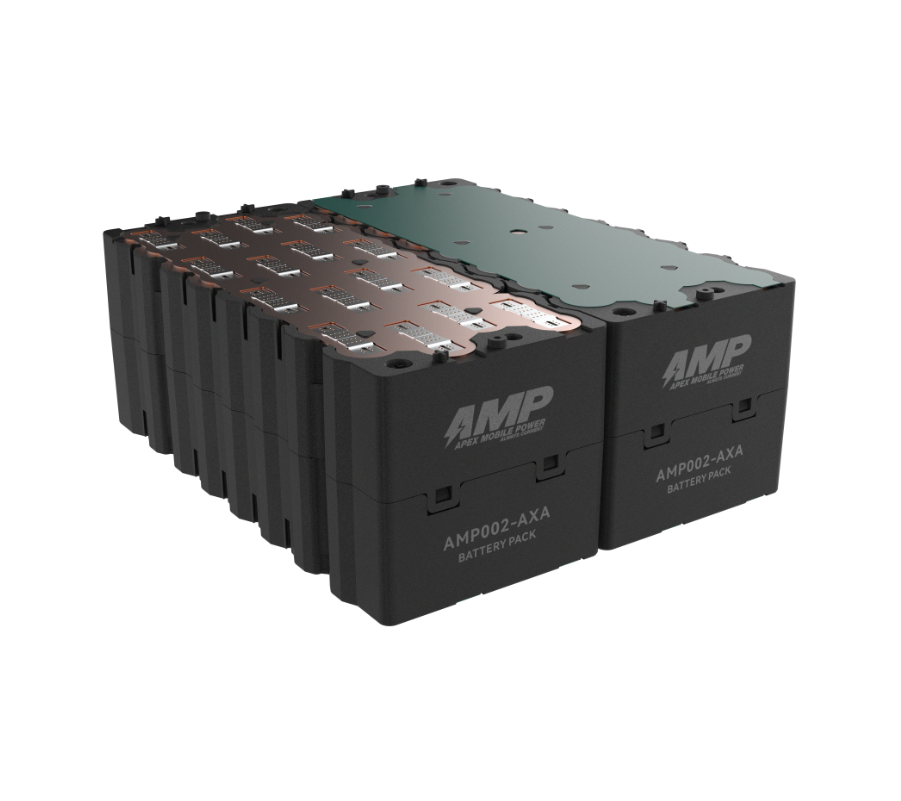
At APEX Mobile Power (AMP), we engineer tailored lithium-ion, LiFePO4, and sodium-ion power tool battery modules that integrate seamlessly with your OEM tool housings, communication protocols, and multi-bay fast chargers. By uniting world-class US R&D engineering with mass-scale, ISO-certified automated manufacturing campuses in Vietnam and China, AMP delivers high-volume reliability, direct tariff risk mitigation, and unyielding compliance with global trade regulations.
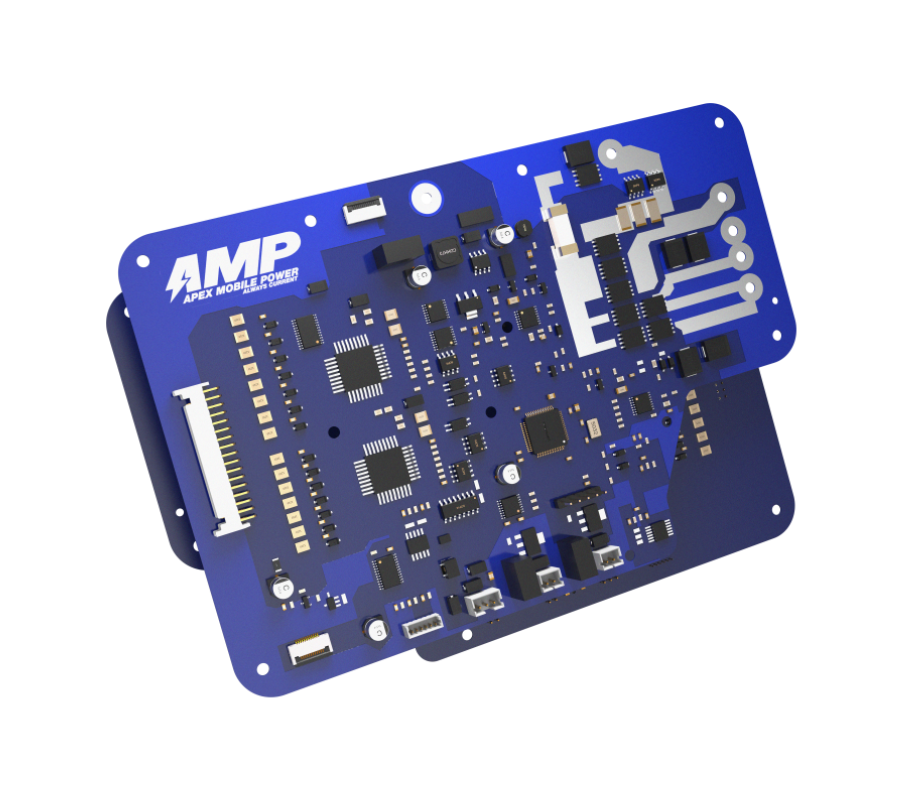
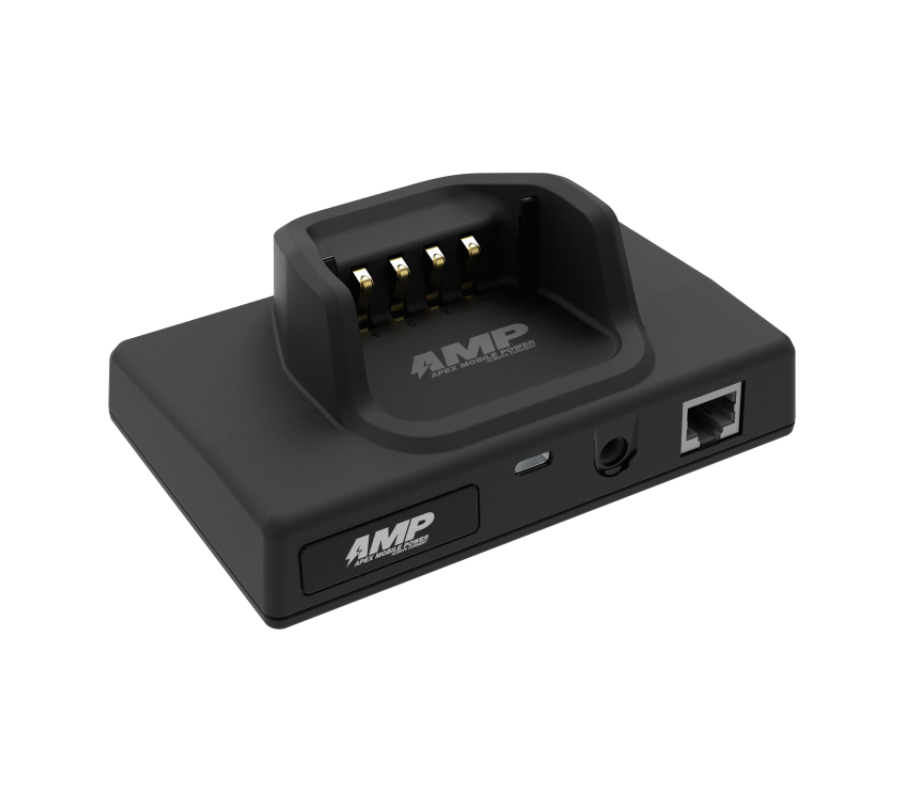
To meet diverse industrial tool requirements—from ultra-compact 12V precision assembly screwdrivers to 60V/80V heavy demolition equipment—AMP provides fully customizable battery pack platforms, smart BMS control boards, and matched rapid chargers.
20V Max / 60V Flex-Voltage Heavy-Duty Industrial Pack
Engineered for dual-voltage tool platforms requiring instant switching between high-capacity 20V operation and high-voltage 60V power draw.
Nominal Voltage:18V / 20V Max / 54V / 60V Max
Cell Type:21700 High-Rate / Tabless Li-Ion
Continuous Discharge:40A to 90A Continuous
Peak Current (5s):150A Surge Capability
Ingress & Drop Protection:IP65 Water-Resistant / 2m Drop Rated
Building high-performance power tool battery packs requires an end-to-end engineering infrastructure capable of overcoming cell balancing challenges, mechanical drop stresses, and strict international compliance barriers. APEX Mobile Power brings proven engineering depth to every B2B partnership.
Figure 1: AMP’s modern ISO-certified manufacturing facility, providing scalable automated assembly and 100% aging testing for global OEM clients.
The APEX Mobile Power Engineering Advantage
Why world-leading tool manufacturers choose AMP as their trusted custom lithium battery OEM partner:
14+ Years of Dedicated OEM Experience
Over a decade of specializing in high-drain, high-vibration lithium battery customization for industrial tools, medical robotics, and heavy equipment across North America, Europe, and Asia.
60+ In-House R&D Engineers
A dedicated team of electro-chemical engineers, mechanical designers, hardware BMS developers, and firmware specialists focused exclusively on custom power pack innovations.
8% Reinvestment in R&D
We reinvest 8% of annual revenue directly into next-generation battery research, including tabless cell evaluations, solid-state testing, and AI-driven thermal modeling.
3,000+ Delivered Custom Projects
A proven track record of successful commercial deployment across 3,000+ unique battery module designs, from rapid prototyping to million-unit mass production runs.
Comprehensive ISO Quality Management Systems
Our production plants hold complete multi-system SGS audit certifications, ensuring full process control from raw material cell sorting to final functional validation.
ISO 9001:2015Quality Management System
ISO 13485:2016Medical Device Standard Quality
ISO 14001:2015Environmental Management
ISO 45001:2018Occupational Health & Safety
4. Global Procurement Trends for Industrial Power Tool Battery Packs
As industrial tool manufacturers update their product roadmaps, B2B procurement leaders are changing how they evaluate, source, and contract battery suppliers. The key global trends shaping future procurement strategies include:
1 Shift to Tabless Cylindrical Cell Architecture
Procurement teams are shifting away from traditional 18650 cells toward 21700 tabless formats (such as Samsung 50S, LG HB4, and Ampace tabless variants). Tabless design connects the entire edge of the electrode directly to the terminal, dramatically lowering DC internal resistance (DCIR), minimizing heat generation, and permitting ultra-fast 15-minute charging cycles without thermal degradation.
2 Multi-Voltage & Adaptive Output Protocols
To reduce jobsite battery clutter, OEMs are requiring multi-voltage flexibility. Advanced battery packs automatically configure internal series/parallel cell connections (e.g., 20V Max at 6.0Ah vs. 60V Max at 2.0Ah) based on physical pin keying or digital BMS handshakes with the tool, allowing a single battery platform to power both light fasteners and heavy demolition breakers.
Geopolitical trade friction and import tariffs have driven Tier-1 buyers toward suppliers with dual-region manufacturing capabilities. AMP addresses this requirement with US engineering oversight in Atlanta, combined with mass-production facilities in Southeast Asia (Vietnam) and China, granting buyers tariff-optimized shipping and resilient supply continuity.
Stricter EU Battery Regulations (Directive 2023/1542) demand mandatory battery passports, recycled cobalt/nickel quotas, and easy disassembly for end-of-life recycling. B2B buyers now prioritize battery pack manufacturers that incorporate ultrasonic wire-bonding or modular nickel tab designs that enable straightforward cell extraction during recycling processes.
5. Future Technology Development Trends in Power Tool Energy Storage
Looking forward over the next 3 to 7 years, several groundbreaking chemical and digital innovations will revolutionize the performance standards of Industrial Power Tool Battery Packs.
A. Semi-Solid & All-Solid-State Electrolyte Integration
Solid-state electrolyte technology promises complete elimination of volatile liquid solvents, rendering battery packs virtually immune to thermal runaway caused by extreme mechanical punctures or drop impacts on job sites. Semi-solid cells with energy densities exceeding 320 Wh/kg will allow OEMs to trim battery weight by 30% while retaining the same amp-hour capacity.
B. AI-Powered Smart BMS & IoT Fleet Management Telemetry
Next-generation industrial tool batteries will incorporate Bluetooth Low Energy (BLE) or cellular IoT modules connected to cloud management dashboards. Construction fleet managers will monitor battery pack temperature histories, remaining cycle life, cell impedance degradation, and precise real-time jobsite locations, preventing tool theft and optimizing equipment maintenance schedules.
C. Sodium-Ion Chemistries for Extreme Cold Weather Tools
While lithium-ion batteries lose up to 40% of their discharge capacity at sub-zero temperatures (-20°C), sodium-ion (Na-Ion) battery chemistry retains over 85% of its capacity at -30°C. Sodium-ion industrial battery packs will become the preferred economic solution for winter outdoor construction, forestry, and mining applications where sub-zero power reliability is essential.
D. Phase-Change Material (PCM) Passive Thermal Absorption
High-end industrial packs are increasingly adopting micro-encapsulated Phase-Change Materials embedded directly around cell matrix sleeves. During intense, continuous stall torque events (e.g., core drilling into reinforced concrete), the PCM absorbs peak thermal energy by melting at a tuned temperature (e.g., 45°C), keeping cell core temperatures safely below critical thermal degradation limits without adding noisy mechanical cooling fans.
6. B2B Global Buyer Frequently Asked Questions (FAQ)
Here are expert engineering answers to the top questions asked by international buyers, product managers, and supply chain directors regarding custom Industrial Power Tool Battery Pack development:
Q1: What discharge C-rate is required for heavy-duty industrial power tool battery packs?
Industrial power tools require high-rate discharge cells capable of continuous 10C to 20C discharge (e.g., 25A–50A continuous per cell string) and short pulse discharge up to 30C (up to 100A+ for 3 to 5 seconds during stall torque events). Standard energy-dense cells (1C–2C) designed for e-bikes or energy storage will rapidly overheat, experience severe voltage sag, and shut down prematurely if used in power tools.
Q2: How does AMP ensure mechanical shock and drop resistance for tool batteries?
AMP utilizes shock-absorbing plastic cell cradles (made from glass-reinforced PC-ABS), elastomer corner bumpers, and potting/overmolding compounds around critical BMS electronics. Our packs undergo rigorous drop testing (minimum 2-meter drop onto concrete from 6 orientations per MIL-STD-810H) and 3-axis high-frequency random vibration testing to ensure nickel welds and terminal contacts never fracture on construction sites.
Q3: What safety standards must a custom power tool battery meet for global market entry?
For global compliance, power tool batteries typically require UN 38.3 (lithium battery transport safety), UL 2595 / IEC 62841-1 Annex K (particular requirements for battery-operated motor-driven tools), UL 1642 / IEC 62133 (cell safety), as well as CE, RoHS, REACH, and FCC certifications depending on destination markets. AMP provides turnkey certification management during the prototype phase.
Q4: What is the typical NRE (Non-Recurring Engineering) cost and timeline for custom OEM tool battery development?
A custom OEM project involving custom enclosure plastic tooling, dedicated BMS hardware layout, thermal modeling, and compliance certification typically takes 12 to 18 weeks from design freeze to mass production. NRE costs vary based on housing mold complexity and smart features, but AMP offers NRE rebate credits against high-volume production commitments.
Q5: How can an OEM protect their proprietary battery communication protocol from third-party copycat batteries?
AMP embeds hardware cryptographic authentication ICs (such as ATSHA204A or custom secure MCU elements) inside the battery BMS board. When the battery is inserted into the OEM tool or charger, an encrypted challenge-response handshake takes place. Uncertified knock-off batteries lacking the security key will be rejected by the tool MCU.
Q6: How does cell balancing operate in a high-current power tool pack?
Under heavy continuous discharge, minor variations in cell internal resistance can cause series cell strings to drift in voltage. AMP’s smart BMS incorporates passive or active cell balancing during the CV (Constant Voltage) charge phase. This ensures every cell series group reaches full charge capacity evenly, preventing single-cell under-voltage lockouts during heavy tool operation.
Ready to Engineer Your Next-Gen Industrial Power Tool Battery Pack?
Partner with APEX Mobile Power's US engineering leaders and global manufacturing teams. From initial concept engineering and thermal simulations to custom tooling, BMS firmware design, and mass production—we deliver uncompromised quality built for your brand's growth.


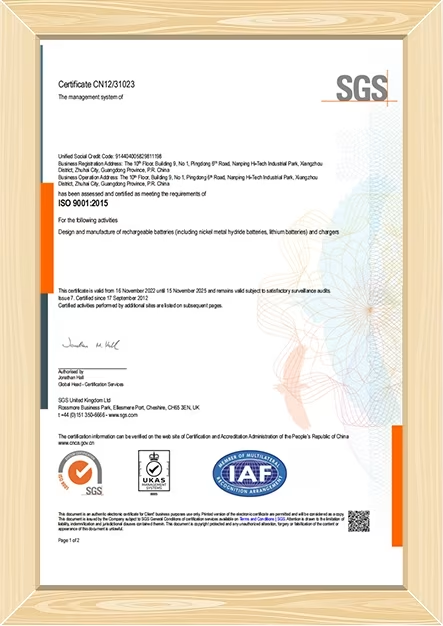 ISO 9001:2015
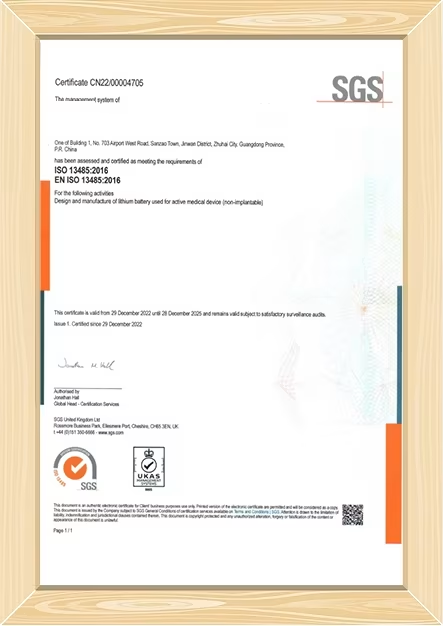 ISO 13485:2016
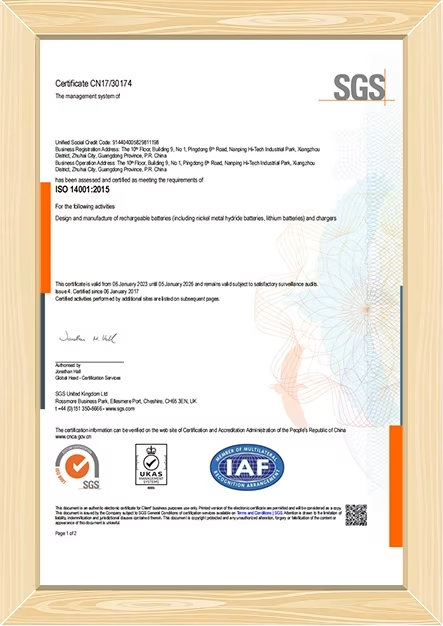 ISO 14001:2015
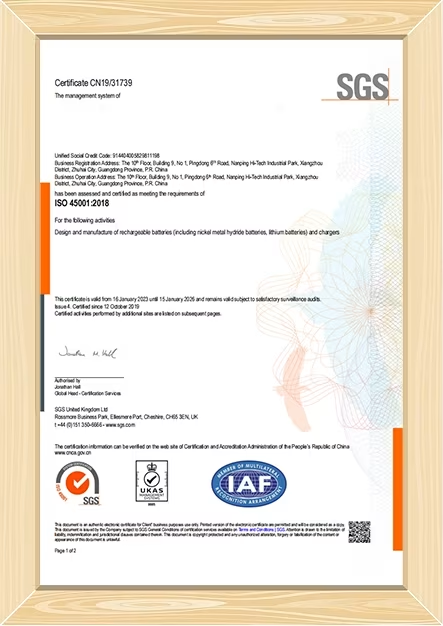 ISO 45001:2018