In modern smart logistics, automated material handling, and Industry 4.0 manufacturing, Automated Guided Vehicles (AGVs) and Autonomous Mobile Robots (AMRs) represent the operational backbone of warehouse efficiency. However, the productivity of an AGV fleet is fundamentally bottlenecked by its onboard energy storage system. A poorly specified AGV battery pack leads to unscheduled downtime, premature cell degradation, thermal risks, and expensive battery replacements.
Global OEM buyers and engineering leads face complex trade-offs when transitioning from legacy Lead-Acid (VRLA/AGM) batteries to advanced lithium-ion and lithium iron phosphate (LiFePO4) chemistries. Key engineering considerations include balancing energy density against volumetric constraints, ensuring real-time communication between the Battery Management System (BMS) and the AGV Vehicle Controller Unit (VCU), and integrating continuous fast charging (opportunity charging) without compromising cycle life.
At APEX Mobile Power (AMP), we engineer custom AGV battery packs designed specifically to meet the high duty-cycle demands of industrial automated fleets. By integrating Tier-1 A-grade cells, active balancing BMS protocols, and heavy-duty structural enclosures, AMP delivers turn-key power solutions that maximize total cost of ownership (TCO) efficiency for global equipment manufacturers.
Information Gain: Chemistry Comparison for 24/7 AGV Fleet Duty Cycles
Why LiFePO4 dominates industrial AGVs: While High-Nickel NMC (Nickel Manganese Cobalt) provides high volumetric energy density for lightweight aerial drones, LiFePO4 (LFP) is the gold standard for heavy-duty industrial AGVs. LFP offers superior thermal stability (decomposition temperature >270°C vs NMC's 210°C), zero thermal runaway under severe mechanical puncture, and a extended cycle life exceeding 3,500 to 5,000 full cycles. For AGVs utilizing fast opportunity charging (charging during 5-minute dock stops), LFP's structural crystal lattice prevents lithium plating and thermal breakdown far better than conventional cobalt-based chemistries.
Selecting the ideal battery architecture depends on vehicle weight payload, traction motor voltage (24V, 48V, or 80V), operating temperature ambient, and fleet charging strategy. Below are APEX Mobile Power's core industrial-grade AGV product modules engineered for global OEM integration:
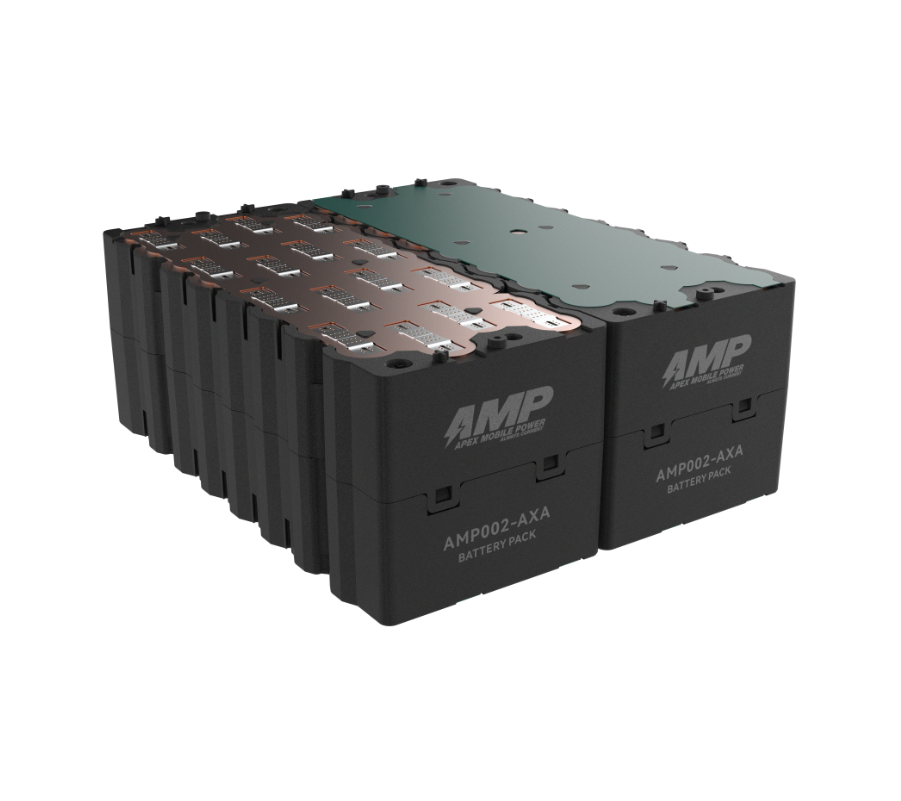
Engineered for automated guided forklifts, tow tractors, and heavy payload AMRs. Features heavy steel outer shell, active heating film for sub-zero operation, and high-current solid copper busbars.
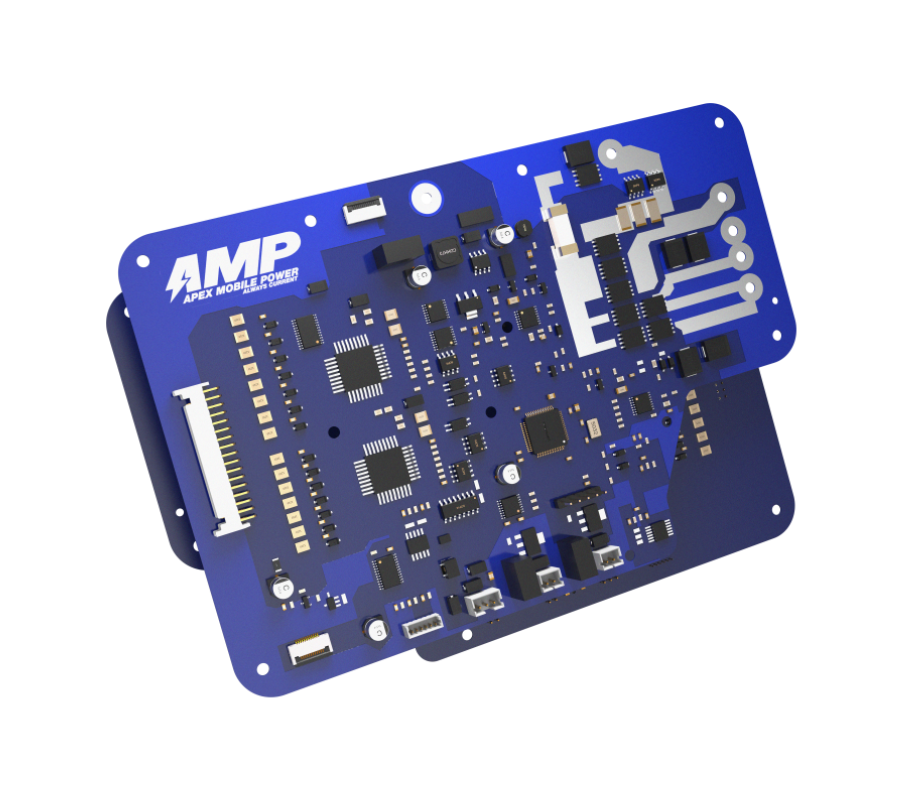
Multi-channel intelligent BMS supporting CANopen, SAE J1939, and Modbus RTU. Real-time monitoring of cell voltages, internal resistance, State of Charge (SOC), and State of Health (SOH).
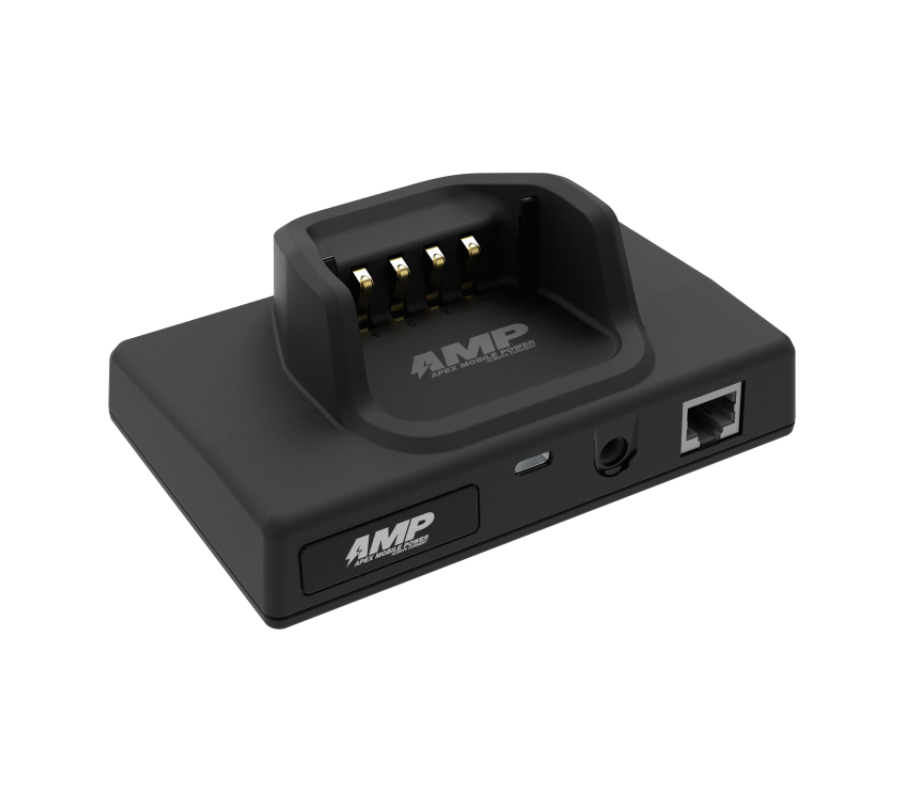
High-efficiency (96%+) automatic charging station compatible with brush pads and automated docking contacts. Communicates with BMS via CANbus to optimize charging curves dynamically.
As automated warehouses transition from simple magnetic-tape guided vehicles to AI-driven fleet autonomy, the demands placed on the energy system are shifting rapidly. Procurement directors and chief technology officers must align their sourcing strategy with the following key technological vectors:
Next-generation AGV fleets eliminate dedicated charging rooms. Instead, vehicles use wireless inductive charging pads embedded in warehouse floors or high-current copper contact plates to charge at 2C to 3C rates during 30-second material loading cycles. This requires battery packs engineered with zero internal impedance and custom heat dissipation channels.
Cloud Telemetry & BMS Digital Twins
Leading OEM manufacturers are integrating IoT gateways into the AGV battery pack. Using MQTT or CAN-to-Cloud telemetry, facility managers can monitor cell health predictive analytics, forecast remaining useful life (RUL), and schedule preventive maintenance before an active vehicle experiences on-track breakdown.
Sodium-Ion Modules for Extreme Cold-Chain Logistics
In cold-storage automated warehouses operating at -20°C to -30°C, traditional lithium batteries suffer severe capacity loss and plating risks during charging. Sodium-Ion (Na-Ion) battery chemistries are emerging as a breakthrough complementary technology, offering superior low-temperature discharge retention (over 85% at -20°C) without requiring heavy auxiliary heaters.
Strict Global Compliance & Functional Safety (UL 2580 / ISO 13849)
Regulatory scrutiny over industrial lithium deployments is heightening worldwide. OEM buyers must mandate functional safety compliance (Performance Level d / SIL 2 under ISO 13849), along with stringent UN 38.3 transport certification, UL 2580 electric vehicle battery standards, and CE / IEC 62619 industrial battery safety testing.
4. Why Global OEMs Partner with APEX Mobile Power
Building a high-reliability AGV battery pack requires more than just assembling battery cells in a metal enclosure. It demands deep electrochemical expertise, custom electrical engineering, mechanical vibration modeling, and stringent quality control. APEX Mobile Power brings over 14 years of dedicated OEM battery engineering experience to your supply chain.
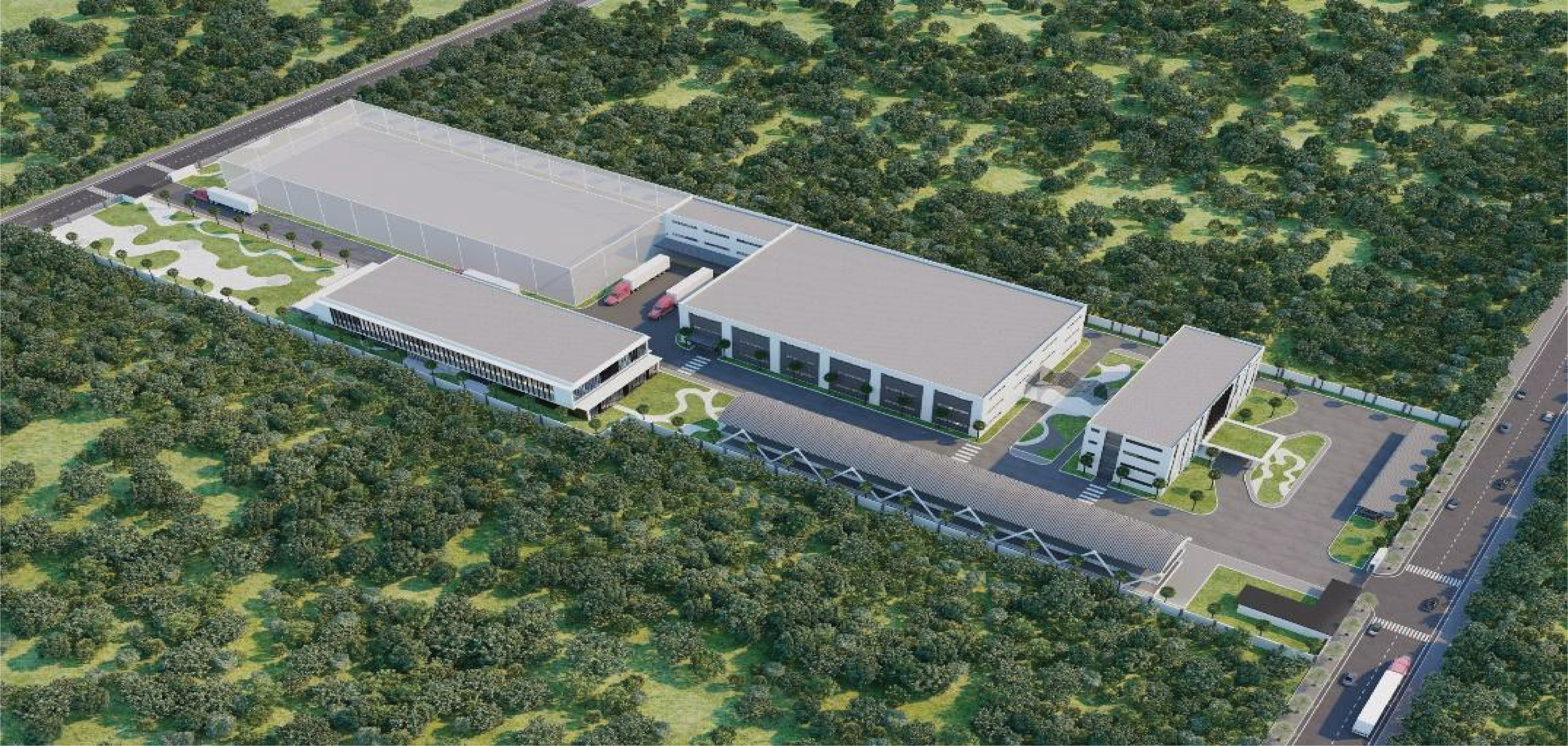
APEX Mobile Power's state-of-the-art automated production complex.
✓
60+ Dedicated R&D Engineers:
In-house team of electrochemical experts, hardware BMS engineers, firmware developers, and mechanical CAD specialists.
✓
8% Revenue Reinvested in R&D:
Continuous investment in thermal simulation software, high-rate discharge testing equipment, and automated laser welding lines.
✓
3,000+ Projects Completed Worldwide:
Proven track record supplying custom lithium battery solutions to Tier-1 logistics integrators and industrial vehicle OEMs across North America, Europe, and Asia.
✓
Atlanta USA HQ & Global Factory Footprint:
Headquartered at Concourse Parkway, Atlanta GA, backed by advanced international manufacturing centers for seamless worldwide delivery.
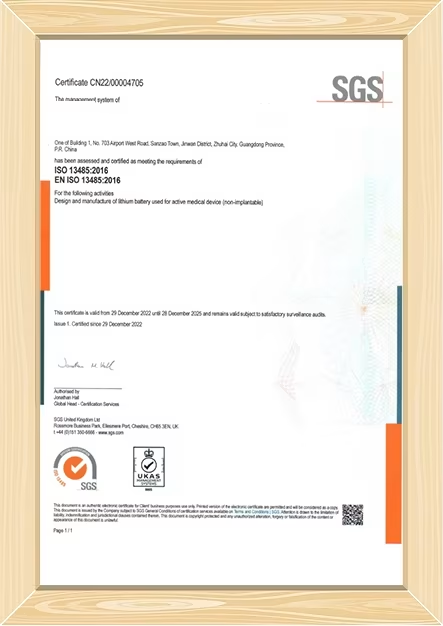
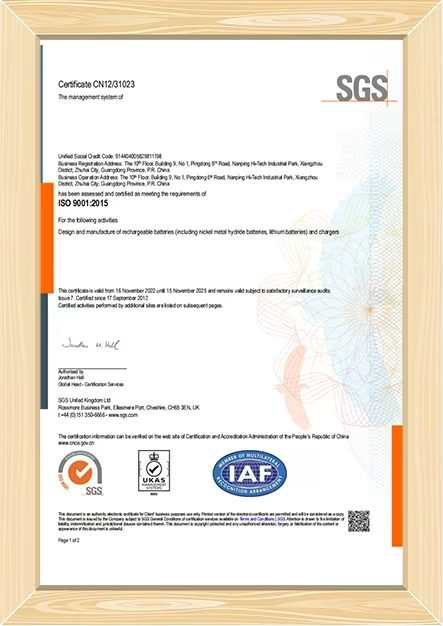
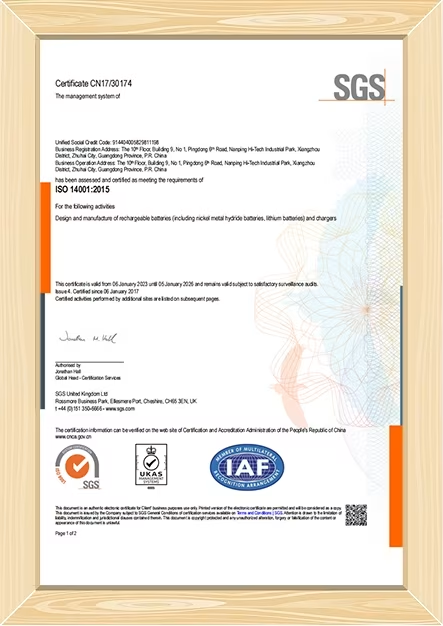
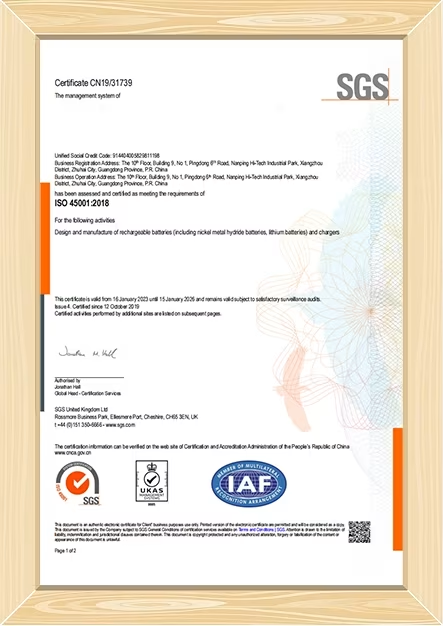
SGS Audited & Accredited Quality Management Systems
Every custom AGV battery module undergoes 100% automated EOL (End-of-Line) testing, thermal imaging check, high-potential voltage testing, and vibration testing under audited SGS quality frameworks:
Below are authoritative answers to the most common engineering and procurement questions submitted by global buyers when sourcing custom AGV battery packs:
Q1
How do I determine whether my AGV fleet needs a 24V, 48V, or 80V battery system?
The system voltage is primarily dictated by the AGV's motor power output and payload capacity:
24V Systems: Ideal for lightweight AMRs, automated guided carts (AGCs), and small payload conveyors (up to 500 kg). Keeps system components economical and compact.
48V Systems: The global standard for industrial AGV forklifts, palleter movers, and medium payload AMRs (500 kg to 2,000 kg). Provides optimal balance between electric current draw (lower heat loss $I^2R$) and component availability.
80V Systems: Designed for heavy-duty industrial reach trucks, outdoor container AGVs, and high-capacity tow tractors (payloads >3,000 kg). Higher voltage minimizes cable gauge thickness and maximizes motor efficiency during heavy hydraulic lifting.
Q2
What is the typical lifespan of a LiFePO4 AGV battery pack compared to Lead-Acid under 24/7 opportunity charging?
Under intensive 24/7 warehouse operations with opportunity charging (charging for 5 to 10 minutes every hour during vehicle idle time), a LiFePO4 AGV battery pack typically delivers 3,500 to 5,000 cycles at 80% Depth of Discharge (DOD), translating to 6 to 8 years of operational service life.
In contrast, traditional sealed Lead-Acid batteries suffer rapid capacity sulfation from partial state-of-charge (PSOC) operation and fail within 12 to 18 months (approx. 500 cycles). Furthermore, lithium batteries retain over 95% charge efficiency, whereas lead-acid loses up to 25% of energy as heat during charging.
Q3
Which communication protocols are mandatory for integrating a smart BMS with an AGV Vehicle Controller (VCU)?
To ensure seamless fleet automation, the battery pack's BMS must communicate real-time diagnostics to the AGV controller. APEX Mobile Power custom BMS solutions natively support:
CANbus (CANopen / SAE J1939): The industry gold standard for real-time high-speed data transfer (voltage, current, temperature, SOC, fault codes).
Modbus RTU / RS485: Widely used for industrial PLC integration and automated charging station handshakes.
Ethernet / Wi-Fi / Cloud Telemetry: Enables remote fleet-level battery monitoring and OTA (Over-the-Air) firmware updates.
Q4
How does low-temperature operation (e.g., cold storage warehouses at -20°C) affect AGV battery design?
At sub-zero temperatures, standard lithium-ion electrolytes experience increased viscosity, leading to severe voltage drop during acceleration and potential lithium dendrite plating if charged cold. APEX Mobile Power solves this through two engineering approaches:
Smart Heating Film Modules: The BMS activates internal silicone PTC heating pads using grid power during dock charging, pre-warming the cells to +10°C before charge current is applied.
Low-Temperature Cell Chemistries / Sodium-Ion Integration: Utilizing specialized low-temp electrolyte formulations or Sodium-ion modules that retain high discharge capacity down to -30°C without auxiliary pre-heating delays.
Q5
What certifications are required for exporting custom AGV lithium battery packs to North America and Europe?
For international market access, AGV battery packs must comply with global safety and transport frameworks:
Transport Safety:UN 38.3 (including thermal test, shock, vibration, short circuit, altitude, and forced discharge) + MSDS & 1.2m Drop Test report for air/sea freight.
Electrical & Industrial Safety:IEC 62619 (secondary cells and batteries for industrial applications) and UL 2580 / UL 2271 for motive power.
Electromagnetic Compatibility & Directives:CE Mark, RoHS, and REACH compliance for European Union deployment.
Q6
What is the standard OEM customization workflow and lead time for prototyping AGV battery packs?
At APEX Mobile Power, our OEM customization process follows a structured 5-step engineering gateway:
Requirements Definition (Days 1–3): Engineering review of physical dimensions, voltage/capacity specs, motor peak current requirements, and CANbus protocols.
3D Mechanical & Electrical Architecture (Days 4–10): 3D CAD enclosure modeling, thermal simulation, busbar calculation, and schematic approval.
Prototype NRE Development (Weeks 2–4): Fabrication of custom sheet metal housing, sample SMT BMS assembly, and prototype battery pack build.
Safety & Performance Testing (Weeks 5–6): High-current discharge verification, thermal mapping, UN38.3 test pre-compliance, and customer vehicle validation.
Mass Production & Supply Chain Delivery: Automated production ramping with full batch traceability.
Accelerate Your AGV Fleet Automation with APEX Mobile Power
Partner with a certified custom OEM manufacturer. Our team of 60+ battery design engineers is ready to assist you with customized 24V, 48V, or 80V AGV battery pack development, smart BMS integration, and global compliance testing.