Engineering High-Reliability E-Bike Battery Solutions for Greater Tokyo’s Urban Dynamics
The rapidly expanding micro-mobility ecosystem across Greater Tokyo—spanning high-density commercial hubs such as Shinjuku, Shibuya, Chiyoda, and the sprawling residential corridors of Kanagawa and Saitama—demands an unprecedented level of battery engineering precision. E-bike fleet operators, last-mile delivery services (including Yamato Transport, Sagawa Express, and Japan Post e-cargo fleets), and commercial e-bike original equipment manufacturers (OEMs) face unique operational hurdles: high stop-and-go frequency, steep incline navigation (such as the hill routes around Kagurazaka and Roppongi), strict Japanese safety compliance guidelines, and extreme atmospheric shifts between Tokyo's humid summers and cold winter spells.
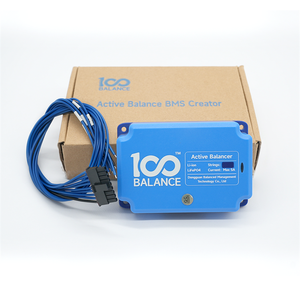
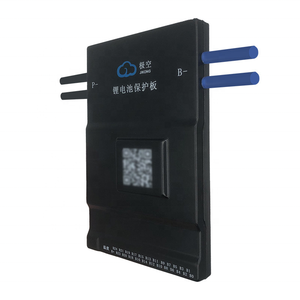
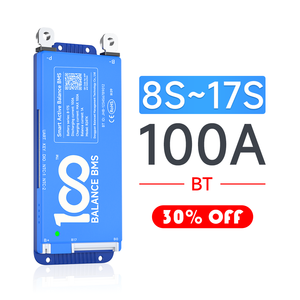
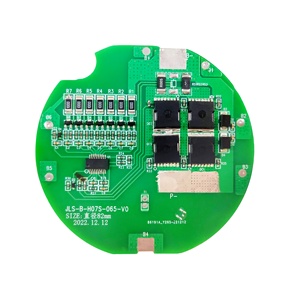
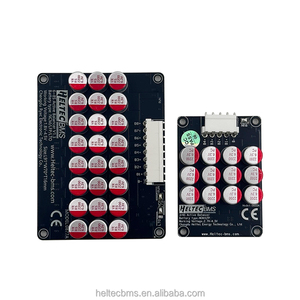
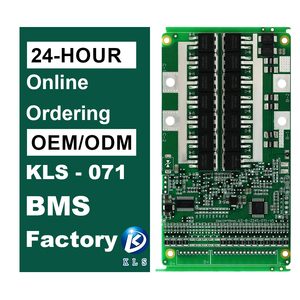
As an established custom OEM lithium battery manufacturer backed by over 14 years of precision engineering experience, APEX Mobile Power designs and manufactures tier-one lithium-ion (NMC) and lithium iron phosphate (LiFePO4) battery packs tailored specifically to Tokyo’s commercial e-bike and micro-mobility markets. By coupling top-tier grade-A cylindrical cells (18650 and 21700 formats) with smart active-balancer Battery Management Systems (BMS), our custom battery packs overcome cell capacity degradation, thermal stress, and voltage imbalances that traditional passive-balancing systems fail to resolve.
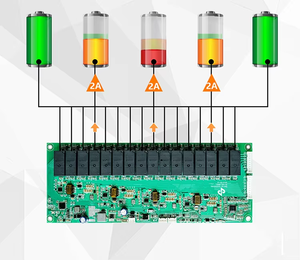
E-E-A-T Technical Insight: Traditional passive BMS dissipates excess cell energy purely as wasted heat through resistors—a major vulnerability during Tokyo summer delivery operations when ambient temperatures exceed 36°C. In contrast, APEX Mobile Power’s Active Balancing technology actively transfers energy from high-voltage cells to lower-voltage cells with up to 95% efficiency, reducing thermal build-up inside sealed IP67 battery enclosures while increasing effective usable capacity by 12% to 18%.
Localized Application Scenarios in Tokyo's E-Mobility Ecosystem
In urban Tokyo, e-bikes are no longer restricted to personal leisure commuting; they have become the backbone of urban logistics, last-mile e-commerce fulfillment, and municipal service fleets. Sourcing the correct lithium battery pack architecture requires understanding specific local use-cases:
1. Heavy-Duty E-Cargo Delivery Fleets
Last-mile delivery e-trikes operating in Shibuya and Ginza carry payloads up to 150 kg. These vehicles demand high continuous discharge currents (30A to 50A) and high voltage stability (48V / 52V systems) to prevent low-voltage throttle cut-offs during steep incline starts.
2. Shared Battery Swapping Networks
Station-based battery swap hubs located outside Tokyo Metro stations subject battery enclosures to constant mechanical impacts and rapid high-rate charging cycles. Sealed aluminum alloy casings with shock-absorbing silicone gel internal potting ensure durability against daily physical handling.
3. Sub-Zero Winter & Summer Heat Resilience
Tokyo experiences sub-zero morning temperatures during January and February (-2°C to 3°C) and extreme heat waves in August (35°C to 38°C). Our battery packs incorporate low-temperature heating elements for pre-charge warmth and NTC thermal sensors to safeguard against high-temperature degradation.
Technical Specification Matrix: Chemistry & Active Balancing Topologies
Choosing the optimal battery pack configuration for Tokyo-bound e-bikes requires balancing energy density, safety profiles, thermal tolerance, and cost performance. The technical table below outlines the core differences evaluated during our OEM customization process:
| Battery Specification |
Lithium NMC (21700) |
LiFePO4 (LFP Industrial) |
Sodium-Ion (Next-Gen) |
| Energy Density (Wh/kg) |
240 – 280 Wh/kg Highest Range |
140 – 170 Wh/kg |
110 – 140 Wh/kg |
| Cycle Life (80% DOD) |
1,000 – 1,500 Cycles |
3,000 – 5,000+ Cycles Longest Life |
2,000 – 3,000 Cycles |
| Low-Temp Discharge (-20°C) |
70% Nominal Capacity |
55% Nominal Capacity |
88% Nominal Capacity Best Cold Performance |
| Thermal Runaway Threshold |
~210°C Peak Sensitivity |
~270°C High Stability |
~300°C Ultra-Safe Profile |
| Target E-Mobility Application |
High-Range Commuter E-Bikes |
Commercial Cargo & Heavy Fleets |
All-Weather Emergency & Logistics |
| BMS Equalization Method |
Active Capacitive (5A Peak) |
Active Inductive / Capacitive |
Active Smart Balancer (CAN/RS485) |
Key Localized Trends Shaping Tokyo's E-Bike Battery Market (2025–2030)
The Japanese Ministry of Economy, Trade and Industry (METI) alongside the Tokyo Metropolitan Government have established aggressive zero-emission mobility targets for 2030. Sourcing e-bike lithium battery packs serving Tokyo requires aligning with four critical industrial shifts:
1. Mandatory Strict Compliance with METI PSE Certification & JIS Standards
Importing and selling lithium-ion batteries in Japan requires full compliance with the Electrical Appliance and Material Safety Law (Denan Law / PSE Mark). E-bike battery modules must satisfy JIS C 8712 (safety requirements for portable sealed secondary cells) and JIS C 8714 (safety tests for lithium-ion cells in portable applications, including internal short-circuit simulation testing). APEX Mobile Power maintains complete compliance testing documentation, ensuring smooth Japanese customs clearance and full consumer safety guarantees.
2. Higher Voltage System Migration: Transitioning from 36V to 48V / 52V Systems
While standard Japanese commuter e-bikes historically relied on 36V systems, heavy commercial e-cargo fleets in Tokyo are migrating rapidly toward 48V and 52V platforms. Higher system voltages reduce current draw for the same power output ($P = V \times I$), significantly lessening $I^2R$ resistive heat losses across copper traces, wiring harnesses, and battery interconnects during continuous hill climbs.
3. Real-Time Telemetry & Smart IoT Fleet Integration
Tokyo delivery operators require real-time fleet visibility. Modern e-bike battery packs are no longer passive power boxes; they are intelligent IoT endpoints. Featuring onboard CAN bus, RS485, and Bluetooth 5.0 communication protocols, our BMS units transmit real-time cell State of Charge (SOC), State of Health (SOH), individual cell voltages, and temperature alerts directly to central logistics dashboards.
4. Focus on High Balance Current Active Balancing (1A to 5.5A)
In multi-cell series battery packs (such as 13S 48V or 16S 60V systems), tiny manufacturing variances in internal cell resistance lead to cell voltage drift over hundreds of charge-discharge cycles. Traditional passive BMS units balance at mere 30mA to 50mA currents—completely inadequate for high-capacity 20Ah to 40Ah e-cargo battery packs. Integrating high-current active balancers (1A to 5.5A) actively equalizes energy during both charge and discharge phases, extending pack service life by over 30%.
APEX Mobile Power: OEM / ODM Manufacturing & Quality Control Capabilities
APEX Mobile Power operates as a full-service custom OEM/ODM lithium battery pack manufacturer, providing seamless end-to-end battery development—from initial mechanical CAD enclosure modeling and custom BMS PCBA design to mass production assembly and global shipping compliance.
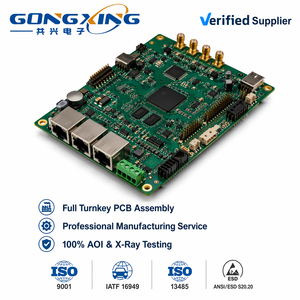
Industrial Engineering Rigor: Our production facilities hold triple ISO certifications—ISO 9001:2015 (Quality Management System), ISO 13485:2016 (Medical Device Quality Management, applying extreme safety protocols to battery manufacturing), ISO 14001:2015 (Environmental Management), and ISO 45001:2018 (Occupational Health & Safety). Our SMT PCBA lines are certified to IATF 16949 automotive standards.
With over 60 dedicated R&D engineers on staff and 8% of annual revenue reinvested directly into power electronics research, we provide complete engineering customizations:
- Custom Enclosures: CNC machined aluminum alloys, flame-retardant ABS+PC plastics (UL94-V0 rated), molded to match internal e-bike frame downtubes or external rack mounts.
- Advanced Thermal Management: Phase-change material (PCM) heat sinks, thermal conductive pads, and potting compounds providing IP67 ingress protection against heavy rainy seasons in Tokyo.
- Cell Sorting & Grading: 100% automated voltage, capacity, and internal resistance (IR) matching prior to nickel-tab ultrasonic spot welding, guaranteeing cell consistency across every pack.
- Comprehensive Regulatory Testing: Full UN38.3 transport testing, drop testing, thermal shock testing, vibration simulation, and overcharge/short-circuit protection validation.