Engineered for intense duty cycles, high payload Autonomous Mobile Robots (AMR), and Automated Guided Vehicles (AGV) deployed in Riyadh logistics hubs and industrial facilities.
The Kingdom of Saudi Arabia, anchored by the strategic directives of Saudi Vision 2030 and the National Industrial Development and Logistics Program (NIDLP), is undergoing an unprecedented technological transformation. At the epicenter of this modern industrial renaissance is Riyadh—a mega-logistics hub rapidly integrating heavy-duty Autonomous Mobile Robots (AMR), Automated Guided Vehicles (AGVs), and automated warehouse systems into high-throughput fulfillment hubs such as the King Salman International Airport Logistics Zone and major distribution clusters across the Central Region.
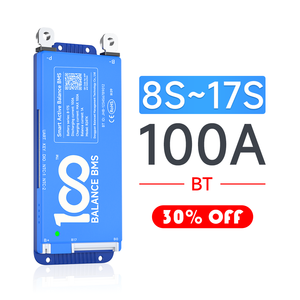
Operating autonomous robotic fleets in Central Saudi Arabia presents severe technical and thermal challenges. Ambient warehouse temperatures in Riyadh frequently surpass 45°C to 50°C during summer peaks, triggering thermal degradation, localized cell imbalance, and premature capacity loss in standard, commercial-grade lithium-ion power packs. To guarantee uncompromised 24/7 uptime, industrial AMR integrators must move beyond off-the-shelf battery solutions and partner with authoritative OEM manufacturers capable of engineering high-performance Lithium Iron Phosphate (LiFePO4) and Lithium Nickel Manganese Cobalt Oxide (NMC) battery systems equipped with Capacitive Active Balancing Battery Management Systems (BMS).
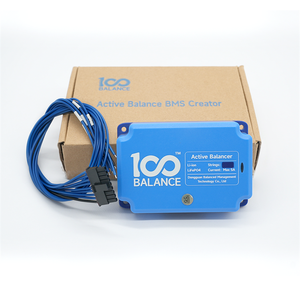
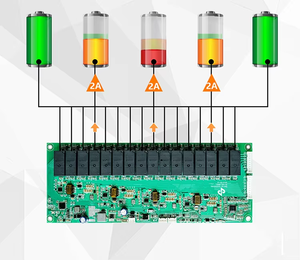
Information Gain Metric: Standard passive balancing BMS systems dissipate excess cell energy as heat, exacerbating thermal stress in Riyadh's hot ambient environments. Active balancing technology transfers energy dynamically between cells with up to 95% efficiency, reducing thermal signature by up to 14°C while extending battery cycle life by over 35% under continuous 3C fast-charging profiles.
The rapid expansion of e-commerce logistics, defense manufacturing, and pharmaceutical distribution centers across Riyadh has fundamentally redefined battery operational specifications. Robotic systems deployed in these high-rate operational environments require heavy charge/discharge throughput, minimal maintenance downtime, and absolute thermal safety compliance.
When selecting a trusted battery system manufacturer for the Riyadh market, the design topology of the Battery Management System (BMS) represents the single most critical point of evaluation. Cell imbalance naturally accelerates under elevated ambient temperatures due to subtle variations in internal cell resistance and self-discharge rates.
| Performance Vector | Standard Passive Balancing BMS | APEX Active Balancer BMS Architecture |
|---|---|---|
| Balancing Mechanism | Dissipates excess energy as heat via resistors | Transfers energy capacitive/inductively between cells |
| Balancing Current | 30mA - 100mA (extremely slow) | 0.6A to 5.5A Continuous Dynamic Transfer |
| Thermal Impact | Generates internal heat within pack enclosure | Zero heat generation (>95% energy transfer efficiency) |
| Cycle Life Expectancy | 1,500 - 2,000 Cycles under heat | 3,500 - 5,000+ Cycles (LiFePO4) |
| Downtime & Maintenance | High risk of cell drift & emergency thermal shutdown | Continuous real-time cell voltage convergence |
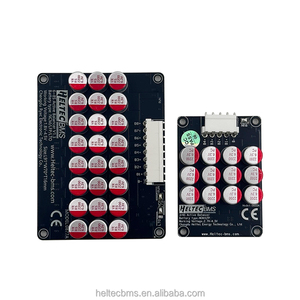
As demonstrated in empirical battery testing, our 5A Active Balancer modules continuously sample individual cell voltages across 4S to 24S configurations. When a cell delta exceeding 0.005V is detected, energy is inductively or capacitively redistributed from the highest voltage cell to the lowest voltage cell without producing parasitic thermal energy. This is essential for maintaining full nameplate capacity in Riyadh's automated warehouses.
APEX Mobile Power operates as an end-to-end OEM and ODM custom battery system manufacturer. Backed by 14+ years of industrial experience, over 60 dedicated R&D engineers, and SGS-accredited manufacturing facilities holding ISO 9001, ISO 13485, ISO 14001, and IATF 16949 certifications, we offer customized solutions for top-tier AMR robotics manufacturers worldwide.
We source tier-1 automotive-grade prismatic and cylindrical cells (LiFePO4, NMC, and Sodium-Ion). For high-duty cycle AMRs operating in hot climates, our high-density LiFePO4 cells provide inherent chemical stability, non-flammable characteristics, and outstanding lifecycle endurance under continuous 100% Depth of Discharge (DoD).
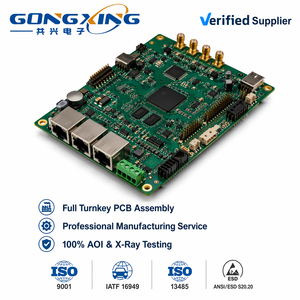
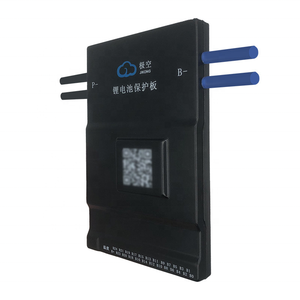
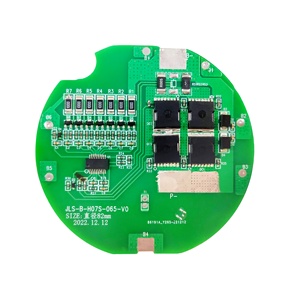
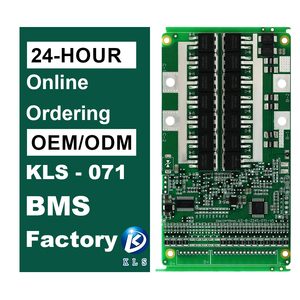
Our in-house IATF 16949 certified Surface Mount Technology (SMT) lines produce custom BMS PCBAs equipped with industrial communication protocols: CANbus 2.0B, RS485, Modbus RTU, and IoT GPS/4G Telemetry. Fleet managers in Riyadh can remotely monitor State of Charge (SOC), State of Health (SOH), individual cell temperatures, and geographic position in real-time via customized cloud dashboards.
Custom pack design includes finite element thermal modeling, anti-vibration silicon damping internal brackets, and CNC-machined aluminum enclosures. Packs are built to withstand structural shock, 1-meter drop testing, and continuous mechanical vibration typical of heavy industrial AGV pallet trucks carrying 1,500kg payloads.
Powers rapid-maneuvering sorting and fulfillment robots operating inside high-density Riyadh distribution centers. Built with 24V/48V LiFePO4 systems supporting 2C fast opportunity charging during shelf-picking downtimes.
Heavy-duty 48V and 80V 150A+ high-capacity battery systems engineered for automated forklifts and pallet movers carrying heavy steel, construction materials, and auto parts in Riyadh manufacturing zones.
Specially engineered low-temperature discharge battery packs featuring integrated self-heating thermal jackets, ensuring seamless operational transitions between freezer zones (-20°C) and hot loading docks.
Answers to common engineering and commercial queries from Saudi logistics managers, OEM developers, and system integrators.
Riyadh experiences ambient temperatures exceeding 45°C, which rapidly accelerates cell capacity drift and voltage imbalance. Passive balancers bleed off excess energy as resistive heat, adding further thermal stress inside the sealed IP67 battery casing. Active balancers transfer energy efficiently (>95%) between cells without heat generation, keeping cell voltages equalized within ±0.005V and extending overall pack longevity by over 35%.
Yes. All custom OEM battery solutions manufactured by APEX Mobile Power undergo strict testing to ensure full compliance with Saudi Standards, Metrology and Quality Organization (SASO) requirements. We supply complete UN 38.3 transport test reports, IEC 62619 safety documentation, MSDS sheets, and CE/UL certifications required for smooth customs clearance through SABER portal registrations.
For heavy logistics and continuous warehouse robotics in Saudi Arabia, Lithium Iron Phosphate (LiFePO4) is the recommended chemistry. LiFePO4 offers superior thermal stability (thermal runaway threshold above 270°C vs NMC at 210°C), exceptional cycle life (3,500 to 5,000+ cycles at 80% DoD), and outstanding tolerance for frequent 1C-3C fast opportunity charging profiles.
Our smart BMS PCBA designs support native CANbus 2.0B, RS485, and wireless IoT modules. Fleet managers can continuously stream individual cell health, temperature logs, real-time SOC, and fault codes directly to their Central Warehouse Management System (WMS) or fleet controller, preventing unscheduled robot breakdowns and enabling predictive maintenance.
Initial engineering design consultation and 3D mechanical renderings are typically delivered within 3-5 business days. Prototypes equipped with custom BMS software configurations are assembled and tested within 3 to 4 weeks. Following customer validation, mass production leads take approximately 4 to 6 weeks, supported by expedite logistics channels directly to Riyadh.
Ready to optimize your Autonomous Mobile Robot fleet performance in the Riyadh market? Speak directly with our senior battery application engineers today for custom design, engineering specifications, and competitive pricing.