Explore top-tier China OEM active balance BMS products engineered for US Commercial & Industrial (C&I) ESS, telecom backup, off-grid solar, and motive power applications.
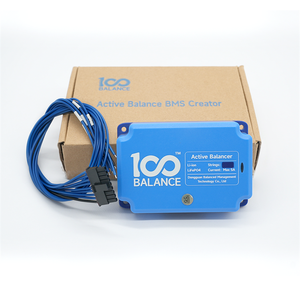
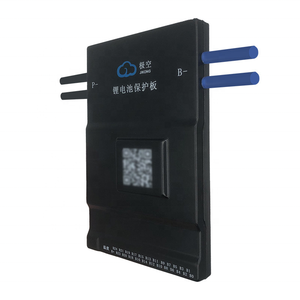
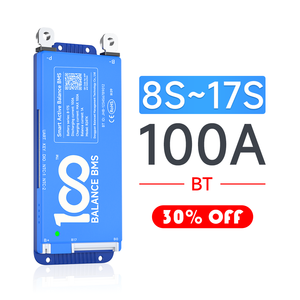
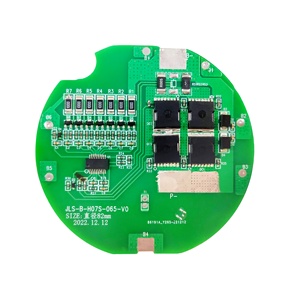
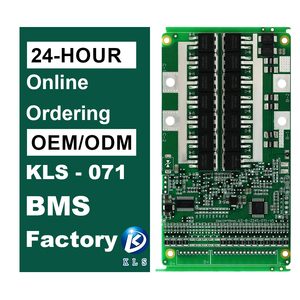
As the United States accelerates its transition toward renewable energy integration, grid-scale Energy Storage Systems (ESS), commercial electrification, and heavy-duty logistics automation, the demand for lithium battery reliability has reached unprecedented heights. Traditional Passive Balancing BMS—which bleeds excess energy off as waste heat via resistive dissipation—is rapidly proving inadequate for high-capacity LiFePO4 (Lithium Iron Phosphate) and NMC cell chemistries. In high-ampere-hour battery arrays, passive balancing currents (typically capped at 30mA to 100mA) fail to maintain state-of-charge (SoC) equilibrium, resulting in premature capacity degradation, localized thermal stress, and reduced pack life.
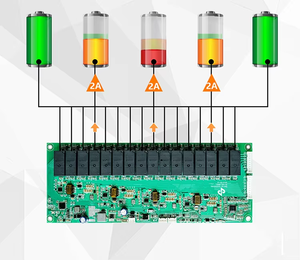
To capture competitive advantage in the US market, system integrators, battery pack manufacturers, and energy project developers are transitioning to Active Balance Battery Management Systems (BMS). Active balancing dynamically transfers charge from higher-voltage cells to lower-voltage cells using capacitive, inductive, or transformer-based energy transfer architectures. By operating at balancing currents ranging from 0.6A to 5.5A+, active balancing recovers up to 15-20% of otherwise unusable battery capacity over the pack lifecycle, drastically reduces thermal management overhead, and ensures compliance with strict US safety standards such as UL 1973, UL 9540, and NFPA 855.
Chinese OEM BMS manufacturers have pioneered several distinct active balancing topologies tailored for different voltage thresholds and operational profiles. Understanding these distinctions is critical for US procurement managers and electrical engineering teams specifying components for North American deployment.
| Balancing Technology | Transfer Mechanism | Balancing Current Range | Energy Transfer Efficiency | Optimal US Application Scenario |
|---|---|---|---|---|
| Capacitive Active Equalization | Switched Capacitor energy shuttling between adjacent cells | 0.5A – 5.5A | 90% – 95% | Residential 48V Wall ESS, Golf Carts, Marine LiFePO4 Packs |
| Inductive Active Equalization | Magnetic energy storage via LC buck-boost converters | 1.0A – 3.0A | 88% – 92% | Telecom 5G Tower Backup, Light Commercial ESS |
| Transformer / Multi-Winding DC-DC | High-frequency bidirectional flyback transformer matrix | 2.0A – 10.0A+ | 94% – 98% | Utility-Scale ESS, High-Voltage EV/AGV Fleets (Up to 1000V) |
| Passive Resistive (Legacy Benchmark) | Resistive discharge heat conversion | 0.03A – 0.1A | 0% (100% Heat Loss) | Small Consumer Electronics, Low-Duty Standby Batteries |
US commercial solar installers utilize 16S 48V/51.2V LiFePO4 active balance BMS to manage high charge/discharge rate variance, optimizing daily solar self-consumption and peak shaving.
For remote telecommunication infrastructure across North America, 5A active balancers ensure long cell longevity in unconditioned outdoor cabinets subject to extreme ambient temperatures.
Automated Guided Vehicles (AGVs) operating in US fulfillment centers require rapid opportunistic fast-charging. 2A-5A active balancing prevents cell drift during high-C charging cycles.
Active balance boards with low static standby current allow marine and recreational vehicle power banks to remain stored without uneven cell self-discharge over extended winter off-seasons.
Medical mobile carts and portable diagnostic equipment require ultra-reliable ISO 13485-certified active BMS boards with dual-redundant protection and EMI mitigation.
US recyclers re-assembling retired EV battery cells into stationary storage rely on high-amp active balancers (5A to 10A) to bridge large capacity discrepancies between aged cells.
Exporting Active Balance BMS units to the United States market involves navigating a strict framework of federal regulations, regional fire codes, and electrical safety standards. Chinese exporters and US importers must coordinate engineering designs to satisfy the following compliance benchmarks:
As a premiere OEM custom lithium battery pack and Active BMS manufacturer, APEX Mobile Power (Ecolux Energy) maintains a vertically integrated ecosystem designed to seamlessly service the North American market from corporate headquarters at 1 Concourse Parkway, Suite 800, Atlanta, GA 30328, combined with state-of-the-art global manufacturing facilities.
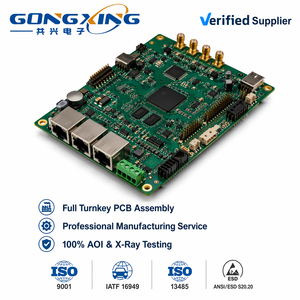
Equipped with high-speed SMT placement lines, automated optical inspection (AOI), and in-circuit testing (ICT), delivering automotive-grade IATF 16949 quality control for custom BMS circuit boards.
Facilities hold certified ISO 9001:2015 (Quality), ISO 13485:2016 (Medical Devices), ISO 14001:2015 (Environmental Management), and ISO 45001:2018 (Occupational Health & Safety).
Reinvesting 8% of annual revenue into research and development, specializing in custom firmware development, Bluetooth app integration, GPS telemetry, and active balancing algorithm optimization.
A 5A active balancer transfers energy directly from higher-voltage cells to lower-voltage cells with up to 95% efficiency, rather than dissipating energy as heat. This allows high-capacity packs (100Ah-300Ah+) to equalize in minutes rather than hours, maintaining full usable system capacity without generating internal heat that accelerates battery aging.
Leading factories pre-program dual CANbus/RS485 firmware protocols compatible with major US inverter brands including Sol-Ark, Victron, Schneider, and Growatt. Custom protocol mapping can also be loaded into the MCU via software during manufacturing.
Imported BMS components should carry CE, FCC, and RoHS compliance markings. For complete battery energy storage systems, the BMS electronics must be designed to meet UL 1973 hardware component testing and support UL 9540 system safety certification.
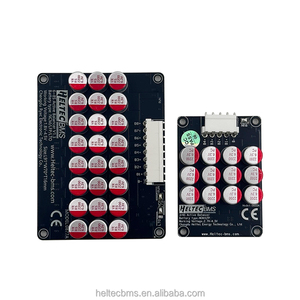
Yes. Standalone active equalizer boards (such as Heltec 5.5A or 5A Capacitive Equalizers) can be retrofitted parallel to an existing passive BMS sampling harness, taking over cell equalization duties while the main BMS handles current sensing and protection relays.
Standard catalog active BMS units are available with low MOQs (10-50 units). Custom PCBA board design, firmware tailoring, and prototype sampling generally require 3-4 weeks, followed by mass production delivery in 4-6 weeks under DDP shipping terms to US ports.
Capacitive balancers transfer charge via high-frequency switching energy capacitors between adjacent cells, ideal for smaller series counts (4S-24S). Inductive balancers store energy in magnetic inductors, achieving efficient energy transfer across non-adjacent cells in larger high-voltage arrays.
Connect directly with our engineering team for custom OEM/ODM Active BMS development, component datasheets, and competitive B2B wholesale quotes tailored for the United States market.
Get a Quote