Specially calibrated battery management boards and active equalization modules ensuring zero noise interference, millivolt-level accuracy, and long-term voltage stability for sensitive diagnostic instruments.

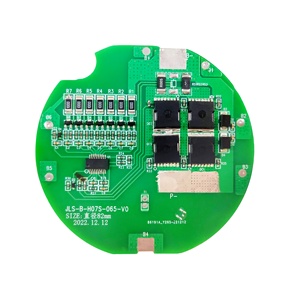
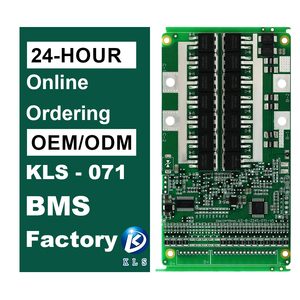
The rapidly expanding technological ecosystem of the Île-de-France region—anchored by world-class innovation clusters such as the Paris-Saclay Science Park, aerospace test facilities surrounding Le Bourget, and advanced rail network maintenance centers run by RATP and SNCF—demands an unprecedented standard of clean, reliable, and portable energy storage. In high-precision Test and Measurement (T&M) equipment, the battery pack is no longer a passive chemical fuel cell; it acts as an active metrological baseline component directly impacting system noise floor, dynamic voltage stability, and calibration repeatability.
Modern mobile oscilloscopes, spectrum analyzers, portable spectrum monitors, underground pipeline flaw detectors, and optical time-domain reflectometers (OTDRs) deployed across Parisian urban infrastructure require portable lithium battery systems engineered with dynamic capacitive active balancing, ultra-low internal impedance (ESR), and zero thermal-induced drift. As a premier original equipment manufacturer (OEM) and exporter specializing in custom lithium-ion (Li-ion), lithium iron phosphate (LiFePO4), and sodium-ion custom battery modules, our enterprise provides engineered power solutions custom-tailored to the rigorous testing requirements of the French and broader European industrial markets.
Industrial diagnostic tools used in Paris field operations operate under extremely demanding environmental and electrical conditions. Standard lithium packs typically suffer from three fundamental vulnerabilities when integrated into scientific testing hardware:
Energy-transfer capacitive and inductive active balancers continuously shuttle charge from high-voltage to low-voltage cells with up to 5A balancing current, eliminating heat dissipation inside sealed T&M instruments.
Integrated smart BMS boards supporting CANbus 2.0B, SMBus, Modbus RTU, UART, and Bluetooth/GPS telematics allow seamless telemetry handshakes between the battery module and the host testing equipment mainboard.
Engineered in compliance with EN/IEC 60079-11 standards for intrinsically safe field equipment designed for deployment in hazardous industrial or chemical processing testing zones across France.
Exporting high-tech test and measurement battery assemblies into the French market requires strict compliance with dynamic European Union regulatory frameworks. Our turnkey ODM engineering and export workflows are configured to meet all safety, environmental, and electro-technical directives mandated by European authorities.
Every test and measurement battery system exported from our ISO-certified facilities to Paris clients carries full technical documentation and certification packages:
Our custom battery packs power an array of specialized diagnostic instruments across key regional industrial domains:
Inspecting electric rail track geometry, catenary wire tension, and underground signal integrity in the Paris Métro and RER network requires heavy-duty portable power packs. Our 48V 16S LiFePO4 active-balancing modules power portable laser alignment rigs and ultrasonic flaw detectors, operating continuously across extended 12-hour maintenance shifts without voltage drop-off.
Calibration of microwave radar systems, avionics telemetry suites, and drone-mounted environmental sensors requires lightweight, ultra-high-energy-density Li-ion battery solutions. Utilizing high-capacity 18650/21700 cylindrical cells packaged into custom carbon-fiber composite enclosures, we deliver high discharge-rate power modules equipped with real-time temperature sensing per cell bank.
With Paris enforcing strict low-emission zones (ZFE) and rapidly expanding its EV charging infrastructure, local field engineers rely on high-power portable battery simulators to validate high-voltage DC fast-charging stations (CCS Combo 2 standard). Our 7S-24S smart BMS platforms with active energy transfer up to 5.5A manage load-dump transients, protecting delicate diagnostic computers against high-voltage surges.
EDF grid technicians and municipal environmental monitoring teams in Île-de-France utilize multi-channel power quality recording equipment to audit grid harmonics and solar/wind microgrid integration. Our sodium-ion and LiFePO4 battery modules offer exceptional cold-weather performance down to -30°C, maintaining precise voltage regulation even in freezing winter conditions.
The table below highlights key performance metrics across our primary custom battery engineering platforms designed for test and measurement export to the Paris market:
| Battery Platform / Architecture | Cell Chemistry | Nominal Voltage Range | Balancing Architecture | Max Balance Current | Communication Protocol | Target T&M Application |
|---|---|---|---|---|---|---|
| Capacitive Active 48V System | LiFePO4 / NMC | 48V (16S Configuration) | Capacitive Energy Transfer | 5.0A Dynamic | CAN 2.0B / RS485 | High-Power Field Testers & Substation Analyzers |
| Smart Micro-BMS PCBA Series | Li-ion 18650/21700 | 12V – 36V (3S – 10S) | Active / Passive Hybrid | 0.6A – 2.0A Active | SMBus / I2C / UART | Handheld Metrology & Portable Oscilloscopes |
| High-Voltage Industrial Array | LiFePO4 / LTO | 60V – 96V (20S – 24S) | Inductive Active Equalization | 5.5A Continuous | Modbus / Bluetooth / GPS | EV Charging Simulator & HV Grid Testing |
| Extreme Climate Sodium-Ion Module | Sodium-Ion (Na+) | 24V – 48V (8S – 16S) | Capacitive Active Balancer | 2.0A Dynamic | CANbus / Isolated RS232 | Outdoor Cold-Weather Environmental Monitors |
In high-grade test and measurement hardware, the method used to equalize cell voltages across a multi-cell battery series string directly dictates instrument lifespan, noise characteristics, and runtime accuracy. Traditional passive balancing circuits burn off excess charge from higher-voltage cells as heat through bleeding resistors. In compact, sealed field diagnostic tools, this passive heat generation introduces several critical engineering flaws:
Heat generated by passive resistors raises the internal ambient temperature of handheld T&M instruments by 15°C to 25°C. Analog-to-digital converters (ADCs), voltage references, and operational amplifiers experience temperature coefficient drift (measured in ppm/°C). This subtle thermal drift corrupts instrument calibration, leading to false measurement readings during sensitive field audits.
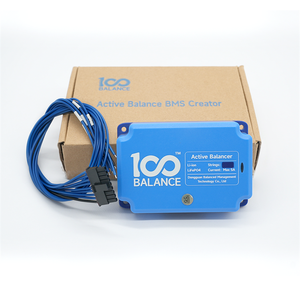
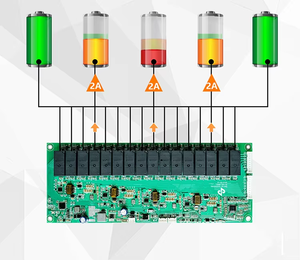
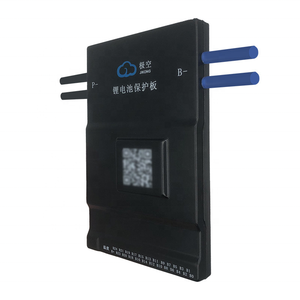
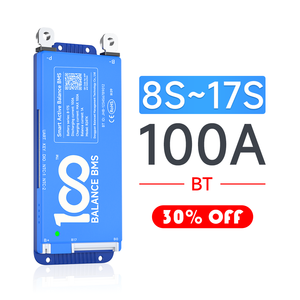
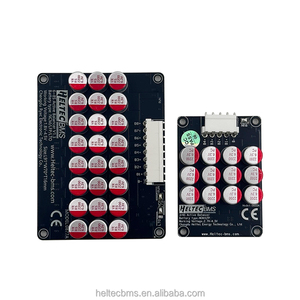
Active balancing systems utilize dynamic capacitive or inductive energy transfer topologies. Instead of dumping excess energy as wasted heat, our active balance boards (such as the 5A Dynamic Active Equalizer and Heltec 4S-21S modules showcased above) take excess charge from higher-voltage cells and transfer it with over 92% efficiency to lower-voltage cells. This process extends total battery pack usable runtime by up to 15% per charge cycle compared to passive configurations.
During peak power draws—such as when an optical fiber OTDR fires a high-intensity laser pulse—a single degraded cell in an unbalanced pack can experience localized voltage sag below the cutoff threshold, causing the entire BMS to disconnect power instantaneously. Active balancing continuously equalizes cell voltages during both charge and discharge cycles, ensuring maximum energy extraction without risk of nuisance power shutdowns during critical field operations.
As a vertically integrated custom battery pack manufacturer operating under stringent international quality control standardizations, our enterprise bridges advanced battery cell chemistry engineering with rapid global delivery into Paris and the wider European economic area.
Over a decade of specialized expertise designing custom battery packs, active balancing BMS architecture, and intelligent charging systems tailored for medical, aerospace, industrial, and T&M sector clients globally.
Our dedicated engineering staff includes electro-chemical specialists, embedded software engineers, hardware designers, and thermal simulation experts. We reinvest over 8% of annual revenue into continuous technology innovation.
Our state-of-the-art cleanroom manufacturing facilities operate under SGS-audited ISO 9001:2015, ISO 13485:2016 (Medical Devices), ISO 14001:2015, ISO 45001:2018, and automotive IATF 16949 quality management systems.
From initial design concept to final delivered product in Paris, our streamlined process guarantees fast turnaround times, full regulatory compliance, and complete engineering transparency:
Answers to common technical, logistics, and compliance inquiries from buyers and R&D managers sourcing custom test and measurement battery packs for the French market.
Active balancing dynamic circuits transfer excess charge from higher-voltage cells to lower-voltage cells using capacitive or inductive energy transfer with high current (up to 5A or 5.5A). Unlike passive balancing, which burns excess power as heat via resistors, active balancing produces minimal heat. This prevents internal temperature rises inside sealed IP65/IP67 instrument housings, eliminating thermal drift in sensitive analog components like ADCs and amplifiers while extending battery cycle life and usable operational runtime by up to 15% per charge cycle.
Yes. Our smart BMS platforms support customizable communication protocols including CANbus 2.0B, SMBus v1.1, Modbus RTU, UART, and RS485. We provide custom firmware development to map battery telemetry parameters—such as State of Charge (SoC), State of Health (SoH), individual cell voltages, temperature sensor array values, and cycle count—directly into your host testing equipment's user interface or display panel.
All exported custom battery packs come complete with full European Union regulatory compliance packages. Standard documentation includes UN 38.3 transport safety test reports (with MSDS and dangerous goods air/sea transport documentation), CE marking compliance certificates, RoHS 3 chemical safety reports, and REACH declarations. For specific medical metrology or hazardous location field equipment, we manufacture in accordance with IEC 62133-2, EN 61010-1, and ATEX intrinsic safety standards upon request.
Following initial engineering design sign-off, custom engineering sample prototypes (including custom 3D enclosure printing, BMS firmware customization, and sample pack assembly) are typically completed within 3 to 4 weeks. Once prototype approval and compliance testing are finalized, standard mass production lead time is 4 to 6 weeks. Express air transport directly to Paris-Charles de Gaulle airport takes approximately 5 to 7 business days via DDP (Delivered Duty Paid) terms.
We engineer custom low-temperature battery options utilizing specialized cell formulations (including advanced LiFePO4, LTO, and Sodium-ion chemistries) combined with smart BMS-controlled internal heating films (PTC elements). These packs can safely discharge and charge down to -30°C without lithium plating risks, ensuring uninterrupted field diagnostic performance for rail, utility, and telecommunications maintenance crews working in severe European weather.
Yes. We accommodate the flexible procurement needs of specialized scientific research, aerospace laboratories, and boutique T&M equipment manufacturers in the Paris region. While we possess scalable mass-production manufacturing capacity for high-volume OEMs, we offer flexible low-MOQ pilot production runs for specialized high-precision applications.
Whether you are developing next-generation handheld spectrum analyzers, rail infrastructure diagnostic arrays, or aerospace telemetry calibrators, our engineering team is ready to deliver tailored high-precision active-balancing battery solutions.
Contact Us