Engineered for UK OEM integrators, grid storage contractors, and commercial fleet managers. Featuring integrated active balancing, high rate discharge capability, and extreme thermal resilience.
Understanding why UK original equipment manufacturers (OEMs) and grid operators are transitioning from traditional lithium-ion to engineered sodium-ion power battery packs.
Our sodium-ion battery cells leverage advanced Layered Transition Metal Oxides (NaxMO2) and Prussian Blue Analogues (PBA). Layered oxides offer high specific energy densities approaching 160 Wh/kg with exceptional C-rate capability, while PBA formulations eliminate expensive cobalt and nickel entirely, ensuring immunity against raw material price shocks in European import supply chains.
Unlike lithium batteries which suffer from copper collector dissolution under deep discharge, sodium-ion cells use aluminum current collectors on both cathode and anode. This unique feature allows sodium-ion battery packs to be transported and stored at zero volts (0V SOC) without degradation, drastically reducing hazardous goods shipping constraints into major UK ports like London Gateway and Southampton.
| Electrochemical Metric | Sodium-Ion (Na-Ion) | Lithium Iron Phosphate (LiFePO4) | Nickel Manganese Cobalt (NMC) |
|---|---|---|---|
| Cell Energy Density | 140 - 165 Wh/kg | 160 - 190 Wh/kg | 230 - 270 Wh/kg |
| Low-Temp Capacity Retained (-20°C) | 88% - 92% (Superior) | 60% - 70% (Poor) | 75% - 82% (Moderate) |
| Operating Temperature Envelope | -40°C to +65°C | ">-20°C to +60°C "-20°C to +55°C||
| Thermal Runaway Initiation Temp | > 260°C (Extremely Safe) | ">> 270°C (Extremely Safe) ">> 210°C (Moderate Risk)||
| Raw Material Resource Abundance | Globally Abundant (Sodium Carbonate) | ">Lithium Constrained ">Lithium/Cobalt Vulnerable||
| 0V Deep Discharge Shipping Safety | Fully Safe (Aluminum Anode Collector) | ">Cell Damage Risk ">Severe Thermal Risk||
| Estimated Cycle Life (80% DOD) | 4,000 - 6,000 Cycles | ">5,000 - 8,000 Cycles ">2,000 - 3,500 Cycles
How our sodium-ion power battery packs solve climate, grid, and economic challenges across England, Scotland, Wales, and Northern Ireland.
With National Grid ESO accelerating Dynamic Containment and Firm Frequency Response (FFR), sodium-ion battery packs offer rapid sub-second response times and high rate discharge capabilities (up to 5C). Their high thermal inertia ensures stable operation during continuous high-frequency cycling without triggering thermal management overheads.
Remote telecommunications towers, offshore wind monitoring stations, and rural microgrids in northern Britain face freezing winter temperatures. Standard LiFePO4 batteries suffer significant capacity loss and charging blockages sub-zero. Our sodium-ion packs maintain 90% capacity at -20°C without auxiliary heating.
London’s Ultra Low Emission Zone (ULEZ) and similar clean air zones in Birmingham and Manchester mandate zero-emission commercial operations. Sodium-ion battery packs integrated into light commercial vehicles, last-mile delivery trikes, and airport ground equipment deliver robust, fast-charging daily service at reduced total cost of ownership.
Navigating the UK’s stringent safety standards, ESG mandates, and battery import framework for seamless commercial execution.
Exporting battery systems to Great Britain requires compliance with the UK Conformity Assessed (UKCA) mark, alongside CE standards for Northern Ireland. APEX Mobile Power ensures all manufactured sodium-ion modules and active balancer BMS hardware meet IEC 62619 (Industrial Safety), UN38.3 (Transport Safety), and BS EN 61000-6-2/4 (EMC directives).
Under the UK’s Climate Change Act and Corporate Sustainability Reporting Directive (CSRD), corporate buyers are held strictly accountable for Scope 3 supply chain emissions. Sodium-ion battery production emits up to 35% less CO2 per kWh compared to conventional high-nickel lithium batteries due to the elimination of energy-intensive nickel/cobalt refining.
Full-stack OEM/ODM manufacturing capability, rigorous quality management systems, and tailored engineering support.
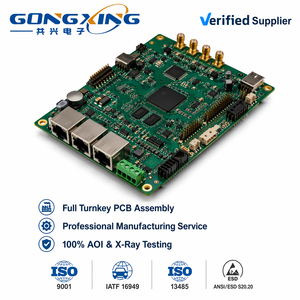
Independently audited by SGS. Operating under strict compliance with ISO 9001:2015 (Quality Management), ISO 13485:2016 (Medical Devices), ISO 14001:2015 (Environmental Management), and ISO 45001:2018 (Occupational Health).
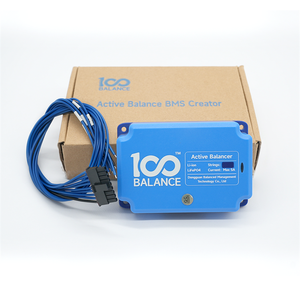
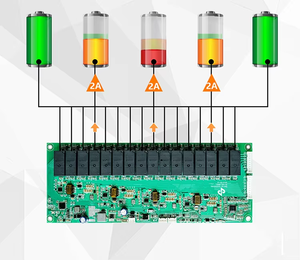
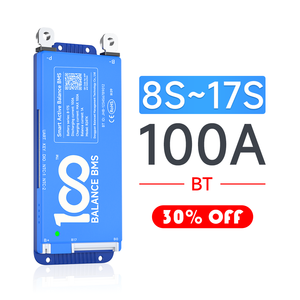
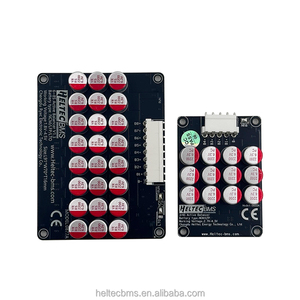
Our in-house developed active balancing algorithms dynamically transfer energy between mismatched cells rather than wasting energy as heat. This increases effective pack capacity by 12% and extends total service life by over 30%.
From initial electrochemical selection and thermal modeling to custom sheet-metal enclosure IP-rating (IP65 to IP68), internal wiring harnesses, and custom CANbus/Modbus protocol mapping for UK inverters.
Direct technical and commercial answers tailored for UK procurement managers, systems integrators, and engineering leads.
Partner with an established OEM manufacturer certified to international quality standards. Connect directly with our engineering team to discuss custom voltage specs, sodium-ion cell selection, and BMS balancing solutions.