Central and Eastern Europe (CEE)—and Hungary in particular—is experiencing a structural pivot toward decentralized, off-grid energy storage. Over the past three years, Hungary's national electricity grid (operated by MAVIR alongside regional distribution system operators like MVM Démász and E.ON) has faced unprecedented grid-feed capacity bottlenecks. The influx of utility-scale solar farms combined with residential rooftop PV installations placed immense thermal stress on legacy low-voltage distribution lines, triggering the well-documented grid-feed moratorium (2022–2024) and accelerating the transition under the METÁR system from annual net-metering (szaldó elszámolás) to gross-metering (bruttó elszámolás).
For solar installers, agricultural complexes, industrial manufacturers, and residential property owners across Hungary, grid interconnection is no longer guaranteed to yield favorable economic returns. Consequently, market demand has shifted dramatically from traditional grid-tied PV systems toward pure off-grid solar battery storage architectures and high-capacity zero-export hybrid systems. To maintain absolute power independence, Hungarian buyers require industrial-grade Lithium Iron Phosphate (LiFePO4) storage systems capable of enduring CEE's severe continental temperature swings—ranging from cold winters (-15°C) to intense summer heatwaves (+38°C).
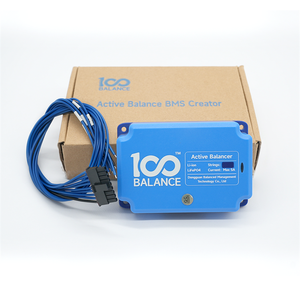
In low-temperature conditions (-10°C to 5°C) common during Hungarian winters (December through February), passive balance BMS boards fail to prevent cell-voltage divergence due to increased internal impedance of individual cells. Incorporating a high-current Active Balance Equalizer (2A to 5A) is technically mandatory to unlock up to 95% usable capacity during winter months without causing cell over-stress.
When engineering and importing off-grid battery packs into the Hungarian market, EPC contractors and OEM integrators must evaluate manufacturers against four core technical parameters to ensure compliance, longevity, and thermal stability:
While NMC (Nickel Manganese Cobalt) offers high gravimetric energy density, LiFePO4 (Lithium Iron Phosphate) is the overwhelmingly superior chemistry for Hungarian off-grid storage due to its thermal runaway resistance, 6,000+ cycle life, zero cobalt content, and compliance with strict EU safety directives.
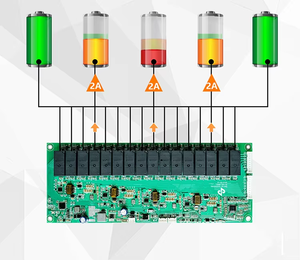
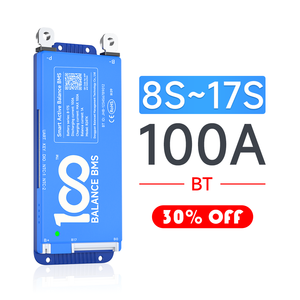
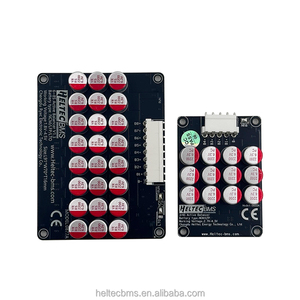
Traditional passive BMS bleed off excess charge energy as heat via resistors at a negligible rate (30mA–50mA). Active balancing systems employ capacitive or inductive energy transfer to actively shunt power from high-voltage cells to low-voltage cells at rates up to 5.5A, extending pack lifespan by 30%.
Off-grid systems in Hungary heavily utilize European and tier-1 Asian hybrid off-grid inverters (Deye, Victron Energy, Growatt, Luxpower, Solis, GoodWe). Factory BMS firmware must offer natively selectable CANbus / RS485 protocol libraries to enable zero-configuration plug-and-play installation.
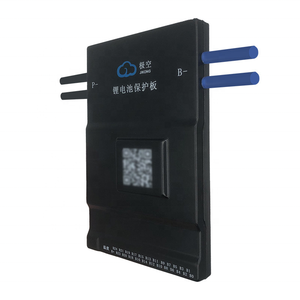
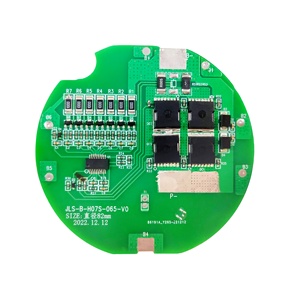
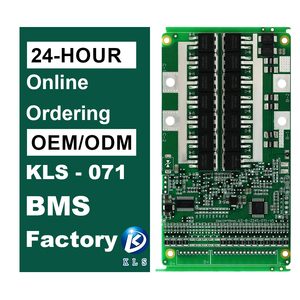
Below is a comparative breakdown of key BMS and balancing hardware designs offered by leading global manufacturers for the Hungarian off-grid battery storage sector:
| Feature Parameter | Basic Passive BMS Racks | Capacitive Active Equalizer (Heltec/5A) | Smart Active Balancer BMS (JK / Seplos / KLS) |
|---|---|---|---|
| Balancing Method | Resistive Heat Dissipation | Capacitive Energy Transfer | Inductive / Active Switched Transfer |
| Equalization Current | 30mA - 60mA | 2.0A - 5.5A Continuous | 0.6A - 2.0A Dynamic |
| Low-Temp Winter Performance | Poor (High Cell Variance) | Excellent (Active Equalization) | Optimal (Full Cell Protection) |
| Inverter CAN/RS485 Protocol | Limited / Fixed | External Add-on Required | Multi-Brand Auto Match |
| Thermal Efficiency | Low (Generates Local Heat) | 95% Transfer Efficiency | 92% Transfer Efficiency |
| Recommended Hungarian Application | Indoor Small Telecom Backup | Retrofit High-Capacity DIY Racks | Commercial Farms, Wineries, Residential ESS |
Off-grid solar storage is not a monolithic product; its technical deployment depends heavily on geography, local grid reliability, seasonal agricultural demands, and thermal conditions across Hungary's distinct counties.
Across Bács-Kiskun, Békés, and Hajdú-Bihar counties, expansive agricultural farms require uninterrupted off-grid power to run high-torque irrigation pumps, automated grain ventilation fans, and livestock climate systems. In summer, grid connections frequently suffer from voltage dips. High-capacity 48V/51.2V LiFePO4 battery banks paired with 150A/200A active balancing BMS handle severe inductive motor surge currents without tripping protection circuits.
Hungary’s premier wine-producing regions feature historic cellar facilities and vineyard eco-lodges situated far from medium-voltage distribution lines. Extending traditional utility poles into protected hillsides is ecologically prohibited and cost-prohibitive. Off-grid solar storage arrays (30kWh to 100kWh) featuring active balancing battery modules supply quiet, emissions-free zero-noise power for refrigeration, destemming machinery, and luxury guest hospitality.
In suburban municipalities surrounding Budapest (Szentendre, Dunakeszi, Érd, Budaörs), home buyers seeking complete autonomy from utility rate changes (under MVM regulations) are installing zero-export and pure off-grid solar storage systems. Compact server-rack LiFePO4 batteries equipped with Seplos 3.0 or JK BMS seamlessly interface with Victron and Deye hybrid inverters to power heat pumps and EV charging stations.
Along major transport corridors (M1, M3, M7 highways) and border inspection facilities, off-grid lithium energy storage containers provide continuous back-up power for remote security surveillance, weigh-in-motion sensors, and automated gate controls. Automated self-heating LiFePO4 battery modules operate reliably even when ambient winter temperatures plummet below freezing.
Below are essential answers to technical, regulatory, and logistics queries commonly raised by Hungarian renewable energy engineers and wholesale buyers when sourcing off-grid solar storage systems from factory manufacturers.
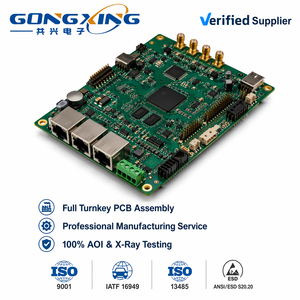
Backed by over 14 years of lithium battery engineering experience and multi-national ISO certifications, our manufacturing facilities provide full turn-key customization—from raw cell matching and active balance PCBA design to IP65 outdoor enclosure fabrication.
Certified under ISO 9001 (Quality), ISO 13485 (Medical Quality), ISO 14001 (Environment), and IATF 16949 (Automotive Electronics).
Dedicated BMS firmware design, CANbus protocol customization, hardware topology development, and thermal simulation modeling.
Patented energy transfer active balance circuitry ensuring uniform cell aging, max cycle life, and low thermal loss across all climate zones.
Proven track record supplying custom lithium battery storage systems across Europe, North America, and Asia-Pacific markets.
Need customized 48V LiFePO4 battery modules, active balancing BMS boards, or turnkey server-rack storage solutions tailored for the Hungarian and CEE markets? Request our complete technical catalog and OEM pricing schedule today.
Get Catalog