Engineered for grid stabilization, localized solar-hydro hybrid microgrids, and industrial UPS architectures across East Africa's challenging climate conditions.
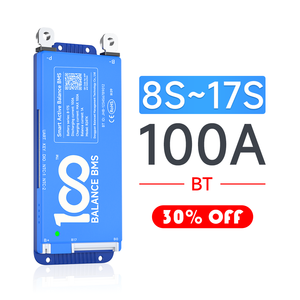
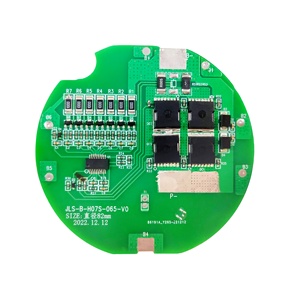
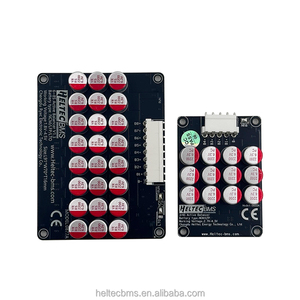
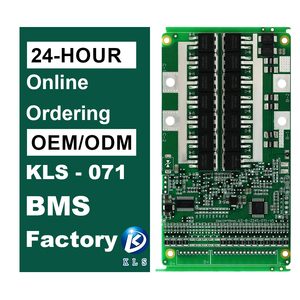
Ethiopia is undergoing an unprecedented energy transformation driven by the deployment of the Grand Ethiopian Renaissance Dam (GERD), national grid modernization under the National Electrification Program (NEP 2.0), and rapidly expanding industrial parks in Hawassa, Kilinto, and Bole Lemi. However, modernizing East Africa's electrical grid presents unique engineering friction: extreme elevation gradients (ranging from 2,300 meters to over 3,000 meters above sea level in cities like Addis Ababa and Debre Berhan), wide ambient thermal swings, and severe voltage frequency fluctuations.
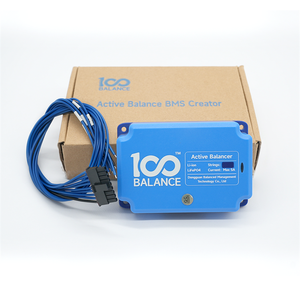
Deploying standard, off-the-shelf energy storage systems in these environments frequently results in premature capacity fade, thermal runway risk, and cell imbalances. As a specialized OEM/ODM Smart Grid Lithium Storage Solution Factory, APEX Mobile Power provides custom-engineered lithium iron phosphate (LiFePO4) energy storage modules integrated with 5A high-current capacitive active balancing BMS architecture specifically calibrated to maintain equilibrium across large battery strings operated under East Africa's severe grid transients.
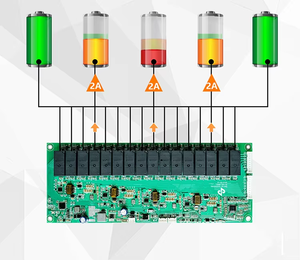
Traditional passive balancing burns off excess energy as heat via resistors—a catastrophic mechanism in high-altitude environments where reduced air density limits convective dissipation. AMP’s capacitive active balancing transfers charge directly between cells with 92%+ efficiency, reducing thermal stress and extending pack service life by up to 35%.
At altitudes exceeding 2,400m, dielectric breakdown voltage drops and air density decreases. Our customized ODM storage enclosures feature pressurized thermal chambers, wide-creepage PCB design compliant with IEC 60664-1 altitude derating, and liquid/forced-air cooling optimized for low barometric pressures.
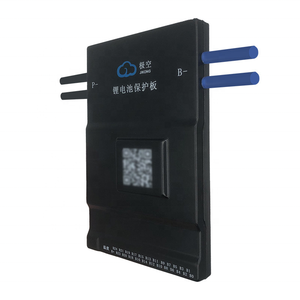
Integrated 4G/GPS JIKONG and Seplos smart BMS boards allow automated remote monitoring for distributed solar microgrids. Supports automated metering and remote disconnect firmware compatible with regional Ethiopian mobile financial channels and utility SCADA systems.
Comparison of factory specs for utility, industrial, and telecom storage deployments in Ethiopia:
| System Parameter | Telecom Backup (48V String) | Commercial & Industrial (C&I) ESS | Utility Smart Grid Container |
|---|---|---|---|
| Battery Chemistry | LiFePO4 (Grade-A Prismatic) | LiFePO4 / High-Density NMC | LiFePO4 LFP (3.2V 280Ah/314Ah) |
| Active Balance Tech | Capacitive 0.6A - 2A Balancing | 5A Inductive/Capacitive Active BMS | 5A - 10A Multi-tier Active Equalizer |
| Nominal System Voltage | 48V / 51.2V DC | 192V - 400V HV String | 768V - 1280V Utility Rack |
| Communication Protocols | RS485, CANbus, SNMP, 4G IoT | Modbus TCP, CAN 2.0B, RS232 | IEC 61850, Modbus, SCADA Fiber |
| Operating Altitude | Up to 3,000 meters derated | Up to 3,500 meters rated | Up to 4,000 meters (Custom ODM) |
| Cycle Life (@80% DoD) | 6,000+ Cycles | 7,000+ Cycles | 8,000 - 10,000 Cycles |
| Safety Certification | UN38.3, CE, IEC 62619 | UL 1973, CE, ISO 9001 | UL 9540A, IATF 16949, IEC 62619 |
Custom OEM/ODM storage solutions built to address specific geographic, infrastructure, and commercial energy requirements across Ethiopia.
Textile and pharmaceutical manufacturing hubs require unbroken power quality. Grid voltage drops in the Ethiopian Electric Utility (EEU) grid trigger immediate transfer to high-rate lithium storage. Our 64S 120A aluminum active BMS units prevent rapid cell drift during high-current discharge cycles.
Ethiopia's floriculture export sector demands uninterrupted temperature control for cold storage. Solar PV integrated with 48V 100Ah/150A active balance LiFePO4 storage packs buffers daytime solar generation, supplying clean energy throughout high-tariff peak evening grid windows.
Remote cellular base transceiver stations (BTS) across the Great Rift Valley operate far from regional substations. Smart active balancing 48V 16S BMS units with 4G GPS modules deliver real-time state-of-health telemetry back to network operations centers in Addis Ababa.
Solar mini-grids serving isolated off-grid pastoral communities experience high dust loads and thermal stress. Containerized ODM lithium battery racks utilize IP65 dust-sealed sub-assemblies and active equalization to prevent degradation from daily 100% Depth-of-Discharge (DoD) cycling.
Combining mega-scale hydro generation with expanding regional solar farms causes grid frequency shifts during cloud cover transients. Fast-responding active balance lithium energy storage acts as a synthetic inertia buffer, preserving 50Hz transmission frequency across regional lines.
Navigating battery procurement in East Africa requires understanding local regulatory structures, trade logistics, and regional financial mechanics. Here are key trends shaping lithium storage procurement in Ethiopia:
Due to National Bank of Ethiopia foreign exchange management frameworks, major energy infrastructure projects utilize Letters of Credit issued through the Commercial Bank of Ethiopia (CBE) or private commercial institutions. APEX Mobile Power maintains verified international trade structures, facilitating smooth documentation compliance, bill of lading (B/L) processing, and milestone payments.
95% of containerized freight into Ethiopia passes via the Port of Djibouti through to the Modjo Dry Port outside Addis Ababa. Lithium-ion batteries (Class 9 Dangerous Goods, UN3480/UN3481) demand compliant ocean packaging, UN38.3 transport certification, and detailed MSDS documentation. AMP handles full export compliance to streamline sea transport and inland trucking.
Passive balancing BMS boards installed in historical solar projects across Oromia and Amhara saw high rate of premature pack failure due to cell divergence. Procurement tenders issued by EPC contractors now explicitly specify Active Balancing BMS boards (0.6A - 5.5A) to ensure maximum cell capacity utilization across long-term multi-year cycles.
Off-grid solar microgrids are transitioning to Pay-As-You-Go (PAYG) monetization models. Modern BMS hardware must support digital communication ports (RS485/UART) capable of interfacing with cellular IoT modems for automated billing integration with Telebirr and M-PESA payment gateways.
Direct answers to technical, commercial, and logistical questions from Ethiopian EPCs, project developers, and system integrators.
In Ethiopian ambient conditions—where solar input peaks sharply and high ambient temperatures coincide with heavy daytime discharge—passive balancing dissipates excess energy as internal heat. This increases battery enclosure temperature and accelerates degradation. Capacitive active balancing (such as our 5A/5.5A equalizers) moves electrical charge from high-voltage cells to low-voltage cells with over 90% energy efficiency. This eliminates thermal hotspot buildup, preserves usable pack capacity, and prevents premature BMS thermal cutoff.
High altitude results in lower atmospheric density, which reduces air dielectric strength and convective heat transfer. For Ethiopian deployments, our OEM factory applies IEC 60664-1 clearance and creepage altitude correction factors to PCB traces, installs upgraded heavy-gauge aluminum heat sinks on BMS MOSFETs (e.g. KLS-BMS series), and integrates derated thermal management firmware to prevent over-temperature tripping under full load.
All custom OEM/ODM packs and BMS modules leaving our factory carry comprehensive documentation, including UN38.3 transport testing, MSDS, CE certification, IEC 62619 for industrial lithium batteries, UL 1973, and factory compliance under our ISO 9001:2015, ISO 13485 (Medical Quality), ISO 14001, and IATF 16949 quality management systems.
Ocean transit from main Asian ports to the Port of Djibouti generally requires 18 to 25 days. Customs transit and dry port trucking along the Djibouti-Addis Ababa freight corridor to Modjo Dry Port takes an additional 7 to 12 days depending on customs clearance speed. We provide complete dangerous goods shipping manifests (Class 9 hazard tags) to prevent customs holds.
Yes. As a full-service OEM/ODM manufacturer, we support complete hardware customization: custom metal or plastic enclosure shapes, laser-etched partner branding, tailored CAN/RS485 communication protocols matching local inverter brands (Victron, Deye, Growatt, Schneider, Luxpower), and tailored BMS firmware parameters.
Our active smart BMS systems (such as the Seplos 3.0 and JK-BD6A24S15P series) feature high-voltage transient suppression (TVS diodes), hardware surge protection, and configurable over/under-voltage protection boundaries. When grid supply experiences sags or spikes, the BMS smoothly decouples the lithium array or switches to island mode without resetting the system.
With over 14 years of dedicated lithium battery and smart BMS manufacturing expertise, our state-of-the-art global facilities deliver uncompromised reliability.
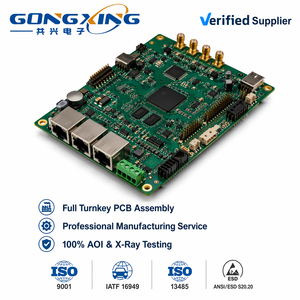
Every BMS board and active balancing module undergoes 100% automated optical inspection (AOI), full-load thermal imaging, functional cycle testing, and vibration testing prior to packaging.
Our engineering team holds deep expertise in chemical cell selection, hardware PCB layout, active balancing algorithm optimization, embedded firmware development, and thermal simulation.
We continuously reinvest in next-generation battery chemistries (LiFePO4, Sodium-Ion, Solid-State) and high-current active balancing IP to keep our OEM partners at the industry forefront.
Ready to engineer reliable, active-balanced lithium energy storage solutions for smart grid, C&I, or telecom projects in Ethiopia? Connect with our senior engineering team today for technical consultation, customized hardware quotes, and prototype evaluation.