


Houston's Energy Transition & Demand for Custom Cylindrical Battery Packs
Energy Corridor Electrification
As the undisputed Energy Capital of the World, Houston, Texas is accelerating its transition toward hybrid drilling operations, off-grid telemetry monitoring, subsea robotics, and industrial energy storage systems (BESS). Traditional power systems face severe operational limitations in Texas's sub-tropical climate. OEM cylindrical lithium battery modules—utilizing 18650, 21700, 32700, and 4680 cell architectures—have emerged as the premier choice due to superior structural integrity, automated mechanical thermal dissipation channels, and high volumetric energy density.
Port of Houston Heavy Automation
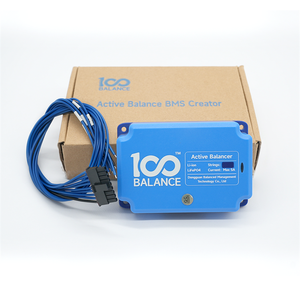
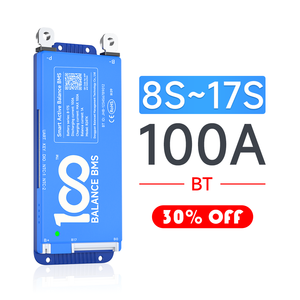
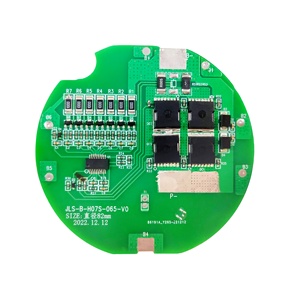
The Port of Houston handles millions of TEUs annually, demanding 24/7 continuous duty cycles for Automated Guided Vehicles (AGVs), electric yard tractors, and container handling cranes. Battery modules deployed here require robust active balancing Smart BMS systems capable of handling 100A to 150A continuous discharge rates while preventing cell voltage divergence during high-C discharge cycles in ambient temperatures exceeding 104°F (40°C).
The Information Gain: Why Cylindrical Cells Outperform Prismatic Form Factors in Gulf Coast Thermal Environments
Many energy system integrators in Harris County and the broader Texas Gulf Coast struggle with premature capacity degradation in large prismatic cells due to uneven heat dissipation across internal electrode plates. Cylindrical cells (such as 21700 and 32700 LiFePO4 / NMC cells) inherently offer superior mechanical heat transfer characteristics. The interstitial void channels present in cylindrical array packing allow forced-air or liquid coolant to flow evenly around 100% of each cell’s outer steel casing.
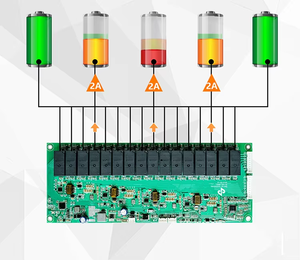
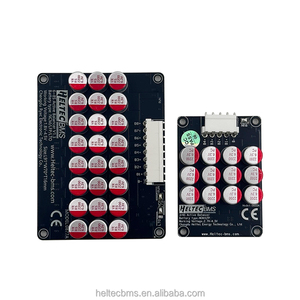
Furthermore, when integrated with 5A capacitive dynamic active balancers, cylindrical battery packs maintain voltage uniformity within ±0.005V across 16S to 24S series strings. This mitigates the "weak cell bottleneck effect," extending cumulative battery cycle life by up to 35% under harsh Texas thermal loads.