As South Korea accelerates its transformation into a global powerhouse for biomedical engineering, surgical robotics, and smart hospital networks, the demand for mission-critical energy storage has evolved beyond standard industrial battery packs. In the dense metropolitan healthcare ecosystems of Seoul—spanning premier institutions such as Seoul National University Hospital (SNUH), Asan Medical Center, Samsung Medical Center, and the Gangnam MedTech Innovation Hub—uncompromising power reliability, stringent thermal stability, and regulatory compliance are non-negotiable mandates.
Medical devices operating in emergency response, mobile diagnostic imaging, ambulatory monitoring, and motorized patient transport require energy sources that deliver high volumetric energy density without compromising lifecycle durability or clinical safety. This comprehensive whitepaper explores advanced lithium-ion (NMC) and lithium iron phosphate (LiFePO4) pack architecture, customized Battery Management System (BMS) integration with dynamic capacitive active balancing, localized Korean MFDS compliance pathways, and dedicated solutions tailored specifically for Seoul's medical technology landscape.
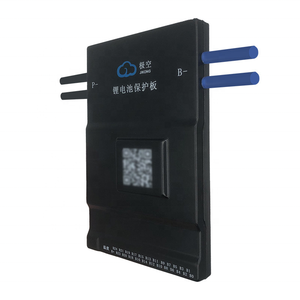
Precision-engineered protection boards and active equalization systems designed to extend battery cycle life, prevent thermal divergence, and guarantee continuous clinical uptime.
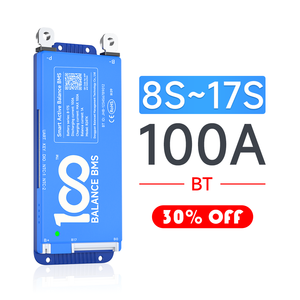
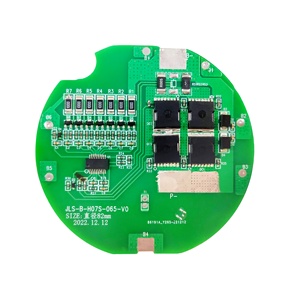
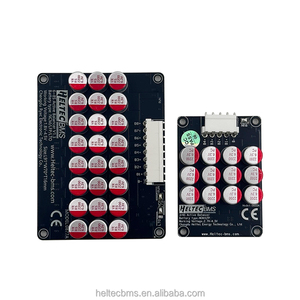
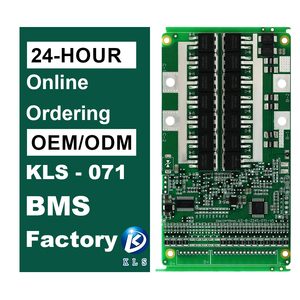
Seoul represents one of Asia’s most technologically complex healthcare environments. From intensive care units (ICUs) in major tertiary hospitals to aesthetic clinic clusters in Gangnam and autonomous hospital logistics robots in Magok Smart City, custom medical battery solutions must be designed to withstand rigorous operational cycles.
Deployed across hospitals in Songpa-gu and Jongno-gu, wireless point-of-care (POC) medical carts require continuous 24/7 power. Our hot-swappable 24V and 48V LiFePO4 battery packs integrate active BMS balancing to prevent voltage collapse during high-current diagnostic imaging sweeps.
In Gangnam and Seocho aesthetic clinics, high-peak-current dermatological and surgical laser equipment requires battery modules capable of delivering instantaneous discharge bursts without inducing internal resistance heating or accelerated cell degradation.
Seoul’s futuristic smart hospitals rely on automated guided vehicles to transport sterile instruments, pharmaceuticals, and linen. Our custom 48V NMC and LiFePO4 battery systems provide fast-charging capability (1C to 3C rate) with CANbus telemetry integration for fleet monitoring.
Life-support emergency transport ventilators and portable hemodialysis units demand ultra-reliable, compact 14.4V / 28.8V lithium packs with dual redundant BMS circuits to guarantee zero power interruption during patient transfer between Seoul hospitals and emergency vehicles.
In traditional battery packs, passive balancing dissipates excess energy from higher-voltage cells as heat through resistors. In high-density medical equipment, passive dissipation poses significant risks: heat accumulation accelerates electrolyte breakdown and creates localized thermal gradients.
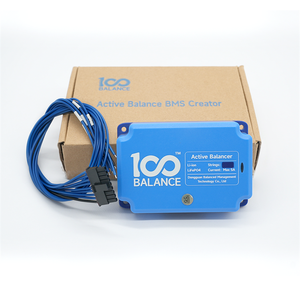
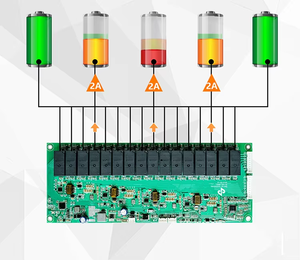
APEX Mobile Power’s Capacitive & Inductive Active Balancing Architecture: Our Smart BMS boards utilize non-dissipative active equalization technology. Energy is transferred dynamic-to-dynamic from high-energy cells to low-energy cells via high-frequency switched capacitors or inductive energy transfer circuits at balancing currents up to 5.5A.
| Performance Metrics | Passive Balancing (Standard) | APEX Active Balancer BMS (Capacitive/Inductive) | Impact on Seoul Medical OEMs |
|---|---|---|---|
| Balancing Current | 30mA – 100mA (Restricted by heat) | 0.6A – 5.5A Continuous Dynamic Balance | 10x faster cell voltage equalization |
| Energy Efficiency | < 60% (Energy wasted as heat) | 92% – 95% Non-dissipative energy transfer | Zero heat buildup inside sealed IP67 enclosures |
| Battery Pack Lifespan | 500 – 800 cycles before capacity drift | 2,000 – 3,500+ cycles (LiFePO4 dependent) | Dramatically reduces total cost of ownership (TCO) |
| Usable Capacity Utilization | ~82% - 85% of total rated Ah | 95% - 98% of total rated Ah | Extended run-time per single charge cycle |
| Safety / Thermal Risk | High localized resistor temperature (>70°C) | Cool operation (<35°C under full balancing) | Full compliance with IEC 60601-1 medical thermal limits |
Importing and manufacturing medical equipment for the South Korean market requires absolute adherence to domestic regulatory frameworks established by the Ministry of Food and Drug Safety (MFDS) and the Korean Agency for Technology and Standards (KATS).
All secondary lithium batteries integrated into medical devices sold in Korea must possess KC (Korea Certification) under the KC 62133-2 standard. APEX Mobile Power provides complete factory compliance documentation, cell test reports, and unencumbered UN38.3 transport dossiers to streamline KC registration.
Medical electrical devices require battery packs featuring dual-protection circuits, fault isolation, and precise state-of-charge (SoC) / state-of-health (SoH) communication over SMBus, I2C, or RS485 protocols to interface directly with clinical user interfaces.
Seoul’s leading medical device developers are embedding artificial intelligence into diagnostic tools and surgical robot arms. These systems demand zero voltage ripple and noise-isolated DC output from internal battery buffers to prevent electronic interference with ultra-sensitive sensor arrays.
APEX Mobile Power (AMP) operates state-of-the-art, vertically integrated manufacturing campuses equipped with automated high-speed SMT line assembly, precision laser cell welding, high-potential dielectric testing, and fully automated battery testing chambers certified under ISO 13485 (Medical Devices Quality Management) and ISO 9001.
Our clean-room assembly processes enforce full lot traceability, individual cell barcoding, and automated optical inspection (AOI) to eliminate assembly defects in mission-critical medical battery packs.
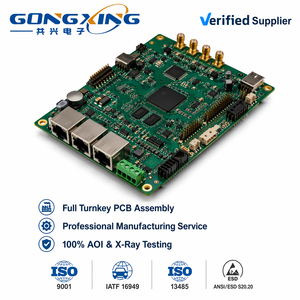
With 60+ full-time engineering specialists, we build tailor-made Smart BMS circuit boards supporting active balancing, custom telemetry protocols, high-precision Coulomb counting, and multi-channel temperature monitoring.
We provide seamless DDP shipping services directly to Seoul industrial complexes, Incheon Free Economic Zone (IFEZ), and regional medical innovation clusters with full Dangerous Goods (DG) compliance.
Key considerations for medical device engineering leads, compliance officers, and supply chain managers in Seoul.
Partner with an ISO 13485 certified battery engineering leader. Contact our technical team to receive tailored battery specifications, 3D CAD models, BMS schematics, and comprehensive pricing catalogs for your next-generation medical application.