Engineered specifically for extreme continental climate resilience, Kazakh KEGOC grid stability requirements, and high-duty C&I solar-plus-storage integration.
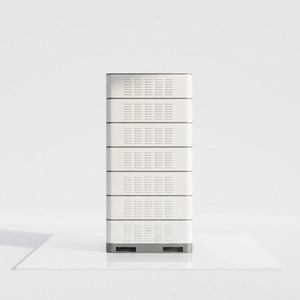
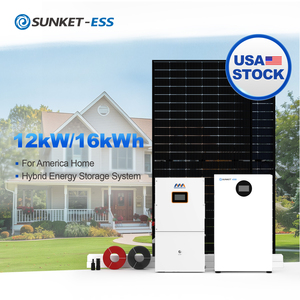
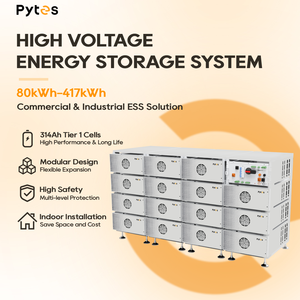
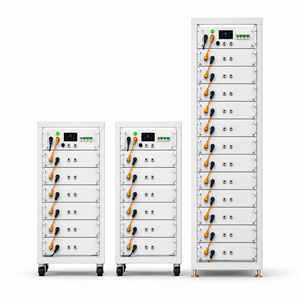
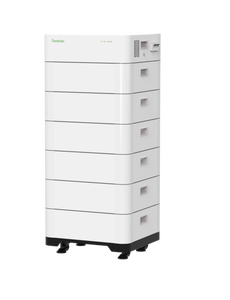
As Central Asia’s premier industrial superpower, Kazakhstan is undergoing a monumental energy structural transformation. Driven by the national "Concept for Transition of the Republic of Kazakhstan to Green Economy" and targets to achieve carbon neutrality by 2060, the country is rapidly deploying utility-scale solar photovoltaic (PV) facilities across energy-rich southern provinces like Turkistan, Jambyl, and Almaty, as well as northern industrial belts.
However, integrating variable solar generation into Kazakhstan's national grid—operated by KEGOC (Kazakhstan Electricity Grid Operating Company)—presents profound engineering challenges. The extreme geographic expanse, combined with legacy transmission infrastructure, subjects regional grids to severe voltage fluctuations, phase imbalances, and curtailment risks. Furthermore, Kazakhstan experiences extreme continental climate volatility, with ambient temperatures swinging from -40°C in harsh steppe winters to over +40°C during summer peaks.
High-Voltage ESS battery modules engineered with Tier-1 314Ah and 100Ah LFP cells significantly reduce system current, minimizing $I^2R$ thermal dissipation losses and maximizing round-trip efficiency (RTE). For turnkey engineering procurement contractors (EPCs), mine operators in Karaganda, and agricultural processing hubs near Shymkent, securing a verified, ISO-certified high-voltage solar ESS battery module supplier is no longer just a supply procurement detail—it is a critical requirement for project bankability and operational survival.
Stackable DC voltages up to 614.4V cut cable cross-section requirements by 60% and reduce inverter switching losses, yielding up to 98.2% round-trip efficiency.
Equipped with internal PTC heating films and industrial HVAC liquid-cooling options, enabling full discharge capabilities under -40°C sub-zero conditions.
Built using ultra-dense Prismatic Lithium Iron Phosphate (LiFePO4) chemistry offering 6,000+ thermal-stable cycles at 80% Depth of Discharge (DOD).
In Commercial & Industrial (C&I) energy storage systems ranging from 50kW/100kWh to multi-megawatt configurations, voltage topology determines total system performance and long-term levelized cost of storage (LCOS). The table below highlights why high-voltage stackable battery systems outperform low-voltage alternatives in Central Asian utility and industrial contexts:
| Engineering Parameter | High-Voltage (HV) Module Stack (358V - 614.4V) | Legacy Low-Voltage (LV) Bank (48V / 51.2V) | Impact on Kazakhstan Projects |
|---|---|---|---|
| Current (Amperage) at 100kW | ~162 Amps (at 614.4V) | ~1,953 Amps (at 51.2V) | 91.7% Current Reduction: Dramatically smaller copper busbars and lower risk of joint overheating. |
| Thermal Dissipation ($I^2R$ Losses) | Ultra-Low (Minimal heat generation) | Extremely High (Requires heavy cooling) | Enhances battery lifespan and safety inside enclosed containerized housing. |
| Round-Trip System Efficiency | 97.5% - 98.5% | 88.0% - 91.5% | Generates higher financial ROI per solar generation cycle. |
| Scalability & Footprint | Modular Vertical Stacking (Compact cabinet) | Bulky Parallel Racks (Large footprint) | Saves valuable floor space in commercial buildings and sub-stations. |
| BMS Balance & Monitoring | Cell-Level Active Balancing via CAN/RS485 | Passive Balancing (High variance over time) | Eliminates premature string failure in remote Kazakh installations. |
Our energy storage module lineup standardizes on next-generation 314Ah prismatic Lithium Iron Phosphate (LiFePO4) cell chemistry. Compared to older 280Ah cells, the 314Ah form factor delivers a 12% energy density boost without altering the physical enclosure footprint. LFP chemistry inherently possesses structural thermal stability, resisting decomposition up to 500°C—far superior to volatile NCM/NCA formulations.
Each high-voltage battery module is integrated with a multi-stage Smart Battery Management System (BMS). The BMS continuously monitors individual cell voltages, temperature gradients across pack modules, insulation resistance, and state-of-charge (SoC). In the event of thermal anomaly detection, aerosol-based automatic fire suppression modules inside the cabinet activate within milliseconds, stopping thermal runaway propagation before it threatens adjacent equipment.
Winter temperatures in Astana, Kostanay, and East Kazakhstan frequently drop below -30°C to -40°C. Standard lithium-ion batteries suffer severe lithium plating when charged below freezing, leading to rapid capacity degradation and short-circuit hazards.
Kazakhstan’s vast mining sectors (copper, uranium, coal, and iron ore) operate in remote, harsh environments where grid downtime directly translates to millions of dollars in lost throughput. High-voltage 192kWh to 261kWh ESS cabinets integrated with local diesel or solar generation provide instantaneous uninterrupted power supply (UPS) capabilities, smoothing out heavy motor starting surges and peak energy charges.
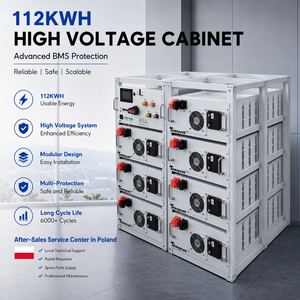
Commercial electricity tariffs in major urban centers like Almaty feature steep peak-demand penalty charges. By deploying our 358.4V 314Ah 112kWh Stackable ESS or 614.4V 100Ah Rack Systems, factory owners charge the energy modules during low-cost off-peak night hours and discharge during afternoon peak manufacturing hours, delivering typical payback cycles within 3 to 4.5 years.
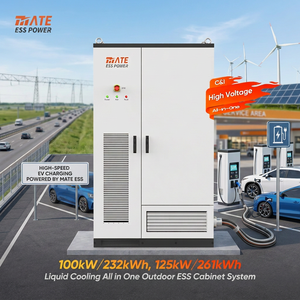
As Kazakhstan positions itself as the key overland logistics bridge connecting China and Europe (via Khorgos, Almaty, and Aktau Port), demand for rapid commercial vehicle charging is surging. Our 100kW / 232kWh High Voltage Energy Storage Cabinets serve as buffer storage systems for EV charging hubs, allowing high-power DC fast charging even in locations backed by weak regional distribution transformers.
Backing our market presence in Kazakhstan is an established manufacturing infrastructure rooted in engineering rigors and certified quality management systems.
Our global production campus operates under stringent quality control systems certified by SGS, UKAS, and IAF:
Every high-voltage ESS module delivered to Kazakhstan carries full UN38.3, CE, IEC 62619, and UL 1973 safety certification compliance, accompanied by complete GOST / EAC customs documentation for seamless entry through Central Asian economic corridors.
Consult with our senior battery system engineers to receive customized engineering drawings, bill of materials (BOM), and factory-direct wholesale quotes tailored for the Kazakhstan and Central Asian energy markets.