Engineered for severe C-rate discharge applications, autonomous RC heavy-lift platforms, and critical energy storage. Explore our core lineup of intelligent BMS and active cell equalizers serving Melbourne OEM partners.
In high-performance remote-controlled (RC) systems, heavy-lift unmanned aerial vehicles (UAVs), and specialized industrial robotics, battery pack performance is constrained by electrochemical thermodynamics. Unlike stationary energy storage systems that prioritize energy density (Wh/kg) over power discharge, high-drain RC battery modules demand extreme power density (W/kg). Designing customized lithium battery modules capable of maintaining 30C continuous and 50C–100C pulse discharge rates requires a rigorous engineering approach focused on minimizing Equivalent Series Resistance (ESR).
Selecting the optimal chemistry for Melbourne's rigorous climate and demanding industrial operational profiles involves evaluated trade-offs between nominal voltage, volumetric footprint, and thermal resilience:
| Battery Chemistry | Nominal Cell Voltage | Continuous Discharge (C-Rate) | Cycle Life (at 80% DOD) | Thermal Runaway Onset | Primary RC Application |
|---|---|---|---|---|---|
| Lithium Polymer (LiPo) | 3.7V - 3.85V (HV) | 45C - 100C | 150 - 300 Cycles | ~130°C (High Risk) | FPV Racing, Heavy Aerial Lifting Drones |
| High-Rate NMC (18650/21700) | 3.6V - 3.7V | 15C - 35C | 500 - 800 Cycles | ~160°C (Moderate Risk) | Long-Endurance UAVs, Industrial Inspection |
| Custom LiFePO4 (LFP) | 3.2V | 10C - 20C | 2000 - 4000 Cycles | >270°C (Extremely Safe) | Rugged Ground RC, Autonomous AGVs, Defence |
For high-drain applications serving Melbourne's commercial drone corridors and robotic test facilities, our engineering team utilizes high-purity synthetic graphite anodes and nano-coated LiCoO2 or ternary NMC cathode materials. This reduces lithium plating during fast recharge cycles and prevents rapid capacity degradation under sustained peak-amp loads.
Under high-drain operational profiles, individual cell state-of-charge (SOC) drift accelerates exponentially. A microscopic imbalance in cell internal resistance ($R_i$) causes uneven voltage collapse during rapid acceleration or heavy payload climb. Traditional BMS architectures rely on passive balancing, which bleeds off excess charge as heat through bleed resistors (typically restricted to 30mA - 100mA balance currents).
In high-amp RC battery packs (e.g., 48V 16S or 24S configurations pulling 100A–150A continuous), passive balancing is fundamentally inadequate. The thermal dissipation from passive bleeding raises ambient enclosure temperatures, degrading adjacent lithium chemistry.
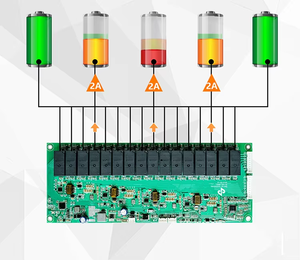
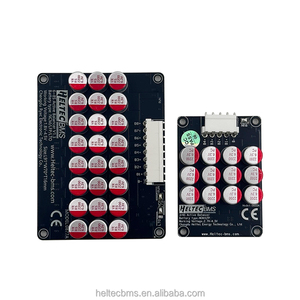
Utilizes high-frequency switching capacitors to shift energy directly from higher-voltage cells to lower-voltage cells with up to 5.5A balance currents and over 92% power efficiency.
Employs dynamic inductors to equalize voltage across adjacent cell pairs, preventing localized hot spots and maintaining cell-to-cell delta below 0.005V during deep discharge phases.
Integrated microcontrollers (e.g., JIKONG & Seplos protocols) dynamically adjust equalization currents based on real-time temperature, SOC gradient, and instantaneous discharge rate.
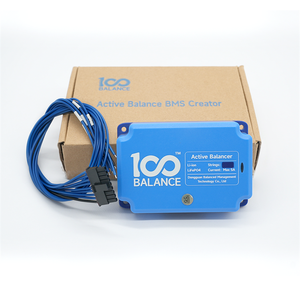
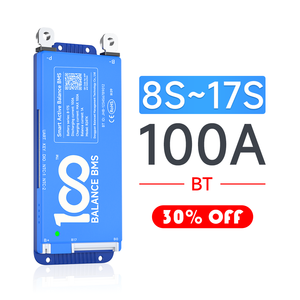
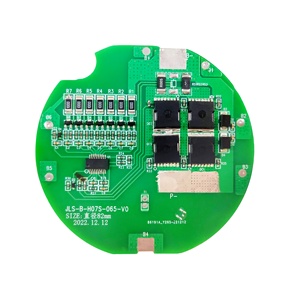
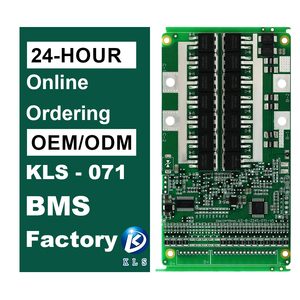
Our featured solutions—such as the Heltec 4S to 21S 5.5A Active Balancer and the JIKONG 150A Smart BMS with GPS integration—actively transport energy across cells throughout both charge and high-drain discharge cycles. This extends functional battery operational life by 35% and prevents premature low-voltage cutoffs during critical flight maneuvers.
Melbourne has emerged as Australia’s primary hub for advanced aerial robotics, autonomous agricultural technology, and defense-grade unmanned systems testing. Custom high-drain RC battery modules manufactured by APEX Mobile Power are custom-engineered to address specific geographical, regulatory, and environmental demands across Victoria:
Unmanned aerial systems operating over Port Phillip Bay and the Port of Melbourne contend with high saline moisture, ambient coastal corrosion, and violent wind gusts requiring sudden, massive bursts of motor thrust (pulling over 120A from the battery module). Our IP67-sealed enclosure designs integrate internal silicon thermal potting, gold-plated high-current anti-spark connectors, and active cell balancing to ensure mission reliability during ship-to-shore payload deliveries.
During Victorian summer months, thermal ambient temperatures in regional zones like the Mallee, Yarra Valley, and Gippsland frequently exceed 40°C. Standard off-the-shelf LiPo RC batteries suffer severe swelling and rapid degradation under high-discharge conditions at elevated temperatures. APEX Mobile Power's customized high-drain packs feature phase-change material (PCM) heat sinks and smart BMS telemetry (RS485/CANbus) that continuously communicate with flight controllers to dynamically throttle draw before thermal thresholds are violated.
Serving Melbourne's prestigious research institutions and tech incubators in Clayton, Dandenong, and Campbellfield, we provide rapid prototyping services for custom-configured battery modules. Whether powering autonomous formula-student race cars, inspection crawlers, or high-speed search-and-rescue RC platforms, our turnkey engineering ensures seamless integration with custom voltage requirements (12V to 100V+ builds).
Procuring high-drain lithium battery modules in Australia requires strict adherence to international and local regulatory safety standards. As Victoria transitions toward clean energy tech and sovereign defense capabilities, Melbourne-based OEMs must navigate critical compliance frameworks:
Mandatory for air and sea freight logistics into Melbourne Airport (Tullamarine) and Port of Melbourne. All our modules undergo altitude simulation, thermal shock, vibration, impact, and external short-circuit testing.
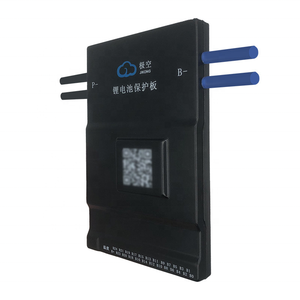
Compliance guidelines for equipment used in hazardous environments. Our custom aluminum enclosures and smart active-balance BMS protection boards prevent spark hazards and thermal events.
Victoria's strict environmental regulations demand recyclable battery designs. Our modular assembly techniques allow non-destructive disassembly and cell harvesting at end-of-life.
As a global premier lithium battery manufacturer supplying Melbourne and international engineering firms, APEX Mobile Power operates state-of-the-art facilities certified under ISO 9001:2015, ISO 13485:2016 (Medical Devices), ISO 14001:2015, and IATF 16949 (Automotive Quality Standards). Our manufacturing capabilities include:
Whether you require custom high-C LiPo flight packs, active-balanced 48V LiFePO4 modules, or turnkey automotive-grade BMS engineering, APEX Mobile Power delivers certified quality backed by 14+ years of technical leadership.
Get a Quote