Precision-engineered charging solutions and capacitive active balance management systems for 12V to 48V LiFePO4, NMC, and LTO battery banks deployed in New Zealand environments.
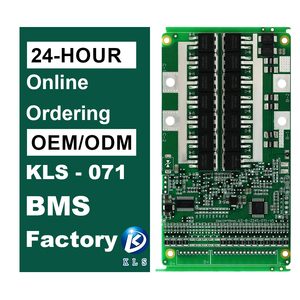
New Zealand's accelerated push toward a zero-carbon economy by 2050, combined with its unique geography, has created unprecedented demand for resilient, high-efficiency electrical storage infrastructure. From off-grid homesteads in the Canterbury Plains and deep South Island microgrids to commercial marine vessels operating out of Auckland Harbour, the transition to high-capacity Lithium Iron Phosphate (LiFePO4) and Nickel Manganese Cobalt (NMC) chemistries is moving at a rapid pace.
However, charging large-capacity lithium battery banks (24V, 48V, and high-voltage DC networks) presents critical technical challenges under New Zealand's grid and environmental conditions. Mains power across New Zealand operates on a standard single-phase 230V / 50Hz supply (or 400V 3-phase for industrial sites), governed strictly by the Electricity Safety Regulations and mandatory RCM (Regulatory Compliance Mark) / AS/NZS standards. Delivering fast charging currents exceeding 50A to 150A requires chargers manufactured with active PFC (Power Factor Correction), ultra-low harmonic distortion (THD < 5%), and industrial-grade thermal management.
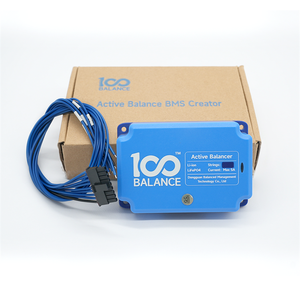
Furthermore, without continuous high-amperage active cell balancing during charge cycles, cell voltage drift severely undermines battery pack capacity and service life. High-current lithium chargers integrated with Active Balance Equalizers (5A to 6A transfer current) eliminate cell voltage imbalances dynamically, ensuring that B2B importers, system integrators, and OEM manufacturers across New Zealand achieve maximum cycle life (>4,000 to 6,000 cycles) and total energy throughput.
Utilizes multi-stage CC/CV charging curves with conversion efficiencies up to 96%, minimizing thermal losses in remote, unventilated enclosures.
Engineered to comply with AS/NZS 60335, AS/NZS 62368, and EMC standards mandatory for legally selling electrical equipment in NZ.
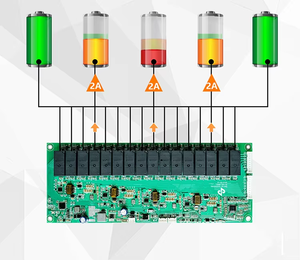
Inductive and capacitive energy transfer circuits actively migrate energy from high-voltage cells to low-voltage cells during charge phase.
Industrial applications in New Zealand require charging hardware capable of enduring severe environmental stresses—ranging from high-salt marine atmospheres to low-temperature alpine conditions in the Southern Alps.
Auckland, Nelson, and Tauranga marine hubs demand IP67-sealed 24V & 48V high-current chargers. Our active balancer modules prevent individual cell degradation caused by long standby periods on shore power.
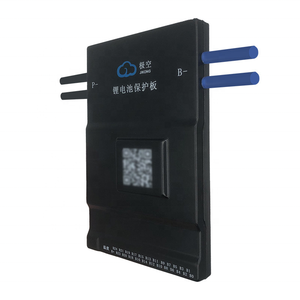
Remote off-grid properties in Marlborough and Northland rely on 48V 16S LiFePO4 storage banks. High-current chargers with integrated Seplos or JIKONG smart active balancers protect against imbalanced solar charge bursts.
New Zealand's progressive dairy and horticulture sectors utilize autonomous electric vehicles (AGVs) and orchard robots. High-current rapid chargers ensure fast turnaround times between operational shifts.
In high-capacity lithium battery systems (>100Ah cell capacity), conventional passive balancing relies on bleeding off excess energy from fully charged cells through heat-dissipating resistors. This method is fundamentally flawed for high-current industrial chargers because:
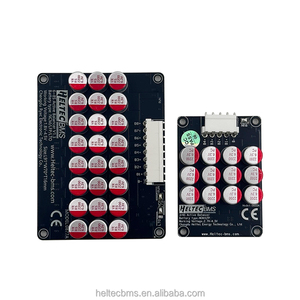
Our solutions incorporate Capacitive & Inductive Active Balance Equalizers (capable of continuous transfer currents from 0.6A up to 5.5A). By continuously transferring charge from higher-voltage cells to lower-voltage cells across the entire array, energy efficiency reaches over 95% while reducing battery case operating temperatures by up to 12°C.
| Technical Parameter | Standard Passive BMS | AMP High-Current Active Equalization Charger |
|---|---|---|
| Balancing Current | 30mA – 100mA (Resistive) | 0.6A – 5.5A (Active Transfer) |
| Equalization Efficiency | < 20% (Energy Dissipated as Heat) | 92% – 98% (Dynamic Energy Redistribution) |
| Charge Cut-off Speed | Slow due to premature high-cell trip | Optimized; max cell capacity utilization |
| System Life Extension | Baseline (2000-3000 cycles) | +35% Life Cycle Extension (>4500+ cycles) |
As a vertically integrated OEM/ODM manufacturer, APEX Mobile Power brings over 14 years of specialized engineering experience to international markets. Our dedicated 60+ engineer R&D team continuously reinvests 8% of annual revenue back into advanced power electronics development, solid state charging topography, and smart BMS firmware optimization.
Every high-current charger and active balance assembly destined for New Zealand undergoes rigorous factory validation:
Certified under ISO 9001 (Quality), ISO 13485 (Medical Electronics Quality), ISO 14001 (Environmental Management), and ISO 45001 (Occupational Safety).
100% full-load burn-in testing, marine salt spray corrosion validation, and thermal chamber cycling (-20°C to +65°C) to match NZ conditions.
Seamless logistic clearance to Auckland, Tauranga, and Lyttelton ports, backed by direct engineering-to-engineering technical support.
Key technical and regulatory answers for electrical engineers, OEM purchasers, and wholesale distributors importing high-current chargers into New Zealand.
Yes. All chargers supplied to New Zealand customers are designed and tested to comply with mandatory AS/NZS 60335-2-29 (specific requirements for battery chargers) and AS/NZS 62368-1 safety standards. We provide full EMC testing documentation, SAA safety approvals, and SDOC (Supplier Declaration of Conformity) required for RCM marking compliance under the NZ EESS framework.
New Zealand mains AC voltage operates at 230V (+10%/-6%) at 50Hz. Our high-current chargers utilize active Power Factor Correction (PFC > 0.99) to optimize AC current draw. For example, a 48V 50A charger delivers 2700W DC output while drawing under 12A AC input, allowing standard 15A NZ plug connection without tripping domestic or commercial circuit breakers.
Large 48V (16S) solar battery packs used in off-grid applications often suffer from cell capacity imbalance due to unequal solar charging bursts and aging. A 5A capacitive active balancer dynamically moves up to 5 Amperes of charge from high-voltage cells to low-voltage cells, keeping all 16 cells balanced within ±5mV. This prevents the BMS from shutting down prematurely during peak solar charging hours.
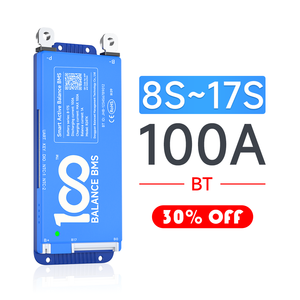
Yes. Our Smart BMS modules (such as Seplos 3.0 and JIKONG JK-BD6A24S15P) come pre-programmed with CANbus 2.0B and RS485 communication protocols compatible with major inverter brands including Victron Energy, Deye, Sol-Ark, GoodWe, and Growatt widely installed across New Zealand.
We provide full customization including custom charging profiles (LiFePO4, NMC, LTO, Sodium-ion), tailored output connector cables (Anderson SB50/SB175, M8 terminals, waterproof IP67 aviation plugs), custom metal enclosures, branded screen printing, and tailored firmware parameters.
Looking for certified high-current chargers, active balancing BMS boards, or custom power solutions for New Zealand project deployment? Request technical specifications and engineering consultation today.