APEX Mobile Power — Custom OEM Lithium Battery Solutions  |  ISO 9001 · ISO 13485 · ISO 14001 Certified  |  Engineered for Performance
OEM/ODM Technical Engineering Whitepaper

Top Trusted High-Discharge Power Tool Battery Pack Manufacturer & Factories

Architecting Next-Generation High-C Lithium Energy Solutions, Active Balancer BMS Systems, & Industrial Manufacturing Excellence for Global OEM Partners.

Featured OEM Components & Assemblies

High-Discharge Power Tool Batteries & Active BMS Products

Explore our precision-engineered active balancing protection boards, smart battery management systems (BMS), and custom power packs engineered specifically for high-drain industrial tools and micro-mobility applications.
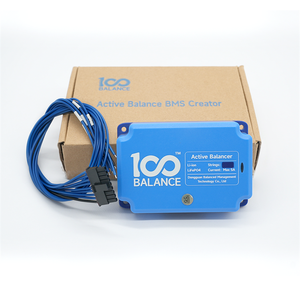
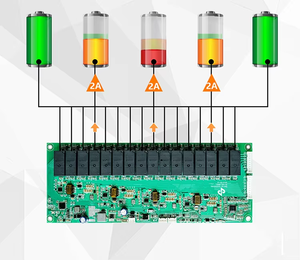
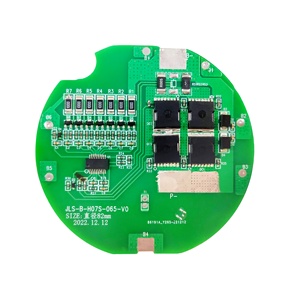
Active Balance Equalizer Balancing Capacitive Lifepo4 48v

Active Balance Equalizer Capacitive LiFePO4 / NMC 5A Active Balancer

5A Balance Current LiFePO4 / NMC High Precision
Send an Inquiry
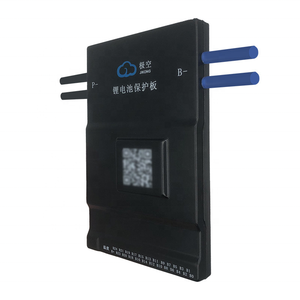
Seplos Bms 3.0 Active Balancer Lifepo4 Battery

Seplos BMS 3.0 Active Balancer LiFePO4 Protection Board

Seplos 3.0 Tech Active Equalizer Industrial Grade
Send an Inquiry
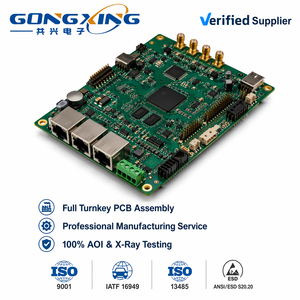
Smart BMS Battery Management System PCBA Board

Smart BMS PCBA & Active Balancing Board Assembly (IATF 16949)

IATF 16949 Full Turnkey SMT Custom Firmware
Send an Inquiry
JIKONG JK-BD6A24S15P Smart Active Balancer 150A BMS

JK-BD6A24S15P 0.6A Smart Active Balancer 150A BMS (7S-24S)

7S-24S Support 150A Continuous GPS / Display
Send an Inquiry
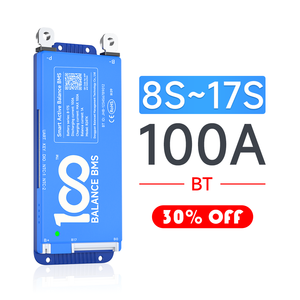
Smart Active Balancer battery Protection Board 100a 48v 16s

Smart Active Balancer Protection Board 100A 48V 16S LiFePO4 BMS

48V 16S Systems 100A Rate Active Equalization
Send an Inquiry
KLS BMS-045 64s 120A 12V LiFePO4 Active Balancer

KLS-BMS-045 64S 120A LiFePO4 Active Balancer Module with Heat Sink

2A Balance Current Aluminum Enclosure Heavy-Duty
Send an Inquiry
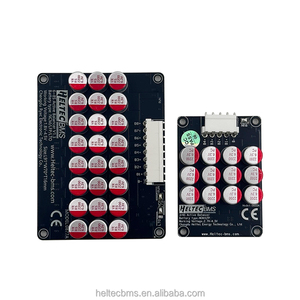
Heltec 4S To 21S Active Balancer 5.5A Equalizer

Heltec 4S to 21S 5.5A Energy Transfer Active Balancer Equalizer

5.5A Max Transfer 4S-21S Wide Voltage Capacitive Tech
Send an Inquiry
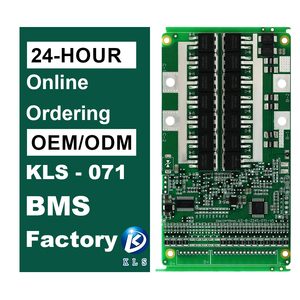
KLS Smart BMS 16S 48V 100A 150A Active Balance

KLSKF-071 Smart BMS 16S 48V 100A/150A Active Equalization System

Home ESS & Power 150A Peak Discharge CAN/RS485 Bus
Send an Inquiry
Executive Industry Whitepaper

Engineering High-Discharge Power Tool Batteries: The OEM Imperative

In modern heavy-duty cordless power tools—ranging from high-torque impact wrenches and rotary hammers to industrial angle grinders and cordless lawn mowers—the battery pack is no longer a passive energy container. It operates as a critical electro-mechanical powertrain component capable of delivering continuous discharge rates between 15C to 30C and burst discharge pulses exceeding 50C to 80C.

Selecting a trusted high-discharge power tool battery pack manufacturer requires deep scrutiny of electro-chemical cell dynamics, structural tabless designs, thermal runaway mitigation, and low-impedance nickel-copper busbar architecture. As global OEMs transition toward high-voltage platforms (20V Max, 40V XGT, and 80V Dual-Battery configurations), engineering teams must eliminate thermal bottlenecks and voltage sag under severe mechanical vibration.

High C-Rate Technical Metrics at a Glance

  • Continuous Discharge Rate: Up to 35A per 21700 cell (15C-25C)
  • Peak Pulse Current (10s): Up to 100A per cell string
  • Internal DC Resistance (DCR): ≤ 10 mΩ total pack resistance
  • Cell-to-Cell Voltage Delta: Active balance equalization < 5mV
  • Vibration Resistance: MIL-STD-810G / IEC 62133-2 drop tested
14+
Years R&D Specialization
60+
Senior Power Engineers
8%
Annual Revenue Reinvested in R&D
3000+
Global OEM Projects Shipped
Architectural Engineering

High-Discharge Cell Selection & Thermal Dissipation Engineering

The thermal profile of a power tool battery pack during continuous 25A current draw dictates tool operating life and safety. Below is a comparative engineering benchmark of chemistry selection and active cell management for industrial power tools.

Battery Chemistry / Cell Tech Continuous Discharge Pulse Rate (5s) Cycle Life @ 10C Thermal Runway Threshold Optimal Power Tool Application
High-Rate NMC (21700 Tabless) 35A - 45A 70A - 90A 800+ Cycles ~210°C High-Torque Impact Wrenches, Angle Grinders
High-Power LiFePO4 (LFP Pouch/Cylindrical) 20A - 30A 50A 2,500+ Cycles ~270°C (Ultra-Safe) Heavy-Duty Industrial Cutters, Outdoor Power Equipment
Sodium-Ion High-Rate Cells 15A - 20A 35A 1,500+ Cycles ~300°C (Sub-Zero Ops) Cold-Weather Field Construction Equipment
Standard Energy-Density NMC (18650) 10A - 15A 20A 400 Cycles ~160°C Light Consumer Screwdrivers, Household Tools

Low-Impedance Busbar Interconnects

Utilizing pure nickel-copper composite laser-welded interconnect straps reduces resistive $I^2R$ heating by up to 42% compared to traditional spot-welded steel straps under 30A current loads.

Active Balancer Smart BMS Integration

Unlike passive balancing which wastes energy as heat, our 5A capacitive/inductive active balancers continuously transfer energy from high-voltage cells to low-voltage cells during high-current operations.

Phase-Change Thermal Insulation

Cell encapsulation using thermal phase-change materials (PCM) and flame-retardant silicone elastomers absorbs peak heat spikes during continuous heavy-load operations, preventing thermal cascading.

Strategic Procurement Analysis

Future Procurement & Product Development Trends

How global OEM brands, tool distributors, and procurement managers are navigating next-generation battery architecture, supply chain transparency, and fast-charging technologies.

1. Transition to Tabless Cell Architecture (21700 & 4680)

Conventional cylindrical cells utilize discrete copper and aluminum tabs, causing localized electrical resistance and heat concentration at high current discharge. The future of high-discharge power tool batteries lies in tabless cylindrical cell design, where the entire current collector foil acts as the terminal. This drops internal resistance (IR) by over 50%, enabling continuous 40A discharge with minimal heat generation.

2. Ultra-Fast Charging Protocols (15-Minute 80% SOC)

Jobsite downtime is the leading driver of tool inefficiency. Modern OEM procurement specifications demand battery packs capable of 4C to 6C fast charging rates. Paired with active liquid/air channel cooling chargers and Smart BMS handshakes (via CANbus or UART protocols), power tool batteries can reach 80% state-of-charge (SOC) within 12 to 15 minutes without degrading cell cycle life.

3. AI-Assisted Smart BMS & Predictive Maintenance

Next-generation battery packs integrate microcontroller-driven Smart BMS boards with edge data analytics. By continuously sampling voltage, temperature, internal impedance, and discharge cycles, the BMS predicts thermal degradation, warns users of mechanical shock anomalies, and balances individual cell banks dynamically via active equalizer circuits before imbalance-induced capacity loss occurs.

4. Regulatory Supply Chain & Eco-Design Compliance

With regulations like the EU Battery Regulation 2023/1542 enforcing digital battery passports, recycled cobalt/lithium minimums, and strict carbon footprint reporting, major tool brands are sourcing exclusively from ISO 14001 and ISO 9001 certified factories that guarantee full material traceability and clean manufacturing processes.

World-Class Manufacturing Base

State-of-the-Art Factory & OEM Customization Capabilities

As a global custom OEM/ODM lithium battery pack manufacturer, APEX Mobile Power operates advanced manufacturing complexes dedicated to engineering high-performance Li-Ion, LiFePO4, and sodium-ion battery packs, custom chargers, and smart BMS components.

Our vertically integrated facility handles every phase of production—from 3D mechanical CAD casing design, finite element thermal analysis, SMT PCB assembly, laser tab welding, automated cell sorting, to rigorous environmental environmental testing (vibration, thermal shock, drop testing, and overcharge abuse testing).
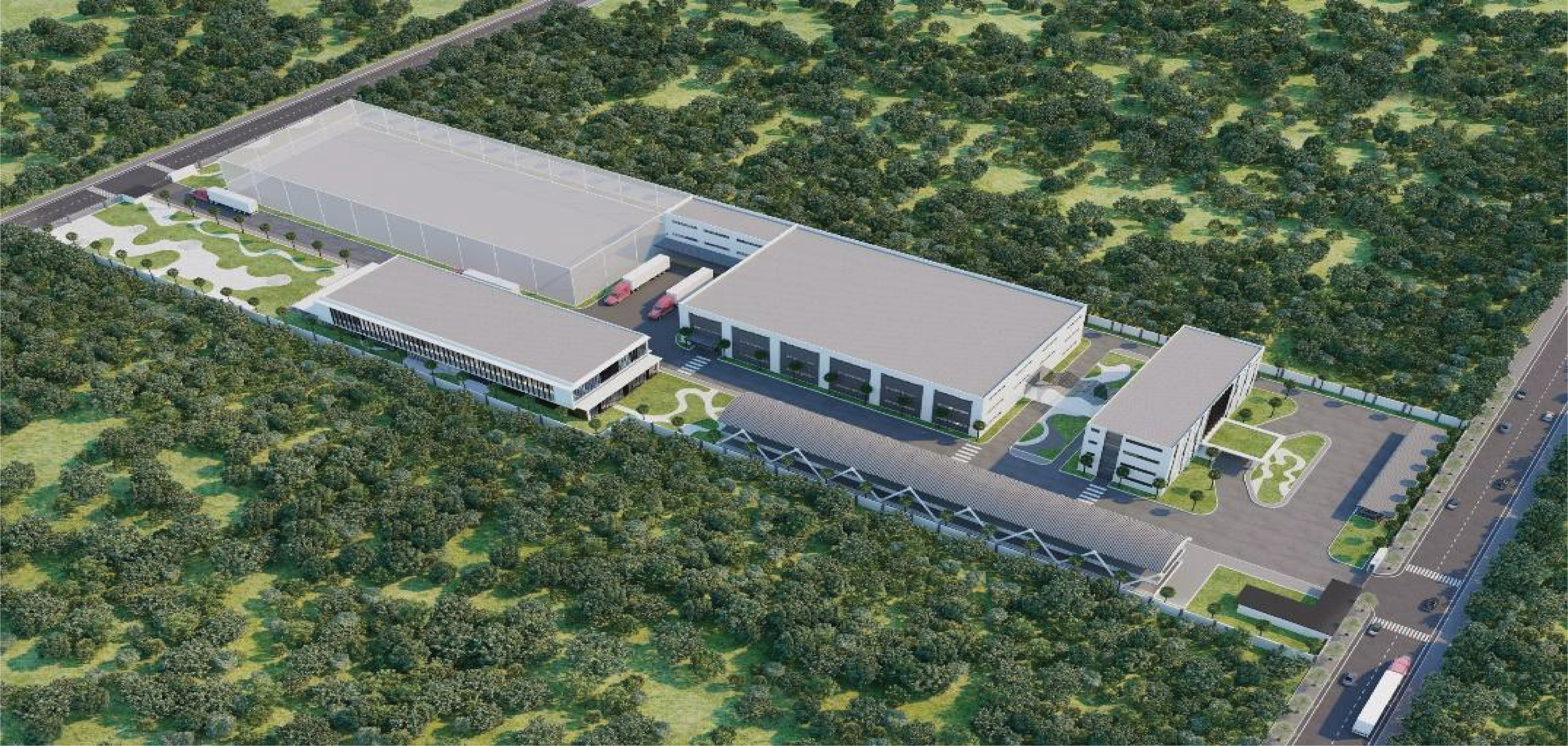
APEX Mobile Power Manufacturing Complex Aerial View

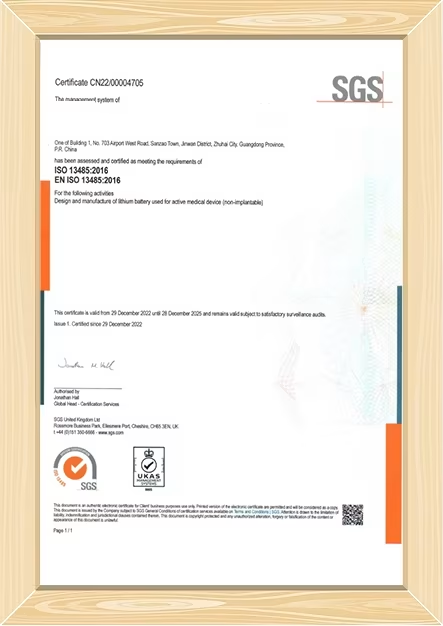
Independently Audited & SGS Certified Factory Quality Systems

Our quality management systems are certified to internationally recognized standards, ensuring safety, reliability, and regulatory compliance for medical, aviation, and industrial power tool applications.
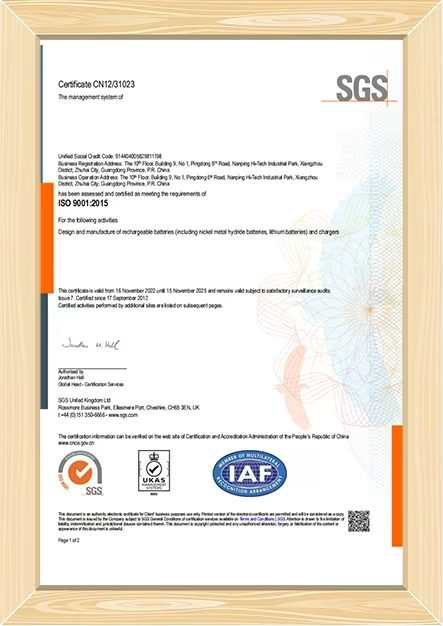
ISO 9001:2015 Certification
ISO 9001:2015
Quality Management
ISO 13485:2016 Certification
ISO 13485:2016
Medical Device Standards
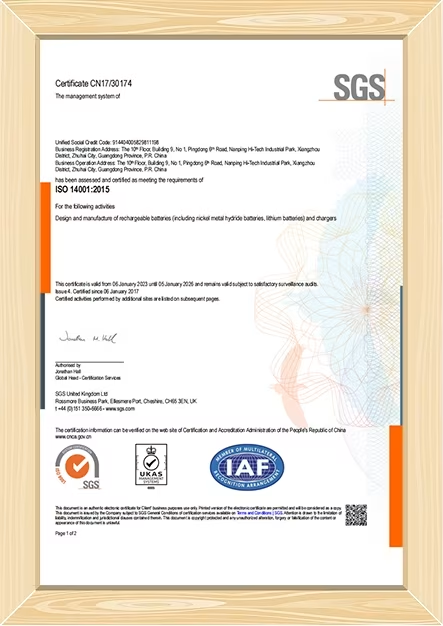
ISO 14001:2015 Certification
ISO 14001:2015
Environmental Systems
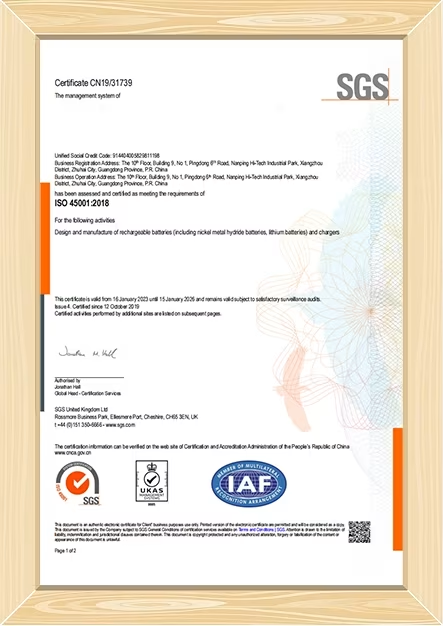
ISO 45001:2018 Certification
ISO 45001:2018
Occupational Safety
Product Certifications: UL, CE, RoHS, UN38.3, IEC
User Intent & Procurement Insights

B2B Procurement FAQ: Power Tool Battery Manufacturing

Common technical and commercial questions answered by our engineering and global supply chain directors.

Q: What continuous C-rate is required for industrial high-torque power tools?

A: Heavy-duty cordless power tools (such as 1/2-inch impact wrenches, rotary hammers, and cut-off saws) require battery cells capable of a minimum continuous discharge rate of 15C to 25C (30A to 45A per cell). Lower discharge-rated batteries will suffer severe voltage drop under heavy torque, tripping the tool's low-voltage cut-off prematurely and generating excessive heat.

Q: Why is active balancing preferred over passive balancing in high-drain battery packs?

A: Passive balancing bleeds off excess cell energy through resistors as waste heat—a major risk during high-discharge operation. Active balancers (such as 2A to 5.5A capacitive/inductive equalizers) dynamically transfer charge between cells in real-time during both charge and discharge cycles, preserving overall pack capacity, lowering internal heat generation, and extending total cycle life by up to 35%.

Q: What certifications are mandatory for international air and sea transport of power tool batteries?

A: All lithium-ion power tool battery packs must pass UN38.3 testing (which includes altitude simulation, thermal test, vibration, shock, external short circuit, impact/crush, overcharge, and forced discharge) along with a certified Material Safety Data Sheet (MSDS) and Article Information Sheet (AIS). Products destined for retail sale in major markets require UL 2595 / UL 1642 (cells), CE, RoHS, and IEC 62133 compliance.

Q: How does your factory handle custom mechanical plastic housing design and IP sealing?

A: We engineer custom tool battery housings using glass-fiber reinforced polycarbonate/ABS blends with overmolded TPU rubber bumpers for drop impact resistance (up to 2-meter concrete drop tests). For outdoor and harsh jobsite environments, we design IP67-rated waterproof sealings with hydrophobic membrane vents to equalize internal pressure without admitting dust or moisture.

Q: What is the typical development lifecycle for custom OEM/ODM power tool battery projects?

A: Rapid prototyping phase (3D printed housing, custom SMT BMS samples, cell tab welding) takes approximately 3 to 4 weeks. Soft tooling and initial functional testing require 4 to 6 weeks. Full production tooling, UN38.3/UL safety certification, and mass production ramp-up take 8 to 12 weeks depending on custom firmware complexity.

Ready to Engineer Your Custom High-Discharge Power Tool Battery?

Partner with APEX Mobile Power for direct engineering support, low-impedance high-C cell sourcing, smart active balancing BMS integration, and ISO-certified manufacturing scale.