
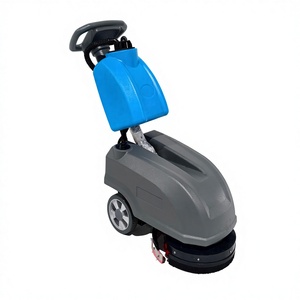
Modern commercial sanitation, logistics hub maintenance, and municipal street sweeping are undergoing a rapid technological migration. Legacy Sealed Lead-Acid (SLA), AGM, and flooded gel batteries—long hindered by heavy deadweight, extended 8-to-10-hour recharge cycles, strict depth-of-discharge limits, and maintenance headaches—are rapidly being superseded by high-energy-density Lithium Iron Phosphate (LiFePO4) and smart Lithium-Ion (NMC) battery power units.
As a premier OEM global exporter and engineering manufacturer, APEX Mobile Power designs and delivers custom-engineered floor sweeper battery packs built to withstand continuous operational vibration, high discharge loads, dust penetration, and extreme ambient temperature fluctuations. This comprehensive technical whitepaper explores current procurement benchmarks, future technological trends, BMS protection architectures, and factory evaluation metrics required by global OEMs and industrial cleaning equipment distributors.
High-performance walk-behind sweepers, ride-on scrubbing units, high-capacity deep-cycle lithium packs, and autonomous robotic cleaning power systems certified for global export.

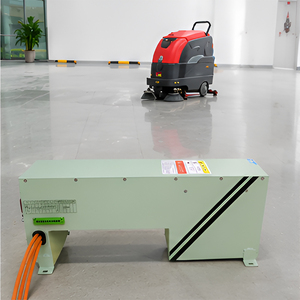
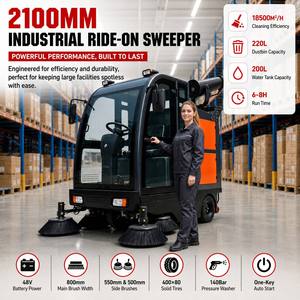
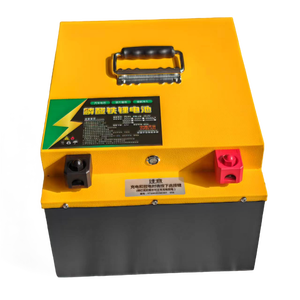
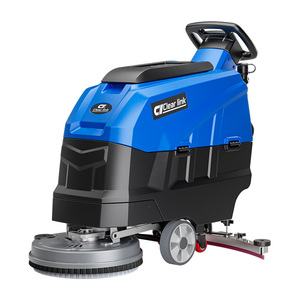
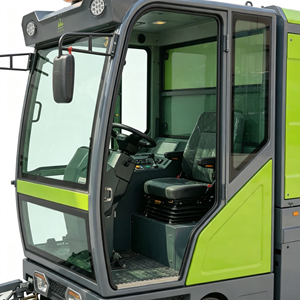
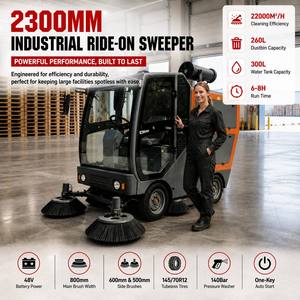
Combining multi-plant vertical integration, rigorous quality control, and certified international compliance to serve global equipment manufacturers.
Our global manufacturing facilities operate under stringent international standards independently audited by SGS, holding ISO 9001:2015 (Quality Management), ISO 13485:2016 (Medical/High-Reliability Devices), ISO 14001:2015 (Environmental Management), and ISO 45001:2018 (Occupational Safety) certifications.
Equipped with over 60 dedicated R&D engineers, we develop intelligent Battery Management Systems (BMS) featuring CANbus 2.0B, RS485, and Modbus communication protocols. Real-time monitoring of cell voltages, thermal regulation, active balancing, and over-current protection ensures maximum uptime for autonomous sweepers.
Commercial floor sweepers operating in port yards, logistics centers, and rough asphalt encounter extreme continuous vibration. Our power modules feature sheet-metal anti-corrosion enclosures, shock-absorbing silicone cell mounts, IP65/IP67 water/dust seals, and heavy-duty Anderson/Rema high-current connectors.
Comparative engineering breakdown between traditional Lead-Acid, Standard Li-Ion, and APEX Advanced LiFePO4 Power Units.
| Performance Parameter | Traditional Lead-Acid / Gel | Standard Lithium-Ion (NMC) | APEX Custom LiFePO4 Unit |
|---|---|---|---|
| Cycle Life (80% DOD) | 500 – 800 Cycles | 1,200 – 2,000 Cycles | 3,500 – 6,000+ Cycles |
| Opportunity Fast-Charging | Not Recommended (Sulfation Risk) | Moderate (1C Max) | Supported (1C to 3C Charge) |
| Energy Density (Wh/kg) | 30 – 40 Wh/kg | 180 – 240 Wh/kg | 140 – 170 Wh/kg (Optimal Safety) |
| Thermal Runaway Temp | Medium Risk (Gassing) | ~210°C Threshold | > 270°C Intrinsic Thermal Safety |
| BMS Integration & Telematics | None (Analog Voltmeters) | Basic Protection Board | Smart CANbus / IoT Cloud Ready |
| Daily Maintenance | High (Distilled Water Refills) | Zero Maintenance | 100% Maintenance-Free |
| 5-Year Operational TCO | High (Multiple Replacements) | Moderate | Lowest (-42% vs Lead-Acid) |
Key industry shifts shaping global supply chain procurement strategies for B2B importers, OEM machinery manufacturers, and facility managers.
Industrial logistics centers and 24/7 airport terminals can no longer afford 8-hour machine downtime dedicated to battery recharging. Modern procurement specifications demand high-current LiFePO4 battery modules capable of accepting 0.5C to 1C fast charging during 30-minute worker lunch breaks. This enables continuous multi-shift floor sweeper operation with a single battery unit, eliminating battery-swapping infrastructure.
Procurement teams are shifting away from "dumb" battery packs toward integrated IoT-connected power systems. By embedding CANbus, RS485, or Bluetooth BLE protocols directly into the Battery Management System (BMS), facility managers receive real-time telemetry regarding State of Charge (SOC), State of Health (SOH), cell temperature distribution, and predictive failure alerts to optimize fleet routing and prevent unexpected field downtime.
Global market entry requires stringent regulatory compliance. Modern importers prioritize battery factories providing turnkey UN38.3 transport testing reports, MSDS, UL 1642 cell approvals, UL 2580 commercial power pack compliance, CE, and IEC 62133 certifications. Ensuring certified hazardous goods shipping (Class 9) guarantees seamless customs clearance in Europe, North America, and Australia.
The market share of autonomous robotic floor sweepers is expanding exponentially. AMR floor sweepers demand specialized battery units featuring high peak discharge rates (for brush motor startup), precision Coulomb-counting fuel gauges, automated docking contact charging plates, and compact high-volumetric-density power configurations.
Exploring cell-level chemical evolutions, structural packaging innovations, and environmental adaptation breakthroughs.
While LiFePO4 remains the commercial gold standard, Sodium-Ion battery modules are emerging as a cost-effective alternative for cold-climate street sweepers, operating reliably down to -30°C without significant capacity fade. Concurrently, semi-solid-state lithium cells are paving the way for ultra-high energy densities in compact walk-behind scrubbers.
Eliminating intermediate module housings via Cell-to-Pack (CTP) structural engineering increases volumetric efficiency by up to 25%. This architectural leap allows machinery designers to pack a 24V 200Ah or 36V 200Ah system into compact battery compartments traditionally restricted to 100Ah lead-acid footprints.
Outdoor municipal street sweepers operated during winter require advanced thermal management. APEX integrates internal PTC heating films managed by the smart BMS, automatically pre-heating battery cells to safe charging thresholds (+5°C) before accepting charge current in sub-zero environments.
Expert responses to critical questions regarding battery selection, factory customization, cycle life, and international logistics.
LiFePO4 (Lithium Iron Phosphate) delivers 3 to 5 times longer cycle life (3,500+ cycles vs 500 cycles), weighs ~60% less, allows 100% depth of discharge (DOD) without damage, charges in 2–3 hours (vs 8–10 hours), and requires zero water refilling or maintenance. This yields significantly lower operational costs and zero equipment downtime.
Yes. APEX Mobile Power specializes in custom OEM/ODM battery engineering. We design custom metal or ABS enclosures, custom wiring harnesses, custom mounting brackets, and specific voltage configurations (24V, 36V, 48V, 72V, 80V) with capacities ranging from 50Ah up to 400Ah+ to retrofitted drop-in replacements or brand-new machinery models.
Our proprietary Smart BMS incorporates multi-tiered hardware and software protection against over-charge voltage, over-discharge voltage, high/low temperature cut-off, over-current, short circuits, cell imbalance, and MOSFET thermal runaway. Optional CANbus/RS485 interfaces allow direct machine dashboard communication.
Our battery units are engineered specifically for heavy industrial environments. We utilize heavy-gauge anti-corrosion metal shells, internal laser-welded busbars (instead of fragile wiring), shock-absorbing cell cradles, and structural potting epoxy to exceed UN38.3 vibration and shock test benchmarks.
Every export shipment includes complete UN38.3 test reports, MSDS, Safe Transport Certificate (Air/Sea), CE certificates, and UL/IEC cell reports. We manage complete Dangerous Goods (DG Class 9) sea and air freight logistics worldwide with full customs documentation.
Initial engineering design and prototype fabrication are typically completed within 2 to 3 weeks following mechanical drawing approval. Once prototypes pass verification testing, mass production lead times generally range between 3 and 4 weeks depending on order volume and customization complexity.
Partnering with APEX Mobile Power guarantees a smooth engineering transition from initial concept to high-volume global delivery. Our 6-step project engineering framework ensures exact specifications are met:
Define voltage, capacity, space envelope, continuous/peak current, and communication protocol.
Our 60+ R&D team creates precise 3D enclosure models, thermal simulations, and customized BMS circuit layouts.
Fast-track sample build with rigorous vibration, temperature chamber, and drop test validation.
Completion of UN38.3, MSDS, CE, and UL testing documentation for seamless global compliance.
ISO 9001/13485 certified automated assembly, laser welding, and 100% automated aging test screening.
Class 9 Hazardous Goods door-to-door or door-to-port sea/air freight with full customs support.
Contact our senior battery application engineers today to discuss your OEM customization requirements, obtain factory-direct wholesale pricing, and request custom mechanical drawings.