APEX Mobile Power — Custom OEM Lithium Battery Solutions  |  ISO 9001 · ISO 13485 · ISO 14001 Certified  |  Engineered for Performance

Top Trusted Commercial And Industrial ESS Module Manufacturer & Exporters

Tier-1 OEM/ODM Battery Management Systems, High-Current Active Balancers & Turnkey Modular Energy Storage Solutions Engineered for Utility, Commercial Microgrids & Industrial Applications.

IATF 16949 / ISO 9001 Certified
Lossless 5A Active Equalization
Global B2B Supply Chain Export
Featured Hardware Modules

High-Performance ESS Active Balancers & Smart BMS Modules

Explore our market-leading active equalization protection boards, capacitive balancing modules, and smart PCBA units designed for high-density LiFePO4, NMC, and LTO commercial battery banks.
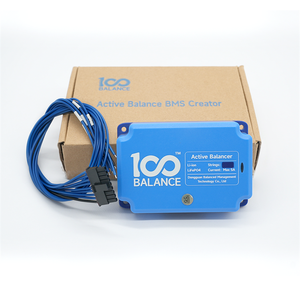
Active Balance Equalizer Capacitive LiFePO4 48V 5A Active Balancer
Capacitive Energy Transfer

Active Balance Equalizer Capacitive LiFePO4 48V Cell NMC 5A Balancer

  • 5A Continuous Active Balancing
  • Capacitive Energy Transfer Topology
  • Compatible with LiFePO4 / NMC / LTO
  • 0.01V Cell Voltage Difference Precision
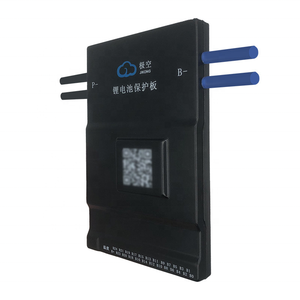
Seplos BMS 3.0 Active Balancer LiFePO4 Battery Protection Board
Industrial ESS BMS 3.0

Seplos BMS 3.0 Active Balancer LiFePO4 Battery Protection Board

  • Integrated Smart Active Equalizer
  • Multi-Protocol RS485 / CANbus Comms
  • High-Current Thermal Management
  • Ideal for Commercial Storage Racks
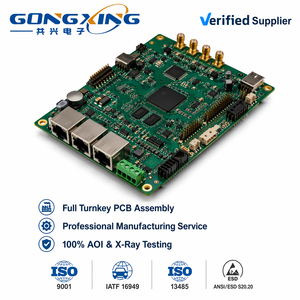
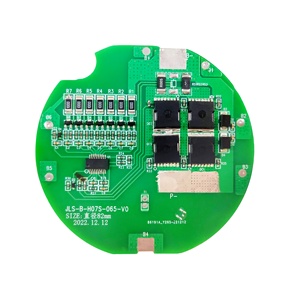
Smart BMS PCBA Active Balancing Board Turnkey SMT Service
Custom PCBA Assembly

Smart BMS PCBA Active Balancing Board | Full Turnkey PCB Assembly

  • IATF 16949 Automotive Quality SMT
  • Custom MCU & Firmware Flash
  • Customized Form Factor & Heat Sinks
  • 100% AOI & Flying Probe Tested
JK Smart Active Balancer 150A BMS 7S-24S with GPS Display
Smart Telemetry BMS

0.6A Smart Active Balancer 150A BMS 7S-24S with GPS & Display

  • Wide 7S to 24S String Compatibility
  • 150A Continuous Discharge Capability
  • Integrated GPS / IoT Remote Tracking
  • iOS & Android Bluetooth Monitoring
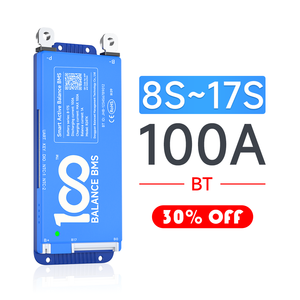
Smart Active Balancer Protection Board 100A 48V 16S LiFePO4 BMS
Telecom & Solar ESS

Smart Active Balancer Battery Protection Board 100A 48V 16S LiFePO4

  • Standard 16S 48V Rack Optimization
  • 100A Continuous Current Handling
  • Active Dynamic Balancing Mechanism
  • Dual Temperature Sensor Probes
KLS Battery Management System 64S 120A 2A Active Balancer
High Voltage Heavy-Duty

KLS High-Voltage BMS 64S 120A LiFePO4 with 2A Aluminum Balancer

  • Ultra-High Voltage 64S Array Design
  • 2A Active Transfer Current
  • Extruded Aluminum Heat Dissipation
  • Rugged E-Mobility & Industrial Duty
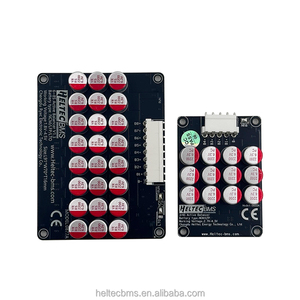
Heltec 4S to 21S 5.5A Active Balancer Capacitor Energy Transfer
High-Current Equalization

Heltec 4S to 21S Active Balancer 5.5A Equalizer Capacitor Balance

  • Industry-Leading 5.5A Balance Peak
  • Capacitive Flying Energy Transfer
  • Compatible with LiFePO4, Li-ion, LTO
  • Low Static Power Consumption
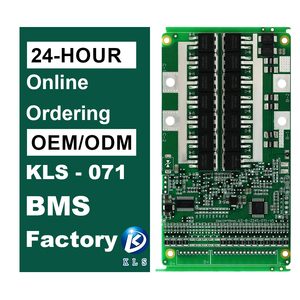
KLS Smart BMS 16S 48V 100A 150A Active Balance KLSKF-071
Home & Commercial Storage

KLS Smart BMS 16S 48V 100A 150A Active Equalization Board

  • 48V Commercial Storage Optimized
  • Seamless Inverter Protocol Matching
  • Dual MOSFET High-Discharge Switch
  • Real-time SOH/SOC Algorithm
Technical Engineering Whitepaper

Commercial & Industrial Energy Storage System (C&I ESS) Module Engineering & Active Equalization Architectures

The global transition toward decentralized renewable microgrids and industrial energy independence has shifted commercial electricity management into a high-density, multi-megawatt paradigm. Central to this transition are Commercial & Industrial Energy Storage Systems (C&I ESS). Unlike residential wall-mounted batteries, commercial ESS deployments demand continuous discharge rates, multi-thousand cycle endurance, and stringent fault tolerance under severe environmental stressors.

At the module level, an ESS battery pack's efficiency, thermal stability, and usable life are severely restricted by the "weakest cell phenomenon." As lithium-ion cells (specifically LiFePO4, NMC, and Sodium-Ion chemistries) undergo thousands of operational charge-discharge cycles, variations in internal resistance (IR), manufacturing tolerances, and localized thermal gradients induce capacity imbalance across series-connected cell strings.

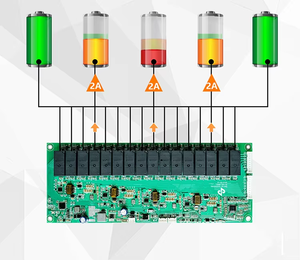
Key Engineering Insight (Information Gain): Conventional passive balancing systems burn excess energy as thermal waste through bleeding resistors during the top of the charge cycle (typically limited to a feeble 50mA to 200mA). In megawatt-scale C&I ESS containers, passive balancing creates localized hot spots, accelerates degradation, and fails to keep pace with dynamic capacity drift. Modern high-reliability ESS installations require Lossless Active Balancing Equalizers (1.5A to 5.5A continuous current) that dynamically transfer energy from high-state-of-charge (SOC) cells to undercharged cells during both charging AND discharging phases.

Topological Comparison: Passive Balancing vs. Active Equalization Systems

To evaluate procurement criteria for enterprise energy storage modules, systems engineers must weigh thermal load, Coulombic efficiency, and dynamic response speed. Below is a comparative technical matrix mapping balancing methodologies across high-voltage ESS setups:

Performance Parameter Passive Resistor Bleeding BMS Inductive Active Balancing Capacitive Flying Transfer (5A Peak)
Balancing Efficiency < 35% (Energy lost as heat) 85% - 90% Energy Efficiency 92% - 96% Lossless Transfer
Max Balancing Current 30mA - 200mA (Thermal constrained) 1.0A - 2.0A Continuous 1.5A - 5.5A Dynamic Peak
Operational Window Charge termination top-off only All states (Charge, Discharge, Idle) Continuous Dynamic Tracking
Thermal Impact on Module High localized heat output (35°C+) Negligible heat generation Near Zero Thermal Footprint
Impact on Cell Cycle Life Standard cycle deterioration Extends lifespan by 15% - 25% Extends lifespan by up to 35%

System Hardware Integration: 16S 48V to 64S 200V Module Scalability

Modularity defines the modern C&I ESS roadmap. Standardized 16S 48V / 51.2V rack-mounted LiFePO4 modules serve as the baseline building block for telecom backup towers, industrial UPS enclosures, and commercial solar energy storage cabinets. By integrating intelligent Battery Management Systems (such as the Seplos 3.0, JK Smart BMS, and KLS-BMS series), enterprise operators gain real-time telemetry through dual RS485, CANbus, and IoT Bluetooth interfaces.

When stringing modules in high-voltage series architectures (ranging from 100V to 1000V DC containerized solutions), precise cell-level diagnostic feedback prevents thermal runaway propagation. Smart BMS PCBA boards manufactured under IATF 16949 automotive standards employ isolated voltage sampling ADCs, multi-point NTC temperature sensing, and solid-state MOSFET or contactor cutoffs capable of handling short-circuit currents in excess of 2000A.

Procurement Intelligence

Future Technological Trends in Commercial ESS Procurement

Strategic insights for B2B supply chain procurement officers, systems integrators, and OEM engineers.

1. Universal Active Equalization standard

Procurement specs are rapidly phasing out passive resistor bleeding. B2B tender guidelines for 2026+ commercial energy storage now explicitly demand lossless capacitive active balancers capable of transferring 2A to 5.5A to mitigate early pack capacity dropoff.

2. AI-Driven Cloud BMS & GPS Telemetry

Smart BMS boards with embedded 4G/GPS telemetry, mobile app interfaces, and cloud predictive diagnostics (State of Health / SOH analytics) allow facility engineers to detect degradation anomalies weeks before hardware failure occurs.

3. Multi-Chemistry Flexible Hardware

As Sodium-Ion (Na-Ion) and Lithium Titanate (LTO) cells gain commercial adoption alongside LiFePO4, modular BMS PCBA architectures with programmable voltage thresholds (1.8V to 4.5V per cell) are becoming essential for inventory optimization.

Enterprise OEM / ODM Credentials

Why Global Tier-1 Integrators Partner With Us

Over 14 years of specialized research, development, and high-volume SMT manufacturing for global commercial battery markets.

14+
Years R&D Excellence
60+
Senior BMS Engineers
8%
Annual Revenue in R&D
3000+
Global ESS Projects

IATF 16949 & ISO 13485 Certified Factory

Our state-of-the-art SMT production lines adhere strictly to automotive-grade quality standards. Automated 3D SPI, AOI inspection, X-ray solder testing, and flying probe diagnostics ensure zero-defect shipment.

Turnkey OEM / ODM Customization

From customized schematic circuit engineering, multi-layer PCB layout, and custom aluminum enclosure design to specialized firmware development (CANopen, Modbus, Victron, Pylontech protocols).

Strict Global Compliance & Testing

All battery modules and active balancing boards undergo full environmental temperature cycling, burn-in testing, and meet UL1973, CE, RoHS, UN38.3, and IEC 62619 regulatory requirements.

Commercial Guidance

Frequently Asked Procurement & Engineering Questions

Expert technical answers addressing common procurement inquiries for commercial and industrial ESS modules.

Q What is the difference between active balancing and passive balancing in 48V LiFePO4 ESS modules?
Passive balancing bleeds off excess energy as heat through resistors when cells reach top-of-charge, operating at low currents (50mA-200mA). Active balancing transfers energy from higher-voltage cells to lower-voltage cells using inductive or capacitive circuits at high currents (1.5A to 5.5A). Active balancing produces negligible heat, works continuously during charge/discharge, and significantly extends total usable pack capacity and lifespan.
Q Can your Smart BMS boards integrate with third-party hybrid solar inverters?
Yes. Our Smart BMS platforms (including Seplos 3.0, JK BMS, and KLS series) come pre-programmed with dual RS485 and CANbus communication protocols compatible with major global inverter brands including Victron Energy, SMA, Deye, Luxpower, Growatt, and Sofar Solar. Custom protocol mapping is available via OEM request.
Q How does capacitive active balancing function under heavy industrial continuous discharge?
Capacitive active equalizers utilize high-frequency switching energy transfer to continuously move charge between adjacent and non-adjacent cells. Because energy transfer occurs dynamically based on real-time cell voltage deltas rather than state-of-charge thresholds, the system balances cells even during 1C+ heavy industrial discharge cycles.
Q What compliance certifications do your ESS modules and BMS PCBA units hold?
Our manufacturing facilities are certified under ISO 9001, ISO 14001, ISO 45001, and IATF 16949. Individual BMS boards and active equalizer products comply with CE, FCC, RoHS, and are engineered to facilitate system-level UL 1973, UL 9540A, and IEC 62619 certification for complete containerized storage installations.
Q What is the typical engineering lead time for custom OEM BMS PCBA development?
Standard prototype engineering samples (schematic design, custom PCB layout, and SMT assembly) are typically delivered within 15 to 25 business days. Mass production volume fulfillment spans 3 to 5 weeks following prototype validation and testing approval.

Accelerate Your Commercial ESS Product Development

Partner with an industry-leading OEM/ODM manufacturer. Contact our senior battery management system engineering team today for technical schematics, volume pricing, and custom sample evaluations.