APEX Mobile Power — Custom OEM Lithium Battery Solutions  |  ISO 9001 · ISO 13485 · ISO 14001 Certified  |  Engineered for Performance

Top Trusted Active Balance Battery Management System Supplier & Exporter

Architecting High-Efficiency Active Equalization, Industrial Smart BMS, and High-Precision Lithium Battery Safety Infrastructure for Global Energy OEM Systems.

Featured Hardware Lineup

Industrial Active Balancers & Smart BMS Boards

Engineered with low internal resistance MOSFETs, capacitive energy transfer technology, and high-frequency microcontroller units for LiFePO4, NMC, and LTO chemistries.

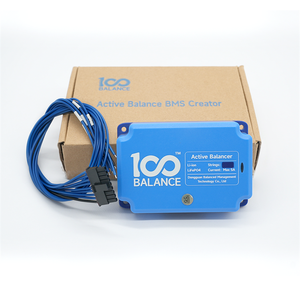
Active Balance Equalizer Balancing Capacitive Lifepo4 48v 5A Balancer
Active Balance Equalizer Balancing Capacitive LiFePO4 48V Cell NMC 5A Active Balancer
Contact Us
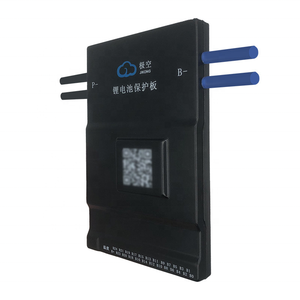
Seplos Bms 3.0 Active Balancer Lifepo4 Lithium Battery protection Board
Seplos BMS 3.0 Active Balancer LiFePO4 Lithium Battery Protection Board Balance System
Contact Us
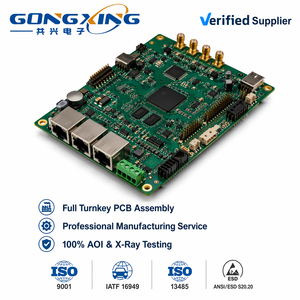
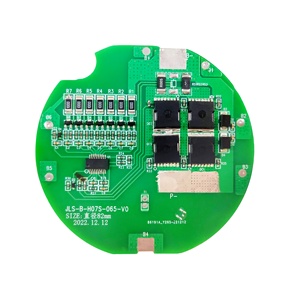
Smart BMS Battery Management System PCBA Active Balancing Board
Smart BMS PCBA | Active Balancing Board | Full Turnkey Assembly | IATF 16949 Standard
Contact Us
0.6A Smart Active Balancer 150A BMS 7S-24S JIKONG JK-BD6A24S15P
0.6A Smart Active Balancer 150A BMS 7S-24S JK-BD6A24S15P Li-ion LiFePO4 System
Contact Us
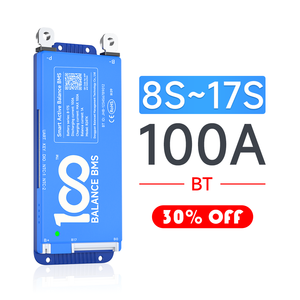
Smart Active Balancer battery Protection Board 100a 48v 16s Lifepo4 Smart BMS
Smart Active Balancer Battery Protection Board 100A 48V 16S LiFePO4 Smart BMS
Contact Us
KLS Battery Management System BMS KLS-BMS-045 64s 120A 12V LiFePO4
KLS BMS KLS-BMS-045 64S 120A 12V LiFePO4 Electric Bicycle Active Balancer
Contact Us
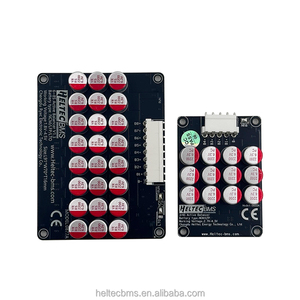
Heltec 4S To 21S Active Balancer 5.5A Battery Equalizer Lifepo4
Heltec 4S to 21S Active Balancer 5.5A Energy Transfer Capacitor Equalizer
Contact Us
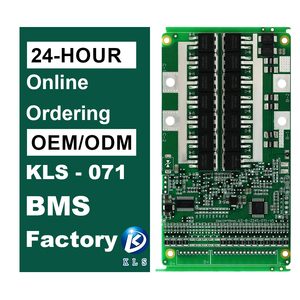
KLS Smart BMS 16S 48V 100A 150A LiFePO4 Home Energy Storage Active Balance
KLS Smart BMS 16S 48V 100A 150A LiFePO4 Home Energy Storage Active Balancer
Contact Us
Engineering Authority

APEX Mobile Power: Global Manufacturing & R&D Baseline

Operating across ISO-certified cleanroom manufacturing plants with complete control over firmware, PCB layout, active balancing logic, and mass production validation.

14+
Years Industry Specialization
60+
Senior Electronics Engineers
8%
Annual Revenue Reinvested in R&D
3000+
Deployed OEM Power Projects
Industry Whitepaper

The Physics of Active Equalization vs. Passive Heat Dissipation

Why large-scale commercial energy storage and high-power lithium packs require non-dissipative energy redistribution.

1. The Engineering Imperative for Active Balancing in Modern Lithium Batteries

In high-capacity battery packs utilizing Lithium Iron Phosphate (LiFePO4), Nickel Manganese Cobalt (NMC), or Lithium Titanate (LTO) cells, voltage divergence during charge and discharge cycles is an inevitable physical phenomenon. Inherent variations in cell manufacturing tolerances, localized thermal gradients, internal impedance divergence, and unequal chemical aging cause individual series cells to reach voltage limits asynchronously.

Traditional Passive Balancing relies on bypass bleed resistors that convert excess charge energy into thermal waste. While sufficient for small consumer electronics (bleed currents typically limited to 50mA – 200mA), passive architecture fails completely in high-capacity energy storage systems (ESS), electric mobility (E-bikes, EV, AGVs), and industrial power banks. Discharging excess energy as heat exacerbates enclosure thermal dynamics, increases thermal management requirements, and fails to remedy capacity bottlenecks during discharge cycles.

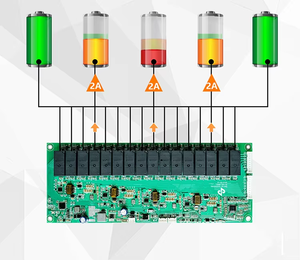
Active Balance Battery Management Systems (Active BMS) solve this fundamental bottleneck by employing lossless dynamic energy transfer. Rather than burning off energy from high-voltage cells, Active Balancers extract energy from higher-potential cells via high-frequency capacitive, inductive, or transformer-coupled circuits and inject it directly into lower-voltage cells. This non-dissipative equalization maintains maximum pack energy yield, lowers total cost of ownership (TCO), and extends battery system operational lifespan by 25% to 40%.

2. Direct Architectural Comparison: Active Balancing vs. Passive Balancing

Technical Parameter Passive Balancing (Resistive Bleed) Active Capacitive Equalization Active Inductive / Transformer Transfer
Equalization Mechanism Thermal heat dissipation via BLEED resistors High-frequency switched-capacitor charge pump Magnetic inductance energy transfer
Balancing Current Range 30mA to 200mA (Max thermal limit) 1.0A to 5.5A (Voltage delta dependent) 2.0A to 10.0A (Continuous programmable)
Energy Efficiency < 5% (95%+ lost as resistive heat) 92% to 95% transfer efficiency 88% to 93% transfer efficiency
Thermal Generation High localized heat; risks thermal gradient acceleration Negligible heat generation (< 1.5W at peak 5A) Low operational thermal profile
Operational Window Only near top-of-charge CV phase (> 3.45V LiFePO4) Continuous during Charge, Discharge, & Rest Continuous dynamic active tracking
Impact on Cell Lifespan Minimal protection against capacity degradation Extends cycle life by 25% - 40% Maximizes depth-of-discharge (DoD) utilization

3. Capacitive vs. Inductive Active Balance Topology Deep-Dive

When selecting an Active Balance BMS supplier or exporter, procurement engineers must distinguish between the two primary electronic topologies dominating the market:

  • Capacitive Energy Transfer (Switched Capacitor): Utilizes multi-channel solid-state MOSFET matrix arrays paired with high-frequency ceramic capacitor banks. Energy is transferred between adjacent series cells based on differential voltage potential ($I_{balance} \propto \Delta V$). As seen in 5.5A capacitive equalizers, this setup delivers ultra-fast microsecond response times with zero magnetic electromagnetic interference (EMI), ideal for high-density 4S to 24S residential and light industrial LiFePO4 packs.
  • Inductive / Transformer Energy Transfer: Uses buck-boost DC-DC converter topologies or multi-winding transformers to transfer energy from the entire pack directly to the weakest individual cell (or vice-versa). Inductive balancing allows fixed, high-current balance rates (e.g., 2A to 10A continuous) regardless of how low the inter-cell voltage delta is. This topology is the benchmark for high-voltage commercial ESS, electric buses, and 64S+ electric vehicle battery modules.
Strategic Outlook

Future Procurement & Technological Trends in BMS Active Balancing

Analyzing global procurement vectors, regulatory evolution, and smart hardware integration trends shaping the next decade of battery storage sourcing.

1. Shift Toward Cloud-Connected & AI-Driven Predictive Active Equalization

B2B battery procurement is rapidly evolving from passive hardware safety boards to cloud-integrated telemetry platforms. Modern Smart Active BMS hardware incorporates IoT microcontrollers supporting CANbus 2.0B, RS485, Modbus RTU, Bluetooth 5.0, and GPS/4G cellular communication. Future-proof procurement strategies prioritize BMS hardware capable of streaming per-cell internal resistance, real-time temperature, State of Charge (SOC), and State of Health (SOH) data to AI cloud platforms.

Machine learning algorithms analyze historical voltage recovery curves during active balancing events to predict micro-short circuits, dendrite growth, and accelerated cell capacity degradation months before catastrophic failure. Sourcing BMS boards with upgradeable firmware and multi-protocol communications ensures seamless integration into smart microgrids and remote Fleet Management Software (FMS).

2. Universal Multi-Chemistry Compatibility & Sodium-Ion (Na-Ion) Integration

As the energy storage industry diversifies beyond traditional NMC and LiFePO4 into emerging Sodium-Ion (Na-Ion) and Lithium Titanate (LTO) chemistries, battery pack manufacturers require BMS active balance platforms with wide programmable voltage thresholds. Sodium-ion cells feature distinct voltage discharge profiles (1.5V to 4.0V) and steeper discharge curves. Sourcing active balancers with fully customizable overvoltage/undervoltage protection thresholds, balance trigger voltage deltas (e.g., 0.005V to 0.1V adjustable), and multi-chemistry algorithm switching eliminates inventory fragmentation for OEM pack assemblers.

3. Compliance with Strict International Grid & Automotive Safety Standards

Global regulatory bodies are mandating stringent thermal runaway containment standards (UL 1973, UL 9540A, IEC 62619, UN38.3, and IATF 16949). Future active balance procurement trends show a decisive migration toward suppliers capable of delivering turnkey PCBA assemblies equipped with dual-redundant hardware protection (hardware overcurrent trip + MCU software shutdown), integrated aerosol/gas sensor triggers, and isolated communication ports to prevent high-voltage transient propagation in 1000V+ containerized ESS projects.

Enterprise Advantage

Why Global Tier-1 OEMs Partner with APEX Mobile Power

A fully integrated OEM/ODM manufacturing supply chain delivering custom active balance PCB assemblies, battery packs, and intelligent power chargers.

ISO & IATF Certified Production

Our state-of-the-art manufacturing plants operate under strict quality management systems, including ISO 9001:2015 (Quality), ISO 13485:2016 (Medical Devices), ISO 14001:2015 (Environmental), and ISO 45001:2018 (Occupational Health & Safety). We deliver full-turnkey SMT PCB assembly compliant with automotive-grade IATF 16949 standards.

In-House Hardware & Firmware R&D

With over 60 dedicated electrical, mechanical, and software engineers on staff and 8% of annual revenue reinvested directly into innovation, APEX Mobile Power designs custom Active Balancers, custom BMS enclosures, smart battery chargers, and specialized application software tailored to exact client parameters.

Rigorous Quality Validation

Every active balance board and battery protection circuit undergoes automated optical inspection (AOI), functional circuit testing (FCT), high-voltage isolation breakdown testing, thermal imaging camera validation under peak 5A/10A active transfer loads, and burn-in chamber environmental stress testing prior to global shipment.

Procurement Knowledge Base

Frequently Asked Questions (FAQ) for BMS Active Balancers

Technical, commercial, and operational guidance for procurement managers, engineering directors, and battery system integrators.

Q1: What is the main difference between an Active Balancer and a Standalone BMS Protection Board?
A standard BMS protection board focuses primarily on battery safety—monitoring total voltage, individual cell overvoltage, undervoltage, charge/discharge overcurrent, and short-circuit conditions to trip safety MOSFETs when thresholds are breached. Most standard BMS units either lack balancing entirely or feature low-current passive balancing (< 100mA). An Active Balancer (or Smart BMS with integrated Active Balance circuit) actively transfers energy from high-voltage cells to low-voltage cells using 1A to 5.5A+ transfer currents. While a standard BMS stops the pack when the first cell empties or fills, an Active Balancer dynamically levels cell voltages, allowing the entire battery pack to utilize its full rated amp-hour capacity.
Q2: Can an Active Balance Board be installed on an existing battery pack with passive BMS?
Yes. External multi-channel active balancers (such as Heltec 4S to 21S 5.5A capacitive equalizers) can be wired in parallel with existing passive BMS units across the cell sampling wire harness. However, for streamlined OEM assembly, space optimization, and telemetry integration, we recommend procuring fully integrated Smart Active BMS boards (such as JIKONG JK-BD6A24S15P or Seplos BMS 3.0) which combine active balancing logic, primary safety protection, CANbus/RS485 communications, and Bluetooth monitoring onto a single compact PCBA footprint.
Q3: How do I select the right balancing current (e.g., 0.6A vs. 2A vs. 5.5A) for my battery project?
Selection depends on overall cell capacity (Ah rating), cell quality grade, and operational discharge rates:
  • 0.6A – 1.0A Active Balance: Ideal for battery packs between 20Ah and 100Ah (e.g., light e-mobility, AGVs, small telecom backup) using high-grade Tier-1 cells with low initial voltage divergence.
  • 2.0A – 3.0A Active Balance: Recommended for 100Ah to 200Ah residential solar energy storage packs (48V / 51.2V 16S LiFePO4 wall batteries) undergoing daily cyclic charge/discharge.
  • 5.0A – 10.0A Active Balance: Essential for high-capacity industrial systems (200Ah to 500Ah+ single cells, heavy industrial equipment, high-voltage C&I energy storage container blocks) or second-life battery re-sorting applications where inter-cell resistance and capacity variances are higher.
Q4: What certifications are mandatory when importing Active BMS boards into Europe and North America?
For North America, BMS units intended for stationary storage or industrial devices must comply with UL 1973 (Standard for Batteries in Stationary Applications) and UL 9540. The PCB assembly itself should carry UL 94-V0 flame retardancy rating and UL 796 printing standards. For the European Union, CE Marking with compliance to EMC Directive (2014/30/EU) and RoHS Directive (2011/65/EU) is mandatory. For transportation safety, the final battery assembly incorporating the BMS must pass UN 38.3 altitude, thermal, vibration, shock, and external short-circuit testing. APEX Mobile Power provides full documentation support and certified test reports for global export compliance.
Q5: Does APEX Mobile Power support custom PCB dimensions, specialized firmware protocols, and turn-key OEM branding?
Absolutely. APEX Mobile Power is an established OEM/ODM turn-key manufacturer. We engineer custom PCB footprints to fit tight enclosure geometries, design custom aluminum heatsink enclosures with IP67/IP68 ingress protection, program customized CANbus / RS485 communication protocols (such as SMA, Victron, Pylontech, Growatt, or proprietary inverter protocols), and provide customized mobile app / PC software branding for global distributors and original equipment manufacturers.

Accelerate Your OEM Battery Engineering & Sourcing Today

Consult directly with APEX Mobile Power's senior BMS design engineers for custom active balancing schematics, volume wholesale pricing, sample evaluation units, and comprehensive compliance documentation.