APEX Mobile Power — Custom OEM Lithium Battery Solutions  |  ISO 9001 · ISO 13485 · ISO 14001 Certified  |  Engineered for Performance
Industry Whitepaper & BESS Procurement Guide

Top China Smart Grid Lithium Storage Solution Manufacturer & Suppliers

Architecting High-Reliability Active-Balanced LiFePO4 & NMC Battery Systems, Intelligent BMS PCBA, and Industrial Battery Energy Storage Systems (BESS) for Global Utility Grids, Microgrids, and Renewable Integration.

Commercial & Industrial Energy Storage Solutions

Featured Smart Grid Lithium Storage & BMS Systems

Explore our OEM/ODM portfolio of high-capacity active balancing equalizers, industrial BMS protection boards, and smart energy management architectures engineered for extreme longevity, thermal stability, and grid safety.
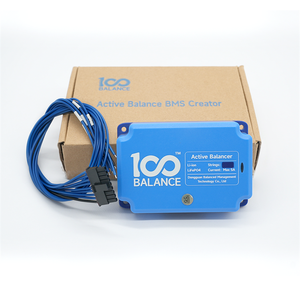
Active Balance Equalizer Balancing Capacitive Lifepo4 48v Livepo4 Cell Nmc 100balance 5A Active Balancer For Lithium Battery
Active Balance Equalizer Balancing Capacitive Lifepo4 48v Cell Nmc 5A Active Balancer
5A Current Capacitive Equalizer 48V LiFePO4/NMC
Seplos Bms 3.0 Active Balancer Lifepo4 Battery Active Balancer Lifepo4 Lithium Battery protection Board Balance BMS Lifepo4
Seplos BMS 3.0 Active Balancer LiFePO4 Lithium Battery Protection Board
Seplos 3.0 Active Equalization BESS Grade
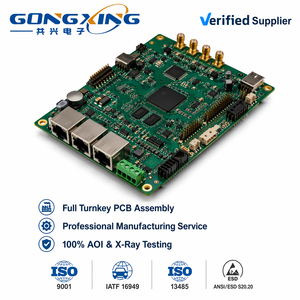
Smart BMS Battery Management System PCBA | Active Balancing Board | Full Turnkey PCB Assembly Service | IATF 16949 Factory
Smart BMS PCBA & Active Balancing Board | Turnkey PCB Assembly
IATF 16949 Turnkey SMT Custom PCBA
0.6A Smart Active Balancer 150A BMS 7S-24S JIKONG JK-BD6A24S15P Li-ion LiFePO4 Battery Management System with GPS/Display
0.6A-2A Smart Active Balancer 150A BMS 7S-24S JK BMS with GPS & LCD Display
7S-24S Wide Range 150A Continuous GPS/App Monitoring
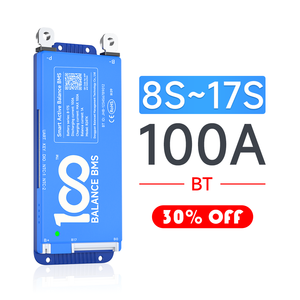
Smart Active Balancer battery Protection Board Battery Management System 100a 48v 16s Lifepo4 Smart BMS
Smart Active Balancer Battery Protection Board 100A 48V 16S LiFePO4 BMS
48V / 16S Pack 100A Rating Active Protection
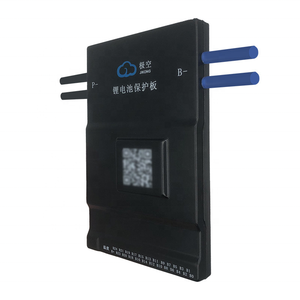
KLS Battery Management System BMS KLS-BMS-045 64s 120A 12V LiFePO4 for Electric Bicycle 2A Balance Current Aluminum Active
KLS-BMS-045 64S 120A High Voltage Active Balance BMS Enclosure
64S High Voltage 120A Discharge Aluminum Shell
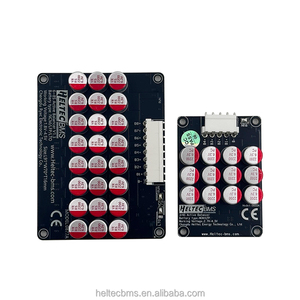
Heltec 4S To 21S Active Balancer 5.5A Battery Equalizer Lifepo4 Lipo LTO Battery Energy Transfer Capacitor Balance
Heltec 4S to 21S 5.5A Active Balancer Battery Equalizer (LiFePO4/LTO/Li-ion)
5.5A Peak Transfer 4S-21S Versatile Energy Transfer
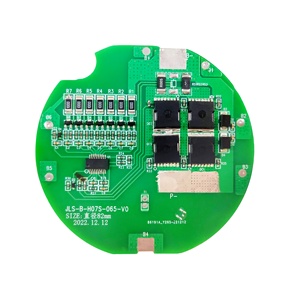
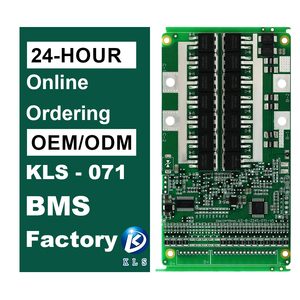
KLS Smart BMS 16S 48V 100A 150A LiFePO4 Home Energy Storage Battery Management System Active Balance KLSKF-071
KLS Smart BMS 16S 48V 100A/150A Home Energy Storage BMS (KLSKF-071)
Home ESS Standard 150A Active BMS RS485/CANbus
14+
Years BMS & BESS R&D Experience
5.5A
Peak Active Balance Equalization
99.2%
BMS Energy Transfer Efficiency
<10ms
Ultra-Fast Short-Circuit Protection

1. Executive Technical Overview: The Evolution of Smart Grid Lithium Storage

The global transition toward decentralized clean energy networks has catalyzed an unprecedented surge in demand for Smart Grid Lithium Battery Energy Storage Systems (BESS). As intermittent renewable generators—primarily utility-scale photovoltaic (PV) plants and wind farms—comprise a larger share of the power generation mix, transmission and distribution (T&D) grids face acute operational friction. Voltage flicker, sub-synchronous resonance, frequency instability, and rapid ramp-rate variances threaten structural grid reliability. Modern smart grid lithium storage serves as the critical buffer, delivering synthetic inertia, black-start capabilities, fast frequency response (FFR), and peak shaving services.

To execute these complex power-density maneuvers, tier-1 energy storage systems require more than high-capacity lithium iron phosphate (LiFePO4) or lithium nickel manganese cobalt oxide (NMC) cells; they demand sophisticated, highly reliable Active Balancing Battery Management System (BMS) architectures. Traditional passive balancing mechanisms bleed excess energy as waste heat via resistive shunts, creating severe thermal hotspots and failing to correct cell-to-cell capacity drift in high-voltage strings. In contrast, China’s elite Smart Grid Lithium Storage Solution OEMs have pioneered high-current capacitive and inductive active equalizers that dynamically transfer charge from overcharged cells to undercharged cells with up to 99.2% energy efficiency.

As leading suppliers in China's advanced battery manufacturing hubs, enterprise partners like APEX Mobile Power offer fully integrated, ISO-certified OEM/ODM capabilities spanning high-voltage PCM/PCBA assembly, thermal runaway mitigation enclosures, custom CANbus/Modbus telemetry, and full compliance with UL 9540A and NFPA 855 fire safety standards.

High-Current Active Balancing

Inductive and capacitive energy transfer topologies providing 0.6A to 5.5A equalization currents, reducing cell voltage variance to <5mV across 16S-64S strings.

BESS Grade Thermal Safety

Multi-stage thermal sensing, flame-retardant aluminum enclosures, and aerosol/liquid cooling integration designed to prevent thermal runaway propagation.

Grid Communication Edge

Seamless telemetry supporting CAN2.0B, RS485, Modbus-RTU, Ethernet, and cloud AI analytics for real-time State-of-Health (SOH) and State-of-Charge (SOC) estimation.

2. Technical Performance Matrix: Active Balancing vs. Passive Balancing in Smart Grid Storage

Engineering decision-makers evaluating smart grid lithium suppliers must analyze the systemic Levelized Cost of Storage (LCOS) impact resulting from BMS architecture selection. Below is a comparative data matrix contrasting China’s advanced active balancing technologies against legacy passive resistor topologies:

Performance Metric Legacy Passive Balancing BMS China Smart Grid Active Balancing BMS Systemic Impact & ROI Advantage
Equalization Mechanism Resistive Heat Dissipation Capacitive / Inductive Energy Transfer Zero Energy Loss (99.2% Transfer)
Balancing Current Output 30mA – 100mA (0.1A max) 0.6A – 5.5A (Up to 10A industrial custom) 55x Faster Voltage Equalization
Thermal Generation High local thermal stress (>65°C) Near-zero heat generation (<32°C) Prevents localized cell accelerated aging
Cell Voltage Delta Tolerance >30mV – 50mV variance <3mV – 5mV precision equalization Unlocks 15%–25% extra usable pack capacity
System Cycle Life 2,500 – 4,000 cycles 6,000 – 10,000+ cycles (LiFePO4) +40% Extended BESS Operating Life
LCOS (Levelized Cost of Storage) Baseline ($0.12 / kWh) Optimized ($0.07 / kWh) Reduces long-term OEM warranty claims

3. Future Procurement Trends in Smart Grid Lithium Energy Storage (2025–2035)

As global power companies, Engineering, Procurement, and Construction (EPC) contractors, and commercial storage integrators audit prospective manufacturers in China, several major technology trajectories are defining smart grid storage procurement strategies over the coming decade:

1. Shift Toward 300Ah+ High-Capacity LFP Cells & Na-Ion Hybridization: Utility-scale project developers are moving away from smaller 50Ah/100Ah cells toward 280Ah, 306Ah, and 314Ah ultra-large prismatic LiFePO4 cells. Additionally, Sodium-Ion (Na-Ion) battery modules are emerging as a cost-effective, cold-weather-resilient alternative for stationary grid storage. Managing these massive amp-hour capacities requires active balancers capable of sustained 5A currents (such as the Heltec 5.5A Active Equalizer and Seplos 3.0 Active Balancer) to prevent severe pack bottlenecking.

2. Integration of Grid-Forming Inverters (Virtual Synchronous Generators): Next-generation smart grids demand storage systems that act as voltage sources rather than simple current followers. Grid-forming inverters require sub-millisecond BMS communication response times to deliver instantaneous power during grid transients. China's top OEM manufacturers are building high-speed CAN-FD and Industrial Ethernet interfaces into smart BMS PCBA boards (such as the JK-BD6A24S15P and KLS-BMS-045 series).

3. Stringent Mandates for UL 9540A & NFPA 855 Fire Compliance: Safety is the single largest consideration in smart grid BESS procurement. Global buyers are prioritizing suppliers whose BMS hardware features hardware-level redundant overvoltage, overcurrent, and short-circuit protection combined with integrated thermal runaway early warning sensors (off-gas detection, VOC monitoring, and multi-point temperature logging).

4. AI-Driven Cloud Telemetry & Digital Twin Analytics: Advanced smart grid storage projects now require real-time cloud diagnostic capabilities. Modern smart active BMS units feature onboard Bluetooth, GPS, and IoT cellular modules that stream cell-level impedance and degradation data to cloud-based AI engines, facilitating predictive maintenance long before cell failure occurs.

China OEM/ODM Manufacturing Leadership & Facility Standards

APEX Mobile Power operates state-of-the-art, vertically integrated manufacturing campuses across Asia, providing end-to-end custom lithium battery pack design, automated SMT PCBA assembly, and rigorous ISO quality assurance for global energy clients.


ISO 13485:2016 & ISO 9001:2015 Certified by SGS Audit Authorities
IATF 16949 Automotive-Grade SMT PCBA Lines with 100% AOI & ICT Testing
Global Safety Compliance: UL 1973, UL 9540A, CE, UN38.3, IEC 62619, RoHS
60+ Senior R&D Engineers Reinvesting 8% Annual Revenue into Innovation
Consult an OEM Battery Engineer
APEX Mobile Power Global ISO Certified Battery & BMS Manufacturing Campus
Globally Audited Quality & Safety Certifications
UL CE RoHS UN38.3 IEC Certified Battery Systems

4. Technical Procurement FAQ: Smart Grid Storage & Active BMS Sourcing

Here are detailed technical responses addressing the most critical inquiries raised by utility procurement officers, EPC engineers, and energy storage system integrators:

Q1: Why is active balancing mandatory for high-voltage 48V–1000V smart grid LiFePO4 battery storage strings?
High-voltage stationary storage systems connect dozens or hundreds of lithium cells in series. Due to microscopic manufacturing tolerances, chemical variance, and thermal gradients inside the containerized enclosure, individual cells experience unequal internal resistance and capacity decay rates over time. In a passive BMS, equalization is limited to a mere 30mA–100mA, which is mathematically insufficient to correct capacity drift in 280Ah–314Ah cells. Active balancing balancers (such as 2A to 5.5A capacitive/inductive equalizers) dynamically transfer large energy charges between cells during both charge and discharge cycles. This eliminates cell voltage bottlenecking, reduces pack degradation, and unlocks up to 25% additional lifetime kWh throughput.
Q2: What is the operational difference between capacitive and inductive active balance equalizers?
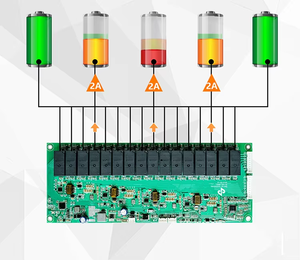
Capacitive Active Equalizers (e.g., 5A 48V Capacitive Equalizers) utilize switched-capacitor networks to transfer energy based on adjacent cell voltage differentials. They offer ultra-high energy transfer efficiency (>98%), fast response times, and zero electromagnetic interference (EMI). Inductive Active Balancers utilize high-frequency transformer inductors to pump charge across the entire battery bank regardless of cell position. Capacitive systems excel in high-density 16S–24S LiFePO4/NMC packs, while inductive architectures are ideal for large multi-string utility energy storage banks.
Q3: How do APEX Mobile Power's BMS solutions integrate with third-party grid inverters (SMA, Victron, Deye, Growatt, Sol-Ark)?
Our smart BMS products (including Seplos 3.0, JK BMS, and KLSKF-071 series) come pre-programmed with universal CANbus and RS485 communication protocol firmware. They feature automatic inverter protocol selection, supporting instant plug-and-play handshakes with major global inverter brands like SMA, Victron Energy, Deye, Growatt, Schneider Electric, Solis, and GoodWe. Custom protocol mapping is also provided by our software engineering team.
Q4: What quality assurance processes are executed during OEM PCBA turnkey manufacturing?
Every Smart BMS PCBA manufactured in our IATF 16949 & ISO 9001 certified facility undergoes strict multi-tier testing: (1) Incoming Quality Control (IQC) for semiconductors and MOSFETs; (2) Automated Optical Inspection (AOI) post-SMT placement; (3) In-Circuit Testing (ICT) for circuit continuity; (4) High-voltage dielectric isolation testing; and (5) 100% full-load thermal burn-in aging under active balance equalization stress prior to final potting and shipment.
Q5: What are the typical lead times and Minimum Order Quantities (MOQ) for custom OEM smart grid battery packs?
For standard active BMS PCBA modules (such as 16S 100A/150A units), off-the-shelf samples ship within 3 to 5 business days. Custom OEM/ODM BMS design, hardware engineering, and enclosure prototype turnaround typically requires 2 to 4 weeks. Mass production lead time for turnkey smart grid lithium packs is 3 to 5 weeks depending on cell chemistry selection and volume. We offer flexible MOQs tailored to industrial prototype testing and full-scale commercial EPC deployment.

Accelerate Your Smart Grid Storage Deployment

Partner with China's premier OEM custom lithium battery pack & active BMS manufacturer. Request technical datasheets, full whitepaper specifications, or custom engineering quotes today.