Discover our Tier-1 certified portable power stations, industrial jump starters, micro-grid energy storage systems, and emergency LED power supplies manufactured for extreme field operational uptime.
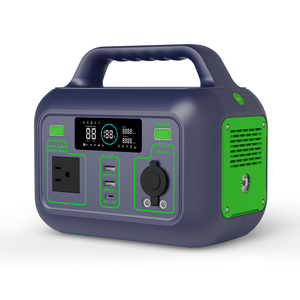
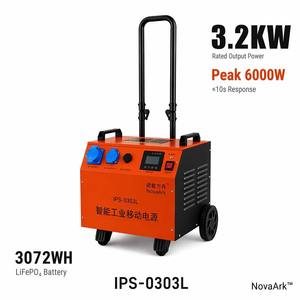
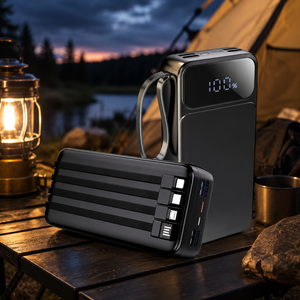
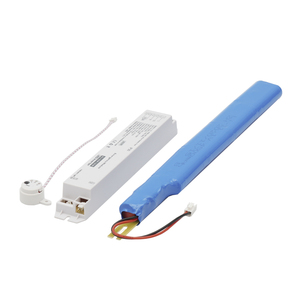
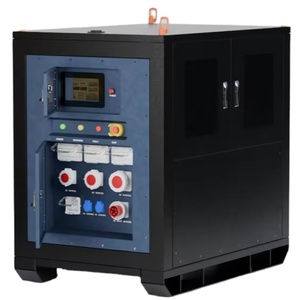
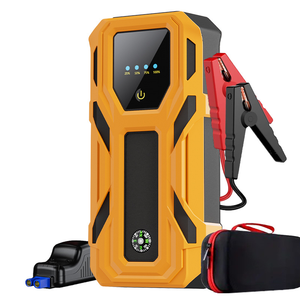
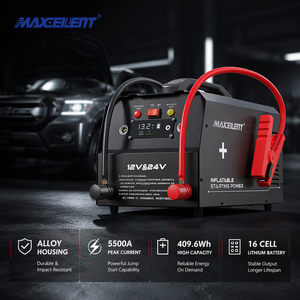
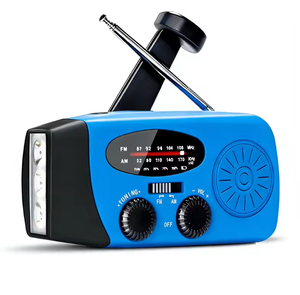
In an era defined by grid instability, extreme climate events, and the rapid decentralization of industrial operations, the demand for Industrial Emergency Power Packs and portable energy storage systems (ESS) has transitioned from an operational luxury to a mission-critical infrastructure mandate. Global B2B buyers, procurement executives, and system integrators face increasing complexity in selecting industrial-grade energy solutions that balance peak energy density, uncompromising thermal stability, strict regulatory compliance, and overall Total Cost of Ownership (TCO).
As a premier China Portable Industrial Emergency Power Pack Factory and Global Exporter, APEX Mobile Power (AMP) operates at the nexus of advanced electrochemistry, proprietary Smart Battery Management Systems (BMS), and precision structural engineering. Certified under ISO 9001:2015, ISO 13485:2016 (Medical Devices Quality Management), ISO 14001:2015, and ISO 45001:2018 by SGS, our manufacturing ecosystem provides global original equipment manufacturers (OEMs) and engineering distributors with full-stack custom battery solutions—from compact tactical emergency backup units to 60kWh containerized mobile industrial micro-grids.
This comprehensive whitepaper explores the critical technology paradigms, electrochemical selection criteria, global procurement trends, and quality verification frameworks required to source industrial-grade portable emergency power systems effectively.
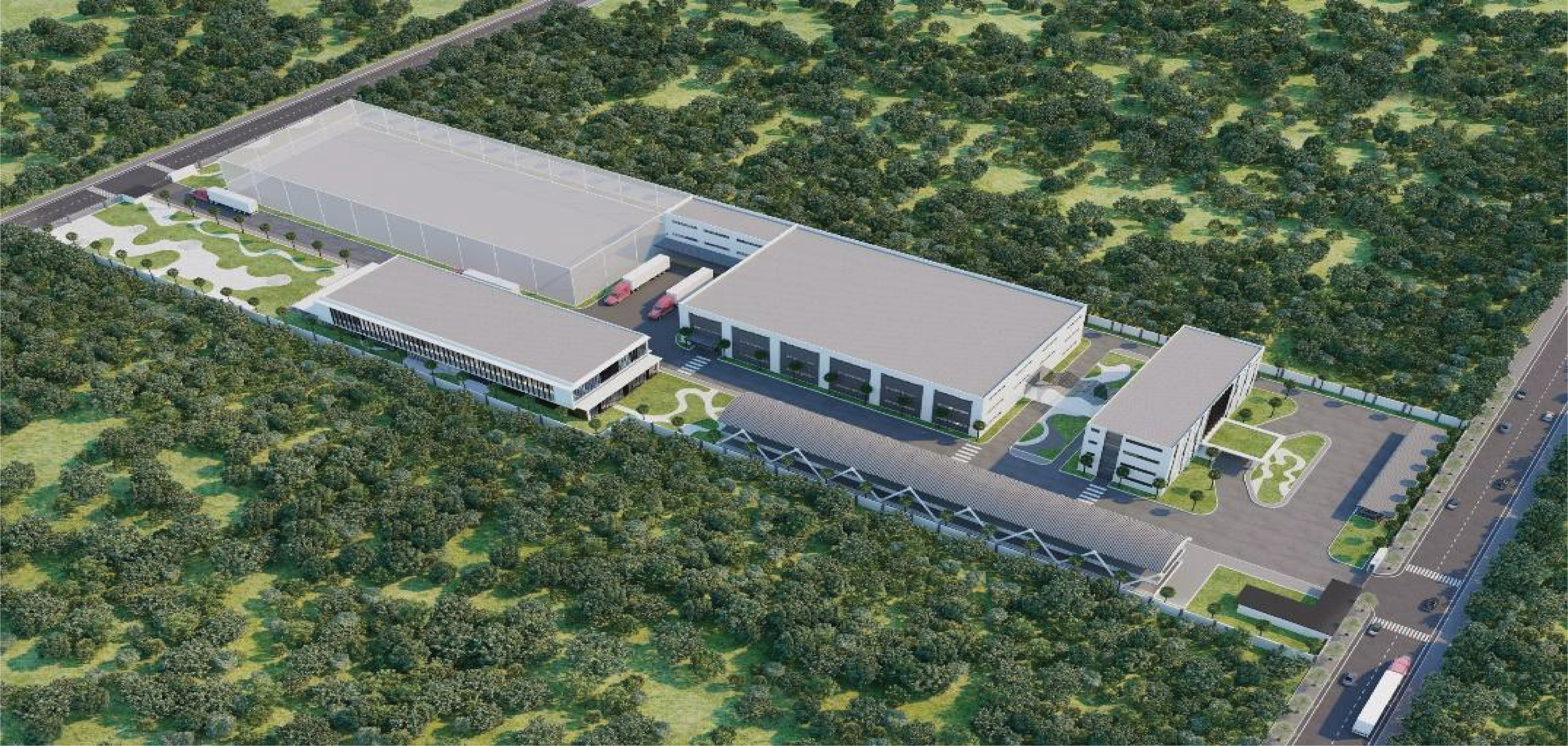
To insulate our international OEM clients from geopolitical risks, tariff fluctuations, and supply disruptions, APEX Mobile Power has established a dual-hub manufacturing topology encompassing fully automated production campuses in China and Vietnam.
Every industrial power pack leaving our lines undergoes rigorous multi-stage qualification: 100% automatic cell-sorting (internal resistance matching within ≤0.5mΩ and voltage variance ≤2mV), continuous thermal runaway chamber testing, automated optical inspection (AOI) for laser welding, and full-load burn-in cycles.
The landscape of portable emergency energy is undergoing a structural transition driven by electrochemical breakthroughs, smart IoT hardware integration, and stringent green manufacturing standards.
Transitioning from conventional liquid lithium-ion to semi-solid and solid-state chemistry increases volumetric energy density beyond 350Wh/kg while virtually eliminating thermal runaway risks under severe mechanical puncture or crushing—essential for high-risk industrial, military, and construction environments.
Modern industrial emergency packs are evolving into intelligent edge nodes. Utilizing embedded MCU architectures with IoT CANbus, Modbus RS485, and cloud connectivity, next-generation BMS platforms dynamically calculate State of Charge (SOC), State of Health (SOH), and predict cell impedance anomalies before catastrophic failure occurs.
Sodium-ion (Na-ion) battery chemistry is emerging as a disruptive force for emergency power in sub-zero applications. Operating efficiently down to -40°C with zero depth-of-discharge degradation during transport, Na-ion provides unmatched thermal stability and raw material cost advantages for heavy industrial backup.
Integrating Gallium Nitride (GaN) power electronics directly into high-power portable stations enables bi-directional fast charging. Industrial power stations can now achieve 0% to 80% recharge within 45 to 60 minutes directly from AC mains or high-output portable solar arrays, minimizing site operational downtime.
Industrial buyers are demanding extreme environmental resilience. Advanced power packs utilize flame-retardant V-0 polycarbonate aluminum alloy hybrid chassis, vibration-damped internal cell holders, and IP67 ingress protection to withstand marine, mining, and hurricane-zone operations.
Global regulatory frameworks, such as the EU Battery Regulation, mandate modular disassembly, battery passport traceability, and eco-design compliance. Advanced OEM manufacturers engineer emergency battery modules with easy cell replacement architecture to facilitate recycling and secondary usage.
Selecting the ideal electrochemical system is the foundational step in engineering a resilient portable emergency power pack. The matrix below outlines key technical parameters across major cell chemistries utilized in APEX Mobile Power manufacturing lines.
| Battery Chemistry | Gravimetric Energy Density | Cycle Life (80% DOD) | Operating Temp Range | Thermal Runaway Temp | Primary Industrial Applications |
|---|---|---|---|---|---|
| Lithium Iron Phosphate (LiFePO4) | 160 – 190 Wh/kg | 3,500 – 6,000 Cycles | -20°C to 65°C | > 270°C (Extremely Safe) | Heavy Industrial ESS, Portable Power Stations, Construction Micro-Grids |
| High-Density NMC / LiCoO2 | 240 – 300 Wh/kg | 800 – 1,500 Cycles | -20°C to 55°C | ≈ 210°C (Requires Active Cooling) | Compact Jump Starters, High-Power Boosters, Ultra-Portable Emergency Packs |
| Sodium-Ion (Na-Ion) | 130 – 160 Wh/kg | 2,000 – 4,000 Cycles | -40°C to 60°C | > 300°C (Inherent Safety) | Sub-Zero Extreme Cold Emergency Power, Budget Heavy-Duty Standby Backup |
| Solid-State Lithium (Emerging) | 350 – 450 Wh/kg | 2,000+ Cycles | -30°C to 80°C | > 400°C (Non-Flammable) | Aerospace Emergency Power, Medical Critical Backup, Military Field Equipment |
Global B2B buyers sourcing emergency power systems from China and Southeast Asia face dynamic structural shifts in supply chain logistics, tariff policies, and technical standards. To maximize return on investment (ROI) and safeguard project schedules, leading procurement teams prioritize three macro trends:
While low upfront cost remains enticing, industrial power packs with sub-standard battery cells or uncalibrated BMS electronics incur high failure rates, costly product recalls, and severe brand equity erosion. Investing in Grade-A LiFePO4 cells with 3,500+ lifecycle guarantees drastically reduces cost-per-kWh cycled over the product's operational lifetime, delivering up to 40% TCO savings over 5 years.
Off-the-shelf white-label products frequently fail to meet specialized industrial requirements—such as custom voltage output thresholds, specialized housing mounting brackets, or specific communication protocols (CANbus J1939). Experienced B2B buyers partner directly with manufacturing factories capable of handling Non-Recurring Engineering (NRE) in-house, spanning custom tooling, PCB hardware layout, software firmware programming, and turnkey regulatory testing.
Lithium power products categorized under Dangerous Goods (Class 9) mandate thorough documentation for air and maritime transport. Leading Chinese exporters provide complete certification packages upfront, including UN38.3 transport safety reports, MSDS, Drop-Test Verification, UL1973, IEC 62619, and CE-EMC compliance certificates, eliminating customs delays and port quarantines.
Detailed technical and commercial answers addressing common inquiries from industrial engineers, procurement officers, and global distributors.
Industrial emergency power packs engineered by APEX Mobile Power feature industrial-grade Tier-1 LiFePO4 cells, heavy-duty aluminum internal structural bracing, conformal-coated moisture-proof PCB assemblies, and industrial Smart BMS with multi-stage hardware protection (over-current, short-circuit, over-voltage, under-voltage, over-temperature, and cell-imbalance protection). Unlike consumer units, our systems are built for 24/7 continuous duty, extreme ambient temperatures (-20°C to 65°C), and rugged vibration environments.
Yes. With over 60 dedicated R&D engineers, we provide complete turn-key OEM/ODM development. This includes mechanical industrial design, custom injection mold tooling, CNC aluminum enclosure fabrication, custom BMS firmware development (CANbus, RS485, Bluetooth IoT app integration), silk-screen branding, and custom packaging tailored to your regional market.
For standard off-the-shelf industrial units, sample orders ship within 5 to 7 business days. For customized OEM prototypes requiring custom casing or PCB redesign, prototype delivery spans 3 to 4 weeks. Mass production lead time is typically 25 to 35 days, supported by our scalable dual-hub production facilities in China and Vietnam.
Our quality control adheres to ISO 9001 and ISO 13485 standards. Every incoming battery cell undergoes automated sorting, matching voltage variance to within ≤2mV and internal resistance to within ≤0.5mΩ. During assembly, automated laser welding guarantees low-impedance interconnects. 100% of finished power packs complete a 24-hour full-power charge/discharge aging test and automated optical inspection before final packaging.
All our industrial power packs are fully certified for global logistics and commercial sale. We maintain comprehensive test packages including UN38.3, MSDS, 1.2m Drop Test reports, CE, FCC, RoHS, UL 1973, UL 2743 (for jump starters), and IEC 62619. We provide all necessary Dangerous Goods (DG) shipping declarations for hassle-free customs clearance worldwide.
Our heavy-duty 60kWh ESS mobile emergency power units feature integrated Energy Management Systems (EMS) supporting multi-source hybrid inputs. They seamlessly interface with solar PV arrays (via built-in MPPT controllers), diesel generators, or grid power, performing automatic transfer switching (ATS) within <10ms to maintain continuous uninterruptible power for off-grid job sites, disaster recovery camps, or industrial plants.
Accelerate your product launch with custom-engineered lithium-ion, LiFePO4, and sodium-ion battery solutions. Contact our engineering team today for technical consultation, detailed specifications, and competitive B2B factory pricing.
Contact Us