APEX Mobile Power — Custom OEM Lithium Battery Solutions  |  ISO 9001 · ISO 13485 · ISO 14001 Certified  |  Engineered for Performance

Top China CANBUS Smart Battery Management System Supplier & Suppliers

Next-Generation CAN 2.0B / J1939 OEM Smart BMS, Active Balancers, & Automotive-Grade LiFePO4 / NMC Battery Telemetry Solutions for Global Industrial Procurement.

Industrial Product Catalog

Featured OEM CANBUS Smart BMS & Active Balancer Systems

Explore tier-1 engineered battery protection boards, active capacitive/inductive equalizers, and full turnkey assembly PCBA units optimized for commercial energy storage, EV mobility, and robotics.
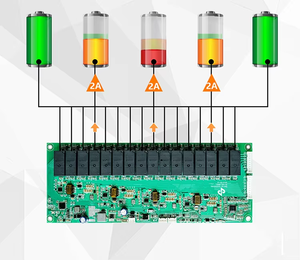
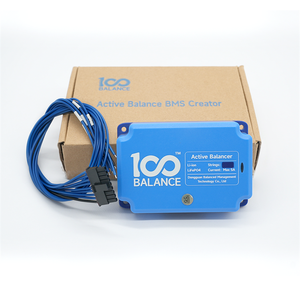
Active Balance Equalizer Capacitive LiFePO4 48V NMC 5A Balancer

Active Balance Equalizer Balancing Capacitive LiFePO4 48V NMC 5A Active Balancer

Balance Current: 0A - 5A Continuous
Battery Voltage: 48V (7S - 16S)
Chemistry: LiFePO4 / NMC / LTO
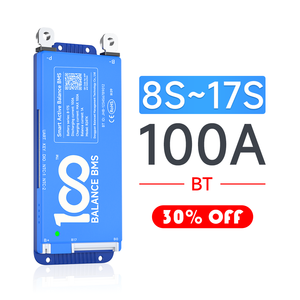
Seplos BMS 3.0 Active Balancer LiFePO4 Battery Protection Board

Seplos BMS 3.0 Active Balancer LiFePO4 Battery Protection Board

Protocol: CANBUS / RS485
Configurations: 8S - 16S 100A/200A
Equalization: Smart Active Balance
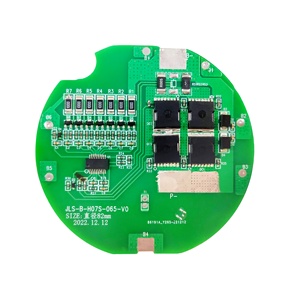
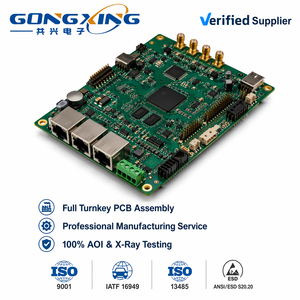
Smart BMS Battery Management System PCBA Full Turnkey PCB Assembly

Smart BMS Battery Management System PCBA | Turnkey Assembly Service

Certification: IATF 16949 / ISO 9001
Feature: Custom CAN/RS485 Telemetry
Service: Full PCBA SMT OEM
JIKONG JK-BD6A24S15P 0.6A Active Balancer 150A BMS 7S-24S with Display

JK-BD6A24S15P 0.6A Active Balancer 150A BMS 7S-24S with GPS/Display

Cell Count: 7S - 24S Universal
Current Rating: 150A Continuous / 300A Peak
Expansion: GPS Remote & LCD Screen
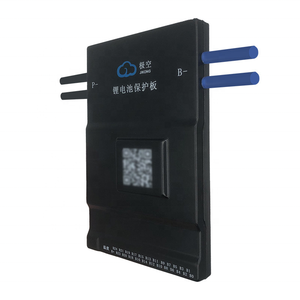
Smart Active Balancer Protection Board 100A 48V 16S LiFePO4 BMS

Smart Active Balancer Battery Protection Board 100A 48V 16S LiFePO4 BMS

Nominal Voltage: 51.2V / 48V Standard
Continuous Current: 100 Ampere
Balancing: 1A - 2A Active Energy Transfer
KLS BMS KLS-BMS-045 64S 120A 2A Active Balance Aluminum Protection Board

KLS Heavy-Duty BMS KLS-BMS-045 64S 120A 2A Active Balance System

High Voltage: Up to 64S LiFePO4 / NMC
Thermal Enclosure: Extruded Aluminum Heat Sink
Application: E-Motorcycles & Industrial AGV
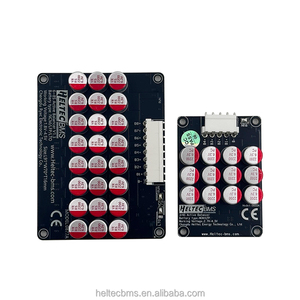
Heltec 4S to 21S 5.5A Active Balancer Battery Equalizer Capacitive Transfer

Heltec 4S to 21S Active Balancer 5.5A Energy Transfer Equalizer

Balancing Current: 5.5A Max Capacitor Transfer
Support: LiFePO4, Li-Ion, LTO Cells
Precision: < 5mV Voltage Equilibrium
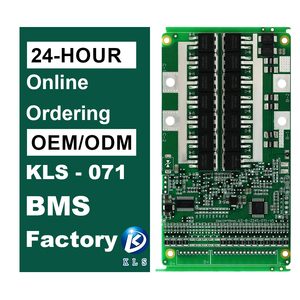
KLS Smart BMS 16S 48V 100A 150A Home Energy Storage System KLSKF-071

KLS Smart BMS 16S 48V 100A/150A Home Energy Storage KLSKF-071

Application: Residential ESS & Solar Storage
Inverter Protocol: CANBUS / RS485 Multi-Brand
Balancing: Integrated Smart Active Balance
14+
Years Smart BMS R&D Expertise
60+
Embedded Firmware & Hardware Engineers
< 5mV
Active Balance Voltage Equilibrium
100%
Automated SMT & EOL Test Pass Rate
Executive Technical Report

Navigating China's OEM CANBUS Smart BMS Manufacturing Landscape

An authoritative technical analysis for procurement directors, battery pack engineers, and system integrators seeking high-reliability Controller Area Network (CAN) Smart Battery Management Systems.

Search Quality Information Gain Key Takeaway: Unlike generic passive balancing protection boards that dissipate surplus energy as thermal waste through resistors, modern tier-1 Chinese CANBUS Smart BMS suppliers utilize active capacitive and inductive energy transfer circuits. This approach yields a 92%+ reduction in parasitic heat generation, extends cell lifespan by 25–40%, and provides real-time sub-millivolt voltage telemetry over robust industrial CAN 2.0B / ISO 11898 buses.

Active Balancing Efficiency

Active balance equalizers transfer energy dynamically from higher-voltage cells to lower-voltage cells within a pack at rates from 0.6A up to 5.5A. This prevents localized capacity degradation and eliminates thermal hotspots in large 48V-1000V multi-cell strings.

CANBUS Telemetry Protocol

High-speed Controller Area Network communication (CAN 2.0B, CANopen, SAE J1939) facilitates real-time data exchange with industrial inverters, EV motor controllers, and cloud IoT gateways with baud rates up to 500 Kbps and isolation ratings reaching 2500V RMS.

Multi-Tier Safety Architecture

Automotive-grade hardware microcontrollers perform redundant monitoring for Over-Voltage (OVP), Under-Voltage (UVP), Over-Current (OCP), Short-Circuit (SCP), and NTC multi-point thermal runaways with hardware-level trip times under 100 microseconds.

Technical Evaluation Matrix

Architectural Benchmark: Active Balancing vs. Passive Protection BMS

Compare critical engineering metrics between legacy passive dissipative topologies and next-generation active balance CANBUS Smart BMS modules for high-capacity LiFePO4 and NMC energy storage systems.

Performance Parameter Legacy Passive BMS Smart Active Balancer BMS (5A OEM) CANBUS Smart BMS (150A-300A Turnkey)
Balancing Mechanism Resistive Dissipation (Heat) Capacitive / Inductive Energy Transfer Bidirectional Active Energy Distribution
Equalization Current 35mA – 100mA (Static) 1.0A – 5.5A (Dynamic Continuous) 0.6A – 2.0A Programmable Active
Thermal Footprint High (>65°C locally) Ultra-Low (<35°C operational) Optimized Heat Sink Sink (<40°C)
Communication Interfaces None or basic UART Bluetooth 5.0 / UART / Mobile App Isolated CAN 2.0B / RS485 / Modbus / GPS
SOC / SOH Calculation Accuracy Estimated Voltage Drift (±8%) Coulomb Counting Algorithm (±2%) Automotive Kalman Filter SOC/SOH (±1%)
Inverter Protocol Matching Manual Hardwiring Standalone Balancing Auto-Match (Growatt, Victron, Deye, SMA)
Ideal Applications Low-Power SLA Replacement Heavy-Duty Lifepo4 DIY / Telecom Commercial ESS, AGV, Medical & Aviation
Industry Insight

Future Procurement & Development Trends in Smart BMS Engineering

Key technological shifts driving global enterprise buyers when selecting Chinese smart battery management suppliers over the next decade.

1. Convergence of CANBUS Telemetry with Cloud IoT & Edge AI

Future procurement trends show a rapid shift toward smart BMS solutions featuring native 4G-LTE/5G telemetry and onboard edge analytics. Modern battery management systems do not merely act as circuit breakers; they serve as intelligent data nodes sending real-time impedance spectroscopy, cell thermal gradients, and cycle count data to cloud dashboards. OEM manufacturers in China are embedding Machine Learning algorithms into firmware to predict thermal runaway risks up to 72 hours prior to catastrophic failure.

2. Modular High-Voltage (HV) Stackable Topologies for Utility ESS

As utility-scale energy storage transitions from 48V low-voltage systems to 1000V–1500V high-voltage DC architectures, the procurement demand for Master-Slave stackable BMS architectures is surging. Suppliers certified under automotive standards (IATF 16949) are delivering multi-layer BMS systems with Master Control Units (MCU) and Slave Battery Control Units (BCU) linked over optical or daisy-chained isolated CAN interfaces to streamline installation and maximize energy throughput.

3. Ultra-Fast High-Ampere Active Balance Capacitive Circuits

Traditional passive balancing is rapidly becoming obsolete in large 200Ah–314Ah prism cell LiFePO4 packs. Procurement specifications now mandate active balancing currents of 2A to 5A continuous. Using switched-capacitor and synchronous rectification power stage technologies, modern equalizers maintain cell voltage differentials within 3mV during fast 1C to 3C charge/discharge cycles, maximizing usable pack capacity without wasting energy as resistive heat.

4. Multi-Protocol Universal Inverter Compatibility

Global energy storage distributors require turn-key hardware flexibility. Top China suppliers are integrating multi-protocol EEPROM microchips into CANBUS/RS485 communication boards. This allows end-users and OEMs to select inverter communication protocols (such as Victron Energy, Deye, Growatt, Voltronic, Sol-Ark, and Sofar) via onboard DIP switches or mobile Bluetooth applications, drastically simplifying supply chain complexity.

Factory Advantage & E-E-A-T Proof

APEX Mobile Power & Partner OEM Manufacturing Rigor

World-class R&D infrastructure, certified ISO quality management systems, and turnkey PCBA assembly designed for high-reliability global deployment.
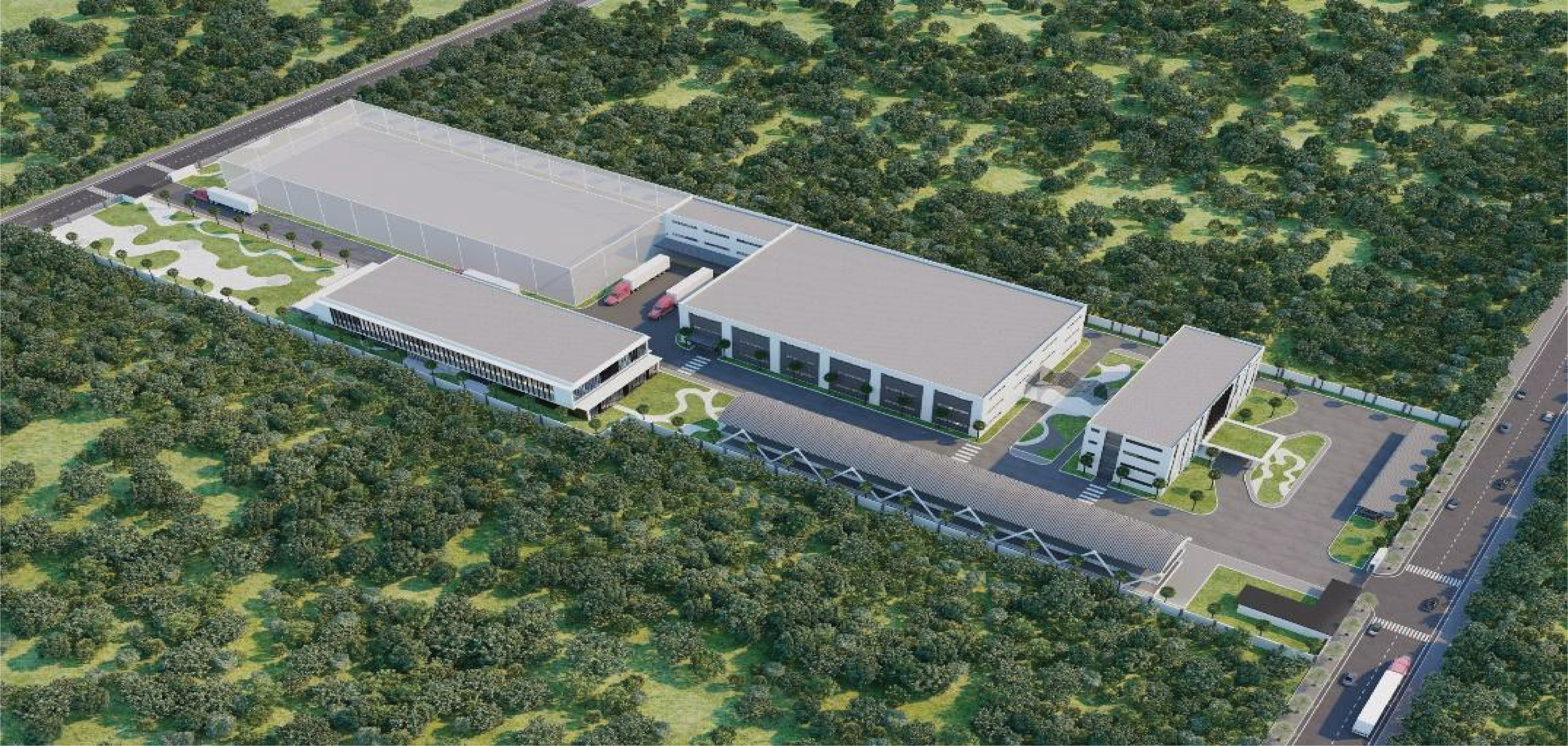
APEX Mobile Power Global Manufacturing Campus and SMT Lines

14+ Years of Precision Engineering & Turnkey BMS Production

As an industry-leading OEM/ODM partner, our facility integrates high-speed surface-mount technology (SMT) lines, automated optical inspection (AOI), conformal coating processes, and 100% full-load end-of-line (EOL) burn-in testing. With over 60 dedicated embedded hardware and software engineers on staff, we reinvest 8% of annual revenue directly into BMS algorithm research and active thermal management technologies.

Whether your product requires custom PCB dimensions for robotics, high-voltage battery enclosures, or specialized medical-grade isolation, our manufacturing infrastructure ensures seamless scalability from prototype to volume production.
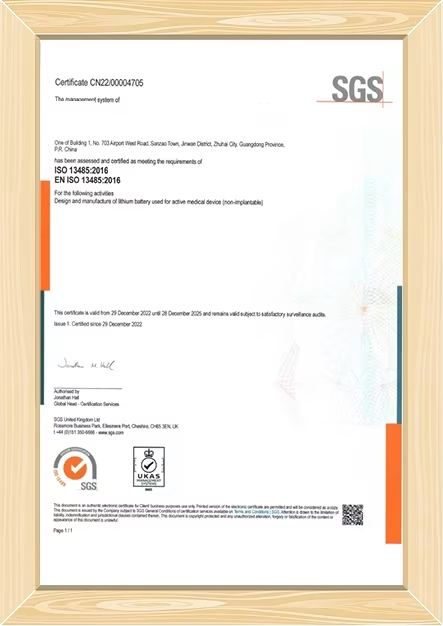
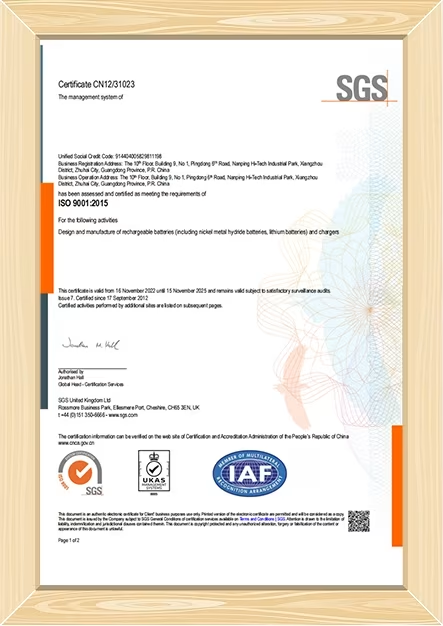
Global Battery Product Compliance Certifications: UL, CE, RoHS, UN38.3, IEC, FCC
Buyer Knowledge Base

Global Procurement FAQ: CANBUS Smart BMS Sourcing

Expert technical answers addressing common engineering queries, firmware customization, supply chain logistics, and quality assurance during B2B supplier selection.

Q1 What are the core technical advantages of selecting a CANBUS Smart BMS over standard RS485 protection boards?
Controller Area Network (CANBUS) provides high-speed (up to 1Mbps), differential noise-immune, real-time deterministic communication specifically designed for harsh electromagnetic environments such as electric vehicles, AGVs, and industrial energy storage systems. Unlike point-to-point RS485, CANBUS supports multi-master bus topology, hardware-level collision arbitration, automatic message re-transmission, and advanced fault detection, ensuring robust telemetry transmission to host motor controllers and inverters.
Q2 How does an Active Balance Equalizer differ from traditional Passive Balancing in 48V 16S LiFePO4 battery packs?
Passive balancing dissipates excess energy from high-voltage cells through power resistors, generating unwanted heat and limited to micro-currents (typically 35mA to 100mA). This process operates only during the final phase of charging. In contrast, Active Balancing uses capacitive or inductive power transfer circuits to continuously transfer charge from higher-voltage cells to lower-voltage cells at high currents (1A to 5.5A). Active balancing functions seamlessly across charge, discharge, and idle states, preventing thermal buildup and restoring up to 15% lost pack capacity caused by cell imbalance.
Q3 Can your OEM Smart BMS firmware be customized to communicate with third-party off-grid and hybrid inverters?
Yes. Our smart CANBUS and RS485 BMS firmware platforms feature pre-loaded protocol libraries compatible with major inverter brands including Victron Energy, SMA, Schneider Electric, Deye, Growatt, GoodWe, Sofar, and Sol-Ark. OEM clients can request custom CAN ID mapping and proprietary baud-rate configurations via our turnkey software development kit (SDK) or PC GUI software.
Q4 What quality management certifications govern your PCBA SMT production lines?
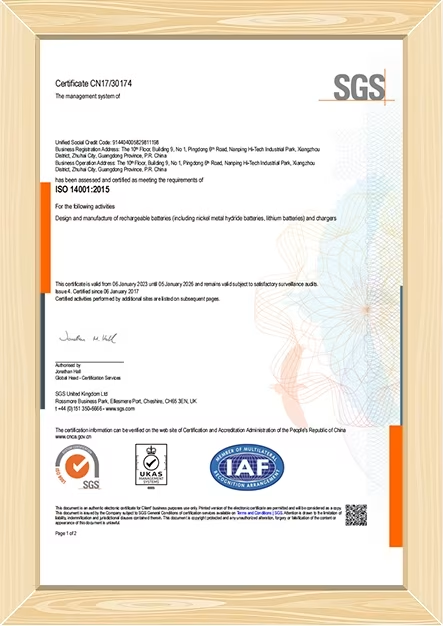
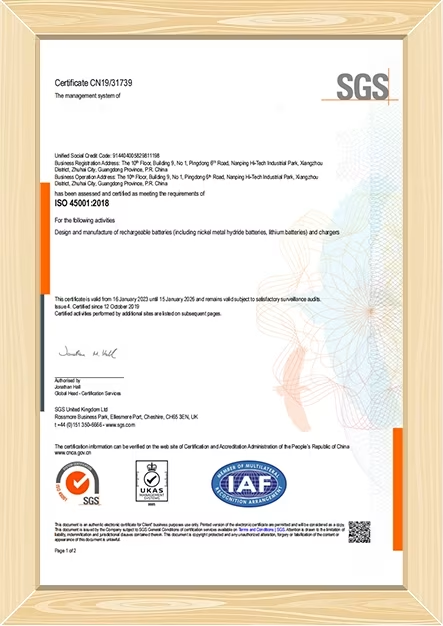
Our state-of-the-art production facilities operate under ISO 9001:2015 (Quality Management), ISO 13485:2016 (Medical Device Components), ISO 14001:2015 (Environmental Systems), and ISO 45001:2018 (Occupational Health & Safety). Additionally, automotive-grade product lines follow IATF 16949 production part approval processes (PPAP) and IPC-A-610 Class 2/3 assembly standards.
Q5 What international battery transport and safety certifications do your Smart BMS products comply with?
Our battery protection boards and smart BMS assemblies are engineered to assist end-product packs in passing UL 1973, UL 2580, IEC 62619, IEC 62133, CE, FCC, RoHS, and UN38.3 transport safety testing. High-pot galvanic isolation and transient voltage suppression (TVS) diodes are integrated to withstand rigorous electrostatic discharge (ESD) and surge withstand tests.
Q6 What is the typical Non-Recurring Engineering (NRE) process and lead time for custom BMS PCB prototyping?
Our OEM NRE workflow begins with schematic design and thermal modeling (7 working days), followed by PCB layout and component sourcing (10 working days), and prototype SMT assembly with preliminary firmware programming (7 working days). Typical prototype delivery ranges from 3 to 4 weeks. Sample validation and rapid thermal testing are conducted in-house prior to mass production volume release.
Q7 How does your factory ensure protection board reliability against high-current surges and thermal runaway?
We utilize low RDS(on) automotive-grade MOSFETs mounted on heavy-copper PCBs (2oz – 4oz copper weight) combined with custom extruded aluminum heat sinks. Over-current protection features redundant dual-stage sensing (hardware shunt resistor fast trip <100µs plus software MCU backup). NTC thermistors are strategically placed across power MOSFETs, battery cell terminals, and ambient air regions to trigger instant safety shutdowns if pre-set thermal limits are exceeded.
Q8 Do you support remote telemetry extensions such as Bluetooth, LCD Touchscreens, and GPS/GSM tracking?
Yes. Our smart BMS platforms feature modular expansion ports supporting Bluetooth 5.0 Low Energy (BLE) modules for iOS/Android smartphones, UART-driven LCD touchscreen displays, and integrated GPS/GSM cloud telemetry modules for fleet management of e-bikes, rental scooters, and commercial energy storage containers.
Start Your Custom OEM Project

Partner with China's Premier CANBUS Smart BMS Manufacturer

Accelerate your product development cycle with our turnkey battery management system engineering, active balancing innovations, and global ISO-certified manufacturing infrastructure.

Get a Quote