
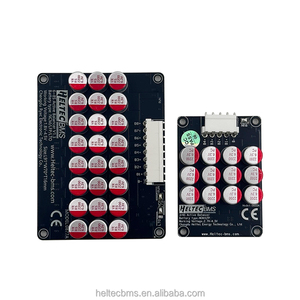
5A Balancing
As mission-critical energy storage applications expand into extreme climatic operational ranges, ultra-fast charging infrastructures, and high-frequency cycling environments, traditional Lithium Iron Phosphate (LiFePO4) and Nickel Manganese Cobalt (NMC) chemistries encounter severe electrochemical limits. Lithium Titanate Oxide (Li4Ti5O12, or LTO) has emerged as the definitive solution for high-rate, ultra-safe, long-lifecycle energy storage requirements.
SEO & Engineering Insight: When procuring LTO battery modules for heavy AGVs, rail transit, frequency regulation power stations, or sub-zero defense applications, global buyers must evaluate exporters not only by cell capacity, but by their module balancing architecture, thermal dissipation engineering, and BMS PCBA integration capabilities.
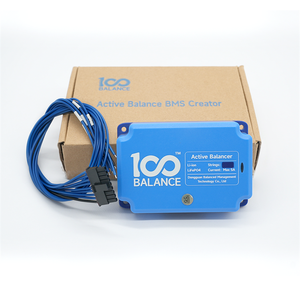
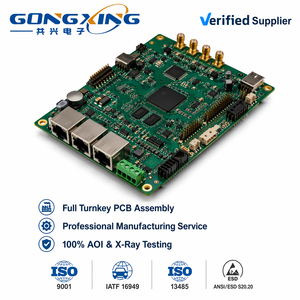
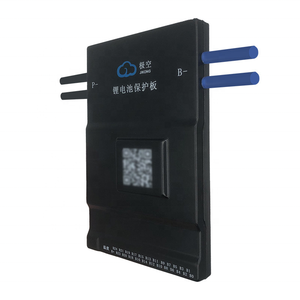
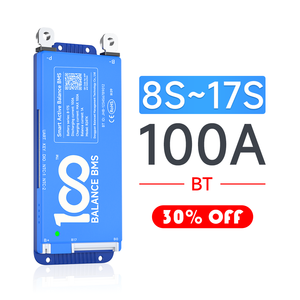
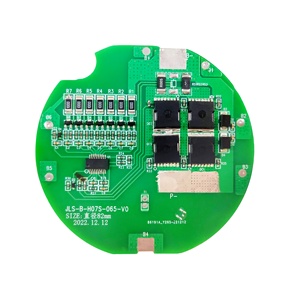
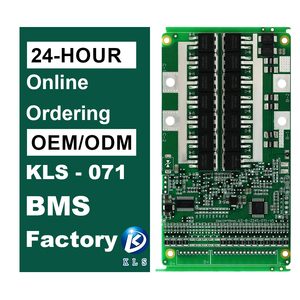
Essential hardware control systems engineered for high-cycle LTO, LiFePO4, and NMC multi-cell string architectures.
Evaluated based on annual export volume, electrochemical R&D depth, BMS active balance compatibility, ISO certifications, and custom OEM manufacturing footprint.
| Rank | Exporter Name | Core Specialization | Export Regions | Key Competitive OEM Strength |
|---|---|---|---|---|
| 1 | APEX Mobile Power (AMP) | Custom OEM LTO Battery Modules, Smart Active BMS Integration | North America, EU, Asia-Pacific, Middle East | Full-stack vertical integration, ISO 13485 & ISO 9001 certified, 60+ R&D engineers. |
| 2 | Yinglong New Energy (Yinlong) | Large-scale LTO cylindrical & pouch cells, E-bus battery modules | Global, Europe, Southeast Asia | Mass production of nanocrystalline LTO cells with ultra-high discharge rates. |
| 3 | Toshiba SCiB Division | Industrial SCiB LTO modules, railway traction energy storage | Japan, North America, Europe | Pioneering zero-dendrite LTO technology with exceptional longevity benchmarks. |
| 4 | Microvast Energy | Fast-charging LTO packs for commercial fleets and port AGVs | USA, Europe, Asia | Proprietary non-flammable membrane separator technology for ultra-fast charging. |
| 5 | Leclanché SA | Heavy-duty marine & hybrid locomotive LTO storage packs | Europe, North America | Custom water-cooled industrial LTO module assembly for maritime certifications. |
| 6 | Nichicon Corporation | Compact LTO module units, quick-charge industrial power supplies | Japan, Europe, USA | Miniaturized high-power density titanate modules for automated machinery. |
| 7 | Battrion AG | Aligned graphite & titanate module structures for fast charging | DACH Region, Western Europe | Advanced micro-structured electrode fabrication for ultra-low resistance. |
| 8 | Grepow Battery Co. | Shaped & customized low-temperature LTO battery packs | North America, Global | Flexible cell dimensions and ultra-low temperature discharge capabilities. |
| 9 | Tarata Energy Solutions | High-voltage grid support LTO containerized modules | Australia, South America | Modular multi-megawatt LTO rack designs for solar-frequency regulation. |
| 10 | Enerdel Systems | Military-grade robust LTO battery modules & power packs | North America, NATO Nations | Extreme shock/vibration resistant enclosures for defense and industrial equipment. |
A granular comparison of lattice stability, thermal runaway dynamics, and lithium-dendrite suppression.
In standard graphite anodes (found in LiFePO4 and NMC), lithium intercalation causes a 10% volume expansion and contraction during every cycle. Over thousands of cycles, this volumetric stress fractures the electrode material and degrades the Solid Electrolyte Interphase (SEI) layer.
The operating potential of the LTO anode is 1.55V vs. Li/Li+, significantly higher than the 0.1V potential of graphite. This high potential prevents the electrochemical reduction of lithium ions into metallic lithium dendrites during extreme fast-charging or sub-zero operations.
Although initial capital expenditure (CapEx) per kWh for LTO modules is 1.5x to 2x higher than LiFePO4, its 25,000+ cycle life reduces replacement frequency to zero over a 20-year project lifespan, lowering Levelized Cost of Storage (LCOS) by up to 45%.
Conventional lithium batteries lose over 60% of discharge capacity at -20°C and cannot be charged below 0°C without permanent cell damage. LTO modules maintain 80%+ usable capacity at -40°C and support fast charging at sub-zero temperatures.
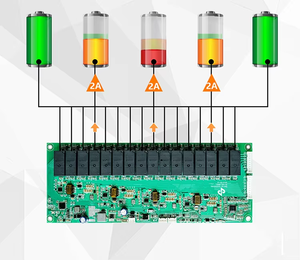
Equipped with smart active equalizers like the 5.5A capacitive or active inductive balancing boards, LTO strings transfer energy between non-adjacent cells seamlessly during 6C-10C rapid charge-discharge bursts.
Strategic shifts shaping high-rate lithium Titanate module manufacturing, active BMS architectures, and international supply chain compliance.
Passive balancing (wasting energy as heat through resistors) is rapidly becoming obsolete for industrial LTO modules. Future procurement specifications mandate active balancing systems (capacitive/inductive transfer up to 5A-10A) to maintain micro-volt cell variance under continuous 10C fast charging.
Automated Guided Vehicles (AGVs) and Autonomous Mobile Robots (AMRs) in 24/7 smart warehouses are adopting 48V and 96V LTO modules. Opportunity charging (charging for 5 minutes every hour during loading) enables 100% operational uptime without battery swap infrastructure.
Driven by the EU Battery Regulation, global OEMs are requesting full material origin traceability, carbon footprint calculations, and embedded IoT telemetry (CANbus / RS485 / Bluetooth) within module BMS units for continuous real-time state of health (SOH) tracking.
With over 14 years of dedicated lithium battery pack engineering experience, APEX Mobile Power provides full turn-key design, prototyping, testing, and volume manufacturing for global OEM partners across medical, aerospace, robotics, and industrial energy storage sectors.
Our state-of-the-art manufacturing campus operates under rigorous international quality management systems, ensuring zero-defect assembly, precision ultrasonic wire bonding, laser busbar welding, and 100% automated end-of-line (EOL) electrical testing.

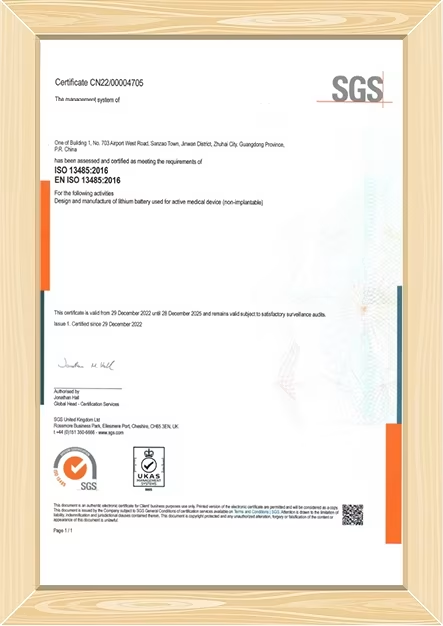 ISO 13485
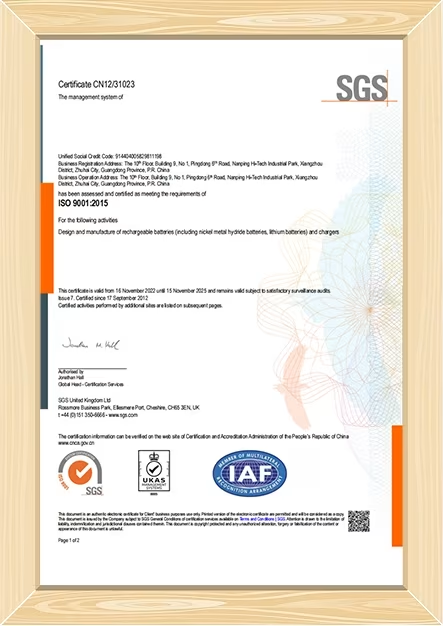 ISO 9001
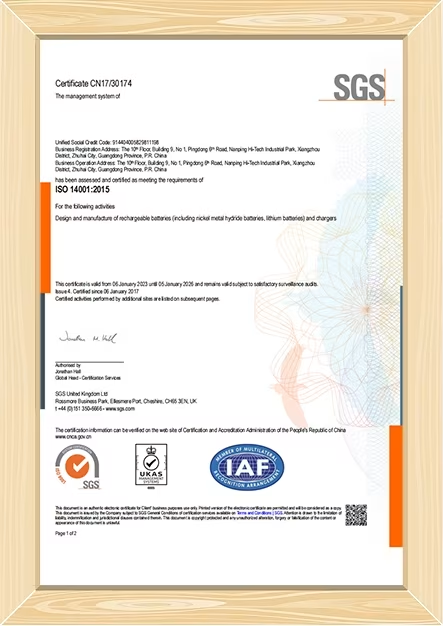 ISO 14001
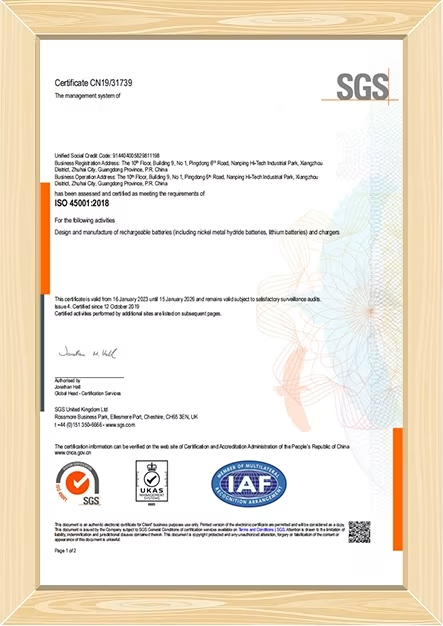 ISO 45001
Essential technical guidelines for engineering directors, procurement leads, and battery system integrators.