Explore top-tier active balance equalizers, custom-voltage lithium management modules, and high-current protection boards engineered for demanding industrial, medical, and energy storage OEM solutions.
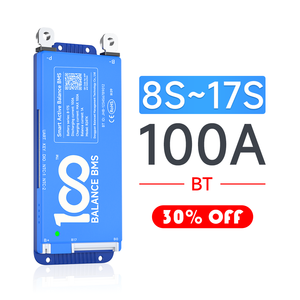
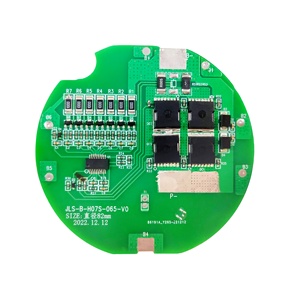
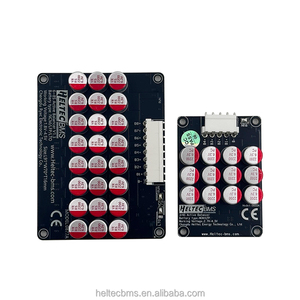
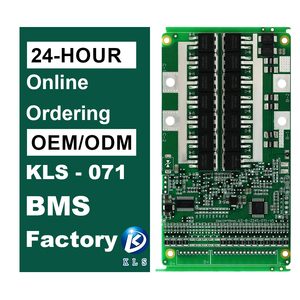
Modern electrification strategies across robotics, aerospace, medical instrumentation, and industrial autonomous systems require energy storage solutions far beyond standardized off-the-shelf voltage profiles. As system engineers transition from conventional nominal voltages (12V, 24V, 48V) to custom-engineered operational ranges (72V, 96V, 192V, 400V, up to 1000V high-voltage platforms), selecting the right custom voltage lithium battery manufacturer becomes an operational imperative.
This technical whitepaper provides B2B buyers, procurement executives, and system engineering architects with an in-depth framework for evaluating global custom lithium pack manufacturers. We analyze essential selection criteria, including electro-chemical cell chemistry matching (LiFePO4, NMC, Solid-State, and Sodium-Ion), structural thermal safety management, intrinsic compliance (ISO 13485, IATF 16949, UL 1973), and the single most vital factor in high-voltage lifecycle optimization: Active BMS Balancing and Dynamic Energy Equalization.
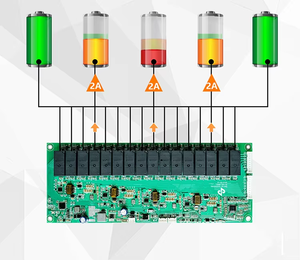
Information Gain Key Insight: Traditional passive balancing discards excess cell energy as thermal waste through resistors, degrading energy efficiency and creating thermal hotspots. Modern high-voltage custom battery packs integrated with capacitive or inductive active balancing (ranging from 0.6A to 5.5A dynamic equalization) transfer energy fluidly from higher-charged cells to lower-charged cells, recovering up to 18% usable capacity and doubling overall pack cycle longevity.
The following benchmark matrix compares leading enterprise custom lithium battery OEMs based on technical customization capability, active BMS integration, medical/industrial certifications, and global production scale.
| Manufacturer Name | Primary Specialties | Voltage Customization Range | BMS Balancing Technology | Key Quality Certifications | Target OEM Segments |
|---|---|---|---|---|---|
| APEX Mobile Power (AMP) | Full-Turnkey Custom Battery Packs, Smart Active BMS, Chargers | 3.7V - 800V Custom | Active Capacitive & Inductive Balancing (0.6A - 5.5A) | ISO 9001, ISO 13485, ISO 14001, ISO 45001 | Medical, Robotics/AGV, Aviation/UAV, Industrial, ESS |
| EnerSys | Industrial Energy Storage, Defense, Telecom Reserve Power | 12V - 600V Custom | Hybrid Active/Passive Smart BMS | ISO 9001, AS9100D, Defense Standards | Aerospace, Military, Telecommunications |
| Saft (TotalEnergies) | Extreme Environment Lithium & Nickel Batteries | 24V - 1000V High Voltage | Advanced Digital Telemetry Active BMS | ISO 9001, IRIS, Space Qualification | Aviation, Rail, Space & Marine Systems |
| Custom Cells Innovation | Automotive Prototypes & High-Power Density Cells | 48V - 800V Automotive Profile | Microcontroller Active Balancing Board | IATF 16949, ISO 9001 | High-Performance EV, Aviation Engineering |
| Lithion Battery Inc. | Iron Phosphate Pack Engineering & Module Assembly | 12V - 192V Industrial | Passive & Smart Active Balancer Boards | ISO 9001, UN38.3, UL1973 | Medical Mobility, Material Handling |
| ProLogium Technology | Next-Gen Solid-State Custom Battery Packs | 48V - 800V High Energy | Integrated Solid-State Active BMS | ISO 9001, IATF 16949 Pending | Next-Gen Automotive, Advanced UAV |
| Ultralife Corporation | Medical & Military Portable Energy Modules | 3.7V - 72V OEM Form Factor | Precision Low-Noise Active BMS | ISO 13485, ISO 9001 | Surgical Equipment, Defense Field Units |
| Cadex Electronics | Battery Packs, Smart Chargers, Diagnostic Systems | 7.4V - 96V Custom | Smart SMBus / CAN Active Balancers | ISO 9001, ISO 13485 | Medical Devices, Mobile Workstations |
| Inventus Power | High-Volume Medical & Commercial Battery Systems | 12V - 400V System Packs | Proprietary Active Balancing Logic | ISO 13485, IATF 16949 | Commercial Robotics, Portable Medical |
| Accutronics (Alexander Battery) | Custom Healthcare & Safety Device Battery Solutions | 3.7V - 48V Tailored Form | Smart Fuel Gauge with Active Balancing | ISO 9001, ISO 13485 | Ventilators, Defibrillators, Inspection Instruments |
With over 14 years of dedicated R&D in custom battery chemistry and intelligent management systems, APEX Mobile Power (AMP) provides global OEMs with end-to-end custom battery pack manufacturing. Operating under rigorous ISO 9001, ISO 13485 (Medical Quality), and ISO 14001 guidelines, AMP integrates active dynamic balancing hardware directly into custom battery packs, eliminating capacity bottlenecks and ensuring thermal safety under extreme operating loads.

When custom voltage battery packs are assembled with dozens or hundreds of series-connected lithium-ion (NMC), lithium iron phosphate (LiFePO4), or sodium-ion cells, cell variance is inevitable. Natural manufacturing tolerances cause minor discrepancies in internal resistance (IR), capacity, and self-discharge rates. Over repetitive charge-discharge cycles, these small variations diverge, leading to severe cell imbalance.
Standard passive balancing engages only at the top of the charge cycle (typically when cells exceed 3.5V or 4.1V). It bleeds off excess voltage as heat through resistor networks at low currents (50mA to 150mA). In high-capacity custom packs (e.g., 100Ah to 300Ah modules), passive balancing takes tens of hours to resolve imbalances and generates internal heat that accelerates cell aging.
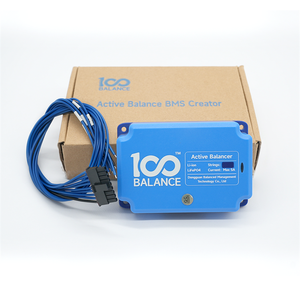
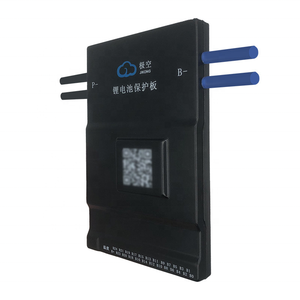
Conversely, Active Balancing (Capacitive & Inductive Transfer) continuously shifts current dynamically between adjacent and non-adjacent cells. Devices like the 5A Active Balancers or JIKONG 0.6A-2A Active Balancer BMS utilize high-frequency switching circuits and energy-storage capacitors to move energy with efficiency exceeding 92%. Active balancing operates throughout charging, discharging, and idle states, ensuring every cell operates in unified thermal and electrical harmony.
Uses high-frequency capacitor arrays to bridge adjacent cells. Ideal for compact multi-cell series (4S to 24S) with equalization current up to 5.5A.
Utilizes multi-winding magnetic transformers to transfer energy from the highest-voltage pack block to the lowest cell. Optimal for high-voltage systems (64S - 1000V).
Integrates Bluetooth, CAN-bus, RS485, and GPS telemetry, broadcasting real-time individual cell differential voltage (ΔV) to cloud diagnostics.
Selecting the optimal cell chemistry dictates the custom pack's volumetric energy density, continuous discharge rates, operating temperature window, and safety profile:
The global custom lithium battery pack market is undergoing rapid technological shifts. Procurement teams must align with key industry advancements to maintain long-term competitive advantages.
B2B buyers are abandoning basic protective PCM boards. Future custom voltage specifications require intelligent BMS architectures equipped with active dynamic balancing, onboard black-box data logging, and predictive AI thermal fault identification.
Dual-chemistry custom pack designs combining high-density NMC for peak surge power with stable LiFePO4 or Sodium-Ion modules for baseline endurance are emerging, optimized through multi-stage active balancing algorithms.
Strict regulatory oversight in medical technology and commercial aviation requires end-to-end component traceability, certified cleanroom battery assembly, and stringent UN38.3 thermal shock validation prior to mass deployment.
Essential questions and engineering insights for system integrators, OEM buyers, and procurement specialists.
Contact APEX Mobile Power's engineering team for immediate technical consultation, custom BMS active balance schematics, or rapid OEM prototyping support.