
Engineering Whitepaper: Architectural Design of Waterproof Integrated LiFePO4 BMS & Charger Solutions
As heavy industrial, maritime, e-mobility, and outdoor energy storage systems (ESS) transition toward Lithium Iron Phosphate (LiFePO4) chemistries, the requirement for robust, single-unit OEM/ODM waterproof LiFePO4 BMS charger integrated systems has become paramount. Standard battery management systems designed for indoor rack usage suffer rapid thermal, moisture, and vibration degradation when deployed in harsh marine, agricultural, or outdoor commercial environments. Establishing long-term operational reliability requires an integrated system engineering approach combining advanced active cell balancing, high-efficiency charger topologies, and hermetically sealed IP67/IP68 enclosures.
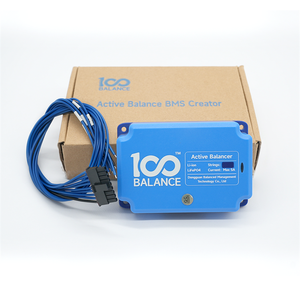
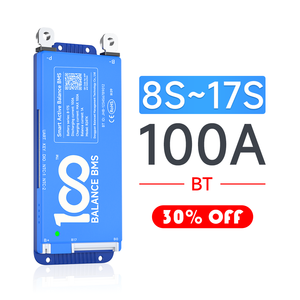
Key Engineering Metric: Passive balancing wastes up to 98% of cell delta energy as heat inside sealed housings. Our advanced OEM/ODM active balancing architectures transfer excess charge bi-directionally between cells at up to 5.5A currents, reducing thermal dissipation by over 82% while boosting usable pack capacity by 12-18% over the battery lifecycle.
1. Encapsulation & IP67/IP68 Waterproof Enclosure Engineering
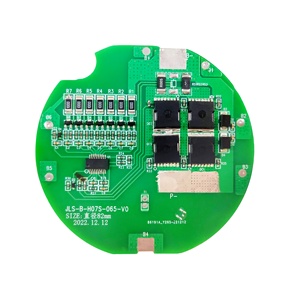
The primary point of failure in field-deployed lithium battery modules is moisture ingress leading to board-level corrosion, dendritic short-circuiting across high-voltage traces, and insulation degradation. Our factory utilizes two-component polyurethane (PU) thermal conductive potting and structural aluminum extrusion housings with vacuum silicone gasketing. The design ensures complete thermal dissipation from power MOSFETs to the external heat-sink shell while guaranteeing zero moisture penetration under 1.5 meters of continuous water submersion (IP68 rating).
IP67 / IP68 Hermetic Seal
Full polyurethane potting compound shields all microcontrollers, sampling resistors, and power stages against liquid ingress, salt spray, and corrosive atmospheres.
Bi-Directional Active Balancing
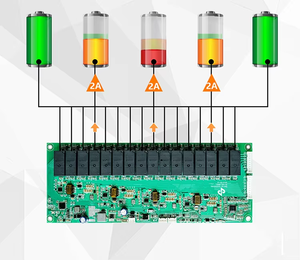
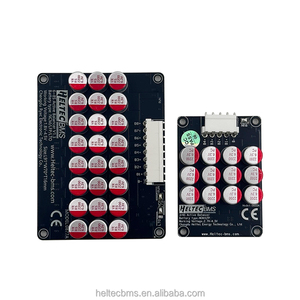
Capacitive and inductive energy transfer circuits move energy from high-voltage cells to lower-voltage cells dynamically, eliminating heat bottlenecks.
Integrated CC/CV Charging Unit
High-frequency resonant LLC converter modules incorporated into the same housing provide communication-bound CC/CV profiles tailored to LiFePO4 curves.
2. Thermal Management & Integrated Charger Architecture
Integrating a battery charger and a Battery Management System into a unified waterproof footprint presents critical thermal challenges. High-efficiency charging requires synchronous rectification topologies that maintain operational efficiency above 94.5%. By utilizing Gallium Nitride (GaN) switching power devices in our custom OEM power supply units, switching losses are drastically minimized, allowing thermal energy to pass directly into the outer finned die-cast aluminum enclosure without relying on internal cooling fans, which are prone to mechanical ingress failure.
Technical Comparison Matrix: Active Balancing vs. Passive Balancing BMS Architecture
When selecting a custom BMS platform for high-capacity industrial LiFePO4 battery modules (48V 100Ah to 96V 300Ah+), evaluating balance current mechanism is vital for pack longevity and safety:
| Performance Parameter | Passive Resistive BMS | OEM/ODM Inductive Active BMS | AMP Capacitive Active Balancer BMS Unit |
|---|---|---|---|
| Energy Balancing Current | 35mA - 150mA (Fixed) | 1A - 3A Dynamic | 2A - 5.5A Continuous Dynamic |
| Balancing Efficiency | < 5% (95% heat loss) | 82% - 88% Energy Transfer | 92% - 96% Energy Transfer |
| Thermal Generation | High local PCB heat spikes | Low-Moderate (Inductive heat) | Ultra-Low (Capacitive flying-cap) |
| Pack Capacity Utilization | 82% - 86% of rated Ah | 92% - 95% of rated Ah | 98.5% Maximum capacity retention |
| Environmental Protection | Conformal Coating (IP54) | Partial Potting (IP65) | Complete Structural Polyurethane Potting (IP68) |
| Communication Telemetry | Basic UART / LED indicators | RS485 / CAN 2.0B | Isolated CAN 2.0B, RS485, Bluetooth, GPS IoT |
OEM/ODM Customization & Turnkey Engineering Workflow
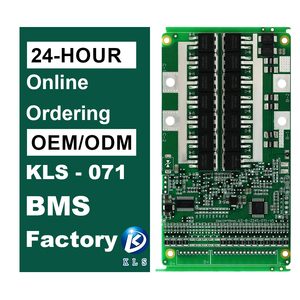
APEX Mobile Power provides full-spectrum original design manufacturing (ODM) and original equipment manufacturing (OEM) services. From initial concept engineering drawing to PCB assembly (PCBA), firmware development, mold design, and mass-scale automated manufacturing, we streamline product commercialization for global tier-1 OEMs.
1. Hardware & Scheme Design
Schematic engineering choosing auto-grade MCU chips (TI, NXP, ST), MOSFET sizing for continuous/surge loads, shunt sensing design, and transient voltage suppression (TVS).
2. Custom Firmware & Protocol
Customizing SOC (State of Charge), SOH (State of Health), DOD (Depth of Discharge) algorithms and integrating CANopen, Modbus RTU, or custom inverter communications protocols.
3. Compliance & Certification
Full qualification supporting UN38.3, UL1973, UL991, IEC62619, CE, and RoHS certifications with pre-compliance testing performed in our in-house lab facilities.
Strategic Procurement & Industry Technology Roadmap (2025–2030)
The global battery energy storage market is undergoing rapid evolution. Key technology shifts driving procurement decisions over the next five years include:
1. Shift to All-In-One Integrated Architecture: Separately sourcing battery chargers, protective relays, external balancers, and display monitors creates procurement inefficiencies and multiple points of electrical failure. Modern industrial fleets are standardizing on unified BMS + Charger + Active Equalizer combined power modules that simplify wire harnesses and reduce installation space by 35%.
2. Cloud-Connected Telemetry & Predictive AI Diagnostics: Next-generation BMS devices no longer act as passive circuit breakers; they serve as intelligent edge-computing gateways. Built-in 4G/5G/GPS chips stream real-time cell impedance, temperature gradient, and cycle aging data directly to cloud dashboards, predicting cell failures weeks before thermal runaway events can occur.
3. High-Current Capacitive Active Equalization: With battery pack capacities scaling beyond 200Ah for commercial energy storage and electric machinery, traditional 100mA passive balancing is completely ineffective. 5A to 10A active balancing is rapidly transitioning from a high-end luxury to a mandatory procurement specification.
APEX Mobile Power Enterprise Advantages & Global Manufacturing Infrastructure
As a global pioneer in lithium power management, APEX Mobile Power brings unmatched technical depth and production capabilities to your supply chain:
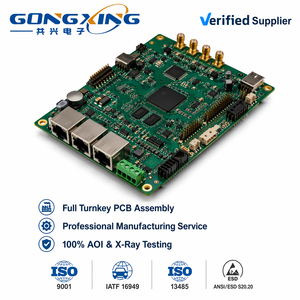
IATF 16949 & ISO 13485 Certified Production lines: Our manufacturing facilities adhere to strict automotive and medical-device quality management systems. Automated SMT mounting, optical inline inspection (AOI), 3D X-ray inspection, and 100% automated end-of-line functional testing ensure near-zero defect rates.
Full Vertical Integration: From custom aluminum extrusion tooling to proprietary SMT PCBA lines, custom potting dispensing robots, and environmental thermal shock testing chambers, we maintain complete control over quality, lead times, and cost structures.
Global Compliance Assurance: We engineer all OEM products to meet international safety and environmental regulations, ensuring seamless regulatory approval and rapid time-to-market across North American, European, and Asian markets.
Frequently Asked Questions (FAQ) - Technical Procurement Guide
What is the difference between active balancing and passive balancing in a LiFePO4 BMS?
Passive balancing bleeds off excess energy from higher-voltage cells through power resistors, wasting energy as heat. It operates with low currents (30mA-100mA). Active balancing transfers electrical energy directly from higher-voltage cells to lower-voltage cells using capacitive or inductive energy storage circuits with high currents (1A to 5.5A+), resulting in minimal heat generation and higher energy efficiency.
How does full polyurethane potting achieve IP68 waterproof performance without causing thermal overheating?
We utilize specialized thermal-conductive two-component polyurethane compounds (thermal conductivity > 1.2 W/m·K). The potting material completely fills air voids around components, conducting heat away from power MOSFETs and charging circuits directly into the heavy-duty aluminum housing, which acts as an external heatsink.
Can the BMS firmware be customized to support custom CAN-bus or RS485 communication protocols?
Yes. Our dedicated software engineering team can implement any custom communication protocol, including CAN 2.0B, CANopen, Modbus RTU, SMBus, or custom hex protocols required by your system controller or inverter brand (e.g., Victron, SMA, Growatt, Deye).
What is the typical NRE cost and prototype lead time for custom OEM/ODM BMS & Charger projects?
Prototype lead times typically range from 3 to 5 weeks for custom PCBA and enclosure design. NRE (Non-Recurring Engineering) fees vary based on project complexity, software requirements, and tooling needs, and are often fully refunded upon reaching agreed-upon mass production volumes.
Are these units certified for global market distribution?
Our products are designed and manufactured to meet global compliance standards, including UL 1973, UL 991, IEC 62619, CE, FCC, RoHS, and UN38.3 transport safety regulations.