OEM/ODM Deep Cycle Marine LiFePO4 Battery Supplier & Exporters
Industrial-Grade Lithium Iron Phosphate Energy Systems, Active Balancing BMS Technologies, and Turnkey Customization for Commercial Vessels, Electric Propulsion, and Offshore Marine Storage.
Engineered Marine LiFePO4 Modules & Active BMS Systems
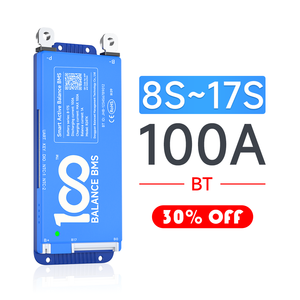
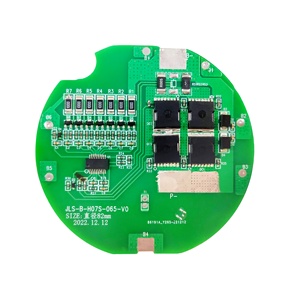
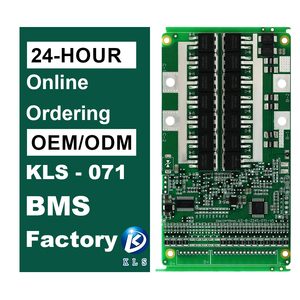
Explore our high-precision active balancing protection boards, smart BMS controllers, and customized battery pack configurations built for marine reliability.
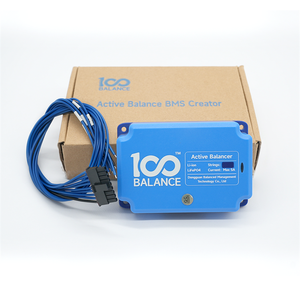
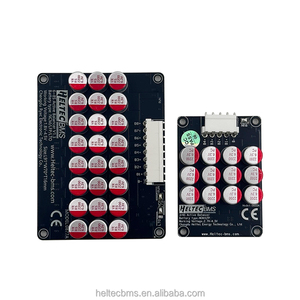
Active Balance Equalizer Balancing Capacitive Lifepo4 48v Livepo4 Cell Nmc 100balance 5A Active Balancer For Lithium Battery
Executive Technical Report: The Paradigmatic Shift to Deep Cycle Marine LiFePO4
The global maritime energy landscape is undergoing a massive structural transition toward full electrification and zero-emission auxiliary power systems. As international regulatory bodies such as the International Maritime Organization (IMO) enforce stringent carbon intensity indicators (CII), commercial vessel operators, yacht builders, naval architects, and maritime system integrators are systematically replacing legacy Lead-Acid, AGM (Absorbed Glass Mat), and Gel batteries with specialized Lithium Iron Phosphate (LiFePO4) deep-cycle energy storage solutions.
Marine environments impose some of the most punishing physical and electrical stresses on energy storage infrastructure: continuous multi-axis vibration, high ambient moisture, saltwater corrosion, rapid discharge demands for electric thrusters, and prolonged state-of-charge (SoC) storage requirements. Under these non-negotiable operational parameters, standard lithium chemistries—such as Lithium Nickel Manganese Cobalt Oxide (NMC)—present significant thermal runaway risks. In contrast, LiFePO4 crystal lattice structures exhibit olivine chemical stability, preventing oxygen release up to 500°C (932°F) and providing an inherently explosion-proof foundation for high-capacity marine power systems.
Information Gain Insight: Unlike conventional off-grid stationary batteries, OEM deep-cycle marine LiFePO4 battery systems require structural IP67/IP68 stainless steel or anodized aluminum enclosures, active capacitive balancing BMS architecture to suppress cell-voltage divergence under high continuous C-rates, and seamless CANbus/NMEA 2000 communication protocol integration.
Intrinsic Thermal Safety
P-O covalent bonds within the LFP chemistry eliminate oxygen liberation, eliminating thermal runaway risks even under mechanical puncture or overcharge conditions.
6000+ Deep Cycles
Delivering up to 80% Depth of Discharge (DoD) for more than 6,000 complete charge/discharge cycles, providing a service lifespan exceeding 10–15 years.
50% Weight Reduction
Significant volumetric and gravimetric energy density advantages reduce vessel displacement, enhancing hydrodynamics and fuel efficiency in hybrid craft.
To assist marine procurement officers and OEM engineers in evaluating capital expenditure (CAPEX) versus long-term operational expenditure (OPEX), the following data matrix details the key technical parameters across major marine energy storage technologies.
Performance Parameter
Marine LiFePO4 (OEM Grade)
Standard Marine AGM
Gel Deep Cycle
Marine NMC Lithium
Cycle Life (80% DoD)
6,000 – 8,000 Cycles
500 – 800 Cycles
600 – 1,000 Cycles
1,500 – 2,500 Cycles
Usable Capacity Ratio
100% Usable
50% Max Safe DoD
50% Max Safe DoD
80% – 90% Usable
Gravimetric Energy Density
150 – 180 Wh/kg
30 – 40 Wh/kg
30 – 35 Wh/kg
200 – 250 Wh/kg
Continuous C-Rate Discharge
1C to 3C Continuous
0.2C Recommended
0.2C Recommended
1C to 2C Continuous
Thermal Runaway Threshold
> 270°C (518°F) - Non-Explosive
N/A (Gassing Risk)
N/A (Gassing Risk)
~ 150°C (302°F) - Severe Risk
Active BMS Balancing Current
0.6A – 5.5A Capacitive/Inductive
None (N/A)
None (N/A)
0.05A – 0.2A Passive Only
10-Year Total Cost of Ownership
Lowest (1x Initial Investment)
Highest (4x Replacements)
High (3.5x Replacements)
Moderate-High
Active Balancing BMS Architecture: Eliminating Cell Drift in Offshore Operations
In large marine LiFePO4 battery banks (e.g., 48V, 96V, 400V, or 800V series-parallel configurations powering bow thrusters, electric propulsion, or hotel loads), minute manufacturing variances in internal impedance and capacity cause voltage divergence across series-connected cells over time. Standard consumer-grade battery management systems rely on passive balancing, which bleeds off excess energy as heat through resistors at small currents (30mA to 100mA). Under heavy marine discharge cycles, passive balancing is completely incapable of maintaining cell equilibrium.
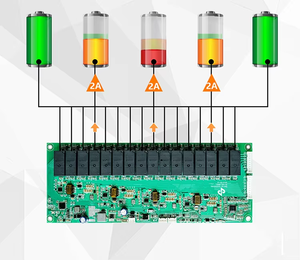
Our OEM marine battery architectures feature advanced Active Balancer Technologies (Capacitive & Inductive Energy Transfer) capable of continuous high-current balancing from 0.6A up to 5.5A:
Energy-Efficient Dynamic Transfer: Active balancers transfer energy directly from higher-voltage cells to lower-voltage cells across the series pack with over 92% transfer efficiency, rather than dissipating energy as waste heat.
Extended Pack Usable Capacity: By continuously equalizing cell voltages during both charging and discharging phases, active balancing prevents premature single-cell under-voltage cutoffs, unlocking an additional 10% to 15% of actual usable capacity.
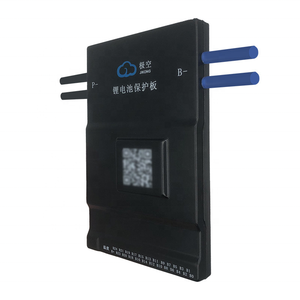
BMS System Protection Integrations: Fully integrated protection hardware featuring short-circuit isolation, dual-temperature monitoring (cell and MOSFET terminals), programmable over-current thresholds, and integrated GPS/Bluetooth monitoring interfaces.
CANbus & NMEA 2000 Compatibility: Native communication protocols allow real-time telemetry streaming directly to marine multi-function displays (MFDs) like Garmin, Raymarine, or Simrad navigation consoles.
As a specialized primary manufacturer and international exporter, APEX Mobile Power provides turnkey engineering services for custom marine LiFePO4 modules. From initial mechanical CAD drafting to certified mass production, our industrial roadmap ensures strict alignment with international maritime safety codes.
1
Cell Grade Selection
100% Brand-New Tier-1 Prismatic Grade-A LiFePO4 cells (CATL, EVE, CALB) verified with internal resistance matching within ≤0.5mΩ.
2
Custom BMS PCBA
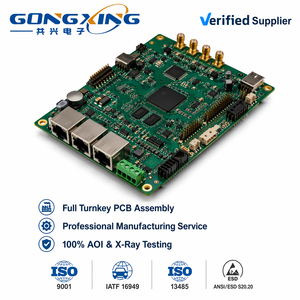
Tailored PCBA design with active balance currents up to 5.5A, supporting 4S (12V) to 24S (72V) or high-voltage multi-series strings.
3
IP67 Mechanical Casing
Heavy-duty marine stainless steel, sheet metal, or molded ABS enclosures engineered with anti-shock rubber damping internal brackets.
Engineering Specification Capabilities:
System Voltages: 12.8V, 25.6V, 38.4V, 51.2V (48V nominal), 76.8V, up to 800V Commercial Marine ESS Banks.
Capacities: 50Ah, 100Ah, 200Ah, 300Ah, 500Ah, scaling up to MWh-level containerized marine energy systems.
Thermal Management: Integrated heating pads for sub-zero Arctic operation (-20°C charging capability) and passive aluminum heat-sink dissipation channels.
Form Factor Versatility: Drop-in Group 24, Group 27, Group 31 marine battery sizes, or custom structural frames designed for tight bilge compartments.
Global Procurement & Sourcing Trends in Marine Battery Systems (2025–2030)
Market intelligence indicates a decisive multi-billion dollar shift in marine battery sourcing models across Europe, North America, and the Asia-Pacific region. Strategic purchasing managers are navigating several major structural trends:
1. Direct Manufacturer Procurement & Supply Chain Resilience
Procurement teams are shifting away from third-party resellers toward direct partnerships with Tier-1 OEM/ODM factories. Direct factory engagement guarantees 100% trace-ability of cell lots, direct engineering support for customized firmware revisions, and immunity from inflated middleman margins.
2. Mandatory Integration of Smart Telemetry
Modern commercial shipping fleets and luxury charter yachts demand remote diagnostics. Sourcing specifications now universally require smart BMS units equipped with Bluetooth 5.0, RS485, CANBUS 2.0B, and IoT cellular gateways to transmit real-time state-of-health (SoH) metrics to cloud management dashboards.
3. Modular High-Voltage (HV) Marine Architectures
Electric commercial ferries, tugboats, and passenger tenders are rapidly adopting 400V to 800V DC bus architectures. High-voltage systems drastically reduce current draw, enabling lighter cabling gauges, reduced heat dissipation, and superior overall powertrain efficiency.
Enterprise Competence & Global Quality Assurance Standards
As a accredited enterprise backed by over 14 years of advanced battery pack design, APEX Mobile Power operates state-of-the-art manufacturing facilities certified under internationally recognized quality frameworks audited by SGS.
Our production facilities strictly adhere to the following certified management systems:
ISO 9001:2015 Quality Management
ISO 13485:2016 Medical/High-Reliability Device Standard
ISO 14001:2015 Environmental Management
ISO 45001:2018 Occupational Health & Safety
Rigorous Manufacturing & Testing Quality Gates:
Automated Laser Cell Welding: Precision robotic fiber-laser welding ensures ultra-low contact resistance across cell busbars, withstanding continuous heavy marine vibrations without weld fatigue.
End-of-Line (EOL) Automated Testing: 100% automated inspection covering BMS protection cutoffs, charge/discharge efficiency, active balance current verification, and thermal sensor calibration.
Environmental Shock & Salt Spray Testing: Enclosures and PCBA conformal coatings undergo rigorous 48-hour ASTM B117 salt spray testing and multi-axis sinusoidal vibration screening.
International Transport & Safety Compliance: All export battery packs comply fully with UN38.3 (Transport of Lithium Batteries), UL 1973, UL 9540A, CE, IEC 62619, and RoHS directives.
Answers to critical technical queries commonly raised by maritime engineers and purchasing managers:
Q1: What is the difference between active balancing and passive balancing in marine LiFePO4 batteries?
A: Passive balancing bleeds off excess charge from high-voltage cells as waste heat through resistors at tiny currents (30-100mA). Active balancing dynamically transfers energy from higher-voltage cells to lower-voltage cells at high currents (0.6A to 5.5A) with over 90% efficiency. Active balancing is essential for large marine banks to prevent cell drift under high C-rate loads.
Q2: Can your OEM marine LiFePO4 batteries replace standard AGM drop-in batteries directly?
A: Yes. We engineer customized 12.8V, 25.6V, and 51.2V drop-in replacement batteries matching standard Group 24, 27, 31, and 8D marine casing footprints. Our internal smart BMS regulates voltage parameters to work seamlessly with marine alternators and solar charge controllers.
Q3: How do your marine battery packs handle moisture and saltwater corrosion?
A: We utilize IP67/IP68 sealed enclosures constructed from 316 stainless steel or marine-grade anodized aluminum. Internal circuit boards (BMS and Active Balancers) feature multi-layer conformal coating to insulate electronics against humidity, salt fog, and chemical exposure.
Q4: What communication protocols are supported for integration with vessel MFDs?
A: Our smart BMS controllers support native CANbus 2.0B, NMEA 2000, RS485, RS232, and Bluetooth 5.0 wireless protocols. This enables direct integration with Victron, Garmin, Raymarine, and custom glass-bridge marine monitoring systems.
Q5: What are the Minimum Order Quantities (MOQ) and lead times for ODM custom marine battery projects?
A: We accommodate flexible OEM prototyping for qualified engineering projects. Standard prototype engineering lead time is 3–4 weeks, while mass ODM production cycles typically range from 30 to 45 days depending on enclosure design and certification requirements.
Q6: Do your lithium marine batteries support sub-zero charging in cold climates?
A: Standard LiFePO4 batteries cannot accept charge below 0°C (32°F). However, our OEM custom modules can be specified with integrated silicone heating films controlled by the BMS, allowing safe automatic pre-heating and charging down to -20°C (-4°F).
Initiate Your Custom Marine Battery Project Today
Partner with an industry-leading OEM/ODM manufacturer. Speak directly with our senior battery engineering team to receive custom CAD designs, active balance BMS specifications, and competitive direct factory pricing.