APEX Mobile Power — Custom OEM Lithium Battery Solutions  |  ISO 9001 · ISO 13485 · ISO 14001 Certified  |  Engineered for Performance

Custom OEM Solar Street Light Lithium Battery Supplier & Exporter

Next-Generation LiFePO4 Energy Storage Systems with Active Balancing BMS & Sub-Zero Thermal Management

OEM Smart Lithium & Active Balancing Solutions

Engineered for high-reliability municipal lighting, off-grid infrastructure, and extreme environmental solar applications.
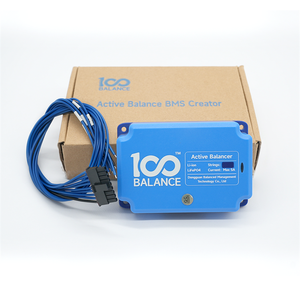
5A Active Equalizer Balancer Board for LiFePO4 Battery Pack
Active Balance Equalizer Capacitive 48V LiFePO4/NMC 5A Balancer
  • Capacitive Energy Transfer
  • 5A Continuous Balance Current
  • Voltage Range: 2.0V - 4.5V
  • Ultra-low Heat Generation
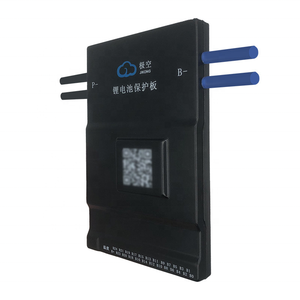
Seplos BMS 3.0 Active Balancer LiFePO4 Board
Seplos Smart BMS 3.0 Active Equalizer Protection Board
  • Multi-tier Cell Protection
  • Integrated Active Equalization
  • CAN/RS485 Communication
  • Solar Street Light Optimized
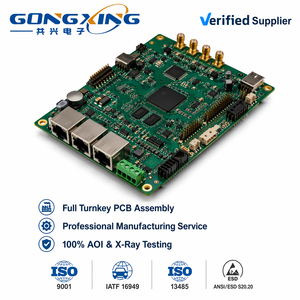
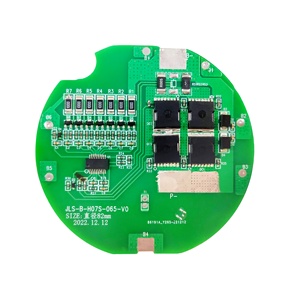
IATF 16949 Factory Smart BMS PCBA
Smart BMS PCBA Turnkey Assembly Board (IATF 16949 Certified)
  • Automotive-grade Hardware
  • Custom Firmware Integration
  • High-Current Cutoff Protection
  • Thermal Matrix Monitoring
JIKONG JK-BD6A24S15P 0.6A Smart Active Balancer BMS
JIKONG JK 0.6A Smart Active Balancer 150A BMS (7S-24S) with GPS
  • Smart App & Display Support
  • Integrated GPS Tracking
  • 7S to 24S Universal Fit
  • 150A Peak Discharge Cutoff
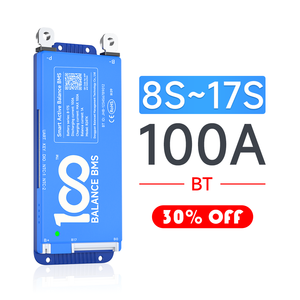
48V 16S 100A Smart Active Balancer BMS
Smart Active Balancer 100A 48V 16S LiFePO4 Protection Board
  • 48V Off-Grid System Native
  • Real-time Cell Impedance Tuning
  • Extended Dynamic Lifecycle
  • Zero Energy Loss Balancing
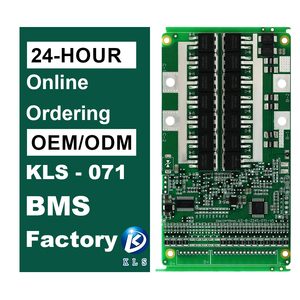
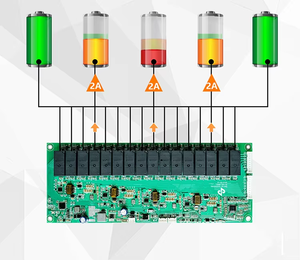
KLS-BMS-045 64s 120A LiFePO4 Active BMS
KLS Heavy-Duty BMS 64S 120A 12V LiFePO4 Active Balance Module
  • Extruded Aluminum Enclosure
  • 2A Active Transfer Current
  • High Vibration Resistance
  • Multi-Channel Temperature Sensing
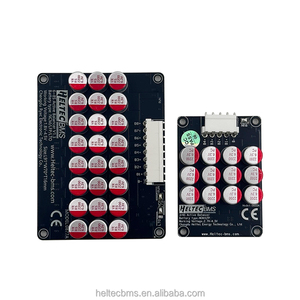
Heltec 4S to 21S 5.5A Active Balancer Equalizer
Heltec 4S to 21S Active Balancer 5.5A Energy Transfer Equalizer
  • Ultra-high 5.5A Current Capacity
  • Supports LiFePO4, Li-ion, LTO
  • Dynamic Delta-V Balance
  • Low Sleep Mode Consumption
KLS Smart BMS 16S 48V 150A Storage Battery System
KLS Smart BMS 16S 48V 150A Active Energy Storage Controller
  • High-Density Solar Integration
  • Advanced SOC Logic Algorithm
  • Dual Temperature Protection
  • Industrial RS485 / Modbus
6,000+
Deep Cycles @ 80% DOD
-40°C
Extreme Operating Floor
99.2%
BMS Balancing Efficiency
IATF16949
Automotive Quality Standard

Engineering Next-Generation Solar Street Lighting Lithium Energy Storage

As global municipal infrastructure rapidly shifts toward smart city grids and autonomous off-grid illumination, the selection of internal battery energy storage systems (BESS) has become the decisive factor in total cost of ownership (TCO) and system availability. Legacy solar street lights relying on sealed lead-acid (SLA), gel, or unmanaged lithium-ion chemistry consistently fail prematurely due to high-temperature degradation, thermal runaway risks, capacity loss caused by cell imbalance, and severe low-temperature charge cutoffs.

As a senior custom OEM solar street light lithium battery supplier and global exporter, APEX Mobile Power engineers industrial-grade Lithium Iron Phosphate (LiFePO4) battery packs integrated with lossless active balancing BMS. By addressing the physics of electrochemical cell drift, environmental thermal stress, and power conversion losses, our bespoke OEM battery packs deliver operational lifespans exceeding 12 to 15 years in extreme climatic zones—from the desert heat of the Middle East (+65°C ambient) to sub-arctic environments (-40°C).

Thermodynamic Stability of LiFePO4 Chemistry

Unlike cobalt-based lithium chemistries (NMC/LCO), LiFePO4 utilizes a robust olivine crystal structure with strong P-O covalent bonding. This structural molecular arrangement resists thermal decomposition up to 500°C, eliminating oxygen release during abuse states and rendering thermal runaway virtually impossible under municipal operational stress.

Active vs. Passive BMS Balancing Rationales

Traditional passive balancing bleeds off excess cell energy as heat through resistors, wasting scarce solar-harvested power and elevating internal battery temperature. Our proprietary capacitive active balancing algorithms (up to 5.5A transfer current) non-destructively shift excess energy from higher-voltage cells to lower-voltage cells during both charge and discharge phases.

B2B Energy Storage Technology Benchmark

Direct empirical comparison between standard commercial batteries and APEX OEM Active-Balanced Solar Street Lighting Packs.

Performance Parameter Legacy Gel / Lead-Acid Standard Unmanaged LiFePO4 APEX OEM Smart Active LiFePO4
Cycle Life (80% DOD) 500 - 800 cycles 2,000 - 3,000 cycles 6,000 - 8,000 cycles
Cell Balancing Method None (Internal drift) Passive Resistive Bleed (30-50mA) Dynamic Capacitive Active (1.2A - 5.5A)
Operating Temp Range -10°C to +40°C -10°C to +55°C -40°C to +75°C (With Heating Film)
Usable Battery Capacity 50% - 60% rated power 80% - 85% rated power 95% - 98% usable energy
BMS Telemetry & IoT None Basic Analog Voltage Protection RS485 / CANbus / Bluetooth / GPS / Cloud
IP Water/Dust Protection IP54 Typical IP65 Enclosure IP68 Hermetically Sealed Die-Cast Aluminum
10-Year Municipal TCO High (3x Replacement Costs) Moderate (1x Replacement Cost) Lowest (Zero Maintenace Required)

Active Balancing Hardware Engineering & Cell Matching Dynamics

In municipal solar street lighting systems, battery packs endure non-uniform ambient thermal profiles depending on pole height, sun orientation, and luminary power dissipate. Over several months, micro-variations in internal cell resistance (IR) and capacity cause individual series cells to diverge. Under passive balancing, the weakest cell dictates the overall pack cut-off threshold (the classic "Bucket Principle"), trapping up to 30% of harvested solar energy in under-charged adjacent cells.

The Physics of Capacitive & Inductive Energy Transfer

APEX Mobile Power incorporates advanced capacitive and switch-matrix active balancer topology into our custom OEM BMS boards (featuring models like the JIKONG, Seplos, and Heltec integrated architectures). Instead of generating parasitic thermal dissipation inside the sealed battery casing, energy is transferred back and forth via LC switching networks:

  • Differential Voltage Detection: High-precision 16-bit analog-to-digital converters (ADCs) monitor individual cell voltages continuously down to a resolution of ±1mV.
  • High-Frequency Energy Shifting: When a voltage delta exceeding 0.005V is detected between any two cells, high-frequency MOSFET switches oscillate at tens of kilohertz, charging an intermediary energy-storage capacitor/inductor from the highest voltage cell and discharging it instantly into the lowest cell.
  • Current Density Scalability: OEM configurations support 0.6A, 2A, 5A, and up to 5.5A active balancing currents, ensuring large capacity packs (100Ah - 300Ah) re-balance within minutes during solar charge spikes.

Tier-1 Cell Selection

We source exclusively Grade-A prismatic and cylindrical cells (CATL, EVE, BYD) with matched internal impedance (ΔIR < 0.3mΩ) and tight capacity tolerance (ΔC < 0.5%).

Robust Enclosure Mechanicals

High-pressure die-cast aluminum boxes engineered to IP68 standards, featuring pressure equalization valves (Gore-Tex vents) to prevent internal moisture condensation.

Intelligent Telemetry

Optional integrated GPS tracking, cloud IoT data logging, and Bluetooth 5.0 mesh networks allow municipal engineers to diagnose lighting poles remotely without ladder trucks.

Future Procurement Trends in Solar Infrastructure Battery Packs (2025–2030 Roadmap)

Governmental municipal buyers, engineering procurement contractors (EPCs), and solar original equipment manufacturers must align their sourcing strategies with upcoming regulatory framework changes and technology shifts. Over the next five years, four critical macro-trends will redefine the B2B solar street light lithium battery supply chain:

1. Shift Toward Sub-Zero Self-Heating & All-Weather Operation

Traditional lithium batteries cannot safely accept charging currents below 0°C without risking lithium dendrite formation, which punctures the separator and leads to internal short circuits. Modern procurement specifications increasingly require silicone heating matrix pads integrated directly into cell modules. Controlled by smart BMS logic, harvested solar energy first powers internal PTC warming elements to raise core cell temperatures to +5°C before initiating solar charge currents.

2. Sodium-Ion (Na-Ion) Hybrid Integration for Extreme Cold

While LiFePO4 remains the benchmark for volumetric energy density and overall cycle longevity in moderate to high heat, Sodium-Ion battery chemistry is emerging as a compelling alternative for extreme polar/sub-arctic regions due to its superior capacity retention (>85% at -30°C) and low raw material cost. Forward-looking OEM manufacturers are deploying hybrid dual-chemistry control BMS units that seamlessly blend Na-Ion cold-weather capability with LiFePO4 cycle stability.

3. Standardized Cloud IoT & AI-Driven Predictive Health Sensing

Municipal smart lighting RFQs are transitioning away from passive, unmonitored battery boxes. Modern procurement mandates real-time telemetry over Narrowband IoT (NB-IoT) or LoRaWAN networks. APEX Mobile Power’s OEM smart BMS controllers continuously monitor parameters such as state-of-charge (SOC), state-of-health (SOH), individual cell internal resistance, and ambient moisture. AI predictive algorithms alert municipal control centers weeks before a battery cell experiences severe failure.

4. Stringent Global Certification & ESG Supply Chain Traceability

Exporting custom lithium battery packs to North American and European markets requires complete regulatory compliance. Sourcing partners must guarantee adherence to UN38.3 transport safety, IEC 62619 for industrial lithium storage, UL 1973, CE, RoHS, and ISO 13485 / ISO 9001 quality management. Furthermore, supply chain transparency regarding ethically sourced materials and carbon footprint disclosures is becoming a mandatory prerequisite for public tender bidding.

APEX OEM/ODM Engineering & Customization Workflow

With over 14 years of specialized OEM lithium manufacturing experience, 60+ full-time engineering specialists, and state-of-the-art IATF 16949 / ISO 13485 production facilities, APEX Mobile Power provides turnkey custom engineering services for international solar equipment providers.

Custom Manufacturing Capabilities

  • Voltage & Capacity Engineering: 12V, 24V, 36V, 48V, and 96V systems ranging from 10Ah up to 500Ah tailored for all-in-one or split solar lighting architectures.
  • Enclosure & Form Factor Customization: Custom-extruded aluminum cases, pole-mounted waterproof boxes, top-of-pole heat-dissipating housings, and underground vault IP68 enclosures.
  • BMS Firmware Customization: Adjustable voltage parameters, specialized MPPT solar controller communication protocols, custom sleep modes, and custom CAN/RS485 maps.
  • Turnkey Rapid Prototyping: Initial CAD drawings within 48 hours; sample prototyping delivered within 15–20 working days.

Automated Quality Assurance Testing

  • 100% Automated Cell Grading & Resistance Sorting
  • High-G Vibration & Mechanical Shock Testing
  • Thermal Shock Chamber Exposure (-40°C to +85°C)
  • IP67 / IP68 Submersion & Water Pressure Testing
  • UN38.3 Air/Sea Cargo Transport Abuse Simulations
  • X-Ray Weld Defect Inspection & Laser Welding Precision
Get Catalog

Solar Street Light Battery Procurement FAQs

Addressing essential engineering and commercial questions for B2B buyers and solar project managers.

Why is Active Balancing critical for solar street light lithium battery packs?
Solar street light batteries experience shallow, irregular charging profiles depending on weather and seasonal sunlight variations. Over time, passive balancing (which only operates at full charge cutoff) fails to equalize cell voltages, causing capacity drift and prematurely reducing battery runtime. Active balancing continuously shifts energy between cells regardless of state-of-charge, preserving full battery capacity and extending system lifespan by 200% to 300%.
How do APEX custom LiFePO4 batteries handle extreme cold down to -40°C?
We integrate smart BMS-controlled internal heating pads (PTC elements) inside insulated battery module walls. When solar panels begin generating power in freezing conditions, the BMS directs energy to the heating element until the internal cell temperature reaches a safe +5°C charging threshold, preventing lithium plating while allowing reliable operation in extreme cold environments.
What certifications are included with APEX OEM solar battery shipments?
All exported OEM lithium battery packs come fully certified with UN38.3 transport reports, MSDS, Safety Data Sheets, CE, RoHS, and IEC 62619 compliance documents. Our manufacturing facilities are audited under ISO 9001, ISO 14001, ISO 45001, and medical/automotive-grade ISO 13485 / IATF 16949 standards.
Can you customize the form factor to fit existing light pole internal dimensions?
Yes. We specialize in custom spatial engineering. Whether your design calls for long slim cylindrical packs to fit inside hollow steel lighting poles, flat slimline modules for integration beneath solar panels, or heavy-duty underground IP68 burial vaults, we design custom aluminum or stainless steel enclosures to match your exact physical footprint.
What communication protocols are supported for Smart Solar Street Light Integration?
Our BMS controllers support standard industrial communication interfaces including RS485, CANbus, Modbus RTU, TTL serial, and Bluetooth 5.0. We can customize communication registers to integrate directly with your solar charge controller (MPPT), central smart city lighting gateway, or cloud management platform.
What is the expected warranty and lifecycle of your active-balanced LiFePO4 packs?
Under standard 80% Depth of Discharge (DOD) conditions at 25°C, our Grade-A LiFePO4 active-balanced battery packs achieve 6,000 to 8,000 complete charge/discharge cycles. We offer standard enterprise OEM warranties ranging from 5 to 10 years depending on target ambient operating profiles and technical specifications.

Partner with a Trusted Global OEM Battery Manufacturer

Accelerate your solar street lighting tenders with high-reliability, active-balanced lithium battery solutions customized to your technical specs. Request our full OEM engineering catalog and technical data sheets today.

Get Catalog