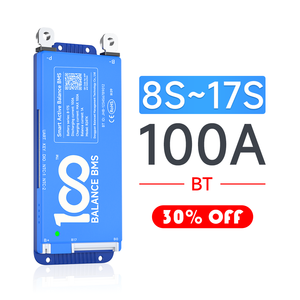
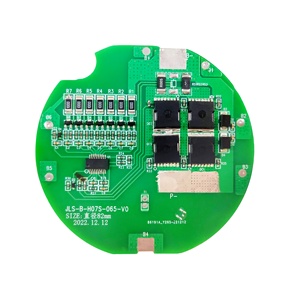
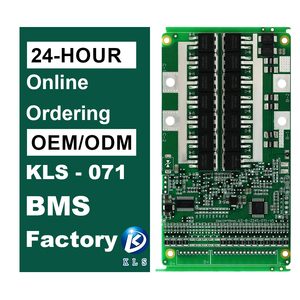
Explore our factory-engineered smart Active Balancing BMS and high-temperature protective control PCBA series built for high-discharge environments, LiFePO4, LTO, and modified NMC cell arrays.
| Performance Metrics | Standard Commercial Li-ion | APEX OEM High-Temp LiFePO4 | APEX Extreme LTO / Spec NMC |
|---|---|---|---|
| Operating Temp Range | -10°C to +50°C | -20°C to +70°C | -40°C to +85°C |
| Thermal Runaway Threshold | ~150°C - 160°C | > 270°C (Exothermic Stability) | > 300°C (Zero Flame Transfer) |
| Capacity Retention @ 60°C (1000 Cycles) | < 55% (Rapid Gas Generation) | > 88% Cycle Retention | > 94% Cycle Retention |
| BMS Balancing Mechanism | Passive Resistor Heat Bleed (0.05A) | Smart Active Inductive (1A - 2A) | Capacitive Energy Transfer (5A - 5.5A) |
| SEI Layer Stabilization | Standard EC/DMC Electrolyte | High-Purity VC/FEC Additive Mix | Inorganic Solid-Electrolyte Interface |
| Certifications Complied | Basic CE, UN38.3 | ISO 13485, UL1973, IEC 62133 | IATF 16949, UL9540A, UN38.3 T1-T8 |
Our global manufacturing infrastructure and engineering rigor overcome the multi-variable challenges of severe heat, vibration, and continuous charge cycles.
We collaborate with raw chemistry refiners to integrate high-boiling-point organic solvents and sacrificial additives like Vinylene Carbonate (VC) to prevent electrolyte oxidation above 60°C.
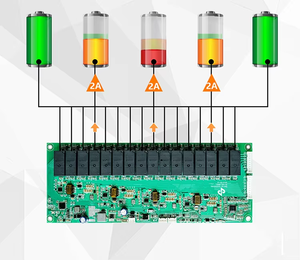
Unlike conventional passive balancing that bleeds energy as parasitic heat inside the pack, our active balancing boards transfer energy between cells with 95%+ efficiency, reducing internal temperature spikes by up to 12°C.
Custom battery enclosures incorporate microencapsulated PCM paraffin matrices and nano-aerogel insulation dividers between individual cells to restrict thermal runaway propagation to single cell events.
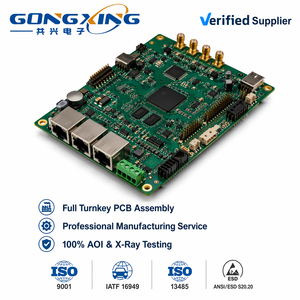
Every OEM production line is independently audited by SGS. From automated 3D optical inspection (AOI) to ultrasonic wire bonding and 100% aging chamber thermal stress testing, quality is guaranteed.
Engineered die-cast aluminum alloys, IP67 waterproof venting membrane systems, and flame-retardant V0-rated ABS/PC housings tailored specifically for severe outdoor and industrial operating conditions.
With headquarters in Atlanta, USA, and automated volume assembly plants in Vietnam, APEX provides seamless tariff mitigation, global logistics compliance, and resilient component sourcing.
In industrial automation, aerospace UAV deployments, high-temperature oil and gas exploration, and stationary outdoor energy storage systems (ESS), energy storage systems operate far beyond room-temperature ambient conditions. Standard commercial lithium-ion batteries exposed to temperatures exceeding 45°C suffer exponential rates of capacity loss, SEI (Solid Electrolyte Interface) decomposition, gas generation, cell imbalance, and elevated risks of thermal runaway.
Designing a high-performance custom OEM high-temperature resistant lithium battery pack requires an authoritative understanding of solid-state electrochemistry, mechanical heat dissipation pathways, and active firmware protection. This technical guide outlines the fundamental physics, procurement trends, and manufacturing protocols required to specify reliable battery solutions for severe ambient heat environments.
Core Thermal Principle: For every 10°C rise in operating temperature above 25°C, the electrochemical reaction rate doubles according to the Arrhenius law. Standard lithium batteries experience severe electrolyte degradation and accelerated lithium plating at high temperatures unless specifically mitigated by high-thermal-stability additives and active equalization systems.
The primary point of failure in standard lithium cells exposed to extreme heat is the breakdown of the protective SEI layer on the graphite or silicon-composite anode. Once the SEI layer thermally degrades (typically starting around 60°C to 80°C in standard EC-based electrolytes), the exposed anode reacts directly with organic solvents. This exothermic reaction generates gases (CO2, C2H4) and internal heat, driving the cell into self-heating thermal runaway.
To overcome chemical breakdown at elevated temperatures, APEX Mobile Power's R&D team customizes cell chemistry formulations utilizing advanced thermal stabilizing additives:
Not all lithium chemistries perform equally under thermal stress. Evaluating the proper chemistry is critical to balancing volumetric energy density against operational longevity:
Cell imbalance is magnified in high-temperature environments. Slight temperature gradients across a large battery module cause individual cells to age at different rates. Cells located closer to heat sources (e.g., power electronics, solar radiation, or industrial motors) degrade faster, exhibiting lower capacity and higher internal resistance (IR).
Traditional passive BMS boards dissipate excess energy from high-voltage cells by burning it off through bleed resistors. Bleeding 0.1A to 0.5A of current through PCB resistors generates localized temperatures on the BMS board exceeding 85°C to 105°C—further heating adjacent battery cells!
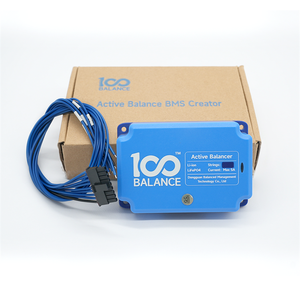
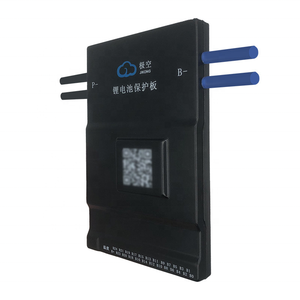
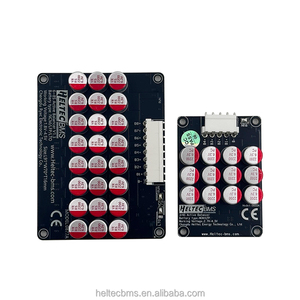
In contrast, Smart Active Balancers (such as the 5A capacitive and energy-transfer systems featured in our Seplos, JIKONG, Heltec, and KLS series) transfer charge dynamically from higher-voltage cells to lower-voltage cells via high-frequency capacitive or inductive coupling:
Global procurement teams for medical equipment, robotics, defense, and heavy machinery are shifting their vendor qualification standards. When evaluating OEM battery factories, strategic buyers are focusing on four key procurement trends:
Geopolitical tariffs and supply chain vulnerabilities have made single-country sourcing a high-risk strategy. Leading B2B buyers mandate OEM partners with fully qualified manufacturing facilities outside of high-tariff zones. APEX Mobile Power addresses this requirement through an integrated operations footprint—combining USA engineering headquarters with high-volume, automated production campuses in Vietnam.
Modern battery procurement requires stringent compliance beyond basic CE or RoHS marks. Key OEMs now demand:
Rather than procuring cells, BMS boards, and thermal insulation from separate vendors, procurement managers are sourcing complete, turnkey plug-and-play battery modules. Integrated modules feature pre-certified active balancers, internal heat-sink plates, flame-retardant structural foam, and digital telemetry protocols (CANbus 2.0B, Modbus, Bluetooth) ready for system integration.
The high-temperature energy storage landscape is evolving rapidly. Next-generation advancements currently entering mass production include:
Integrating machine-learning algorithms into smart BMS microcontrollers allows real-time modeling of cell core internal temperatures based on current draw, ambient heat, and impedance spikes. Predictive BMS firmware can dynamically throttle charge rates or activate external cooling before cells enter thermal stress ranges.
Sodium-ion (Na-ion) battery chemistries are emerging as exceptional candidates for wide-temperature industrial applications. Exhibiting higher thermal stability and less susceptibility to thermal runaway than standard NMC chemistry, sodium-ion batteries provide reliable power down to -40°C and up to +60°C at a lower raw material cost.
Next-generation battery packs incorporate phase-change materials (PCMs) engineered to absorb latent heat during rapid discharge bursts. By changing phase from solid to gel at precisely 45°C, these materials store thermal energy passively, keeping cell skin temperatures below critical thresholds without requiring active liquid pumps.
With over 14 years of specialized manufacturing experience, 60+ dedicated R&D engineers, and over 3,000 custom battery projects successfully deployed worldwide, APEX Mobile Power provides complete turnkey contract manufacturing services:
Detailed engineering answers to common procurement questions regarding custom thermal battery packs, active balancing selection, and factory compliance.
Consult directly with APEX Mobile Power's senior engineering team. From initial thermal simulation to ISO 13485 quality-controlled mass manufacturing, we deliver safe, reliable, high-performance battery power tailored to your operational specifications.