APEX Mobile Power — Custom OEM Lithium Battery Solutions  |  ISO 9001 · ISO 13485 · ISO 14001 Certified  |  Engineered for Performance

Custom OEM High-Energy Density Lithium Battery Pack Manufacturers & Factories

Next-Gen Battery Engineering Whitepaper: High Wh/kg Cell Integration, Active Balancer BMS Architecture, and Global Procurement Strategies

High-Energy Density Battery Packs & Smart BMS Assemblies

Direct factory supply of precision-engineered active balance equalizers, custom LiFePO4/NMC power packs, and smart PCBA management systems for mission-critical industrial, medical, and energy storage OEM deployment.
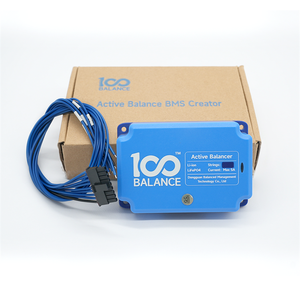
Active Balance Equalizer Balancing Capacitive Lifepo4 48v Livepo4 Cell Nmc 100balance 5A Active Balancer For Lithium Battery
5A Capacitive Active Equalizer

Active Balance Equalizer Balancing Capacitive LiFePO4/NMC 48V Cell 5A Active Balancer

High-precision voltage equalization (≤5mV), dynamic energy transfer for 16S pack capacity recovery.
Get Catalog
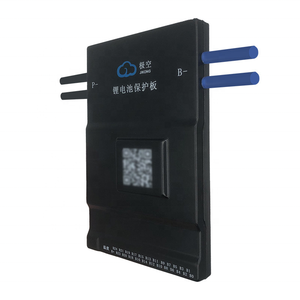
Seplos Bms 3.0 Active Balancer Lifepo4 Battery Active Balancer Lifepo4 Lithium Battery protection Board Balance BMS Lifepo4
Seplos BMS 3.0 Architecture

Seplos BMS 3.0 Active Balancer LiFePO4 Lithium Battery Protection Board

Integrated dual-layer overcurrent protection, CANbus/RS485 smart monitoring protocol setup.
Get Catalog
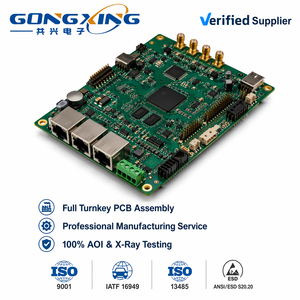
Smart BMS Battery Management System PCBA | Active Balancing Board | Full Turnkey PCB Assembly Service | IATF 16949 Factory
IATF 16949 Certified PCBA

Smart BMS PCBA & Active Balancing Board Turnkey PCB Assembly Service

Automotive-grade SMT manufacturing, full telemetry monitoring, short-circuit response <100μs.
Get Catalog
0.6A Smart Active Balancer 150A BMS 7S-24S JIKONG JK-BD6A24S15P Li-ion LiFePO4 Battery Management System with GPS/Display
7S-24S Smart GPS/Display

JIKONG JK-BD6A24S15P 0.6A Active Balancer 150A BMS with Remote GPS

Wide-series voltage adaptability, real-time OLED telemetry screen, mobile APP Bluetooth control.
Get Catalog
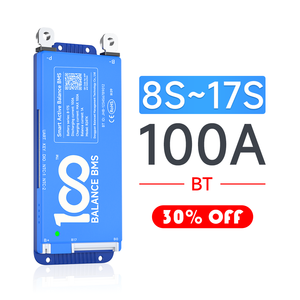
Smart Active Balancer battery Protection Board Battery Management System 100a 48v 16s Lifepo4 Smart BMS
48V 16S 100A High Power

Smart Active Balancer 100A 48V 16S LiFePO4 Protection Board BMS

Optimized for rack-mount energy storage systems, active thermal throttling & multi-node stacking.
Get Catalog
KLS Battery Management System BMS KLS-BMS-045 64s 120A 12V LiFePO4 for Electric Bicycle 2A Balance Current Aluminum Active
Aluminum Active Heat-Sink

KLS-BMS-045 64S 120A 12V LiFePO4 System with 2A Balance Current

Ruggedized aluminum casing for high-vibration LEV and electric mobility applications.
Get Catalog
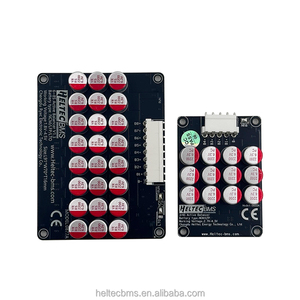
Heltec 4S To 21S Active Balancer 5.5A Battery Equalizer Lifepo4 Lipo LTO Battery Energy Transfer Capacitor Balance
5.5A Ultra-Fast Equalizer

Heltec 4S to 21S Active Balancer 5.5A Battery Energy Transfer Capacitor Board

Universal compatibility with LiFePO4, Li-po, and LTO chemistries, continuous lossless balancing.
Get Catalog
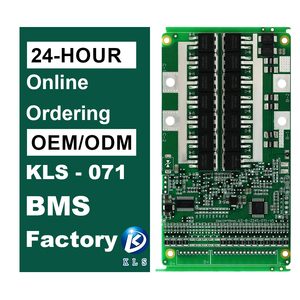
KLS Smart BMS 16S 48V 100A 150A LiFePO4 Home Energy Storage Battery Management System Active Balance KLSKF-071
Home ESS Heavy-Duty

KLS Smart BMS 16S 48V 100A/150A Active Balance Management Board

Purpose-built for residential energy storage, dual-temperature sensor loops, long cycle reliability.
Get Catalog
14+
Years R&D Excellence
60+
Senior Battery Engineers
3000+
Global OEM Projects
320 Wh/kg
Max Gravimetric Density

1. Executive Summary & Engineering Fundamentals: High-Energy Density Lithium Battery Pack OEM Manufacturing

In the modern energy storage and electromobility landscape, the requirement for high-energy-density lithium-ion battery packs has evolved from a niche premium specification into a core engineering requirement. Custom OEM (Original Equipment Manufacturer) high-energy density lithium battery packs—designed with advanced gravimetric energy densities exceeding 280 Wh/kg to 320 Wh/kg at the cell level—represent the pinnacle of electrochemical engineering, thermal management integration, and intelligent hardware design.

As global OEM buyers and industrial systems architects evaluate potential battery packaging manufacturing partners, looking beyond basic cell specifications is paramount. High energy density inherently compresses electrochemical energy into smaller spatial volumes and lower weight budgets. This technical reality imposes stringent demands on structural integrity, thermal runaway containment, dynamic cell-to-cell balancing via active Battery Management Systems (BMS), and rigorous compliance frameworks including ISO 13485, IATF 16949, UL 1973, and UN 38.3.

This technical whitepaper provides high-level procurement procurement insights, technical benchmarks, and architectural methodologies designed for system integrators, purchasing directors, and engineering leads looking to source custom high-energy-density lithium battery modules from certified factory environments.

Table 1: Electrochemical Chemistry Comparison Matrix for High-Density OEM Battery Packs

Lithium Chemistry Type Gravimetric Energy Density (Wh/kg) Volumetric Energy Density (Wh/L) Cycle Life (80% DOD) Thermal Runaway Onset Temp (°C) Primary OEM Target Applications
High-Nickel NCM (811 / NMC 90.5.5) 280 - 330 Wh/kg 680 - 780 Wh/L 1,200 - 2,000 Cycles ~210°C Aerospace, Long-Range UAVs, High-End Medical Robotics
Silicon-Anode Lithium-Ion 300 - 360 Wh/kg 750 - 850 Wh/L 800 - 1,500 Cycles ~195°C Portable Military Gear, Precision Test Equipment, Wearables
LiFePO4 (LFP High-Density Prismatic) 160 - 195 Wh/kg 350 - 420 Wh/L 4,000 - 6,000+ Cycles >270°C Residential & Commercial ESS, Electric AGVs/AMRs, Heavy Industrial
Semi-Solid-State Battery (Pouch) 350 - 400 Wh/kg 800 - 920 Wh/L 1,000 - 2,000 Cycles >300°C eVTOL Aviation, Defense Systems, Specialized Marine Vehicles
Sodium-Ion (Na-Ion Next-Gen) 130 - 160 Wh/kg 280 - 340 Wh/L 3,000 - 4,000 Cycles >260°C Low-Temperature Backup Power, Telecommunication Base Stations

2. Technical Deep-Dive: Mechanical, Thermal, and BMS Architecture in High-Energy Packs

To safely maximize energy density without sacrificing operational lifetime, custom factory engineering must execute precise synchronization across three core domains:

A. Cell-to-Pack (CTP) Packaging Efficiency

Traditional OEM designs utilize module housings within outer enclosures, resulting in structural efficiency ratios of under 55%. Advanced high-energy-density factories leverage direct Cell-to-Pack (CTP) structural adhesive bonding. By using thermal polyurethane and structural epoxy structural foam, dead space is eliminated, achieving volumetric packaging utilization exceeding 72%.

B. Active Balance Equalization (5A Transfer)

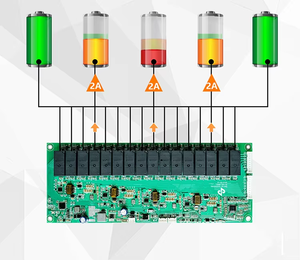
High Wh/kg chemistries like NCM 811 are highly sensitive to microscopic impedance variances across series strings. Passive balancing (bleeding excess energy as heat via resistors) is completely inadequate for high-density architectures. High-efficiency capacitive/inductive active balancing transfers energy lossless between cells at up to 5.5A currents, preserving total usable capacity over cycle lives.

C. Multilayer Thermal Runaway Barriers

Packing cells closer together exponentially increases thermal runaway propagation risks. Quality custom manufacturers incorporate aerogel insulation blankets between individual pouch/prismatic cells, combined with phase-change materials (PCM) and directional flame-venting gas ducts to guarantee zero cell-to-cell thermal propagation under severe penetration or internal short-circuit testing.

3. Future Procurement Trends in Custom High-Energy Density Battery Manufacturing

The global battery procurement landscape is undergoing seismic structural shifts driven by technological advances, raw material supply dynamics, and international legislative directives. B2B procurement heads and OEM procurement managers should align their supply chain roadmaps with the following strategic trends:

Trend 1: Transition from Passive Protection to AI-Enabled Predictive BMS Telemetry

Conventional protection boards simply cut off MOSFET switches when voltage or temperature thresholds are violated. Future-proof OEM procurement mandates smart BMS hardware equipped with cloud telemetry (4G/5G/GPS), micro-impedance spectroscopy, and machine-learning algorithms. These systems continuously measure cell internal resistance (dZ/dt) to forecast cell degradation and detect internal micro-dendrite formation days before a potential short-circuit event occurs.

Trend 2: Widespread Adoption of Silicon-Carbon Composite Anodes

Pure graphite anodes reached theoretical physical density caps (~372 mAh/g). Factory production lines are rapidly adopting silicon-carbon (Si-C) composite anodes capable of expanding anode capacity to >450–600 mAh/g. When procuring high-energy battery packs for weight-sensitive applications (such as aerial drones, robotic exoskeletons, and portable medical imaging devices), specifying Si-C anode cells provides an immediate 15% to 22% weight reduction for identical amp-hour ratings.

Trend 3: Strict Environmental Traceability & The EU Battery Passport Standard

ESG compliance is no longer an optional marketing add-on—it is a regulatory prerequisite for North American and European import compliance. Modern tier-1 custom battery factories track carbon footprints across raw lithium extraction, cathode synthesis, cell assembly, and final pack delivery. Purchasing managers must verify that OEM manufacturers provide digital passports documenting ethical cobalt sourcing, recycled nickel percentages, and low-carbon manufacturing logistics.

Trend 4: Modular Standardization with Custom Encapsulation

Rather than designing custom cell geometries from scratch—which inflates Non-Recurring Engineering (NRE) costs and delays time-to-market—the industry is converging on standardized high-capacity cylindrical formats (21700, 4680, 32140) combined with fully customized structural enclosures, custom busbars, and tailored wire-bonding interconnects. This hybrid approach slashes NRE prototyping timelines from 12 months down to 8–12 weeks while maintaining 100% mechanical integration flexibility.

4. Key Technology & Manufacturing Breakthroughs in Next-Gen Battery Packs

Achieving superior gravimetric performance requires advanced industrial equipment and precise manufacturing execution. Below are the core technological breakthroughs distinguishing top-tier OEM factories from standard assembly shops:

  • Micro-Resistance Ultrasonic & Laser Busbar Welding: High-density packs carry immense power densities. Copper-to-aluminum laser welding yields low-resistance joints (<50 micro-ohms), drastically eliminating resistive heat spikes under high C-rate discharge conditions.
  • Capacitive & Transformer-Based Active Balancing: As shown in our featured product line (e.g., Heltec & Seplos active balancers), dynamic energy transfer balancing ensures that high-capacity cells remain tightly balanced within 0.003V during charge and discharge cycles, unlocking up to 15% more usable energy over pack lifespans compared to passive resistance bleeding.
  • Immersion Liquid Cooling & Cold-Plate Integration: For ultra-fast charging applications (>3C charging rates), ambient air cooling fails to mitigate heat build-up. Factories now integrate micro-channel aluminum liquid cold plates directly inside the cell matrix, ensuring uniform thermal gradients (<2°C temperature variance across all internal cells).
  • High-Precision Automated Cell Sorting: Prior to pack building, individual cells undergo 100% automated sorting across three critical parameters: open-circuit voltage (OCV), internal AC resistance (IR), and self-discharge rates over a 14-day aging period. Only cells with voltage variance <2mV and resistance variance <0.3mΩ are grouped into high-density strings.

5. Enterprise Capabilities & OEM Customization Value Proposition

At APEX Mobile Power, we combine over 14 years of specialized battery packaging engineering with state-of-the-art ISO-certified manufacturing facilities. Our engineering team acts as an extension of your own R&D department, navigating complex electrical, thermal, and regulatory design constraints to deliver turn-key lithium battery solutions.

Strict Quality Certifications

Our global production campuses operate under independently audited ISO 9001:2015, ISO 13485:2016 (Medical Devices), ISO 14001:2015, ISO 45001:2018, and IATF 16949 automotive quality management standards.

Full In-House Testing Capabilities

Every custom pack design undergoes rigorous physical validation in our testing labs: UN 38.3 altitude/vibration simulation, mechanical drop testing, IP67 waterproofing chambers, thermal shock cycling (-40°C to +85°C), and nail-penetration safety verification.

Turn-Key Custom Engineering Workflow

From 3D mechanical enclosure CAD modeling, custom hardware/software BMS board layout, to full prototype assembly and international regulatory body certification support—we streamline your product development lifecycle.

60+ Dedicated R&D Engineers

We reinvest 8% of annual turnover back into forward-looking energy research, focusing on high-density chemistry stabilization, solid-state cell integration, and high-current capacitive balancing protocols.

6. Comprehensive OEM Buyer's Guide & Frequently Asked Questions (FAQ)

Navigating global lithium battery pack sourcing involves complex technical, commercial, and legal considerations. Below are detailed answers to the most common questions raised by procurement managers and chief technology officers during the vendor evaluation phase.

Q1 What is the practical difference between Gravimetric Energy Density (Wh/kg) and Volumetric Energy Density (Wh/L) when selecting battery packs?
Gravimetric Energy Density (Wh/kg) measures the total electrical energy stored per unit of mass (weight), which is critical for applications where overall payload weight directly affects operational efficiency or range (such as aviation drones, medical wearables, and portable field equipment).

Volumetric Energy Density (Wh/L) measures the energy stored relative to total physical dimensions (volume), which dominates procurement decisions when physical space within an enclosure is strictly constrained (such as slim medical devices, handheld instruments, and compact AGVs). Our engineering team optimizes cell chemistry and packaging structures to maximize both parameters based on your application's physical boundaries.
Q2 Why is active balancing (Active Balancer BMS) superior to passive balancing in custom high-energy battery packs?
Passive balancing bleeds off excess electrical energy from high-voltage cells through resistive heat dissipation. In high-density lithium battery packs, this method creates two major drawbacks: it generates internal heat inside tight enclosures and wastes valuable stored energy.

In contrast, Active Balancing (such as our 5A capacitive dynamic equalizers) takes excess charge from higher-voltage cells and transfers it directly into lower-voltage cells via capacitive or inductive energy transfer loops. This process yields zero wasted thermal energy, keeps cell temperature uniform, increases usable pack capacity by up to 15%, and extends pack cycle life by keeping cell voltages perfectly balanced throughout charge and discharge phases.
Q3 What communication protocols can your custom Smart BMS support for OEM system integration?
Our smart BMS hardware platform supports full multi-protocol connectivity customized to your master device's system controller architecture. Standard supported protocols include:
  • CANbus 2.0B / CANopen / J1939: High-speed industrial, vehicle, and robotics telemetry.
  • RS485 / Modbus RTU: Standard for commercial Energy Storage Systems (ESS) and telecom power units.
  • SMBus / I2C / HDQ: Precision smart-battery communication for medical devices and portable instruments.
  • Bluetooth Low Energy (BLE) / Wireless Mesh / Cloud GPS: Remote monitoring app interface for field maintenance personnel.
Q4 What regulatory testing and safety certifications are required before shipping custom lithium battery packs internationally?
International transport and commercial market deployment require specific safety standard compliance:
  • UN 38.3 & MSDS: Mandatory UN transport testing (altitude, thermal shock, vibration, impact, external short-circuit, overcharge, forced discharge) required for air, sea, and ground freight logistics.
  • IEC 62133 / CB Scheme: International safety certification for portable sealed secondary cells and batteries.
  • UL 1973 & UL 9540A: Standard for stationary energy storage batteries and thermal runaway fire testing.
  • ISO 13485: Medical device quality management system compliance required for active non-implantable medical power devices.
APEX Mobile Power manages the end-to-end certification process with accredited testing bodies (SGS, TUV, Intertek) to ensure your custom battery pack reaches international markets with full compliance documentation.
Q5 What is the typical engineering lead time from initial CAD concept design to mass production?
Our standard custom OEM battery development cycle spans the following stages:
  1. Phase 1: Requirements Definition & Design Proposal (1–2 Weeks): Electrical spec confirmation, cell chemistry selection, 3D CAD envelope layout, thermal calculation.
  2. Phase 2: BMS Hardware/Software & Mechanical Prototyping (3–4 Weeks): Custom SMT PCB sample build, enclosure rapid tooling/CNC machining, functional sample assembly.
  3. Phase 3: Sample Verification & Internal Testing (2 Weeks): Cycle testing, temperature chamber profiling, short-circuit validation.
  4. Phase 4: Regulatory Certification & Hard Tooling (4–6 Weeks): Formal UN38.3, IEC, or UL testing while injection molding or sheet metal tooling is fabricated.
  5. Phase 5: Pilot Batch & Mass Production (4 Weeks): Full automated assembly, 100% cell-matching, automated optical inspection (AOI), and final pack dispatch.
Overall lead time typically averages 8 to 12 weeks depending on structural tooling complexity and specific regulatory requirements.
Q6 How does APEX Mobile Power ensure long-term production consistency and cell supply chain security?
We maintain direct strategic tier-1 partnerships with leading global lithium cell manufacturers (including CATL, EVE, Samsung SDI, LG Energy Solution, and Panasonic). Every batch of cells received undergoes strict Incoming Quality Control (IQC) with barcode tracking tied to lot numbers.

Additionally, our dual-sourcing strategy for critical components (BMS microcontrollers, MOSFETs, insulation materials) ensures that your long-term OEM supply chain remains immune to geopolitical interruptions or single-vendor component shortages.
Engineering Consultation & OEM Sourcing

Ready to Engineer Your Custom High-Energy Density Battery Pack?

Partner with APEX Mobile Power for world-class battery design, ISO 13485 / IATF 16949 factory production, smart active balancing BMS integration, and international regulatory certification support.