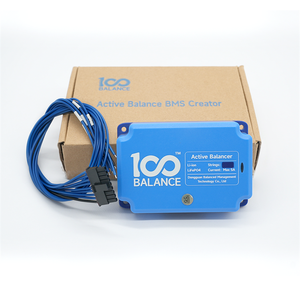
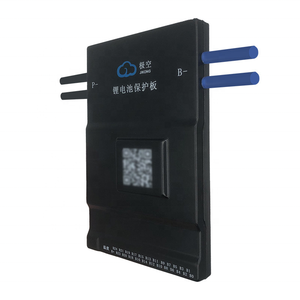
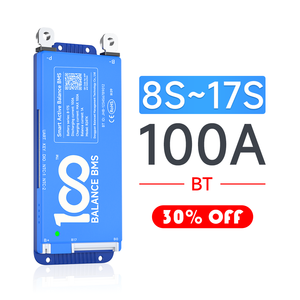
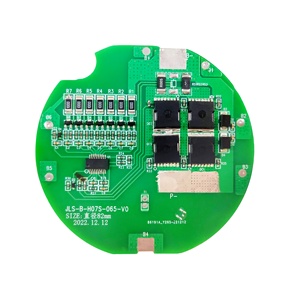
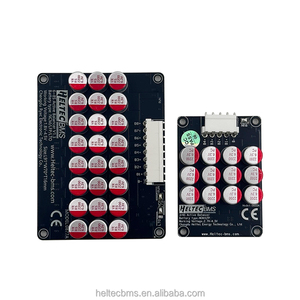
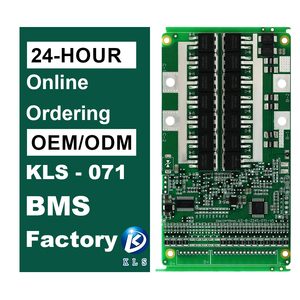
As premier custom OEM containerized solar energy storage system manufacturers, our engineering architecture relies on hyper-reliable cell-level management, high-amperage active balancing, and automotive-grade PCBA integration. Below are 8 essential active balancing and smart BMS systems engineered for large-scale 20ft and 40ft modular BESS deployments, optimizing state-of-charge (SoC) cell parity and expanding battery lifecycle duration by up to 30%.
Modern grid infrastructure requires containerized solar storage systems engineered to endure 15+ years of continuous cycling under harsh environmental conditions. APEX Mobile Power operates vertically integrated manufacturing facilities certified under ISO 9001:2015, ISO 13485:2016, ISO 14001:2015, ISO 45001:2018, and IATF 16949 automotive standards. From custom high-voltage BMS PCBA fabrication to turnkey 20ft/40ft liquid-cooled container integration, our engineering rigor mitigates financial and operational risks for IPPs (Independent Power Producers), EPC contractors, and global solar developers.
We manage the entire manufacturing ecosystem in-house: structural containerized enclosure design, HVAC liquid thermal management routing, fire suppression integration (NFPA 855 & UL 9540A compliant), high-voltage DC busbar assembly, and real-time cloud SCADA/BMS communication protocols (CANbus, Modbus TCP/IP).
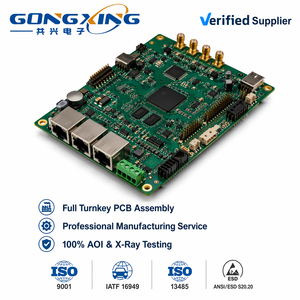
Every PCBA protection board and active cell balancer produced in our SGS-audited facilities undergoes automated optical inspection (AOI), x-ray component verification, temperature-cycle stress burn-in testing, and 100% End-of-Line (EOL) testing under full rated current loads up to 1500V DC.
Containerized Solar Energy Storage Systems (BESS) represent the operational backbone of modern renewable microgrids, peak-shaving installations, and frequency regulation projects. Transitioning from legacy lead-acid and early lithium installations to high-density Lithium Iron Phosphate (LiFePO4) 3.2V prismatic cells requires advanced system integration to maximize volumetric energy density while enforcing multi-layered safety mechanisms.
In mega-watt scale 20ft (3.44MWh – 5.0MWh) and 40ft (6.88MWh+) storage containers, thousands of battery cells are connected in long series strings to reach working voltages between 1000V DC and 1500V DC. Over time, subtle variations in manufacturing tolerances, internal resistance, and ambient thermal gradients induce cell imbalance. Traditional passive balancing burns off excess energy as waste heat through resistors, limited to low currents (50mA to 200mA), which generates localized hotspots inside sealed battery racks.
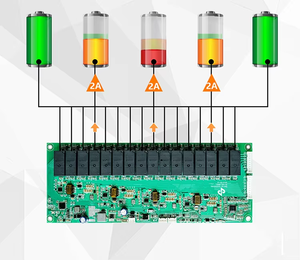
Advanced custom OEM containerized systems integrate Capacitive and Inductive Active Equalizers (ranging from 2A to 5.5A continuous transfer current). Active balancing dynamically transfers charge from higher-energy cells to lower-energy cells across the entire pack with over 92% efficiency. This technology prevents premature string cutoff during high-rate charging and discharging, eliminating capacity degradation bottlenecks and expanding usable container energy capacity by 8% to 15%.
| Architecture Metric | Legacy Passive BMS Balancing | High-Efficiency Active BMS Balancing (AMP Standard) |
|---|---|---|
| Equalization Current | 50mA – 200mA (Resistive Dissipation) | 2.0A – 5.5A Dynamic Energy Transfer |
| Energy Efficiency | 0% (Energy wasted entirely as heat) | 92% – 95% High-Efficiency Charge Redistribution |
| Thermal Impact | Increases internal rack temperatures | Zero thermal penalty during balancing cycle |
| Cell Life Expectancy | 3,000 – 4,500 Cycles (3.2V LiFePO4) | 6,000 – 8,000+ Cycles (Extended Asset Longevity) |
| Maintenance Downtime | High (Frequent manual cell equalization) | Automated real-time cloud-monitored parity |
Thermal management dictates both safety and financial yield in containerized solar storage. HVAC air-cooled containers suffer from internal thermal stratification, leading to temperature deltas of up to 8°C between top and bottom rack tiers. Liquid-cooling systems utilize specialized glycol-water chillers paired with micro-channel cooling plates sandwiched between LiFePO4 cells.
This direct thermal coupling maintains cell temperature variation within ≤ 2.5°C across the entire container, reducing auxiliary power consumption by 30% compared to traditional forced-air HVAC units. Lower operating temperatures suppress solid electrolyte interphase (SEI) layer growth on battery anodes, directly preserving battery health.
Safety engineering for containerized solar ESS mandates a multi-stage defense strategy against thermal runaway:
As the global clean energy transition accelerates, utility procurement directors and project financiers must anticipate technology shifts when selecting custom OEM containerized solar energy storage system manufacturers. The following strategic trends are reshaping global procurement specifications over the next decade:
The industry is rapidly shifting away from 40ft 3.35MWh enclosures toward high-density 20ft 5MWh containers utilizing ultra-large 314Ah or 530Ah LiFePO4 cells. This halves the project footprint, cuts civil installation costs by 35%, and dramatically reduces maritime transport logistics expense per MWh.
Modern utility-scale solar-plus-storage projects are standardizing on 1500V DC system architecture. Higher DC voltage lowers system currents, minimizing copper cabling requirements, reducing transmission resistive losses (I²R), and boosting overall round-trip efficiency (RTE) above 90%.
Procurement specifications now mandate smart BMS integration with cloud-native edge computing. Machine learning algorithms analyze real-time cell impedance, voltage drift, and gas emissions to predict cell failure weeks before an operational anomaly occurs, enabling predictive maintenance.
Sodium-ion batteries are emerging as a cost-effective alternative for stationary energy storage in extreme cold regions (-40°C to +60°C operating window). Custom OEM suppliers are designing hybrid containerized solutions combining LiFePO4 for high energy density with Na-Ion for cold-weather reliability and zero-risk raw material availability.
Geopolitical tariffs and local content mandates (such as the US Inflation Reduction Act) require tier-1 OEM manufacturers to maintain diversified international manufacturing footprints (e.g., Southeast Asia, Vietnam, USA) to ensure tariff-compliant shipping and uninterrupted supply chains.
The global energy storage ecosystem is transitioning from standalone battery hardware sales to fully integrated software-defined energy platforms. Custom OEM containerized solar energy storage system manufacturers are now expected to provide end-to-end grid compatibility:
Legacy storage containers relied on grid-following inverters that depended on external AC grid voltage waveforms. Modern containerized BESS engineering incorporates grid-forming inverters capable of black-starting regional microgrids, delivering synthetic inertia, and stabilizing weak renewable grids during severe frequency excursions.
DC-coupled containerized systems directly connect solar PV arrays to the BESS DC busbar via high-efficiency MPPT controllers before AC inversion. This eliminates double-inversion losses, captures clipped solar energy during peak irradiance hours, and reduces overall balance-of-system (BOS) power electronics costs by up to 18%.
Direct answers to technical, commercial, and regulatory inquiries commonly raised by utility procurement officers and engineering EPC leads:
Partner with APEX Mobile Power for certified, reliable, and high-performance custom OEM containerized solar energy storage systems. Our senior R&D engineering team is ready to review your project single-line diagrams (SLD) and technical RFQs.