APEX Mobile Power — Custom OEM Lithium Battery Solutions  |  ISO 9001 · ISO 13485 · ISO 14001 Certified  |  Engineered for Performance

Custom OEM Automotive Grade Lithium Battery Pack Manufacturer & Supplier

ISO 26262 ASIL-D Compliant | IATF 16949 Certified Production | Advanced EV & Auxiliary Power Systems

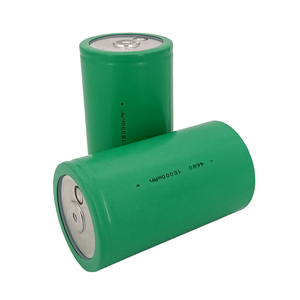
UFX4680 3.7V 15000mAh OEM Cylindrical Lithium-Ion Battery Pack
UFX4680 3.7V 15000mAh MSDS New Design Cylindrical Lithium Ion Battery 4680 for EV Car Battery New Type case High Quality OEM
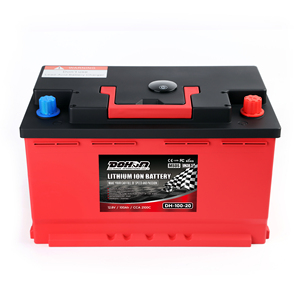
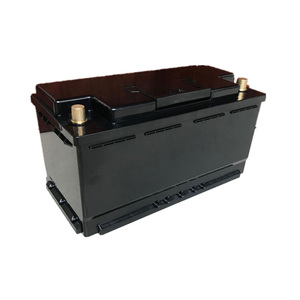
Group 49 DIN H8 L5 Lithium Car Starting Battery Pack 100AH 2100CCA
Group 49 DIN H8 L5 Lithium Car Starting Battery Pack 100AH 2100CCA LiFePO4 Li-ion Batteries Automotive Vehicle Wirh Re-start
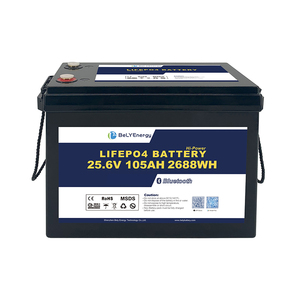
Bely Energy 24V 105AH Prismatic Automotive Lithium Ion Battery Pack
Bely Energy High Quality 24V 105AH Battery Packs Prismatic Automotive Lithium Ion Batteries
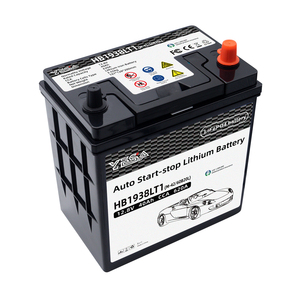
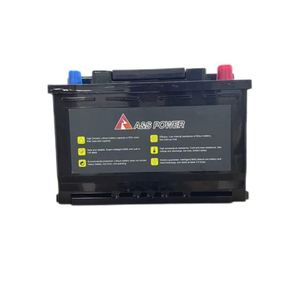
12V 50Ah Lightweight LiFePO4 Start-Stop Battery Pack
Powerful 12V 50Ah Lightweight LiFePO4 Battery Pack New Condition Start-Stop Vehicle Replacement for 45B24 46B24 55B24RS
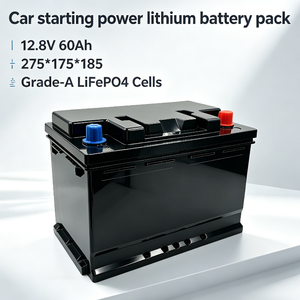
32140 LiFePO4 Shell High Cycle 12.8V 60Ah Automotive Battery Pack
32140 LiFePO4 Shell High Cycle 12.8V/60Ah BMS Automotive Safety 4S4P Automotive Start-up Power Supply Lithium Battery Packs
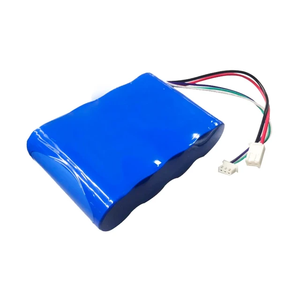
Wholesale 7.4V 4000mAh 18650 Lithium Ion Battery Modules for Electric Vehicles
Wholesale 7.4V 4000mAh Lithium-ion Battery Packs 18650 Cells for Electric Cars. Available Voltages 3.7V 7.4V 11.1V 12V 24V 36V
12V 80Ah 1000CCA High Performance Lithium LiFePO4 Car Audio Battery
High Performance 12V 80Ah 1000CC Lithium LiFePO4 Car Audio Battery Pack 14.4V 6V Output New Condition Auto Batteries
Automotive LiFePO4 12V 50Ah 80Ah Starter Battery Pack
Vehicle Battery Electric Automobile Generator Battery Pack Lifepo4 12v 50ah 80Ah Lithium Starter Auto Batteries for Car
14+
Years Automotive OEM R&D
60+
Senior Electrochemical Engineers
2100A
Peak Cold Cranking Amps (CCA)
3500+
Deep Charge Cycles @ 80% DOD

1. Executive Industry Overview: The Paradigm Shift to Automotive-Grade OEM Lithium Solutions

The global automotive ecosystem is undergoing an unprecedented structural transition from legacy internal combustion architectures to electrified powertrains, smart auxiliary 12V/48V platforms, and high-voltage energy storage. As a tier-1 focused Custom OEM Automotive Grade Lithium Battery Pack Manufacturer & Supplier, our engineering matrix is designed to solve the critical thermal, mechanical, and electrochemical failure modes inherent to lower-tier industrial batteries. Automotive applications require strict adherence to zero-defect manufacturing, extreme vibrational tolerance (ISO 16750-3 standard compliance), and bulletproof thermal management.
Unlike standard commercial battery packs designed for steady-state low-C discharge rates, automotive-grade lithium battery systems must handle rapid transient current spikes (up to 30C during cold cranking), dynamic regenerative braking energy absorption, and continuous thermal cycles ranging from -40°C sub-zero environments to +85°C engine compartment temperatures. Delivering high gravimetric energy density (exceeding 260 Wh/kg at cell level) while maintaining complete ISO 26262 ASIL-D functional safety compliance requires full vertical control over cell selection, smart Battery Management System (BMS) logic development, laser-welded busbar interconnects, and structural enclosure sealing.

Technical Benchmark: Industrial-Grade vs. APEX Automotive OEM Grade Battery Systems

Engineering Specification Standard Industrial Lithium Pack APEX Automotive OEM Grade LiFePO4 / Li-Ion Pack Information Gain & OEM Impact
Cell Topology & Grading Grade-B or mixed-grade commercial cells Tier-1 Automotive Grade-A Cylindrical (4680/32140) & Prismatic Zero dynamic capacity fade delta; <0.5% internal resistance variance across string.
Vibration & Shock Rating UN 38.3 Basic Drop Testing ISO 16750-3 Heavy Commercial Vehicle Vibration & Sine Sweep Certified Eliminates structural tab fatigue, wire bond shearing, and housing fractures.
Cold Cranking Amps (CCA) 300A – 600A Peak Discharge 1000A to 2100A Instantaneous Peak Cranking Current (Group 49 DIN H8) Reliable engine ignition and high-load starter motor activation down to -30°C.
BMS Architecture Passive balancing only, basic PCB circuit Dual-microprocessor active balancing, CAN 2.0B / J1939, Smart Re-start logic Prevents parasitic vehicle drain; guarantees emergency reserve power via automated isolation.
Thermal Runaway Delay (TPD) No thermal barrier between cells Aerogel insulation + Phase Change Material (PCM) thermal barriers Zero thermal propagation to adjacent cells during single-cell nail penetration testing.
Operating Cycle Life 1,000 – 1,500 cycles @ 80% DOD 3,500 – 6,000+ deep cycles @ 80% DOD (LiFePO4 chemistry) Extends total vehicle service life beyond 10 years without pack replacement.

2. Enterprise Engineering Capabilities & Customization Framework

Custom Mechanical & Structural Integration

Our R&D team utilizes advanced CAD/FEA simulation to engineer custom battery enclosures matching exact DIN standards (Group 49 DIN H8, L5, 45B24, 55B24RS). Enclosures feature IP67/IP69K ingress protection, die-cast aluminum alloy or flame-retardant ABS/PC shells, and anti-vibrational internal damping matrices.

Intelligent BMS with Smart Re-Start Logic

Integrated automotive BMS units continuously measure cell voltages, temperature gradients, and State of Charge (SOC) / State of Health (SOH). Featuring proprietary "Smart Re-start" technology, the BMS isolates 20% emergency reserve energy before full depletion, allowing the driver to jump-start the vehicle at the push of a button.

Extreme Cold-Cranking & High C-Rate Output

Utilizing specialized ultra-low internal resistance (<0.8 mΩ) LiFePO4 cells and large 4680 cylindrical formats, our automotive starter batteries deliver up to 2100 CCA. Nickel-copper composite busbars joined by continuous fiber laser welding minimize voltage drop during 300A-2000A transient ignition surges.

IATF 16949 & Multi-ISO Quality Assurance

Manufactured in SGS-audited cleanroom facilities adhering to ISO 9001, ISO 13485, ISO 14001, and ISO 45001 standards. Every production batch undergoes 100% automated optical inspection (AOI), full-cycle charge-discharge validation, thermal shock testing (-40°C to +85°C), and UN38.3 vibration simulation.

3. Strategic Procurement Trends: Electrification Pathways for 2025–2035

The OEM procurement landscape for automotive batteries is evolving rapidly. Global automotive Original Equipment Manufacturers (OEMs) and aftermarket fleet suppliers are abandoning traditional lead-acid starter batteries in favor of ultra-lightweight, high-longevity Lithium Iron Phosphate (LiFePO4) and advanced Cylindrical 4680 chemistries. Key procurement macro-trends include:
  • 12V/48V Auxiliary Power Weight Reduction: Replacing a standard 28kg Group 49 lead-acid battery with an APEX 100Ah 2100CCA LiFePO4 pack cuts total component weight by up to 65% (saving 18kg per vehicle). This weight reduction directly boosts electric vehicle (EV) driving range and improves dynamic vehicle payload capabilities.
  • Large Format Cylindrical Cells (4680 & 32140): Transitioning from 18650/21700 cell arrays to 4680 and 32140 steel-shell formats reduces structural cell interconnect count by 80%. This drastically decreases manufacturing complexity, lowers thermal resistance points, and increases structural pack rigidity.
  • Total Cost of Ownership (TCO) Parity: While initial capital expenditure for automotive lithium packs is higher than legacy AGM lead-acid batteries, a 10-year lifespan with zero maintenance and 4,000+ cycle durability yields a 45% total TCO reduction over commercial fleet lifecycles.
  • Supply Chain Traceability & Sustainability: European Battery Regulation compliance mandates full material tracking, carbon footprint disclosure, and recyclable enclosure designs. Our OEM manufacturing process integrates fully documented cobalt-free cell chemistry and MSDS/UN38.3 transport clearance.

4. Deep-Dive Product Portfolio & OEM Application Benchmarks

Our broad spectrum of custom automotive lithium battery packs caters to primary EV power arrays, high-performance car audio systems, commercial vehicle auxiliary packs, and engine starting applications.

UFX4680 3.7V 15000mAh EV Cell Module Architecture

The UFX4680 cylindrical cell represents the pinnacle of volumetric efficiency for electric vehicle battery packs. Featuring a 46mm diameter and 80mm height, this tabless-inspired internal geometry minimizes internal electrical resistance (DCIR < 1.2 mΩ). With a unit capacity of 15,000mAh at 3.7V nominal, these modules allow automotive engineers to construct high-voltage (400V/800V) EV battery packs with significantly fewer serial connections.

Target Applications: Passenger EV Powertrains, Electric Commercial Buses, High-Voltage Energy Storage Systems (ESS), Autonomous Delivery Platforms.
Request 4680 OEM Data Sheet

Group 49 DIN H8 L5 100Ah 2100CCA Automotive Starter Battery

Engineered as a direct drop-in replacement for premium European and North American passenger cars, SUVs, and light trucks requiring DIN H8 / L5 form factors. Delivering an astonishing 2100 Cold Cranking Amps (CCA), this unit effortlessly turns over high-displacement internal combustion engines even at sub-zero temperatures. Built-in smart microprocessor BMS protects against short-circuiting, over-charging, thermal runaway, and deep discharge while featuring an integrated "Re-Start" button.

Target Applications: Luxury Passenger Vehicles, Off-Road 4x4s, Heavy Duty Diesel Engines, Micro-Hybrid Start-Stop Systems.
Inquire Group 49 Wholesale Pricing

24V 105Ah Automotive Prismatic Lithium-Ion Battery Module

Designed for 24V commercial vehicle electrical systems, marine auxiliary power, and heavy industrial machinery. Utilizing high-stability prismatic lithium-ion cells encased in an insulated aluminum casing, this pack delivers high energy density combined with exceptional thermal stability. The integrated CANbus communication interface allows real-time telemetry streaming directly to vehicle ECU displays.

Target Applications: 24V Commercial Trucks, Mining Vehicles, Electric Forklifts, Hybrid Bus Auxiliary Systems.
Consult 24V OEM Integration

32140 Steel Shell 12.8V 60Ah High-Cycle LiFePO4 Pack

Utilizing robust 32140 steel-jacketed cylindrical cells arranged in a 4S4P structural configuration, this 12.8V 60Ah module provides unmatched physical durability against severe operational impact and continuous high vibration. The steel casing effectively suppresses radial cell expansion, ensuring long-term thermal integrity and extending cycle life beyond 4,000 deep discharge cycles.

Target Applications: Military Ground Vehicles, Agricultural Machinery, High-Vibration Automotive Generators, Emergency Power Units.
Get 32140 Technical Specs

5. Frequently Asked Procurement & Engineering Questions (FAQs)

Q1: What differentiates an "Automotive Grade" lithium battery pack from standard commercial or energy storage packs?
Automotive-grade lithium battery packs are engineered to comply with much stricter thermal, mechanical, and safety standards than commercial energy storage batteries. Key differences include Tier-1 Grade-A cell sorting (strict cell-to-cell capacity matching within < 0.5% tolerance), dynamic thermal management capable of handling 20C-30C pulse discharge rates during engine cranking, ISO 16750-3 vibration resistance, and ISO 26262 ASIL-D functional safety certified BMS hardware. Additionally, automotive packs undergo exhaustive UN38.3, ECE R100, and SAE J2464 environmental testing.
Q2: How does the "Smart Re-Start" technology work in your 12V LiFePO4 starting batteries?
Our proprietary Smart Re-Start micro-controller monitors total battery discharge in real time. If auxiliary vehicle loads (such as headlights, audio amplifiers, or telemetry devices) drain the battery down to approximately 20% State of Charge (SOC), the internal BMS automatically trips an isolated solid-state MOSFET circuit to preserve reserve capacity. When the vehicle operator presses the external re-start button or triggers the remote wireless switch, the BMS re-engages the circuit, delivering full 1000A-2100A cold cranking amps to start the engine without needing external jumper cables.
Q3: Can your OEM custom battery packs operate efficiently in extreme low-temperature cold weather climates?
Yes. Standard LiFePO4 chemistries experience elevated internal resistance below 0°C. To solve this, our low-temperature automotive packs feature built-in PTC internal thermal heating blankets governed by the BMS. When charging current or ignition trigger is detected in sub-zero environments (-20°C to -40°C), the battery diverts input power to rapidly heat the cell cores to optimal operational temperature before enabling full current flow, preserving long-term cycle health.
Q4: What communication protocols are supported by your automotive BMS for vehicle ECU integration?
Our intelligent BMS units support standard CAN 2.0B, CANopen, SAE J1939 automotive bus protocols, as well as LIN bus interfaces. This allows real-time broadcast of State of Charge (SOC), State of Health (SOH), cell voltage deltas, temperature sensor arrays, diagnostic fault flags, and total charge/discharge current logs directly to the central vehicle control unit (VCU) or dashboard display.
Q5: What is the typical non-recurring engineering (NRE) process and timeline for custom OEM battery pack development?
Our structured NRE roadmap takes custom OEM projects from concept to mass production in 8 to 14 weeks:
  1. Feasibility & Architectural Specification (Week 1–2): Defining electrical parameters, mechanical envelope, ingress protection, and thermal dynamics.
  2. 3D CAD, Thermal FEA & BMS Prototyping (Week 3–5): Rapid prototyping of enclosure tooling, custom PCB layout, and busbar laser-cutting.
  3. Sample Assembly & In-House Testing (Week 6–8): Comprehensive UN38.3, thermal cycling, short-circuit, and vibration testing.
  4. Pilot Production & OEM Certification (Week 9–14): Final tooling validation, IATF 16949 mass-production sign-off, and client field validation.
Q6: Are your automotive lithium batteries compliant with global shipping and safety regulations?
All our battery configurations are certified under UN 38.3 (Transport of Dangerous Goods) safety standards, UN 3480 / UN 3481 shipping guidelines, and comply with MSDS, CE, RoHS, and REACH parameters. We provide full air-freight and ocean-freight UN-certified dangerous goods packaging (Class 9 hazard compliance) for global seamless door-to-door delivery.
Q7: What cell chemistries do you offer, and how do I choose between LiFePO4, NMC, and 4680 Li-Ion?
Selecting the ideal electrochemistry depends on your primary performance vectors:
  • LiFePO4 (Lithium Iron Phosphate): Best for engine starting, 12V/24V auxiliary power, and commercial vehicle fleets. Offers unmatched thermal safety, non-combustible properties, and 3,500–6,000+ cycle life.
  • NMC (Nickel Manganese Cobalt): Preferred when absolute gravimetric energy density (Wh/kg) is critical in compact passenger EV traction packs where space is severely constrained.
  • 4680 Cylindrical Format: Ideal for high-voltage (400V/800V) modular EV packs requiring rapid automated laser welding, high continuous power output, and integrated liquid cooling plates.
Q8: How do you prevent thermal runaway propagation in high-capacity automotive battery packs?
We employ a multi-layered passive safety design: First, every cell is separated by flame-retardant ceramic insulation matrix pads and silica aerogel thermal barriers. Second, physical pressure-relief vent valves prevent pressure build-up within the sealed enclosure. Third, the BMS continuously monitors multi-point temperature sensors, automatically triggering high-current contactor cutoffs in less than 10 milliseconds upon detecting abnormal temperature rates of rise.
Q9: Can your 12V starter batteries directly replace AGM or Gel lead-acid batteries without alternator modification?
Yes. Our 12V LiFePO4 automotive batteries (e.g., Group 49 DIN H8, 45B24) feature an integrated smart BMS designed to accept standard automotive alternator charging voltages (14.2V to 14.6V). The internal protection circuit manages peak transient voltage spikes, making them 100% plug-and-play compatible with existing vehicle charging systems without needing specialized external regulators.
Q10: What is your Minimum Order Quantity (MOQ) for custom OEM battery pack development?
We support prototype and sample testing runs starting from small pilot quantities (10 to 50 units) during the engineering validation phase. For full custom OEM mass production, typical production batch MOQs start at 500 units depending on cell topology and enclosure customization complexity.

Partner with a World-Class OEM Automotive Lithium Battery Manufacturer

Accelerate your vehicle electrification project with custom automotive-grade lithium battery packs engineered for maximum safety, extreme CCA performance, and long cycle life. Contact our senior electrochemical engineering team today for technical consultation, 3D CAD modeling, and wholesale procurement quotes.

Contact Us