Procurement Knowledge Base
Frequently Asked Questions (FAQ)
Detailed technical and commercial guidance for OEM buyers, engineering leads, and distribution partners.
1. What is the Minimum Order Quantity (MOQ) for custom China wholesale sodium-ion power battery packs?
Our standard OEM wholesale MOQ starts at 50 to 100 units for customized industrial battery packs (e.g., 48V 50Ah/100Ah modules). For initial engineering validation, prototype sampling, and bench tests, we offer sample runs (1 to 5 units) with full engineering design documentation.
2. How does Sodium-Ion battery pack pricing compare to LiFePO4 in high-volume wholesale contracts?
At current industrial manufacturing scale, Sodium-Ion battery pack costs are approaching parity with LiFePO4. However, as gigawatt-hour cathode and hard carbon production scales globally, Sodium-Ion cell costs are projected to drop 20% to 30% below LiFePO4 due to cheap sodium carbonate raw materials, copper-free aluminum current collectors, and abundant manganese materials.
3. Can sodium-ion batteries be charged safely in sub-zero cold winter temperatures?
Yes! Unlike lithium-ion cells which risk metallic dendrite formation and internal short circuits when charged below 0°C, Sodium-Ion chemistry features a high sodium-ion diffusion coefficient. Sodium-ion packs can be safely fast-charged at temperatures down to -20°C and discharged down to -40°C while maintaining over 70% to 88% capacity.
4. Are APEX Mobile Power sodium battery packs certified for air, sea, and international transport?
All our custom battery packs undergo comprehensive testing to comply with UN38.3, IEC 62619, CE, RoHS, UL 1973, and MSDS standards. Furthermore, because sodium-ion batteries can be transported safely at a 0V State of Charge (0V SOC) without cell degradation, air and sea freight logistics carry substantially lower risk hazard classifications.
5. What custom OEM engineering services do you provide for battery packs?
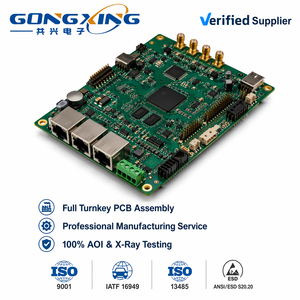
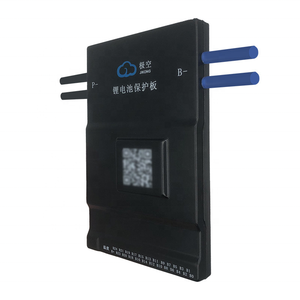
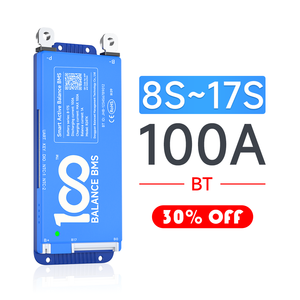
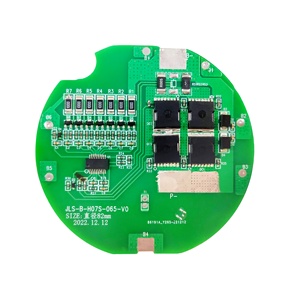
We provide full turn-key engineering design: electrochemical cell selection, structural mechanical sheet-metal or aluminum enclosure design (IP65/IP67 waterproof ratings), proprietary Smart BMS circuit development, active balancing circuit integration, custom wire harness assembly, and CAN/RS485 communication firmware tailoring.
6. Why is an Active Balancing BMS mandatory for high-capacity Sodium-Ion battery modules?
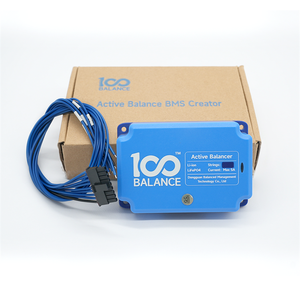
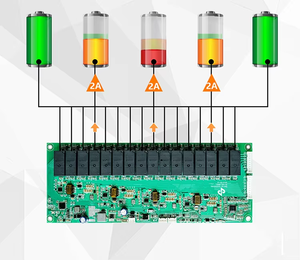
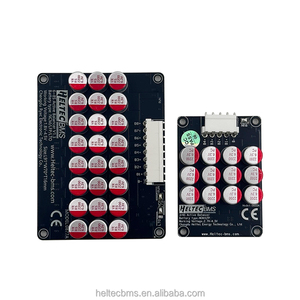
Sodium cells have a slightly steeper discharge voltage curve compared to the flat plateau of LiFePO4 cells. Active balancing continuously transfers charge from higher-voltage cells to lower-voltage cells during both charge and discharge states with up to 5.5A balance current. This prevents premature cell-cutoffs, optimizes usable pack energy capacity by up to 15%, and extends pack cycle life.
7. What is the typical production lead time for wholesale custom OEM battery orders?
Prototyping and engineering sample validation typically take 2 to 3 weeks. Mass production lead times for wholesale OEM container orders are generally 25 to 35 business days following final drawing approval and engineering sign-off.
8. Can sodium-ion power battery packs replace lead-acid batteries directly?
Yes. We engineer plug-and-play drop-in replacement 12V, 24V, 36V, and 48V sodium battery modules inside standard AGM/GEL plastic enclosures. They offer 3x the cycle life, 60% weight reduction, zero maintenance, and faster charging capabilities.