Explore our enterprise-grade Lithium Iron Phosphate (LiFePO4) prismatic cells and engineered battery modules, sourced directly from China's top tier-1 manufacturing facilities with full QR code traceability.
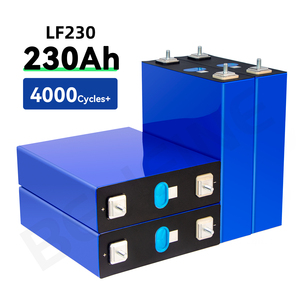
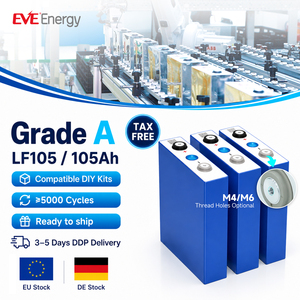
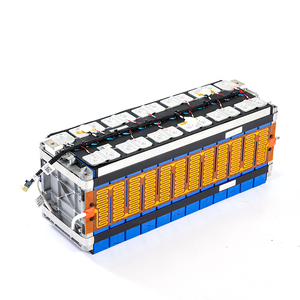
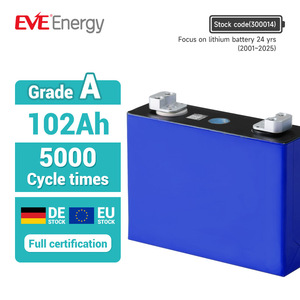
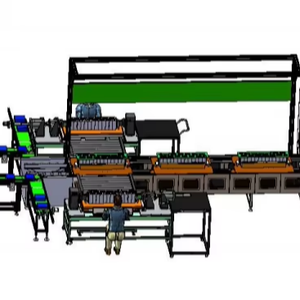
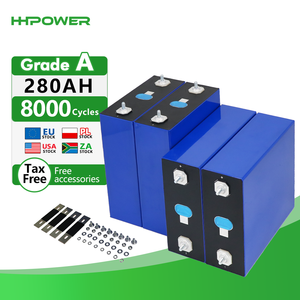
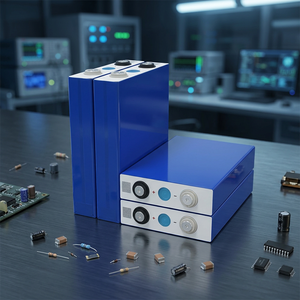
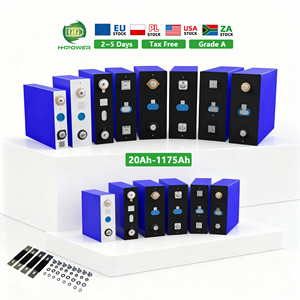
In the rapidly evolving global landscape of stationary energy storage systems (ESS), commercial & industrial (C&I) backup, and heavy-duty electric mobility, Lithium Iron Phosphate (LiFePO4 / LFP) prismatic battery modules have established absolute dominance over traditional cylindrical and pouch cell formats. Driven by unmatched thermal stability, extended cycle endurance, and superior mechanical packing efficiency, wholesale buyers and original equipment manufacturers (OEMs) worldwide are increasingly standardizing on custom Chinese prismatic module designs.
According to recent industry benchmarks, China accounts for over 85% of global LFP manufacturing throughput. Selecting the right B2B partner, understanding deep mechanical/electrical customization capabilities, and evaluating raw cell quality (Grade A vs. degraded stock) represent critical success factors for international procurement teams.
Prismatic LFP cells eliminate redundant structural shell space inherent to cylindrical cells (e.g., 21700 or 32700). Utilizing rectangular aluminium casing, modules achieve volumetric packing efficiencies exceeding 75% in Cell-to-Pack (CTP) configurations.
LiFePO4 chemistry features a robust P-O covalent bond structure that resists thermal runaway up to 500°C. Combined with integrated explosion-proof safety valves on prismatic caps, operational fire risk is virtually eliminated.
Delivering 4,000 to 8,000 deep discharge cycles at 80% EOL (End of Life), prismatic LFP cells dramatically lower the Levelized Cost of Storage (LCOS), making them the financial gold standard for utility-scale solar microgrids.
Below is a detailed technical matrix comparing key Grade A prismatic cells frequently engineered into customized OEM battery modules (e.g., 8S, 16S, 1P4S, 2P16S configurations):
| Cell Model | Nominal Volts | Capacity (Ah) | Energy (Wh) | Internal Resistance (mΩ) | Standard Cycle Life (25°C) | Weight (kg) | Primary Application |
|---|---|---|---|---|---|---|---|
| EVE LF105 | 3.2V | 105Ah | 336 Wh | ≤ 0.5mΩ | ≥ 3,500 Cycles | 1.98 kg | Telecom, RVs, Marine, Light EV |
| EVE LF280K | 3.2V | 280Ah | 896 Wh | ≤ 0.25mΩ | ≥ 6,000 Cycles | 5.42 kg | C&I Storage, Solar Farms, UPS |
| Custom 314Ah / 320Ah | 3.2V | 314-320Ah | 1004-1024 Wh | ≤ 0.20mΩ | ≥ 8,000 Cycles | 5.65 kg | Grid-Scale ESS, 20ft Containerized Battery |
| CHEEBO Module Pack | 25.6V (8S) | 100-200Ah | 2.56 - 5.12 kWh | Integrated BMS | ≥ 4,500 Cycles | Modular Design | Electric AGV, Heavy Robotics, Home ESS |
As global energy transition policies accelerate, procurement strategies for wholesale battery buyers are shifting from purchasing standardized off-the-shelf battery packs to commissioning direct custom-engineered OEM/ODM modules. Key market trends shaping Chinese factory manufacturing include:
While the 280Ah prismatic cell (such as the EVE LF280K) served as the industry benchmark for years, tier-1 Chinese factories have rapidly transitioned to 314Ah and 560Ah single-cell architectures. Operating within the same volumetric footprint as 280Ah cells, 314Ah cells deliver an 11% energy density boost, reducing system-level containerized foot-print, wiring complexity, and installation labour costs for utility-scale EPC projects.
Modern B2B buyers no longer accept passive balancing BMS. Modern custom battery modules engineered in China now feature integrated microprocessors supporting CANbus 2.0B, RS485, Modbus RTU, and IoT Wi-Fi/Bluetooth protocols. Active balancing circuits capable of transferring 2A to 5A equalization current preserve module life and prevent early pack shutdown caused by individual cell capacity drift.
To survive high-vibration automotive and marine environments, leading Chinese factories utilize continuous-wave laser welding for nickel-plated copper flexible busbars. Flexible laminated busbars absorb thermal expansion and mechanical mechanical shocks, preventing weld degradation and high electrical resistance over decade-long lifespans.
Partnering with top-tier Chinese manufacturers guarantees rigorous Quality Assurance (QA) matching ISO 9001, ISO 13485 (Medical Device Grade), ISO 14001, and ISO 45001 standards. Premium manufacturing execution systems (MES) track each individual cell from electrode slurry mixing to final pack assembly.
Every cell used in our custom modules carries an un-tampered factory laser-etched QR code. This allows full inspection of factory grading data, internal resistance matching (ΔRi < 0.05mΩ), and voltage sorting (ΔV < 2mV) before pack creation.
Custom modules undergo strict thermal shock testing (-40°C to +65°C), UN38.3 transport simulation vibration, altitude depressurization, and mechanical drop tests to guarantee safety under global freight and operational stress.
Our OEM module designs facilitate rapid end-product compliance, fully supporting global market entrance certifications including UL 1973, UL 9540A, CE, IEC 62619, RoHS, UN38.3, and MSDS documentation packages.
Addressing the most critical technical and commercial queries raised by global procurement managers, system integrators, and engineering buyers.
Authentic Grade A cells are shipped straight from Tier-1 manufacturers (EVE, CATL, REPT, HITHIUM) with pristine, factory-sealed QR codes, flat cell top plates, and zero swelling. Factory grading sheets record initial capacity exceeding nominal rating (e.g., 280Ah cells testing at 295Ah+). Grade B cells typically exhibit scratched QR codes, irregular capacity test curves, higher internal impedance, or visual swelling. We provide factory test reports and guarantee 100% Grade A traceability.
Our Chinese OEM facilities offer end-to-end customization, including: voltage configuration (12V, 24V, 36V, 48V, 72V, up to 800V High Voltage systems), mechanical casing (sheet metal, extruded aluminum, IP67 waterproof poly-cases), integrated BMS protocols (CANbus, RS485), liquid/air thermal management, and custom terminal connectors (Radsok, Anderson, M8 studs).
Standard sample prototyping ranges from 14 to 21 business days. Mass production lead times typically require 25 to 35 days depending on component availability and custom enclosure tooling. MOQ starts as low as 10 to 50 modules for initial engineering evaluations, scaling to full 20ft/40ft containerized shipments for volume OEM projects.
All battery modules are classified under Dangerous Goods (Class 9 Hazmat, UN3480). Products are packed in UN-certified heavy-duty wooden crates or reinforced corrugated cartons lined with custom EPE shock-absorbent foam. Shipments include full UN38.3, MSDS, and Sea/Air Freight Safe Transport Certificates for DDP/FOB/CIF shipping worldwide.
Yes. Our custom 12.8V and 25.6V drop-in replacement modules feature internal BMS protection circuits that enable seamless compatibility with existing lead-acid charging infrastructure, while providing 3x the usable energy density, 1/3rd of the weight, and 10x the operational lifespan.
With over 14 years of specialized engineering innovation, 60+ in-house battery architects, and state-of-the-art automated manufacturing facilities in China and Vietnam, APEX Mobile Power / Ecolux Energy delivers bankable, ultra-reliable energy solutions tailored to your market requirements.
Whether you are engineering next-generation telecom backup networks, commercial solar storage, electric utility vehicles, or specialized medical equipment, our team provides full engineering support from preliminary CAD design and thermal simulation to mass production and international certification.
Request custom engineering drawings, cell datasheet spec packs, or instant factory-direct wholesale pricing from our technical sales consultants.