Engineered for 24/7 continuous autonomous mobile robot operations. Featuring active inductive and capacitive cell balancing, ultra-low internal resistance, and real-time telemetry.
How Tier-1 China OEM Manufacturers Are Engineering Ultra-Reliable, Active-Balanced Battery Packs to Power Industry 4.0 Warehousing & Smart Manufacturing
In the rapidly expanding ecosystem of automated intra-logistics, Autonomous Mobile Robots (AMRs) and Automated Guided Vehicles (AGVs) represent the operational backbone of modern Industry 4.0 facilities. Unlike consumer electronics or stationary energy storage, AMR power platforms demand exceptionally rigorous engineering standards. They operate in continuous 24/7 high-duty cycles, subject to rapid pulse discharges, aggressive opportunity fast-charging (1C to 3C), mechanical vibration, ambient temperature fluctuations, and stringent safety protocols.
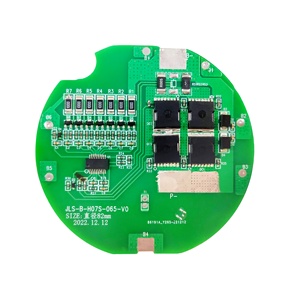
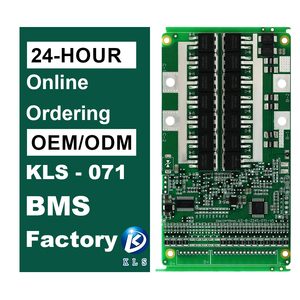
As a premier China wholesale Autonomous Mobile Robot battery system manufacturer and exporter, APEX Mobile Power bridges the critical technological gap between raw electrochemical capacity and mission-critical industrial reliability. Achieving maximum fleet uptime requires moving beyond legacy passive-balancing battery management. Modern industrial robotics demand intelligent energy management systems integrated with high-current capacitive or inductive active cell balancing, real-time CANbus/Modbus telemetry, and automotive-grade physical structural housing.
This industrial whitepaper examines the core technical differentiators of custom OEM AMR battery systems, details future procurement dynamics, explores breakthrough BMS balancing architectures, and offers global procurement teams an actionable blueprint for sourcing high-gain battery systems direct from China's leading manufacturing hub.
Vertically integrated custom lithium battery engineering backed by internationally audited quality management systems (ISO 9001, ISO 13485, ISO 14001, ISO 45001) and IATF 16949 compliant assembly facilities.
From initial mechanical envelope CAD modeling and finite element analysis (FEA) to custom PCB layout, firmware programming, and automated spot welding, we deliver end-to-end customized battery systems tailored to your robot's exact chassis constraints.
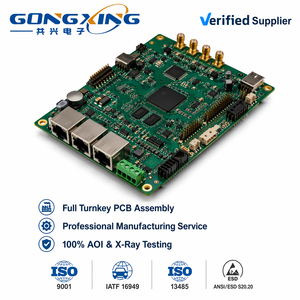
Operating under SGS-certified ISO 9001:2015, ISO 13485 (Medical Quality), and IATF 16949 standards, our state-of-the-art production lines feature laser wire bonding, 3D optical inspection (AOI), and 100% computerized end-of-line (EOL) testing.
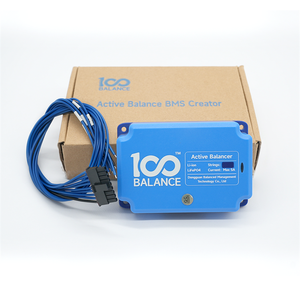
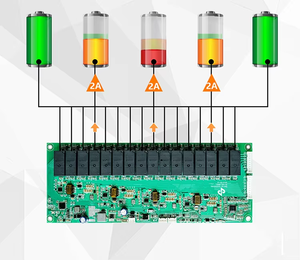
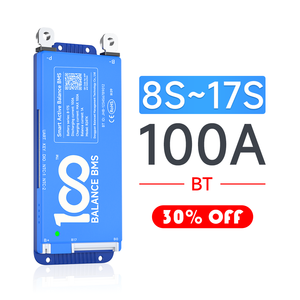
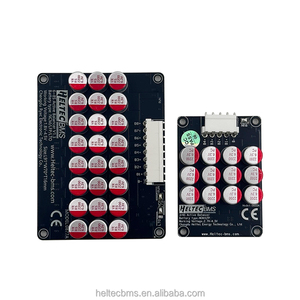
We pioneer high-current active energy transfer balancing boards (2A to 5.5A continuous equalization). By eliminating thermal dissipation penalties inherent in passive balancing, our packs operate cooler and extend cell cycle life by over 35%.
Why high-current active balancing is an absolute engineering prerequisite for fast-charging industrial mobile robot fleets.
| Performance Parameter | Legacy Passive BMS Balancing | APEX Smart Active Balancing BMS | Operational Impact on AMR Fleets |
|---|---|---|---|
| Equalization Mechanism | Burns excess energy off as heat via resistors | Transfers energy from high cells to lower cells (Capacitive/Inductive) | Zero localized heat buildup inside battery enclosure. |
| Balancing Current Rate | Very Low (30mA – 100mA) | High Current (1.0A – 5.5A Continuous) | Balances cell drift rapidly during 1C-3C opportunity charging. |
| System Energy Efficiency | Low (<85% - energy wasted as heat) | High (>94% - lossless charge redistribution) | Maximizes usable kWh per charge; reduces power bills. |
| Battery Pack Lifespan | Standard (~1,500 to 2,000 cycles) | Extended (>3,500 to 4,500+ cycles) | Dramatically lowers total cost of ownership (TCO). |
| Thermal Management Impact | Generates internal thermal hotspots | Maintains uniform pack temperature delta (<2°C) | Prevents premature thermal degradation and safety trips. |
In high-duty cycle AMR fleets using opportunity charging (e.g., 15-minute high-current top-ups while docked at automated conveyor stations), individual lithium cells rapidly drift in State of Charge (SoC) due to micro-variations in internal resistance (DCIR). Passive balancing modules cannot bleed off energy quickly enough during short charge windows. APEX Active Balancing Technology utilizes high-frequency switched-capacitor or inductive energy transfer matrices to dynamically pump up to 5.5A of current directly from the highest-voltage cells to the weakest cells in real time—whether charging, discharging, or idling.
The key engineering innovations driving next-generation power density, safety, and cloud intelligence for automated material handling equipment.
Modern warehouse operations demand 100% robot availability without manual battery swapping. Future battery systems are moving toward 2C-4C continuous charge acceptance rate capabilities integrated with contactorless inductive wireless charging pads. APEX battery systems incorporate low-impedance LiFePO4 cells, copper busbar interconnects, and dynamic thermal sensors engineered specifically for extreme high-current pulsed charging.
The integration of IoT gateways (CANbus to Wi-Fi/4G/5G) directly into smart BMS boards allows fleet managers to monitor battery health metrics in real-time. By utilizing cloud-based AI algorithms and digital twin models, operational engineers can accurately predict cell degradation, schedule preventive maintenance, and diagnose State of Health (SoH) anomalies long before a robot experiences field failure.
To maximize volumetric energy density within compact AMR footprints, traditional module housings are giving way to advanced Cell-to-Pack (CTP) structural configurations. By eliminating intermediate module enclosures, CTP architectures increase available energy capacity by 20–30% while reducing total battery weight and structural part counts.
While LiFePO4 remains the dominant chemistry for industrial safety and cycle life, advanced applications operating in extreme sub-zero cold-storage logistics (-30°C) are driving adoption of Sodium-Ion (Na-Ion) modules and hybrid LFP/Na-Ion packs. Sodium-ion technology exhibits superior low-temperature discharge capabilities and enhanced thermal stability under short-circuit conditions.
Navigating supply chain resilience, international certification compliance, and total cost of ownership when sourcing custom battery packs from China.
Exporting AMR equipment into European and North American markets demands strict regulatory compliance. Tier-1 buyers require manufacturers to provide fully certified battery packs complying with UL 2580, UL 1973, IEC 62619, CE, RoHS, and UN38.3 transport safety certifications. Factory auditing by recognized authorities (SGS, TUV) is now standard for OEM vendor approval.
Off-the-shelf standard battery packs rarely fit unique robotic chassis spaces or custom payload profiles. Global procurement leads are moving away from distributors toward direct China manufacturer partnerships that offer tailored engineering, custom wiring harnesses, flexible NRE, and integrated CAN/RS485 communication protocols.
Procurement decisions are shifting from initial CAPEX purchase price to lifecycle TCO calculations. A high-quality LiFePO4 battery pack equipped with an active balancing BMS delivers 4,000+ operational cycles versus 1,500 cycles for a lower-grade passive pack, effectively cutting battery replacement costs and maintenance downtime in half over a 5-year robot operational lifespan.
Detailed answers to essential engineering, procurement, and manufacturing questions regarding custom wholesale AMR lithium battery systems.
Partner directly with China's leading OEM/ODM Autonomous Mobile Robot battery manufacturer. Contact our senior technical team today for engineering support, CAD integration, custom BMS specs, and competitive wholesale pricing.