Explore our turnkey Smart Battery Management Solutions featuring real-time Bluetooth monitoring, high-current active energy transfer, and industrial-grade protection architecture.
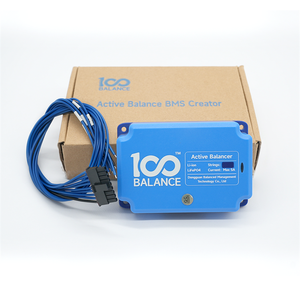

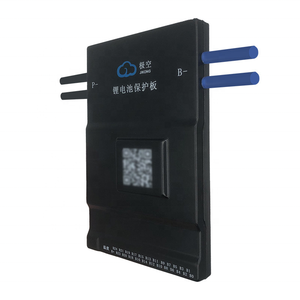
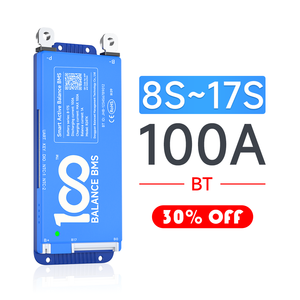
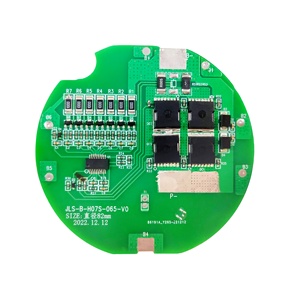
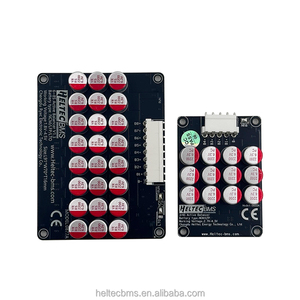
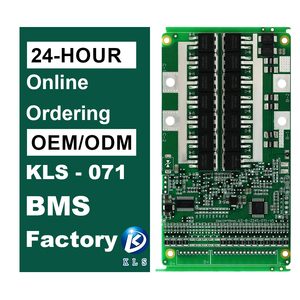
In the rapidly expanding electrochemical energy storage system (ESS), light electric vehicle (LEV), and industrial automation markets, the role of the Battery Management System (BMS) has fundamentally shifted from a simple, reactive safety shutdown mechanism (hardware protection board) to an intelligent, predictive data node. As China consolidates its position as the global nexus for advanced lithium battery manufacturing, leading original equipment manufacturers (OEMs) and contract factories are pioneering the integration of high-bandwidth Bluetooth Low Energy (BLE 5.0/5.3) modules directly onto multi-layer printed circuit board assemblies (PCBAs).
Traditional passive hardware protection boards rely solely on analog comparators to trigger thermal switches or MOSFET gates under critical over-voltage, under-voltage, or over-current thresholds. However, they lack dynamic cell telemetry, real-time State-of-Charge (SoC) Coulomb counting algorithms, and State-of-Health (SoH) degradation modeling. A Smart BMS with Bluetooth module solves these operational vulnerabilities by bridging embedded microcontroller processing (such as ARM Cortex-M4 or automotive-grade TI/ST microcontrollers) with low-latency wireless communication layers.
By eliminating mechanical diagnostic cables and bulky physical human-machine interfaces (HMIs), Bluetooth-enabled Smart BMS architectures dramatically reduce physical installation complexity and waterproof housing sealing costs (IP67/IP68 compliance). Field engineers and end-users can perform non-intrusive diagnostic scans, adjust charge/discharge parameter envelopes, calibrate shunt resistors, and upload Over-the-Air (OTA) firmware updates directly through secure, encrypted Bluetooth BLE channels.
To evaluate the measurable economic and operational advantages of upgrading to a China-manufactured Smart BMS with Bluetooth functionality, our R&D engineering team has compiled a technical benchmark based on 16S 48V/51.2V 100A LiFePO4 battery pack test benchmarks:
| Performance Parameter | Legacy Analog Hardware BMS | Smart BMS with Bluetooth & Active Equalizer | Engineering Impact / Advantage |
|---|---|---|---|
| Balancing Methodology | Passive Resistive Bleeding | Inductive / Capacitive Active Transfer | Zero energy thermal waste; zero pack hotspots |
| Balancing Current Capacity | 30 mA – 60 mA (Max) | 0.6 A – 5.5 A (Dynamic Transfer) | 100x faster cell equilibrium recovery rate |
| Telemetry & Diagnostic Mode | None (Hardwired Fault LEDs) | Real-time BLE 5.0 App & Cloud Gateway | Remote non-intrusive fault isolation |
| SoC / SoH Accuracy | Voltage Estimation (±15% Error) | High-Precision Coulomb Counter (<±1.5%) | Prevents unexpected capacity drop-offs |
| Communication Protocols | None | Bluetooth BLE, CANbus, RS485, UART | Seamless integration with Victron, Growatt, Deye |
| Firmware Adaptability | Fixed Factory Hardwired | OTA Bluetooth Updates & Configurable Parameters | Future-proof against new chemistry profiles |
| Thermal Management Safety | Single Thermal Fuse / NTC | Multi-Point Dual/Quad NTC Monitoring | Pre-emptive thermal runaway protection |
As global procurement managers source custom battery protection equipment from China's top BMS factories, four key engineering trends are driving the next generation of Smart BMS design:
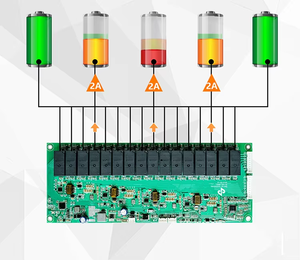
Moving away from passive resistor burning, new active balance designs utilize high-frequency switching transformers and energy storage capacitors to move charge across cells seamlessly, extending battery cycle life by 25% to 40% over 3,000 deep charge-discharge cycles.
Modern Smart BMS hardware incorporates optocoupler-isolated UART, RS485, and CANbus channels running alongside dual-mode Bluetooth (BLE + Classic). This enables simultaneous connection to off-grid solar inverters while allowing field technicians to inspect telemetry via smartphone.
By pairing onboard Bluetooth modules with cellular or Wi-Fi IoT gateways, BMS telemetry data (voltage curves, temperature gradients, internal resistance trends) is uploaded directly to cloud management platforms for AI-driven predictive lifecycle analysis.
For international business leaders, engineering teams, and procurement directors evaluating battery management partners in China, selecting a factory extends beyond comparing baseline component costs. The key sourcing drivers in 2025–2030 include:
With over 14 years of specialized engineering experience in custom lithium-ion battery pack assembly, smart BMS hardware design, and power conversion systems, our factory network stands as a trusted manufacturing partner for worldwide industrial, medical, robotics, and energy storage enterprises.
Our state-of-the-art production campus combines automated SMT lines, high-precision thermal shock chambers, automated high-voltage insulation test bays, and dedicated wireless RF testing rooms to ensure every Smart BMS with Bluetooth module operates flawlessly across demanding temperature ranges (-40°C to +85°C).
Our quality management system is independently audited by SGS, adhering strictly to automotive-grade quality standards, complete APQP/PPAP documentation, and strict statistical process control (SPC).
Certified for the design and manufacture of high-reliability battery protection circuits for non-implantable medical devices, emergency backup units, and portable healthcare equipment.
Over 8% of our annual corporate revenue is directly reinvested into R&D innovation, advancing active balancing topology, embedded Bluetooth stack security, and cloud BMS analytics.
Our industrial-grade Bluetooth 5.0 BLE modules utilize optimized ceramic chip antennas or IPEX external antennas, delivering a stable line-of-sight transmission distance of up to 15–30 meters (50–100 feet). The signal penetrates standard aluminum battery enclosures and fiberglass battery boxes without loss of telemetry data.
Passive balancing burns excess energy from higher-voltage cells through bleeding resistors as heat (limited to ~50mA), which can create thermal hotspots inside sealed battery packs. Active balancing dynamically transfers energy from high-voltage cells to low-voltage cells using capacitive or inductive circuits at currents up to 5.5A with >92% efficiency, significantly extending pack capacity and cycle life.
Yes. We offer complete software white-labeling services. Our software engineering team can customize the mobile app interface (iOS/Android) with your brand logo, corporate color schemes, custom alert thresholds, and specialized language support, as well as providing API access for integration into your proprietary IoT cloud platforms.
Our Smart BMS units come pre-loaded with RS485 and CANbus protocol firmware libraries compatible with leading international inverter brands, including Victron Energy, Growatt, Deye, GoodWe, Sofar Solar, Luxpower, and Voltronic Power. Custom protocol mapping is available upon request.
Our Smart BMS and active balancer product lines support all major lithium chemistries, including Lithium Iron Phosphate (LiFePO4), Lithium Nickel Manganese Cobalt Oxide (NMC), and Lithium Titanate Oxide (LTO). Hardware configurations range from 3S up to 64S high-voltage systems (spanning 12V, 24V, 36V, 48V, 72V, up to 200V+ industrial applications).
For standard catalogue models (such as 16S 48V 100A/150A Bluetooth Smart BMS), sample evaluation units ship within 3-5 working days with NO minimum order quantity. For custom PCBA design (hardware modifications, custom board dimensions, specialized current shunts), prototyping takes 2-3 weeks, with mass production lead times of 3-4 weeks.
Partner with China's premier Smart BMS manufacturer. Our engineering team is ready to support your custom battery management hardware, active balancing, and Bluetooth module requirements.
Get Catalog