APEX Mobile Power — Custom OEM Lithium Battery Solutions  |  ISO 9001 · ISO 13485 · ISO 14001 Certified  |  Engineered for Performance

China Top Rack-Mounted Residential LiFePO4 Battery Factories & Supplier

Global OEM/ODM Technical Whitepaper & Industrial Sourcing Guide for 48V/51.2V High-Density Energy Storage Systems

Tier-1 Prismatic Cells Smart Active BMS Equalization UL1973 / UL9540 Certified 6000+ Deep Cycles
Factory Featured Products

High-Performance BMS & Active Equalizer Solutions

Engineered specifically for rack-mounted home energy storage, telecom backup power, and industrial solar microgrids.
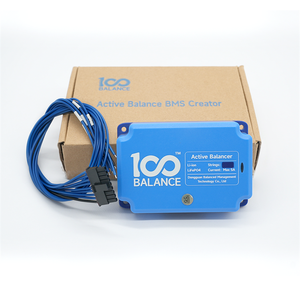
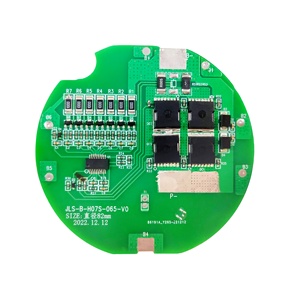
Active Balance Equalizer 5A capacitive LiFePO4

Active Balance Equalizer Capacitive LiFePO4 48V NMC 5A Active Balancer

  • Equalization Current: 5A Max
  • Topology: Energy Transfer Capacitive
  • Compatibility: 14S - 16S LiFePO4/NMC
Send an Inquiry
Seplos BMS 3.0 Active Balancer LiFePO4 Protection Board

Seplos BMS 3.0 Active Balancer LiFePO4 Protection Board System

  • Continuous Current: 200A
  • Protocol: CANBus 2.0B / RS485
  • Multi-Pack Parallel: Up to 16 Packs
Send an Inquiry
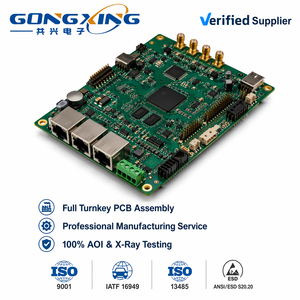
Smart BMS PCBA Active Balancing IATF 16949 Assembly

Smart BMS PCBA Board | Full Turnkey PCB Assembly Service (IATF 16949)

  • Manufacturing: Automotive Grade
  • Customization: Hardware & Firmware
  • Protection: Overcharge/Short-Circuit
Send an Inquiry
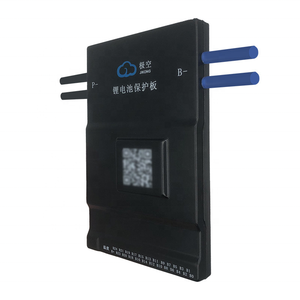
Jikong Smart Active Balancer 150A BMS 7S-24S

JIKONG JK-BD6A24S15P 0.6A Smart Active Balancer 150A BMS with GPS

  • String Support: 7S to 24S
  • Balance Current: 0.6A Active
  • Features: iOS/Android App & Display
Send an Inquiry
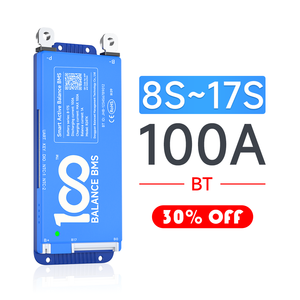
Smart Active Balancer Protection Board 100A 48V 16S LiFePO4

Smart Active Balancer Protection Board 100A 48V 16S LiFePO4 BMS

  • System Voltage: 51.2V (16S Nominal)
  • Peak Discharge: 200A (10 sec)
  • Inverter Protocol: Multi-brand Auto
Send an Inquiry
KLS Battery Management System BMS KLS-BMS-045

KLS-BMS-045 64S 120A Active Balancing Aluminum Thermal Enclosure

  • High Voltage: Up to 64S Series
  • Active Equalizer: 2A Current
  • Heat Dissipation: Aluminum Heatsink
Send an Inquiry
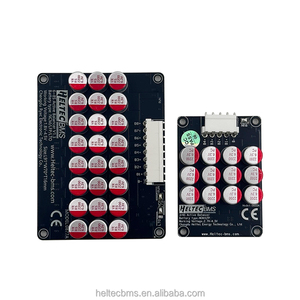
Heltec 4S to 21S Active Balancer 5.5A Equalizer

Heltec 4S to 21S 5.5A Active Equalizer Energy Transfer Capacitor Board

  • Balancing Current: 0 - 5.5A
  • Chemistry: LiFePO4 / Li-ion / LTO
  • Sleep Mode: Under-voltage Auto Off
Send an Inquiry
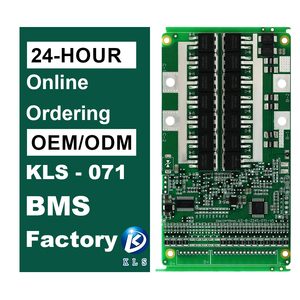
KLS Smart BMS 16S 48V 100A 150A LiFePO4 Home Energy Storage

KLSKF-071 Smart BMS 16S 48V 150A Home Energy Storage Active System

  • Application: Standard 19" Rack Pack
  • Communication: RS232 / RS485 / CAN
  • Active Equalizer Integration: Included
Send an Inquiry
Factory Benchmark Data

China OEM Manufacturing Excellence in Numbers

Why leading global energy brands and EPC system integrators partner with top China LiFePO4 manufacturers.

6000+
Deep Cycles @ 80% DoD for Long Service Life
99.2%
Round-Trip Efficiency (RTE) via Smart Active BMS
15+
Years Design Life in Residential Backup Operations
100%
Automated End-of-Line (EOL) & Safety Testing

Executive Whitepaper: Strategic Sourcing of Rack-Mounted LiFePO4 Energy Storage Systems from China

The global transition toward residential renewable autonomy and grid resilience has triggered an unprecedented surge in demand for Rack-Mounted Residential LiFePO4 (Lithium Iron Phosphate) Battery Packs. Standardized primarily in 19-inch 3U, 4U, and 5U server-rack form factors operating at 48V (15S) or 51.2V (16S) nominal voltages, these modular energy storage modules represent the gold standard for home solar integration, telecom backup power, and light commercial microgrids.

As the primary manufacturing hub for over 85% of the world's lithium-ion energy storage products, China hosts an extensive supply chain ecosystem. However, procuring high-reliability, long-lifecycle rack batteries demands a rigorous understanding of cell grade classification, active equalizing BMS architecture, thermal management protocols, and international regulatory compliance (including UL1973, UL9540, and IEC 62619).

Key Engineering Takeaway: Not all rack-mounted batteries are created equal. The systemic performance difference between budget assemblies and tier-1 OEM factory products lies in cell matching internal resistance (ΔIR < 0.3 mΩ), active vs. passive BMS balancing circuitry, and structural laser welding integrity.

1. Architecture & Anatomic Breakdown of a Premium 51.2V Rack Battery

A industrial-grade 51.2V 100Ah or 200Ah rack-mounted battery module consists of five synchronized engineering subsystems designed to withstand 15+ years of continuous cycling:

  • Automotive-Grade Prismatic Cell Array: Utilizing Brand-New Grade-A LiFePO4 prismatic cells (such as CATL, EVE, BYD, or REPT) featuring heavy-duty aluminum casing, flame-retardant explosion-proof vents, and laser-welded copper/aluminum composite busbars.
  • Intelligent Master BMS with Active Equalization: Modern systems incorporate active balancing circuits (typically 2A to 5A transfer current) rather than traditional passive heat-dissipation balancing. This prevents premature cell degradation, keeps cell voltage differentials (ΔV) below 10mV, and restores up to 15% lost pack capacity over time.
  • Integrated Multi-Protocol Communication Gateway: Built-in dual RS485, CANBus 2.0B, and RS232 interfaces pre-programmed with automatic inverter protocol auto-matching for major hybrid inverter brands (Victron, Deye, Luxpower, Growatt, Sol-Ark, Schneider, GoodWe, and Sofar).
  • Heavy-Duty Server Rack Enclosure: Cold-rolled SPCC steel casing with anti-corrosion powder coating, dual handles, integrated LED SoC screen, key breaker, and heavy-duty current terminals (Amphenol/Radsok quick-connectors rated up to 200A continuous).
  • Multi-Layer Safety & Fire Suppression: Internal aerosol fire-extinguishing packs combined with phase-change thermal insulation sheets between individual cells to prevent cascading thermal runaway.

Extended Cycle Life

High-grade LiFePO4 chemistry yields 6,000 to 8,000 cycles at 80% Depth of Discharge (DoD), drastically reducing total cost of ownership (LCOE).

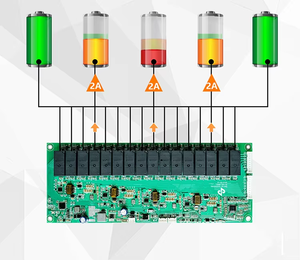
Active Energy Transfer

Unlike passive BMS that wastes excess energy as heat, active equalizers transfer energy dynamically from high-voltage cells to low-voltage cells.

Modular Expansion

Seamless parallel connection of up to 15 or 32 battery packs, expanding residential capacity effortlessly from 5kWh up to 160kWh.

2. Technical Comparison: Active Balancing BMS vs. Traditional Passive BMS

In residential battery packs operating daily charge/discharge cycles, cell inconsistency naturally develops due to slight thermal gradients within the rack enclosure. The table below illustrates why top-tier China factories are shifting toward Active Balancing technology:

Technical Parameter Traditional Passive BMS Smart Active Balancing BMS OEM Sourcing Benefit
Balancing Mechanism Resistive Heat Dissipation Capacitive / Inductive Energy Transfer Zero excess heat buildup inside rack
Balancing Current 30mA - 100mA (0.03A - 0.1A) 1.0A - 5.5A Dynamic Transfer 50x faster cell equilibrium
Energy Loss High (Wasted as heat) Minimal (>92% Transfer Efficiency) Higher usable energy capacity
Working Window Only near top of charge (>3.45V) Continuous (Charge, Discharge, Idle) Prevents premature low-voltage cut-offs
Pack Longevity 3 - 5 Years before drift occurs 10 - 15 Years consistent performance Reduces RMA & warranty claims by 80%

3. Future Purchasing & Technological Trends (2025–2035)

Purchasing directors and distributors sourcing rack batteries from China should align their product roadmaps with the following four industry developments:

A. Shift toward High-Voltage (HV) Rack Architectures

While 48V/51.2V low-voltage systems remain dominant in retrofit home storage, new residential and commercial installations are moving toward High-Voltage (HV) rack configurations (192V, 384V, to 700V DC). HV systems reduce DC line current, allowing thinner copper wiring, lowering I²R transmission losses, and achieving overall solar-to-battery efficiency exceeding 97.5%.

B. AI Cloud BMS & IoT Predictive Diagnostics

Top China factories are integrating Wi-Fi, 4G, and Bluetooth IoT modules directly into the BMS PCBA. By streaming telemetry data (cell voltages, internal resistance trends, temperature gradients) to cloud servers, AI models can detect latent micro-short circuits or cell degradation up to 30 days before a hardware failure occurs.

C. Sodium-Ion (Na-Ion) Hybrid Rack Systems

For extreme cold climates (-30°C to -10°C), sodium-ion battery chemistry is emerging as a viable alternative or hybrid pairing with LiFePO4. Na-ion cells exhibit superior low-temperature discharge characteristics and excellent safety, presenting a strategic supply chain diversification opportunity.

D. Strict Compliance with UL 9540 & NFPA 855 Fire Standards

Global import markets—especially North America and Europe—require strict adherence to unit-level and system-level thermal runaway propagation tests. Premium Chinese suppliers now provide full UL 9540 system listings, simplifying municipal permitting for installer networks.

4. Enterprise Sourcing & Quality Audit Checklist for OEM Buyers

When auditing a China LiFePO4 battery factory for custom OEM/ODM production, evaluate the following crucial quality control milestones:

  1. Cell Grade & Traceability Verification: Request original factory barcodes (QR codes) for every prismatic cell to verify manufacturer origin, initial capacity rating, and manufacturing date.
  2. Automated Sorting & Matching: Ensure the factory utilizes automated sorting machines to match cells strictly within capacity tolerances (±0.5Ah) and internal resistance (±0.2mΩ).
  3. Laser Welding vs. Screw Bolting: High-reliability rack batteries utilize CNC laser welding for busbars. Avoid high-current packs that rely solely on threaded mechanical screws, which can loosen due to shipping vibrations.
  4. ISO Certified Manufacturing Quality Management: Partner exclusively with factories accredited with ISO 9001:2015, ISO 13485 (Medical Quality Systems), ISO 14001 (Environmental), and ISO 45001 (Safety).
Procurement & Technical FAQ

Frequently Asked Sourcing Questions

Clear, authoritative answers to critical engineering and logistical questions asked by global B2B buyers.

What is the difference between 15S (48V) and 16S (51.2V) Rack-Mounted LiFePO4 batteries?
A 15S pack uses 15 cells connected in series for a nominal voltage of 48V (operating range 42V to 54.75V), whereas a 16S pack uses 16 cells in series for a nominal voltage of 51.2V (operating range 44.8V to 58.4V). Most modern off-grid and hybrid inverters are optimized for 16S 51.2V configurations as they deliver higher energy density and match standard 48V telecom equipment charging profiles seamlessly.
Why is active balancing essential for rack-mounted batteries connected in parallel?
When multiple battery packs are connected in parallel, slight voltage variations between individual cells across different packs cause unequal current distribution during heavy charge/discharge cycles. Active balancing dynamically equalizes voltages across cells with zero heat dissipation, preventing early pack shut-off, reducing internal cell stress, and ensuring full system capacity is utilized.
Can your rack-mounted BMS auto-communicate with our specific inverter brand?
Yes. Our smart BMS boards feature pre-loaded multi-protocol firmware. Via CANBus or RS485 DIP switch configuration, the battery automatically syncs protocol data with major global inverter brands including Victron, Deye, Sol-Ark, Growatt, Luxpower, Sofar, Schneider, Mustang, and GoodWe.
What certifications are required to import rack batteries into North America and Europe?
For North America, UN38.3, UL1973 (for battery packs), and UL9540 (for overall ESS system safety) are critical, along with FCC certification for BMS communications. For Europe, CE, IEC 62619, IEC 62040, RoHS, and UN38.3 transport safety documentation are required. Top China suppliers provide complete certification test report packages.
What is the expected lead time and minimum order quantity (MOQ) for custom OEM orders?
Standard sample orders for testing and compliance validation typically ship within 7 to 14 days. Custom OEM orders (featuring customized front panels, logo branding, specialized BMS firmware, and custom packaging) have an MOQ starting at 50 units, with mass production lead times of 25 to 35 business days.
How do China factories ensure anti-propagation safety against thermal runaway?
Tier-1 factories apply multi-layered passive fire protection: structural cell separation using high-temperature mica or aerogel insulation pads, heavy-duty pressure-relief vents on each cell casing, and internal thermal-activated aerosol fire extinguishing cartridges that release flame suppressants instantly upon sensing abnormal temperature spikes.

Partner with a Leading China OEM/ODM LiFePO4 Battery Manufacturer

Elevate your energy brand with ISO 9001 / ISO 13485 certified rack-mounted battery solutions. Contact our engineering team today for technical specifications, factory pricing, and sample evaluation.