Precision active balancers and smart BMS units engineered to optimize outdoor waterproof battery packs for long-life industrial and renewable applications.
The global transition toward decentralized clean energy, mobile robotics, maritime electrification, and rugged industrial IoT has catalyzed an unprecedented demand for high-reliability outdoor waterproof battery packs. Deploying energy storage systems in unconditioned outdoor environments exposes battery chemistry, electronic control systems, and structural enclosures to harsh operational stresses—including moisture ingress, saltwater corrosion, extreme thermal cycling (-40°C to +65°C), high mechanical vibration, and solar radiation.
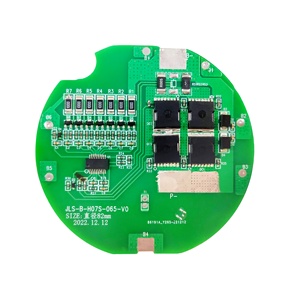
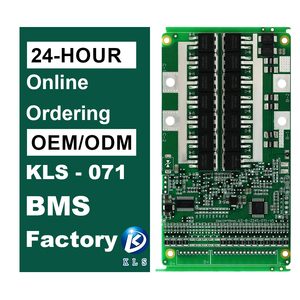
As China’s premier outdoor waterproof battery pack supplier and exporter, APEX Mobile Power leverages over 14 years of advanced electro-chemical engineering, custom hardware assembly, and certified manufacturing to deliver industrial-grade OEM/ODM battery solutions. Achieving reliable IP67, IP68, and NEMA 4X ingress protection requires a holistic system-level architecture that integrates robust cell selection, precision enclosure potting, pressure equalization, and intelligent active balancing Battery Management Systems (BMS).
Unprotected standard battery packs deployed outdoors suffer rapid performance degradation and catastrophic safety hazards due to three core failure mechanisms:
Our OEM engineering framework mitigates environmental risks by deploying aerospace-grade isolation, automated structural potting, hydrophobic pressure relief valves, and capacitive active balancing architectures.
Utilizes dual-O-ring silicone seals, die-cast aluminum 6061-T6 housings, and fully potted polyurethane (PU) PCB encapsulation to prevent water, dust, and solvent intrusion under 1.5m immersion.
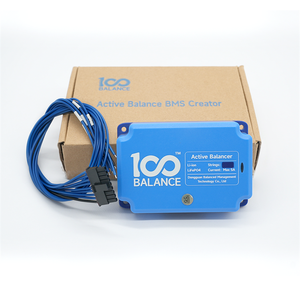
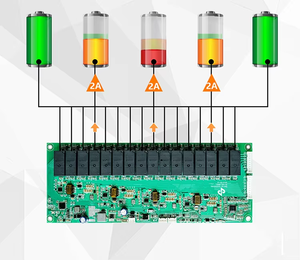
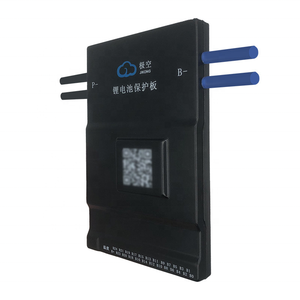
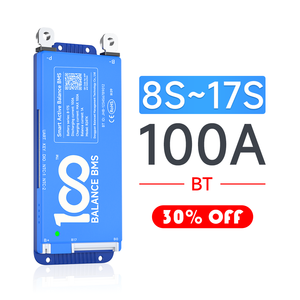
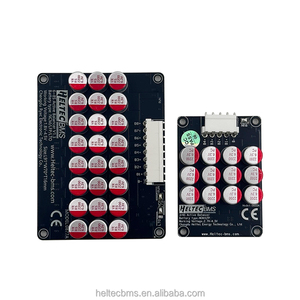
Incorporates 2A to 6A capacitive dynamic energy transfer balancers (such as Seplos, Jikong, and Heltec modules). Moves charge dynamically between cells without generating excess internal heat.
Integrated ePTFE breathability valves equalize internal atmospheric pressure during rapid heat expansion while blocking liquid water ingress, neutralizing condensation risks.
Engineered with tier-1 Automotive Grade (Grade-A) prismatic and cylindrical cells offering over 4000 to 6000 deep discharge cycles at 80% DoD for maximum total cost of ownership (TCO) efficiency.
In outdoor energy storage installations (e.g., 48V 100Ah to 200Ah LiFePO4 battery banks), battery string health is dictated by the weakest cell. Traditional passive balancing burns off energy via resistors, generating parasitic thermal loads inside sealed waterproof enclosures. APEX integrates active capacitive balancing technology capable of high-current energy redistribution (up to 5.5A).
By continuously shuttling charge from higher-voltage cells to lower-voltage cells during both charge and discharge cycles, our system boosts usable pack capacity by up to 15%, reduces operational thermal stress by 40%, and extends pack operational lifespan by more than 3 years.
APEX Mobile Power operates a state-of-the-art manufacturing campus certified under global industrial standards, providing enterprise clients, system integrators, and OEM brand partners with end-to-end custom engineering services.
Global procurement executives and B2B buyers must navigate evolving regulatory frameworks, supply chain dynamics, and technological breakthroughs. The next 5 years will redefine outdoor energy storage across four key vectors:
Modern outdoor waterproof battery packs are no longer passive power sources; they are intelligent edge nodes. Modern B2B procurement strategies prioritize battery systems integrated with CANbus 2.0B, RS485, Modbus, and integrated 4G/5G/GPS telematics. Real-time telemetry streams state-of-charge (SoC), state-of-health (SoH), cell impedance, and internal humidity to cloud dashboards, enabling predictive maintenance before field failures occur.
While LiFePO4 remains the benchmark for cycle life and safety, Sodium-Ion (Na-ion) batteries are emerging as a disruptive solution for sub-zero outdoor applications. Operating down to -40°C with minimal capacity degradation and zero thermal runaway risk, sodium-ion technology provides procurement managers with cost-effective alternatives for arctic telecom backup and outdoor monitoring stations.
Strict European Union Battery Regulations require full supply chain traceability, carbon footprint disclosure, and "Battery Passport" integration. Future-proof outdoor battery suppliers in China are embedding micro-memory chips inside battery packs to record lifetime cycle data, simplifying second-life repurposing and recycling compliance at End-of-Life (EoL).
Safety benchmarks for outdoor power equipment installed in public or critical infrastructure now demand internal thermal barrier insulation. Advanced silicone potting compounds combined with micro-encapsulated phase-change materials (PCM) and aerosol fire-suppression cartridges ensure localized cell failures are contained without cascading propagation.
IP67 certification guarantees complete protection against dust ingress and resistance to water immersion up to 1 meter depth for 30 minutes. IP68 extends this protection to continuous submersion under deeper pressurized water conditions (typically up to 1.5–3 meters indefinitely), verified by continuous testing. For oceanographic, underwater robotics, or heavy rain flood zones, IP68 rated enclosures with potted electronics are recommended.
Outdoor battery packs experience thermal gradients due to direct sunlight or ambient cold. Temperature differences cause series-connected cells to age unevenly. Passive balancing dissipates excess energy as heat—adding unwanted thermal load inside a sealed waterproof container. Active balancers transfer charge dynamically between cells with up to 95% efficiency, maintaining cell equilibrium without overheating the pack.
We employ a dual-defense strategy: First, we integrate Gore waterproof pressure equalization vents (ePTFE membranes) that allow gas and vapor pressure to equalize without admitting liquid water. Second, critical electronic control assemblies and PCBAs are coated with hydrophobic conformal coatings or embedded in complete polyurethane potting compounds.
Yes. Standard lithium batteries cannot be charged below 0°C without lithium plating damage. APEX engineers outdoor battery packs with integrated internal low-voltage silicone heating pads controlled by the smart BMS. The system uses incoming charger power to preheat cells to safe operating temperatures (+5°C) before initiating the charge cycle.
We support fast-track prototyping with engineering sample turnaround in 15–20 business days. Mass production lead times typically range from 35 to 45 days depending on component certifications (UL/UN38.3). Flexible minimum order quantities (MOQ) are available for specialized industrial and medical projects.
Accelerate your product development cycle with certified custom lithium power solutions. Speak directly with our senior electro-chemical engineers to discuss custom voltage, capacity, active BMS integration, and IP68 enclosure requirements.