Engineered for mission-critical medical carts, surgical equipment, ventilators, and emergency backup power solutions requiring uninterrupted reliability and strict active cell equalization.
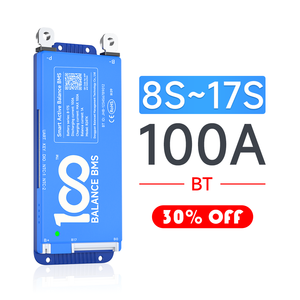
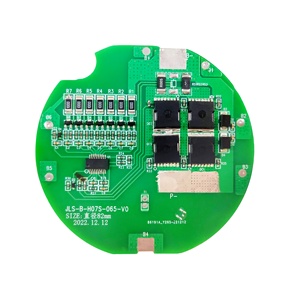
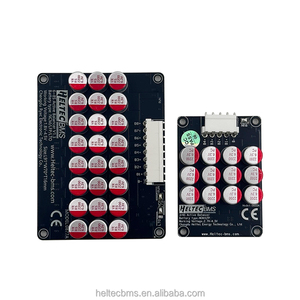
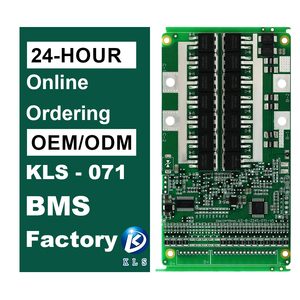
Modern healthcare infrastructure relies heavily on uninterrupted, high-energy-density portable electrical power. From mobile nursing workstations and diagnostic imaging carts to life-support ventilators, infusion pumps, and surgical robotics, the transition from legacy Lead-Acid and NiMH chemistries to advanced Lithium-Ion (NMC) and Lithium Iron Phosphate (LiFePO4) power modules has redefined operational mobility in clinical environments.
As a leading China top medical equipment lithium power module manufacturer, APEX Mobile Power addresses the rigorous safety, regulatory compliance, and longevity requirements mandated by healthcare OEMs worldwide. Unlike generic industrial battery modules, medical-grade lithium power systems must comply with stringent international standards such as ISO 13485:2016, IEC 60601-1, UL 2054, and UN 38.3. Achieving compliance demands sophisticated Battery Management System (BMS) engineering, advanced thermal runaway mitigation, and high-precision active cell balancing circuits.
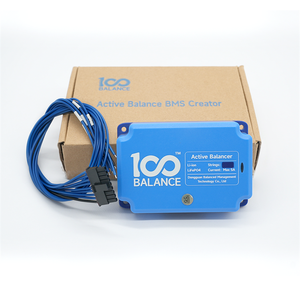
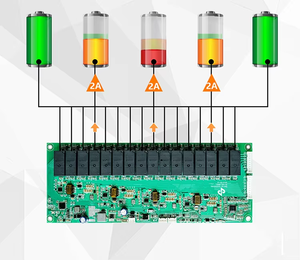
Battery pack longevity and functional reliability are dictated by the single weakest cell within a serial configuration. Traditional passive balancing dissipates excess energy as heat through bleed resistors, generating parasitic thermal loads inside sealed medical enclosures. In contrast, our medical power modules incorporate high-efficiency capacitive and inductive active balancers (1A to 5.5A transfer currents). This technology dynamically transfers charge from higher-voltage cells to lower-voltage cells without thermal dissipation, delivering significant performance enhancements:
| Performance Metric | Passive Balancing BMS | APEX Smart Active Balancing BMS |
|---|---|---|
| Energy Efficiency | < 65% (Dissipated as heat) | > 92% (Energy transfer recovery) |
| Thermal Generation | High (> 55°C localized heat spikes) | Ultra-low (< 35°C ambient thermal footprint) |
| Equalization Speed | Slow (50mA - 100mA bleed current) | Ultra-Fast (0.6A - 5.5A continuous transfer) |
| Battery Cycle Life | 1,500 - 2,000 Cycles | 3,500 - 5,000+ Deep Cycles (LiFePO4) |
| Cell Delta Delta-V Control | ±30mV imbalance tolerance | ±5mV micro-precision equalization |
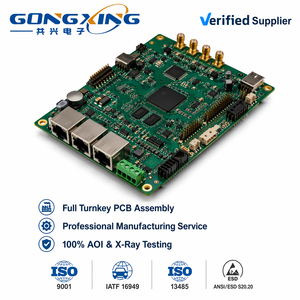
APEX Mobile Power operates vertically integrated manufacturing facilities certified under ISO 9001:2015, ISO 13485:2016, ISO 14001:2015, and ISO 45001:2018. Our manufacturing lines implement IATF 16949 automobile-grade quality control processes to ensure zero-defect production for critical healthcare equipment suppliers.
Dedicated production cleanrooms adhering to strict medical device standards, implementing full traceabilities from raw lithium cell grading to PCBA surface mounting.
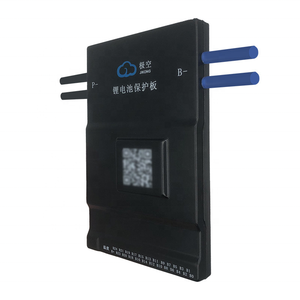
Dual-microprocessor BMS architecture providing secondary hardware overvoltage, overcurrent, short-circuit, and multi-point NTC temperature protection.
Integrated smart communication protocols compatible with hospital information systems (HIS), displaying accurate State of Charge (SOC) and State of Health (SOH).
Procurement officers and engineering managers sourcing medical-grade battery systems from Chinese suppliers are witnessing several key technological and regulatory shifts:
The next generation of medical energy modules engineered by APEX Mobile Power focuses on three core innovation pillars:
A. Semi-Solid-State Lithium Cells: Integrating electrolyte-gel matrices to eliminate leakage risks, boost energy density to > 300 Wh/kg, and pass extreme penetration testing without flame or explosion.
B. AI-Powered BMS Predictive Maintenance: Machine-learning algorithms embedded in the BMS microcontroller analyze cell impedance trends over time, predicting cell failure weeks before operational degradation occurs.
C. Ultra-Fast Medical Charging: Implementation of 2C - 3C fast-charging protocols allowing medical power carts to achieve 80% charge capacity within 25 minutes during nurse shift changes.
Combining deep technical expertise with specialized medical compliance engineering to accelerate your product time-to-market.
From 3D mechanical enclosure design to custom PCBA active balancer layout, our 60+ engineering team delivers complete OEM solutions within 4 to 6 weeks.
All custom power modules undergo rigorous pre-testing (vibration, thermal shock, altitude simulation, drop tests) to guarantee fast UN38.3 and IEC safety approvals.
Built-in galvanic isolation, flame-retardant V-0 ABS/PC or aluminum alloy housings, and zero EMI/RFI interference with sensitive hospital imaging devices.
Common questions asked by medical equipment procurement teams and hardware engineers.
ISO 13485 specifies strict quality management requirements for medical device components. Unlike standard ISO 9001, ISO 13485 mandates total product traceability, risk management (ISO 14971), cleanroom assembly controls, and rigorous design validation required by regulatory bodies such as the FDA and EU MDR.
Active balancing continuously transfers electrical charge between individual battery cells during both charging and discharging phases. This eliminates energy waste, prevents cell voltage drift, reduces thermal buildup inside sealed medical enclosures, and extends battery pack operational life by up to 40%.
LiFePO4 (Lithium Iron Phosphate) is ideal for heavy-duty, daily-use medical workstations requiring maximum safety, long cycle life (3,500+ cycles), and non-combustible stability. NMC (Nickel Manganese Cobalt) is selected for compact wearable medical monitors and portable ventilators where minimal weight and high volumetric energy density are paramount.
Yes. Our software engineering team designs custom BMS firmware supporting SMBus v1.1, CANbus 2.0B, RS485, I2C, and custom UART protocols. This enables real-time fuel gauge integration, cycle-count tracking, and fault diagnostics directly onto your medical equipment's primary display screen.
We provide complete UN38.3 test summary reports, MSDS (Material Safety Data Sheets), drop-test reports, and air/sea transport certification documents issued by accredited third-party testing laboratories (SGS, TUV, or ITS).
Standard prototype samples (enclosure design, custom PCBA, cell assembly) are completed within 3 to 4 weeks. Full certification testing and mass production tooling typically require 6 to 8 weeks depending on custom mold complexity.
Consult directly with APEX Mobile Power senior battery design engineers. Receive rapid engineering feedback, preliminary technical drawings, and custom pricing within 24 hours.