APEX Mobile Power — Custom OEM Lithium Battery Solutions  |  ISO 9001 · ISO 13485 · ISO 14001 Certified  |  Engineered for Performance
Global B2B Energy Storage Whitepaper & OEM Directory

China Top High-Voltage Solar ESS Battery Module Manufacturer & Factories

Engineering Tier-1 LiFePO4 High-Voltage Stacking Energy Storage Systems (300V–800V) for C&I Microgrids, EV Charging Hubs, and Utility-Scale Solar Integration.

14+
Years Industry Engineering
60+
Dedicated Battery R&D Engineers
3000+
Global OEM Storage Deployments
6000+
Cycles @ 80% DOD Lifespan
Tier-1 OEM Product Supply

Featured High-Voltage Solar ESS Modules & Cabinets

Precision-engineered LFP modules built with high-density prismatic cells, active thermal management, and ultra-fast CAN/RS485 communication protocols for immediate global factory dispatch.

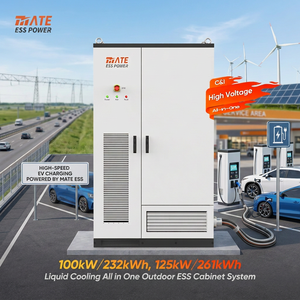
EV Charging / C&I MATE ESS Solar Battery 100kW 232kWh LFP Cabinet System

MATE ESS Solar Battery 100kW 232kWh 125kW 261kWh LFP Lithium Battery Cabinet System for EV Charging Station

100kW / 232kWh Outdoor Cabinet Liquid/Air Cooled
Send an Inquiry
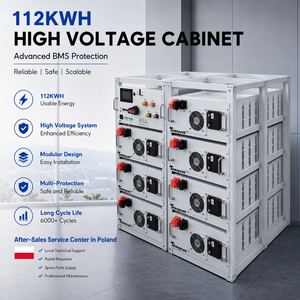
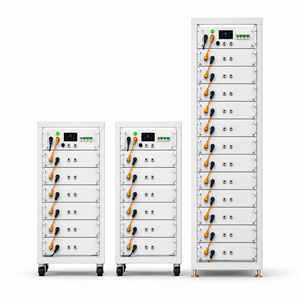
High Voltage Stack High Voltage Indoor 358.4V 314Ah 112KWH Module Stack

High Voltage Indoor 358.4V 314Ah 112kWh with 7pcs 16kWh Modules for C&I Solar Power Stackable ESS

358.4V 314Ah 112kWh Capacity Stackable Design
Send an Inquiry
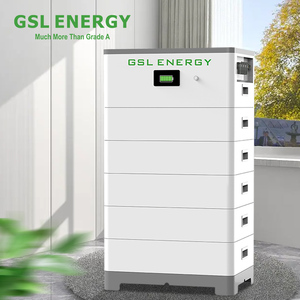
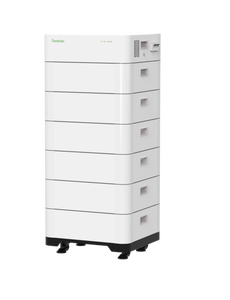
Modular HV Module GSL Energy High Voltage 50Ah Stackable ESS Lithium Battery

GSL ENERGY High Voltage 50Ah Solar Lithium Battery 30kWh 25kWh LiFePO4 Stackable ESS Solar System

25kWh / 30kWh High Voltage 50Ah OEM B2B Supply
Send an Inquiry
Commercial Cabinet High Voltage Cabinet 192KWH 614.4V Commercial Solar ESS

High Voltage Cabinet 12pcs 16kWh LiFePO4 Modules Indoor Stacked 192kWh 614.4V 314Ah Commercial ESS System

614.4V 314Ah 192kWh System Rack-Mounted HV
Send an Inquiry
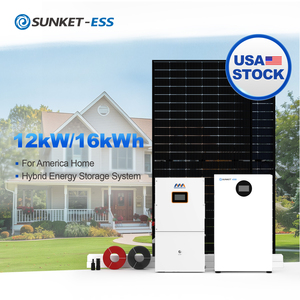
USA Market Stock Standard 16kWh Battery 12kW Hybrid Inverter Home ESS

Standard 16kWh Battery 12kW Hybrid Inverter Home ESS System 120V/240V Split Phase for USA Market

16kWh / 12kW Split Phase 120/240V UL Compliance
Send an Inquiry
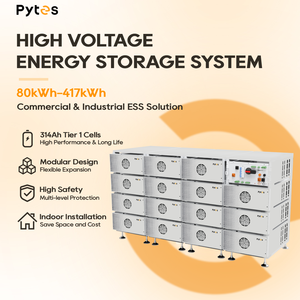
314Ah High Density Pytes 314Ah High Density LiFePO4 Battery Module 16kWh

Pytes 314Ah High Density LiFePO4 Battery Module 51.2V 16kWh High Voltage Modular Sub-Pack for Solar ESS

51.2V 314Ah 16kWh Energy Unit Modular Building
Send an Inquiry
614.4V Rack ESS 61.44kWh 60kW High Voltage LiFePO4 Battery System

61.44kWh 60kW High Voltage LiFePO4 Battery 614.4V 100Ah 12 Module Rack ESS System 6000 Cycles CAN/RS485

614.4V 100Ah 60kW Discharge 12 Module Stack
Send an Inquiry
Residential HV Sub-Unit 102.4V 50Ah LiFePO4 High Voltage Stackable Module

102.4V 50Ah LiFePO4 Battery Module High Voltage Stackable Energy Storage System for Residential Solar

102.4V 50Ah 5.12kWh Module Quick-Plug Terminal
Send an Inquiry
Deep Engineering Whitepaper

Why High-Voltage (HV) Battery Architecture Dominates C&I Solar ESS

In modern Commercial, Industrial, and utility-scale energy storage, transitioning from low-voltage (48V/51.2V) to high-voltage (300V–800V+) battery module stacking represents a paradigm shift in system efficiency, thermal stability, and Levelized Cost of Storage (LCOS).

Reduced I²R Copper Losses

By increasing the DC bus voltage up to 600V–800V, the operating current drops proportionally for equivalent power throughput ($P = V \times I$). Lower amperage minimizes thermal dissipation across busbars and power cables, improving round-trip efficiency (RTE) by 3.5% to 5.2% over traditional low-voltage 48V parallel networks.

Simplified Inverter Topology

High-voltage battery stacks connect directly to standard 3-phase grid-tied hybrid inverters without requiring complex step-up DC-DC conversion transformers. This eliminates conversion stages, decreases BoS (Balance of System) footprint, and reduces total equipment capital expenditures (CapEx).

Performance Metrics Low-Voltage (LV) Stack (48V–51.2V) High-Voltage (HV) Stack (300V–800V) OEM Advantage & ROI Impact
Round-Trip Efficiency (RTE) 86.5% - 89.0% 94.5% - 97.2% Higher energy throughput per daily charge/discharge cycle.
BOS & Cabling Cost High (Heavy gauge copper wires required) Ultra-Low (70% smaller cable cross-section) Substantial savings on raw copper and installation labor.
Parallel Scaling Limit Up to 15 packs max due to current imbalance Scalable to Megawatt-hour (MWh) Arrays Seamless expansion for industrial commercial microgrids.
Thermal Management Risk High local hotspot generation at high amps Even Heat Distribution & Liquid Cooled Extends cell service life beyond 15+ years.
Compatible Inverters Single-phase residential inverters PCS & 3-Phase Commercial Hybrid Inverters Direct connection to 380V/400V/480V industrial grids.
Market Intelligence & Trend Mining

Future Procurement Trends for HV ESS Batteries

As global commercial solar adoption accelerates, procurement officers, EPCs, and system integrators must adapt to critical shifts in lithium cell chemistry, structural packaging, and smart grid protocols.

1. Transition to 314Ah+ High-Density Prismatic Cells

The market is rapidly shifting from legacy 280Ah cells to next-generation 314Ah and 560Ah LiFePO4 cells. Utilizing 314Ah cells increases volumetric energy density by 12% in standard cabinet enclosures, reducing shipping container requirements and site setup times for procurement contractors.

2. Mandatory Pack-Level Liquid Cooling Systems

Air-cooled storage cabinets are giving way to micro-channel liquid plate cooling. Liquid cooling maintains inter-cell thermal variance within $\le 2.5^\circ\text{C}$, preventing thermal runaway cascade risk and ensuring predictable degradation curves across multi-megawatt installations.

3. Integrated Aerosol Fire Suppression & UL9540A

Regulatory oversight (NFPA 855 and UL9540A unit-level fire tests) demands that high-voltage cabinets feature multi-stage safety hardware: automated gas detection (CO/H2), thermal sensors, and localized aerosol fire extinguishers directly inside each battery pack module.

4. Cloud-Connected Smart BMS & AI Predictive Maintenance

Modern B2B buyers now mandate IoT-enabled High-Voltage Master Controllers featuring Cloud-BMS telemetry. Machine learning algorithms continuously monitor cell impedance, State of Health (SOH), and balance current to detect cell failure prior to system fault occurrence.

5. Modular Stacking & Plug-and-Play Quick Terminals

To save high field installation costs, manufacturers are engineering stackable HV sub-modules equipped with high-amp blind-mate connectors and integrated high-voltage control boxes (PDU), enabling rapid scaling from 50kWh to 1MWh without complex internal wiring.

Original OEM Manufacturing Excellence

Why Partner with China's Premier Battery Manufacturing Network

Leveraging over 14 years of specialized lithium battery research, automated manufacturing plants, and rigorous ISO quality control systems, our factories provide global B2B clients with complete end-to-end battery engineering power.

Automated Production & Laser Welding Precision

Our state-of-the-art facilities utilize fully automated robotic cell sorting, ultrasonic wire bonding, and automated laser welding lines. Every high-voltage module undergoes 100% End-of-Line (EOL) testing including high-voltage insulation resistance testing (Hi-pot test up to 3000V DC) to guarantee zero defective units.

Full International ISO Certification Matrix

Audited and certified by SGS, our factories strictly operate under ISO 9001:2015 (Quality Management System), ISO 13485:2016 (Medical Device Grade Precision), ISO 14001:2015 (Environmental Management), and ISO 45001:2018 (Occupational Health & Safety), backed by complete UL1973, UL9540, CE, IEC62619, and UN38.3 compliance certification packages.

60+ R&D Engineering Experts & 8% Reinvestment

We reinvest more than 8% of annual turnover into our battery electrochemistry and firmware R&D center. Our 60+ engineering team provides custom BMS protocol matching (Sunsynk, Deye, Victron, Growatt, SMA, Solis, Luxpower), mechanical enclosure customization, and thermal simulation modeling for specialized climate conditions.

Global Supply Chain & Tier-1 Cell Sourcing

Through strategic long-term supply agreements with global Tier-1 cell foundries (EVE, CATL, REPT, Pytes), we ensure stable delivery timelines, guaranteed cell grade-A matching within tight voltage tolerances ($\le 5\text{mV}$ variance), and transparent material traceability for wholesale buyers.

Procurement Risk Management

B2B Buyer's Checklist for High-Voltage Solar Storage Batteries

Avoid costly system failures, shipping delays, and compliance rejection by validating these technical benchmarks prior to finalizing high-voltage ESS volume purchase orders.

✓ Step 1: Verify Cell Grade & Test Reports

Insist on original factory OCV (Open Circuit Voltage) and IR (Internal Resistance) testing data sheets. Ensure cell suppliers provide genuine Grade-A capacity reports and UN38.3 test summary reports before packing.

✓ Step 2: Validate High Voltage PDU / Control Box Architecture

Ensure the High-Voltage Control Box features dual pre-charge resistors, high-break DC fuses, air-break contactors, and surge protection devices (SPD) to absorb voltage spikes during grid reconnect events.

✓ Step 3: Check BMS Protocol Compatibility

Confirm that the master BMS controller natively supports dual CANbus 2.0B / RS485 communication protocols and includes DIP switch auto-addressing for effortless multi-rack parallel synchronization.

✓ Step 4: Audit Thermal Management & IP Enclosure Ratings

For outdoor deployments, check for IP55/IP65 ratings, integrated HVAC air conditioning or liquid cooling loops, and anti-corrosion C4/C5 rated powder coating finishes suitable for harsh coastal environments.

Expert Knowledge Base

Frequently Asked Procurement & Technical Questions

Detailed technical insights answering critical engineering and procurement inquiries regarding High-Voltage Solar ESS Battery Modules.

Q1 What is the primary technical distinction between High-Voltage (HV) and Low-Voltage (LV) ESS modules?
Low-Voltage ESS systems typically operate at nominal 48V or 51.2V, connecting battery cells in parallel. High-Voltage (HV) ESS systems stack cells in series to achieve system DC bus voltages ranging from 192V, 358V, up to 800V+. HV architecture reduces system operating current, cuts resistive cable heat losses, improves total round-trip conversion efficiency, and simplifies direct connection to 3-phase commercial grid-tied inverters.
Q2 Which lithium cell electrochemistry is standard for high-voltage commercial ESS battery modules?
Lithium Iron Phosphate ($\text{LiFePO}_4$ or LFP) is the global industry standard for high-voltage ESS. LFP offers outstanding thermal stability, zero risk of thermal runaway oxygen release (unlike NMC/NCA chemistries), ultra-long lifespan exceeding 6000 cycles at 80% DOD, non-toxic raw materials, and lower levelized energy storage costs.
Q3 How does the High-Voltage Master Controller (PDU) manage system safety during short-circuit faults?
Our High-Voltage Control Cabinet contains a multi-tiered safety system: ultrafast pyro-fuses rated up to 1000V/500A, dual-pole DC contactors, an active pre-charge circuit to limit inrush current during inverter capacitor initialization, and real-time insulation resistance detection to trip safety breakers within milliseconds of any ground fault detection.
Q4 Can these high-voltage battery modules be connected in parallel to reach Megawatt-hour (MWh) capacity?
Yes. By utilizing our Master-Slave BMS topology, individual high-voltage racks (e.g., 614.4V 100Ah or 314Ah cabinets) can be connected in parallel using a centralized High-Voltage Combiner Box. The master controller automatically balances inter-rack SOC (State of Charge) and coordinates RS485/CAN communication with industrial power conversion systems (PCS).
Q5 What inverter communication protocols are pre-integrated into your HV battery modules?
Our BMS hardware includes pre-programmed firmware protocols for leading global hybrid inverter brands, including Deye, Sunsynk, Growatt, Solis, Victron Energy, GoodWe, SMA, Sofar, and Luxpower. Protocol selection can be configured via on-board DIP switches or via touchscreen control panels.
Q6 What safety certifications are provided for international customs clearance and grid compliance?
All high-voltage modules and storage cabinets come with complete compliance documentation packages, including UL1973 (Battery Standard), UL9540 (System Safety Standard), IEC 62619 (Industrial Lithium Battery Standard), CE, UN38.3 (Transport Safety), and full MSDS reports for hazardous cargo maritime container shipping.
Q7 What is the expected operating life and degradation curve of 314Ah high-density HV battery modules?
Under standard operating conditions ($25^\circ\text{C}$ ambient temperature, 0.5C charge/discharge rate, 80% Depth of Discharge), our Tier-1 314Ah LFP modules achieve $\ge 6000$ cycles before capacity drops to 80% SOH. Under daily full cycling, this translates to a calendar service lifespan of 15 to 18 years.
Q8 What customization options (OEM/ODM) are supported for commercial battery clients?
We offer full-stack OEM/ODM customization services including custom mechanical cabinet dimensions, IP55/IP65 outdoor weatherproofing, custom powder-coat branding colors and logo printing, liquid cooling vs. air cooling design, specialized voltage ranges (100V to 1000V DC), custom BMS software algorithms, and private label shipping packages.

Accelerate Your Commercial Solar ESS Procurement Today

Partner directly with China's leading High-Voltage Solar Battery Module factory. Contact our senior battery engineering team for instant technical data sheets, custom OEM project quotations, and factory audit scheduling.