China Top High-Voltage Lithium Battery System Factories & Exporters
Technical Whitepaper & Strategic Sourcing Guide on High-Voltage Battery Architecture, Smart Active Balancer BMS, and Industrial-Scale OEM/ODM Procurement
Featured Hardware Solutions
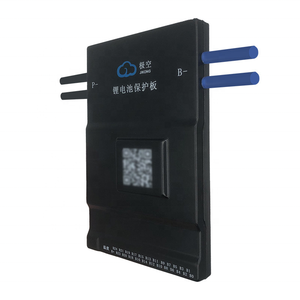
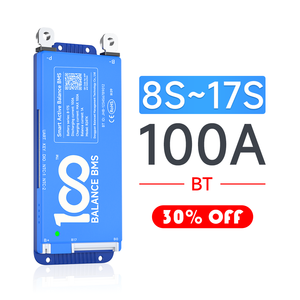
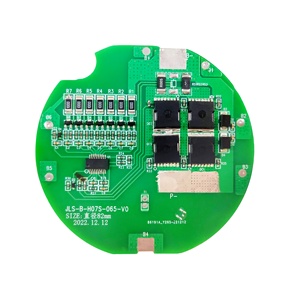
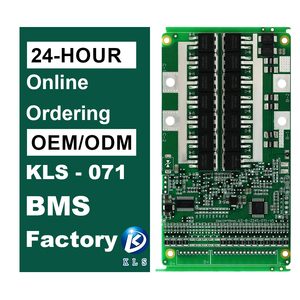
High-Voltage Active Balancer & Smart BMS Portfolio
Factory-direct smart battery management components and capacitive/inductive dynamic cell equalizers engineered for high-voltage energy storage systems and industrial lithium modules.
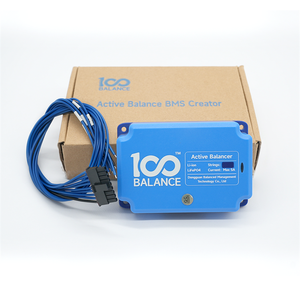
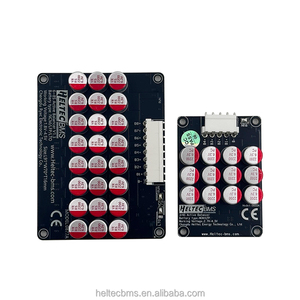
Active Balance Equalizer Balancing Capacitive LiFePO4/NMC 48V 5A Active Balancer
Executive Overview: The Shift to High-Voltage Lithium Battery Systems
The global industrial energy transition has shifted the standard for commercial & industrial energy storage systems (C&I ESS), electric mobility platforms, medical cart power units, and automated guided vehicles (AGVs) from legacy low-voltage parallel configurations (48V nominal) toward high-voltage series-connected architectures (ranging from 192V, 384V up to 1000V+ DC).
Why High Voltage? High-voltage lithium battery systems operate under fundamental physics principles ($P = I \times V$). By raising system operating voltage, the current required to deliver equivalent power output drops proportionately. This reduction in current ($I$) yields three pivotal operational benefits for B2B engineering procurement teams:
Drastic Thermal Loss Mitigation: According to Joule’s first law ($P_{loss} = I^2 R$), resistive thermal losses in copper busbars and wiring harnesses decrease quadratically. A shift from 48V to 400V reduces cable power losses by over 90% under identical power loads.
Optimized Cable Cross-Sections & Weight: Lower operating currents permit thinner copper wire gauges, reducing harness weight, simplifying enclosure routing, and lowering overall raw material costs.
Enhanced Inverter Conversion Efficiency: Modern high-power PCS (Power Conversion Systems) achieve peak conversion efficiency (often exceeding 98.5%) when DC bus voltages closely match the 380V/400V/480V grid AC interface.
However, stringing dozens or hundreds of Lithium Iron Phosphate (LiFePO4) or Nickel Manganese Cobalt (NMC) cells in series introduces severe cell-consistency challenges. A single underperforming cell in a 192S or 384S string restricts the entire pack’s usable capacity, driving thermal runaway risks if unmonitored. This whitepaper analyzes how leading Chinese high-voltage lithium battery system factories utilize advanced active balancing, multi-tier BMS topologies, and ISO/IATF-certified manufacturing to deliver scalable power infrastructure.
China OEM Factory Strengths & Engineering Quality Standards
Evaluating top Chinese high-voltage battery exporters requires looking beyond simple pack assembly costs. Global OEMs (Original Equipment Manufacturers) demand stringent compliance across medical, aerospace, automotive, and heavy industrial sectors. Factories like APEX Mobile Power (AMP) demonstrate high information-gain metrics by maintaining vertically integrated manufacturing ecosystem controls:
ISO 13485 & IATF 16949 Certified
Production lines audited for medical-grade risk management (ISO 13485) and automotive-grade APQP/PPAP protocols (IATF 16949), ensuring zero-defect cell matching.
Smart Active Balancing BMS
In-house hardware & firmware development of capacitive and inductive active equalizers delivering up to 5.5A non-dissipative balancing current.
Full Turnkey SMT & Assembly
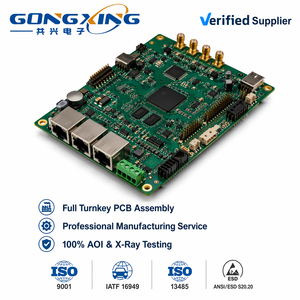
High-speed SMT placement lines for BMS PCBA manufacturing, combined with automated laser welding for module interconnections.
Active Energy-Transfer Balancing (1A - 5.5A, Capacitive/Inductive)
BMS Architecture
Single-Board Monolithic (Limited to <96V)
3-Tier Master-Slave Daisy-Chain (Daisy-Chain ISO-SPI up to 1500V)
Cell Sourcing Quality
Grade-B or mixed internal impedance cells
Tier-1 Fresh Grade-A Cells (CATL, EVE, BYD) with 100% Traceability
Quality Certifications
Basic CE & RoHS only
ISO 9001, ISO 13485, ISO 14001, ISO 45001, UN38.3, UL1973, IEC 62619
Thermal Management
Natural Convection / Passive Air
Integrated Liquid Cooling Plates / Forced Air Flow Simulation
Technology & Market Trends: The Future of High-Voltage Systems
As energy density demands climb, Chinese top battery exporters are driving four major technological breakthroughs that will define international procurement contracts over the coming decade:
1. Active Capacitive vs. Inductive Cell Balancing
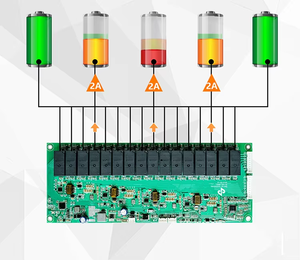
Traditional passive balancing bleeds off excess charge from high-voltage cells as waste heat through resistors. In high-voltage strings (e.g., 256S LiFePO4 packs), passive balancing is mathematically ineffective—taking days to correct cell imbalance while causing localized thermal stress. Advanced Chinese exporters integrate Active Energy Transfer Balancing using switched-capacitor or transformer-based inductive circuits (such as Heltec, JIKONG, and Seplos modules). These active balancers shift energy from higher-voltage cells directly to lower-voltage cells with over 92% transfer efficiency, cutting equalization time from 48 hours down to under 30 minutes.
2. Cloud-Connected Smart BMS with AI Health Prediction
Modern high-voltage BMS units incorporate dual IoT connectivity (4G LTE / GPS / CAN bus) to stream real-time cell parameters—individual cell internal impedance ($R_i$), State of Charge (SoC), State of Health (SoH), and micro-temperature differentials—to cloud monitoring platforms. Machine learning algorithms analyze electrochemical degradation patterns to predict cell failures weeks before thermal events occur.
By eliminating traditional module housings, Cell-to-Pack (CTP) designs boost volume utilization from 40% to over 65%. For high-voltage industrial battery racks, modular 19-inch rack-mounted high-voltage clusters (e.g., 51.2V 100Ah modules connected in series up to 768V DC) allow seamless scalability, easy maintenance hot-swapping, and reduced installation downtime.
4. Commercial Sodium-Ion Hybrid Systems
While LiFePO4 remains the dominant chemistry for stationary energy storage due to its cycle life (>6000 cycles at 80% DoD), Sodium-Ion (Na-ion) high-voltage modules are emerging as a viable alternative for extreme cold environments (-40°C to +60°C operational range) and budget-sensitive backup applications. Top Chinese manufacturers are pioneering hybrid BMS firmware capable of managing mixed chemical strings.
B2B Future Procurement & Sourcing Outlook
International buyers sourcing high-voltage lithium battery systems from China face changing regulatory landscapes, import tariffs, and logistics mandates. To secure supply chains, global enterprise buyers are adopting specific procurement strategies:
1. Modular Compliance Readiness
Procuring sub-assemblies already pre-certified for UN38.3, IEC 62619, and UL 1973 dramatically reduces local system-level validation costs in Europe and North America.
2. Flexible Dual-Location Supply Networks
Leading Chinese exporters (such as APEX Mobile Power) have expanded manufacturing facilities across Southeast Asia (e.g., Vietnam, Thailand) alongside primary Chinese hubs to mitigate geopolitical tariffs and supply chain bottlenecks.
3. Customized Software Protocols
Buyers demand open-source and customizable CANbus / RS485 / Modbus RTU firmware protocols to integrate smoothly with global inverter brands like SMA, Victron, Deye, and Sol-Ark.
Sourcing & Technical Procurement FAQ
Answers to common engineering and commercial questions raised by international OEMs when sourcing high-voltage lithium battery systems from China:
Q1: What defines a "High-Voltage" Lithium Battery System compared to low-voltage systems?
Low-voltage (LV) systems operate below 60V DC (typically 12V, 24V, or 48V nominal). High-voltage (HV) systems connect cells in series to achieve nominal voltages from 192V DC up to 1000V+ DC. HV systems reduce operational current, cut resistive cable heating, minimize voltage drops across long wiring distances, and increase total system energy efficiency.
Q2: Why is Active Balancing mandatory for High-Voltage LiFePO4 series strings?
LiFePO4 cells exhibit an exceptionally flat voltage curve between 20% and 90% State of Charge (SoC). In long series strings (e.g., 192S), subtle capacity or impedance variances cause individual cells to hit overvoltage or undervoltage limits early during charging or discharging. Active balancers transfer energy (up to 5A+ current) from high-voltage cells to low-voltage cells without wasting power as heat, restoring full string capacity.
Q3: What certifications are mandatory for importing lithium battery packs into North America and Europe?
For sea/air transport, UN38.3 test reports and MSDS are mandatory worldwide. For North America, system safety compliance requires UL 1973 (stationary batteries) or UL 9540A (fire thermal runaway propagation testing). For Europe, CE, RoHS, and IEC 62619 safety standards are required.
Q4: What is the typical NRE (Non-Recurring Engineering) lead time for custom OEM battery packs?
A typical custom OEM project takes 2 to 3 weeks for mechanical/electrical design and BMS firmware mapping, 3 weeks for initial prototype SMT and sample build, and 4 to 6 weeks for UN38.3 and IEC certification testing. Turnkey prototype delivery usually takes 6 to 8 weeks.
Q5: How do Chinese factories ensure long-term cell quality and trace cell origins?
Tier-1 Chinese battery pack factories source Grade-A cells directly from manufacturers (such as CATL, EVE, BYD, Ganfeng) with complete factory birth certificates. Every cell code is scanned into an MES (Manufacturing Execution System) database, matching voltage, capacity, and internal resistance within ultra-narrow tolerances (ΔIR < 0.5mΩ, ΔCap < 0.5%).
Partner with China's Premier High-Voltage Battery Manufacturer
Looking for custom OEM high-voltage battery modules, active balancer BMS boards, or full-turnkey storage solutions? Our engineering team is ready to evaluate your technical requirements.