Precision-engineered cell balancers and battery protection systems for 36V, 48V, 60V, and 72V E-Bike and Light EV battery packs
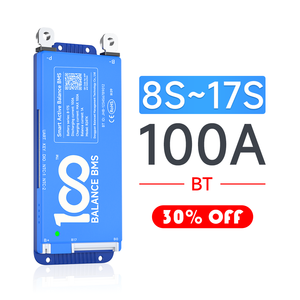
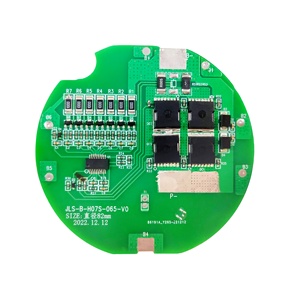
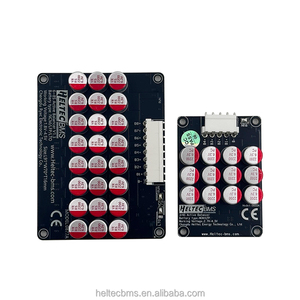
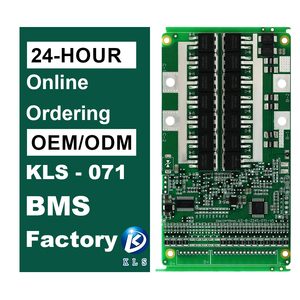
The global light electric vehicle (LEV) market, driven by rapidly swelling urban e-bike adoption, commercial last-mile delivery fleets, and stringent carbon-neutrality mandates, is undergoing a seismic technical evolution. At the heart of this transformation is the custom lithium-ion battery pack—a sophisticated electrochemical and electronic subsystem that determines vehicle range, peak power delivery, overall safety, operational lifespan, and total cost of ownership (TCO).
China has firmly established itself as the world's primary engine for custom OEM/ODM lithium-ion battery pack production and smart Battery Management System (BMS) engineering. Benefiting from a hyper-integrated industrial supply chain spanning raw precursor refining, cathode/anode synthesis, precision cylindrical cell manufacturing (21700, 18650, 4680), and turnkey surface-mount technology (SMT) PCBA assembly, Chinese tier-1 factories offer global B2B procurement directors unmatched economies of scale, technological agility, and rapid engineering iterations.
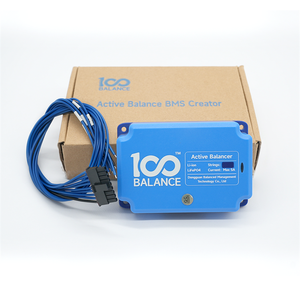
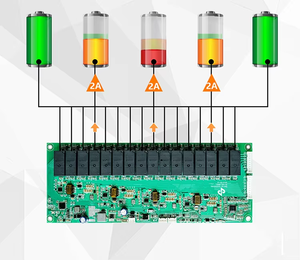
Modern B2B e-bike battery sourcing has shifted from mere volumetric energy density (Wh/L) optimization to intelligent cell-balancing architectures. Passive resistor balancing—which bleeds excess energy as heat—is being phased out by premium OEMs in favor of high-current active capacitive and inductive energy transfer balancers (ranging from 0.6A to 5.5A). This structural shift eliminates thermal hotspots inside sealed battery casings and dramatically reduces cell capacity divergence over 1,500+ charge cycles.
Navigating the complex landscape of Chinese e-bike battery suppliers requires enterprise buyers to look beyond baseline FOB pricing. Rigorous supply-chain auditing demands a detailed analysis of cell chemistry selection (High-Nickel NMC vs. Thermal-Stable LiFePO4 vs. Emerging Sodium-Ion), structural potting techniques for thermal runaway mitigation, CANbus/RS485 firmware customization, and multi-jurisdictional safety certifications including EN 15194:2017, UL 2271 (Light Electric Vehicle Batteries), UL 2849 (E-Bike Electrical Systems), and UN 38.3 transport safety validation.
To assist automotive-grade procurement teams and original equipment manufacturers (OEMs) in selecting the optimal power architecture, the following engineering matrix compares the dominant lithium cell chemistries and cell-balancing methodologies utilized in high-performance Chinese battery factories.
| Architecture Parameter | Lithium Nickel Manganese Cobalt (NMC 811/622) | Lithium Iron Phosphate (LiFePO4 / LFP) | Sodium-Ion (Na-Ion Next Gen) |
|---|---|---|---|
| Nominal Voltage (Cell) | 3.6V - 3.7V | 3.2V - 3.3V | 3.0V - 3.1V |
| Gravimetric Energy Density | 230 - 280 Wh/kg | 160 - 185 Wh/kg | 140 - 160 Wh/kg |
| Cycle Life (80% DOD) | 800 - 1,200 Cycles | 2,500 - 4,500 Cycles | 2,000 - 3,000 Cycles |
| Thermal Runaway Temp | ~210°C (Requires PCM / Active Cooling) | ~270°C - 300°C (Intrinsically Safe) | ~260°C (High Thermal Stability) |
| Low-Temp Discharge (-20°C) | ~70% Retained Capacity | ~55% Retained Capacity | ~88% Retained Capacity (Superior) |
| Optimal Active Balancer Type | Capacitive Dynamic Transfer (0.6A - 2A) | Inductive High-Current Balancer (2A - 5.5A) | Hybrid Microprocessor Controlled BMS |
| Target Application | High-Range Cargo & Mountain E-Bikes | Commercial Fleet Delivery & Commuter Bikes | Budget Urban Micro-Mobility & Cold Climates |
Utilizes high-frequency switching capacitors to transfer charge continuously between adjacent and non-adjacent cells. Energy is moved directly from highest-voltage cells to lowest-voltage cells with up to 95% efficiency, operating independently of the charge/discharge state.
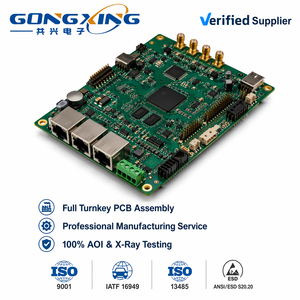
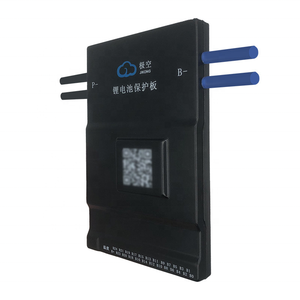
Tier-1 Chinese suppliers integrate dual-layer hardware protection circuits alongside primary MCU firmware. Features independent hardware overvoltage cutoff, short-circuit protection under 200 microseconds, and multi-point NTC thermistor sensing.
Advanced BMS boards support CAN 2.0B, RS485, and Bluetooth Low Energy (BLE 5.0). Enables real-time State of Charge (SOC), State of Health (SOH) tracking, cloud diagnostics, dynamic cell voltage logging, and OTA (Over-The-Air) firmware updates.
As the micro-mobility regulatory landscape tightens across Europe and North America, B2B procurement executives must align their supply chain strategies with shifting manufacturing paradigms in China. Key technological and logistical macro-trends include:
Legacy 18650 cell packs are rapidly giving way to 21700 cylindrical cells (such as 50E, 50G, and high-drain 45D variants). Offering 50% higher volumetric capacity per cell, 21700 configurations reduce total cell counts, simplify nickel-strip spot welding paths, lower BMS sensing tap points, and dramatically improve structural battery enclosure density.
From 2027 onwards, all light transport vehicle (LMT) batteries entering the European Union must carry a QR-coded digital "Battery Passport." Top Chinese manufacturers are already embedding blockchain-verifiable traceability into BMS microcontrollers, logging raw material origin (cobalt, lithium, nickel), supply chain carbon footprint, recycled content ratios, and dynamic health histories.
Driven by municipal safety enforcement (e.g., NYC Local Law 39 and UL 2271 mandates), Chinese battery pack architecture now mandates single-cell isolation enclosures. Using flame-retardant aerogel insulation pads, phase-change materials (PCM), and directional vent valves, tier-1 suppliers guarantee that even if one cell suffers catastrophic internal shorting, thermal runaway will not propagate to adjacent cells.
Enterprise buyers should strictly audit Chinese factories to ensure they utilize Grade-A fresh cells from top-tier cell manufacturers (CATL, EVE, Samsung SDI, LG Energy Solution, Panasonic, or BAK) with automated cell sorting. A robust factory standard requires sorting cells within extremely tight tolerances: Internal Resistance variance ≤ 0.5mΩ and Voltage variance ≤ 2mV prior to automated laser welding.
Leading Chinese battery pack factories provide global clients with end-to-end turnkey custom engineering—taking products seamlessly from initial 3D enclosure CAD concepts to mass production. Grounded in automotive-grade quality standards, top manufacturers offer the following key capabilities:
Operates strictly under ISO 9001 (Quality), ISO 14001 (Environmental), ISO 45001 (Occupational Safety), and IATF 16949 automotive standards for complete traceability.
In-house electrochemical engineers, BMS hardware/software designers, mechanical CAD modeling experts, and thermal simulation specialists reinvesting 8%+ annual revenue into R&D.
High-speed, high-precision fiber laser welding stations eliminate cold-soldering defects, ensuring ultra-low contact resistance and robust vibration resistance under heavy road conditions.
Direct lab partnerships for rapid testing and global certification approval: UN 38.3, MSDS, DG Freight Clearance, CE, RoHS, REACH, UL 2271, UL 2849, and IEC 62133.
Here are expert answers to the most common questions raised by OEM/ODM procurement directors, electrical engineers, and supply chain managers when sourcing e-bike lithium battery packs from China.
Answer: Standard OEM/ODM customized battery pack projects usually require an initial sample engineering phase (1 to 5 prototype units for testing and validation). For mass production runs, typical factory MOQs range between 100 to 500 units depending on enclosure customization (off-the-shelf plastic vs. custom extruded aluminum tooling) and cell availability. Standard catalog BMS boards or active balancers generally have flexible MOQs starting from 20 to 50 pieces.
Answer: Passive balancing dissipates excess energy from higher-voltage cells as wasted heat through resistors (usually at low currents of 30mA to 100mA), operating only during the final charge phase. Active balancing transfers energy dynamically from high-voltage cells to low-voltage cells using capacitive or inductive circuits at significantly higher currents (0.6A to 5.5A). Active balancing generates virtually no heat, operates during charging, discharging, and idle states, and extends total battery pack lifespan by up to 30%.
Answer: Export-grade lithium battery packs are classified under Dangerous Goods (Class 9 - UN 3480 for stand-alone batteries or UN 3481 for batteries packed with equipment). Tier-1 Chinese suppliers provide complete UN 38.3 test summary reports, 1.2-meter drop test certificates, MSDS (Material Safety Data Sheets), and official Sea/Air Freight Dangerous Goods Condition Identification Certificates issued by state-accredited inspection agencies (CIQ).
Answer: For North America, UL 2271 (light EV batteries) and UL 2849 (complete e-bike electrical system) are widely enforced by retailers, municipal authorities (e.g., NYC FDNY), and insurance underwriters. For the European Union, compliance with EN 15194:2017, CE marking, Low Voltage Directive (LVD), Electromagnetic Compatibility (EMC), RoHS, REACH, and UN 38.3 transport certification is mandatory.
Answer: Yes. Custom Smart BMS boards can be integrated with customized communication firmware including CANbus 2.0B (e.g., CiA 417 or custom CAN protocol), RS485, UART, and Bluetooth Low Energy (BLE). This allows real-time display of precise state-of-charge (SOC %), battery temperature, remaining mileage estimation, fault codes, and cell voltage telemetry directly on the rider dashboard or fleet management app.
Answer: Achieving IP65 to IP67 ingress protection requires multi-stage engineering: ultrasonic plastic welding or die-cast aluminum enclosures with sonic-sealed rubber gaskets, waterproof sealed charging ports (e.g., XLR, Rosenberger, or magnetic connectors), and internal silicone potting encapsulation surrounding the BMS PCBA to safeguard electronics against vibration, condensation, and water submersion.
Whether you require custom battery pack prototyping, active balancer BMS PCBA manufacturing, or full-scale OEM/ODM production for your e-bike fleet, our engineering team is standing by to deliver turnkey solutions.