Top-tier components engineered for extreme cycle stability, high charge/discharge rate efficiency, and zero-maintenance off-grid solar microgrids.
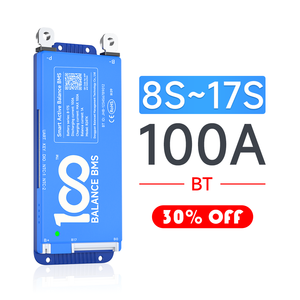
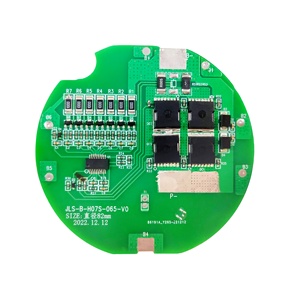
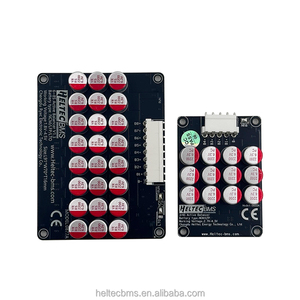
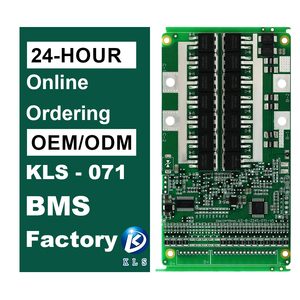
A technical evaluation of vertically integrated battery manufacturing campuses, ISO-accredited production systems, and precision cell balancing technologies.
Top China solar battery manufacturers maintain direct tier-1 supply agreements with global lithium cell leaders such as EVE, CATL, and BYD. By pairing Grade-A LiFePO4 cells with laser-welded busbars and precision capacity matching (within ±0.5% capacity drift and ≤0.3mΩ internal resistance variance), suppliers achieve unprecedented system consistency.
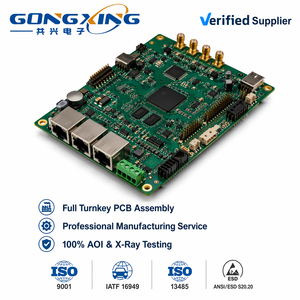
Enterprise-grade off-grid energy storage manufacturing demands stringent quality frameworks. Leading Chinese exporters operate under SGS-audited ISO 9001:2015, ISO 14001:2015, ISO 45001:2018, and IATF 16949 automotive standards. This guarantees rigorous End-of-Line (EOL) testing, insulation withstand tests, and 100% full-cycle thermal aging before dispatch.
Why 5A Active Equalization is essential for preserving 6,000+ cycle lifespans in high-capacity 48V/51.2V LiFePO4 energy storage systems.
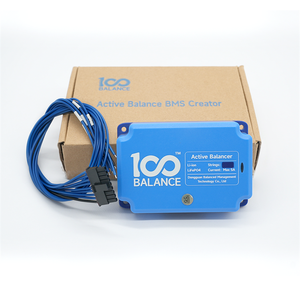
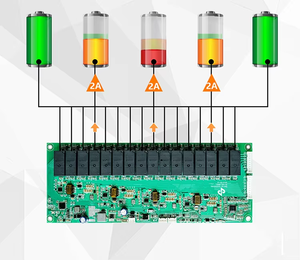
In remote off-grid solar installations, battery packs undergo deep daily cycling (up to 80%–90% Depth of Discharge). Traditional passive balancing bleeds off excess energy as heat through resistors at small currents (30mA–100mA), leading to significant energy loss and potential thermal hot spots. In contrast, modern capacitive and inductive active balance technology transfers charge dynamically from high-voltage cells to low-voltage cells at currents up to 5A–5.5A, drastically reducing degradation and maximizing usable battery bank capacity.
| Architecture Feature | Passive BMS Topology | Capacitive Active Equalizer (5A+) | Inductive Energy Transfer BMS |
|---|---|---|---|
| Energy Transfer Efficiency | 0% (Dissipated as Heat) | 92% – 95% Efficient Transfer | 88% – 93% Efficient Transfer |
| Balancing Current Range | 30mA – 150mA | 1.0A – 5.5A (Continuous) | 0.5A – 2.0A |
| Heat Generation inside Pack | High (Requires Heat Sinks) | Negligible (Low Resistance Transistors) | Low |
| Cell Voltage Delta Mitigation | Slow (Fails on large 280Ah/314Ah cells) | Ultra-Fast (Equalizes within <10mV) | Moderate |
| System Lifespan Extension | Standard (~3,500 Cycles at 80% DoD) | Maximized (>6,000 Cycles at 80% DoD) | Extended (~5,000 Cycles) |
Key technological advancements transforming Chinese off-grid energy storage exports over the next decade.
Off-grid systems are shifting rapidly from legacy 100Ah/200Ah cells to 314Ah and 560Ah prismatic cells, reducing footprint by 25% while increasing total energy density and lowering per-kWh procurement costs.
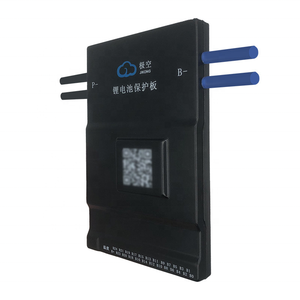
Next-gen Smart BMS units (such as Seplos 3.0 and JK Smart BMS) automatically auto-detect and handshake with major off-grid hybrid inverters, including Victron Energy, Deye, Growatt, Sol-Ark, and Luxpower via CAN/RS485.
Integration of onboard Bluetooth 5.0, WiFi, 4G, and GPS modules enables EPC contractors and site operators to monitor individual cell voltages, temperature curves, and SOH (State of Health) remotely from mobile apps.
For high-altitude and alpine off-grid applications, sodium-ion battery modules are emerging alongside LiFePO4 due to their ability to discharge efficiently at -40°C without requiring active thermal heating pads.
How global EPCs, distributors, and microgrid developers can optimize sourcing, compliance, and custom engineering with Chinese OEMs.
Off-grid procurement is pivoting away from standardized generic battery boxes toward fully customized OEM solutions. B2B buyers now demand custom sheet metal enclosures, localized branding, specialized IP65/IP67 weatherproofing, and tailormade firmware protocols to match unique regional solar radiation profiles and inverter ecosystems.
With tightening international regulations, exporters from China must provide comprehensive safety documentation including UN38.3 transport testing, UL1973, CE, IEC 62619, and MSDS clearance. Advanced buyers are requiring ESG carbon footprint reporting and material origin verification to comply with European and North American customs policies.
Expert answers to critical technical and commercial queries encountered during OEM battery sourcing from China.
Premier suppliers utilize 100% new Grade-A cells directly from tier-1 manufacturers (CATL, EVE, BYD) with automated sorting for voltage and impedance. They integrate active balancing BMS boards, laser-welded copper busbars, and certified fire suppression materials, backed by full ISO/IATF quality control systems rather than manual hand-soldering and second-life cells.
Active balance equalizers dynamically transfer charge between individual series cells with currents up to 5A. This prevents weak cells from hitting low-voltage cutoffs prematurely and stops strong cells from overcharging, maintaining system voltage alignment within 10mV and extending cycle life from ~3,500 to over 6,000 cycles.
Yes. Leading BMS brands like Seplos, Jikong (JK), and KLS feature dual CAN bus and RS485 communication interfaces pre-programmed with firmware protocols for Victron Energy, Deye, Sol-Ark, SMA, Growatt, GoodWe, and Schneider Electric inverters.
Importers should ensure the supplier provides UN38.3 (air/sea shipping safety), MSDS, IEC 62619 (industrial lithium safety), CE-EMC, and UL1973 or UL9540A test reports for North American stationary energy storage compliance.
Initial engineering sample production (including custom sheet metal tooling, PCBA firmware adjustment, and cell assembly) typically takes 3 to 4 weeks. Once approved, mass production orders are completed within 20 to 30 days depending on cell batch availability.
Need custom LiFePO4 battery pack engineering, active balancing BMS integration, or turnkey OEM/ODM production for your off-grid energy project? Talk with our senior engineers today.
Inquire Now