
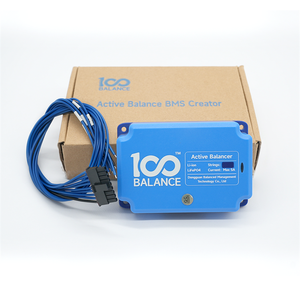
Explore our tier-1 active balancing modules and integrated battery management systems engineered for LiFePO4, NMC, and LTO energy storage architectures.
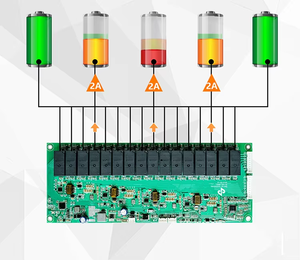
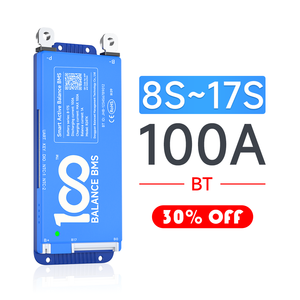
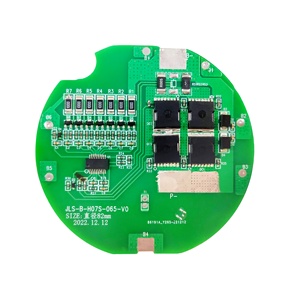
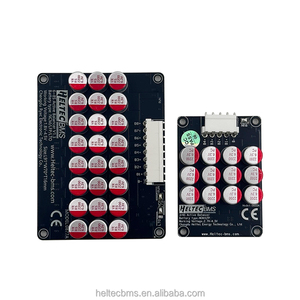
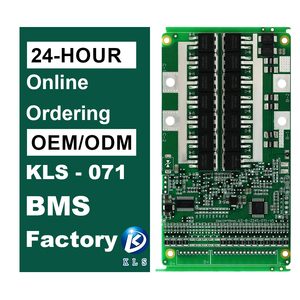
Understanding cell consistency dynamics, energy balance transfer mechanisms, and smart BMS integration in industrial energy storage and electric mobility.
Unlike resistive dissipation which converts excess energy into thermal stress, active capacitive balancing continuously transfers charge from high-voltage cells to low-voltage cells using ultra-low ESR capacitors at switching frequencies up to 1.2MHz.
Our OEM modular units support real-time CANbus 2.0B, RS485, and Modbus communication interfaces alongside integrated Bluetooth and GPS tracking. This enables cloud-based state-of-health (SOH) predictive analytics and OTA firmware updates.
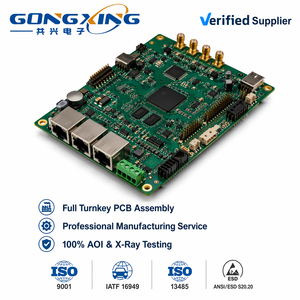
Manufactured under automotive-grade quality management controls. Each PCBA board undergoes 100% automated optical inspection (AOI), conformal coating for environmental sealing, and high-current burn-in testing to guarantee zero zero-day thermal runaway risks.
Selecting the right module architecture for industrial energy systems (ESS, Robotics, and E-Mobility).
| Engineering Feature | Capacitive Active Equalizer (AMP OEM) | Inductive Active Equalizer | Traditional Passive Dissipative BMS |
|---|---|---|---|
| Balancing Mechanism | High-Frequency Energy Transfer | Inductive Switched-Transformer | Resistive Heat Loss |
| Equalization Current | 1.2A to 5.5A Continuous | 0.5A to 2.0A | 35mA to 100mA (Max) |
| Energy Efficiency | 92% – 96% Efficiency | 85% – 90% Efficiency | < 5% (Energy Wasted) |
| Thermal Generation | Ultra-low (< 35°C under 5A operation) | Moderate (Transformer core loss) | High (Hotspot accumulation on PCBA) |
| Cell Voltage Delta Tolerance | < 0.005V (5mV Precision) | < 0.01V (10mV Precision) | > 0.03V (30mV Drift) |
| Applicable Battery Chemistries | LiFePO4, NMC, LTO, Sodium-Ion | LiFePO4, NMC | Standard Li-Ion |
How international B2B buyers and Tier-1 energy OEMs are restructuring supply chains for sustainability, regulatory compliance, and modular scalability.
Global importers are prioritizing Chinese energy unit suppliers with established digital supply chain traceability. Sourcing strategy now demands compliance with carbon footprint declarations, recycled cobalt/lithium content metrics, and integrated "Battery Passport" data logging built into the smart BMS firmware.
Procurement managers are shifting away from fixed, monolithic battery packs toward plug-and-play modular units (such as 16S 48V or 24S 72V base modules). These standard building blocks can be wired in series and parallel to create commercial ESS stacks up to 1000V with decentralized Master-Slave BMS topologies.
As cell capacities scale beyond 280Ah and 314Ah in modern energy storage systems, traditional 50mA passive balancers are obsolete. B2B contracts now specify 2A to 5.5A active balancers to shorten cell-matching cycles, optimize usable capacity, and prevent premature module replacement.
To insulate projects from raw material price volatility, OEM buyers expect BMS PCBA platforms that seamlessly support multiple cell chemistries (LiFePO4, NMC, LTO, and emerging Sodium-Ion) via simple software register reconfigurations.
Combining 14+ years of OEM manufacturing mastery with world-class ISO certifications and strict intrinsic quality assurance.
Operated under IATF 16949 and ISO 9001 quality systems. High-precision SMT lines with automated 3D SPI and AOI ensure defect-free board assembly for medical, military, and industrial clients.
Certified by SGS for the design and manufacture of high-reliability lithium battery modules powering non-implantable active medical equipment and critical emergency medical units.
From custom mechanical housing design (IP67 aluminum enclosures) to customized BMS software algorithm development, our 60+ R&D engineers deliver end-to-end solutions.
Direct answers to crucial design, safety, and import questions for engineering leads and procurement specialists.
Passive balancing bleeds off excess energy from fully charged cells as heat through resistors (usually at a tiny 35mA–100mA current), wasting energy and causing thermal hot spots. Capacitive active balancing transfers energy dynamically from higher-voltage cells to lower-voltage cells via switching capacitors at up to 5.5A continuous current, achieving 95% efficiency without heat accumulation.
Our 5A capacitive active balancers are engineered with ultra-low internal resistance MOSFETs and high-grade ceramic capacitors. During full 5A energy transfer, the PCBA temperature rise remains under 15°C above ambient. For heavy-duty industrial modules, aluminum heat sinks and thermal conductive pads are integrated to guarantee reliable thermal dissipation up to 85°C working conditions.
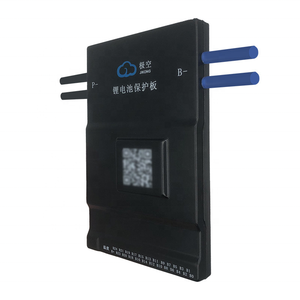
Yes. Our Smart BMS platforms (such as Seplos, Jikong, and KLS series) come pre-programmed with major inverter communication protocols including Victron, Pylontech, Growatt, Deye, Schneider, and SMA. Custom CANbus 2.0B or Modbus-RTU register maps can also be tailored by our firmware team upon request.
All our modular energy units, battery protection PCBAs, and active balancers carry comprehensive UN38.3 test reports, MSDS documentation, CE, RoHS, and FCC compliance certificates. This ensures compliant sea and air freight shipping globally with full UN-certified dangerous goods (DG) packaging standards.
For small cell capacities (<50Ah), a 0.6A to 1A active balancer is sufficient. However, for commercial 100Ah to 300Ah LiFePO4 cells, a 2A to 5.5A active balancer is recommended to ensure cell voltage delta is kept under 5mV during high C-rate charging and discharging cycles.
Engineering prototypes (schematic design, PCB layout, and initial sample assembly) are delivered within 14–21 business days. Following client validation and test approval, scalable mass production under ISO 9001 / IATF 16949 standards typically requires 3–4 weeks lead time.
Need custom voltage configurations, tailored BMS firmware, or tier-1 active balancing modules for your energy storage or e-mobility project? Connect directly with our engineering consultation team.
Contact Us