APEX Mobile Power — Custom OEM Lithium Battery Solutions  |  ISO 9001 · ISO 13485 · ISO 14001 Certified  |  Engineered for Performance

China Best Cylindrical Lithium-Ion Battery Module Supplier & Exporter

Engineered Industrial Battery Modules, Active Balancing BMS Architecture & Enterprise OEM/ODM Sourcing Whitepaper

Core Product Portfolio

High-Performance Cylindrical Modules & Smart BMS Solutions

Precision-engineered balancing boards, intelligent BMS assemblies, and custom battery modules for LiFePO4, NMC, and LTO energy systems.
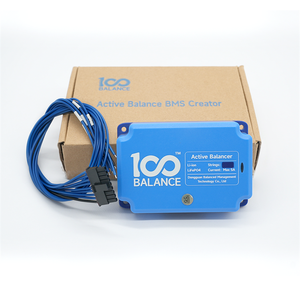
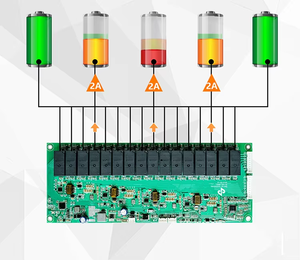
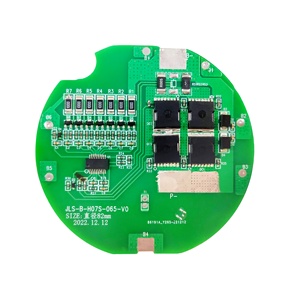
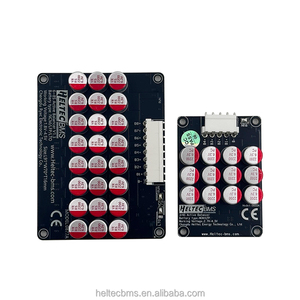
Active Balance Equalizer Balancing Capacitive Lifepo4 48v

Active Balance Equalizer Capacitive LiFePO4 48V Cell NMC 5A Balancer

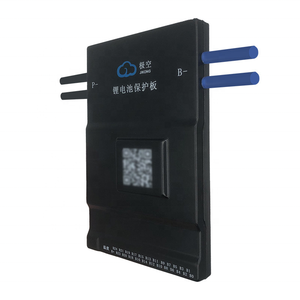
Seplos BMS 3.0 Active Balancer LiFePO4 Battery

Seplos BMS 3.0 Active Balancer LiFePO4 Battery Protection Board

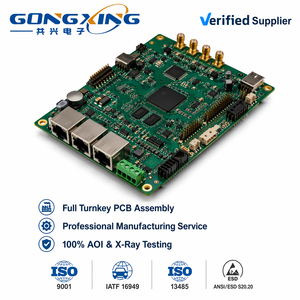
Smart BMS PCBA Active Balancing Board IATF 16949

Smart BMS PCBA Active Balancing Board Turnkey Assembly (IATF 16949)

JK JK-BD6A24S15P Li-ion LiFePO4 BMS GPS Display

JIKONG JK-BD6A24S15P 0.6A Active Balancer 150A BMS 7S-24S Display/GPS

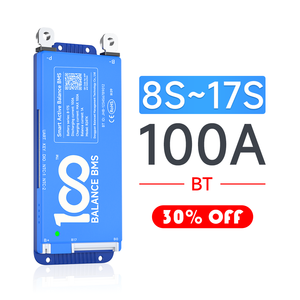
Smart Active Balancer Protection Board 100A 48V 16S

Smart Active Balancer Protection Board 100A 48V 16S LiFePO4 Smart BMS

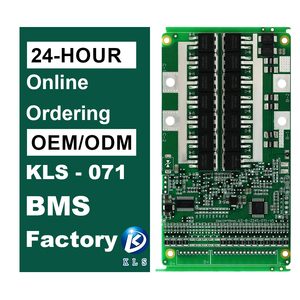
KLS BMS 045 64S 120A 12V LiFePO4 Electric Bicycle

KLS-BMS-045 64S 120A 12V LiFePO4 E-Bike Active Equalizer Module

Heltec 4S to 21S Active Balancer 5.5A Equalizer

Heltec 4S to 21S 5.5A Energy Transfer Active Balancer Equalizer

KLS Smart BMS 16S 48V 100A 150A Energy Storage

KLS Smart BMS 16S 48V 100A/150A LiFePO4 ESS Active Equalizer

14+
Years OEM/ODM Expertise
60+
Full-Time Battery Engineers
8%
Annual Revenue in R&D
3000+
Global Projects Delivered

1. Global Market Landscape & Procurement Dynamics of Cylindrical Lithium Modules (2026–2030)

The global transition toward electrification across industrial robotics, medical mobility, autonomous guided vehicles (AGVs), unmanned aerial vehicles (UAVs), and decentralized Energy Storage Systems (ESS) has radically transformed requirements for energy storage architectures. Among all mechanical form factors, cylindrical lithium-ion battery modules (utilizing 18650, 21700, and 4680 cell formats) continue to dominate high-reliability applications due to their automated manufacturing maturity, superior thermal dissipation dynamics, structural robustness, and low volumetric cost metrics.

As international original equipment manufacturers (OEMs) and system integrators shift away from standard commercial off-the-shelf (COTS) packs toward highly customized battery modules, sourcing strategy has evolved. Procuring directly from specialized Chinese tier-1 exporters provides unparalleled advantages in cost efficiency, fast-tracked engineering iterations, and direct access to cutting-edge active balancing technology.

Information Gain Insight: Modern B2B procurement is no longer driven strictly by cell price per kilowatt-hour ($/kWh). Leading system engineering teams evaluate total cost of ownership (TCO), module-level internal resistance matching, life cycle extension through active equalization, and direct cell-to-pack (CTP) structural integration capabilities.

Comparative Module Topology Analysis

To assist technical buyers in evaluating battery module options, the following comparative engineering matrix illustrates the operational performance of cylindrical battery modules against prismatic and pouch cell configurations:

Engineering Parameter Cylindrical Module (21700/4680) Prismatic Module (LiFePO4/NMC) Pouch Cell Module
Gravimetric Energy Density 240 – 300 Wh/kg 160 – 220 Wh/kg 230 – 280 Wh/kg
Mechanical Vibration Resistance Exceptional (Structural Shell) High (Heavy Frame) Moderate (Requires Compression)
Thermal Runaway Mitigation Superior (Natural Air Channels/PCM) Moderate (Large Contact Area) Complex (Swelling Dynamics)
Cell Matching & Sorting (IR/V) Precision Automated (ΔIR ≤ 1.5mΩ) Batch Sorting (ΔIR ≤ 3mΩ) Manual/Semi-Auto
Lifecycle with Active Balancing 4,000 – 6,000 Cycles (to 80% SOH) 3,500 – 5,000 Cycles 2,000 – 3,500 Cycles
Automated Assembly Efficiency Very High (Laser Busbar Welding) High (Bolted/Welded) Moderate (Tab Folding)

2. Advanced Engineering Architecture: Active Equalization & Smart BMS Integration

A primary failure mode in multi-cell series/parallel cylindrical battery packs is capacity degradation caused by cell imbalance. Over extended charge-discharge cycles, minor variations in cell internal resistance, self-discharge rates, and localized thermal gradients induce voltage divergence across cell strings. Left uncorrected, the weakest string dictates the total usable module capacity, accelerating premature degradation and safety risks.

Passive vs. Active Equalization Topologies

Traditional passive balancing bleeds off excess energy as heat through shunt resistors, typically capped at low currents (50mA to 200mA). This method is inefficient, generates undesirable thermal loads inside sealed enclosures, and fails to maintain equilibrium in high-capacity 48V, 72V, or high-voltage industrial battery systems.

In contrast, modern cylindrical modules manufactured by top-tier Chinese exporters incorporate high-efficiency Active Equalization systems (1A to 5.5A transfer currents). Utilizing capacitive or inductive energy-transfer mechanisms, active balancers dynamically move electrical energy from higher-voltage cells to lower-voltage cells without heat generation. This continuous balancing retains up to 15% more usable capacity over the module lifecycle and extends overall service life by 30% to 50%.

Capacitive Energy Transfer

High-frequency switching capacitors transfer charge seamlessly across adjacent cells. Supports up to 5.5A balance current with 92% power conversion efficiency.

Multi-Layer Safety Protocols

Integrated hardware-level overcurrent, short-circuit, over-voltage, and multi-point NTC thermal sensors prevent thermal runaway events instantaneously.

Smart Telemetry & CANbus

Real-time State of Charge (SOC) and State of Health (SOH) estimation via CANbus 2.0B, RS485, and integrated Bluetooth/GPS cloud telemetry modules.

3. Emerging Procurement Trends & Technology Forecast (2026–2030)

Global buyers sourcing cylindrical lithium-ion battery modules from China must align their technical roadmaps with major industry trends:

  • Rapid Transition from 18650 to 21700 and 4680 Form Factors: Modern engineering designs favor 21700 cells due to a 50% increase in volumetric energy density compared to 18650s, reducing the total number of welded connections and BMS sampling channels. The adoption of 4680 large cylindrical cells for industrial ESS and e-mobility further lowers module assembly costs while simplifying thermal management.
  • Inductive vs. Capacitive Active Balancing Dominance: High-power applications are shifting toward hybrid inductive-capacitive balancing boards capable of delivering 2A to 5A continuous balancing across 4S to 24S configurations. This ensures fast voltage equalization even during high-C-rate discharge operations.
  • Structural Cell-to-Pack (CTP) & Phase Change Material (PCM) Encapsulation: Custom cylindrical modules increasingly incorporate aluminum structural honeycombs, flame-retardant silicone foams, and PCMs. This design increases structural rigidity against vibration while preventing thermal propagation between adjacent cells.
  • Turnkey OEM Engineering Services (NRE Integration): Corporate buyers are bypassing off-the-shelf module vendors in favor of Chinese original equipment manufacturers capable of delivering full turnkey service—from custom enclosure design (IP67/IP68 stainless steel or extruded aluminum) to custom PCB layout, wiring harness fabrication, and certification testing.

4. Comprehensive B2B Technical Procurement FAQ

Directly addressing core engineering inquiries, compliance prerequisites, and manufacturing capabilities for international enterprise buyers:

Q1: How does active balancing prevent capacity loss in 48V & 72V cylindrical battery modules?
In multi-cell strings (e.g., 16S 48V or 24S 72V), manufacturing variations lead to unequal degradation rates across individual cell groups. Passive balancers only operate near full charge, dissipating small currents as heat. High-current active balancers (1A to 5.5A) continuously transfer electrical charge from the highest-voltage cells to lower-voltage cells throughout both charge and discharge cycles. This process maintains tight voltage balance (ΔV ≤ 5mV), prevents premature under-voltage cutoff, and maximizes the operational runtime of the battery pack.
Q2: What automated cell-matching standards are implemented during module assembly?
To ensure optimal pack longevity, automated sorting machines test 100% of incoming cylindrical cells (EVE, Panasonic, Samsung SDI, CATL, LG Energy Solution) prior to module build. Sorting criteria include Voltage Tolerance (ΔV ≤ ±2mV), Internal Resistance Matching (ΔIR ≤ ±0.5mΩ using 1kHz AC milliohm meters), and Capacity Binning (within ±0.5%). This strict cell matching minimizes initial divergence and ensures uniform aging across parallel strings.
Q3: How does fiber laser welding compare to traditional nickel spot welding for module busbars?
Traditional resistance spot welding introduces thermal stress and inconsistent contact resistance, limiting continuous discharge current. Industrial cylindrical modules engineered by APEX Mobile Power utilize high-precision fiber laser welding with pure copper or aluminum-copper composite busbars. Laser welding yields ultra-low contact resistance (≤ 0.05mΩ per joint), provides superior mechanical strength under severe industrial vibration (MIL-STD-810G compliant), and supports high C-rate continuous current discharge without thermal overload.
Q4: What international export safety certifications are available for custom OEM modules?
Exported battery modules comply fully with global transport and safety standards. All module designs undergo mandatory UN38.3 (T1-T8 vibration, shock, thermal, external short circuit) transport testing and MSDS documentation. Product-level certifications include IEC 62133-2, UL 1973 (for stationary storage), UL 2580 (for e-mobility), CE-EMC, RoHS, and REACH. Facilities operate under strict ISO 9001, ISO 13485 (Medical Quality), ISO 14001, and ISO 45001 management systems.
Q5: What is the typical NRE lead time for custom prototype battery module engineering?
Custom engineering projects follow a structured Non-Recurring Engineering (NRE) process. Thermal simulation, 3D CAD CAD/BMS schematic development takes 1 to 2 weeks. Prototype sample assembly—including custom molded brackets, laser-welded busbars, and custom BMS programming—takes 3 to 4 weeks. Full mass production ramp-up typically occurs within 6 to 8 weeks following prototype sign-off and preliminary UN38.3 verification.

5. Enterprise Authority & Manufacturing Competencies

As a leading Chinese supplier and exporter of custom OEM lithium-ion battery modules, APEX Mobile Power provides full-stack engineering expertise across critical industries—including active medical systems, high-altitude UAVs, autonomous delivery robotics, industrial field equipment, and stationary ESS backup power systems.

Custom Chemistry Integration

Tailored integration of LiFePO4, NMC, LTO, and Sodium-Ion cylindrical cells optimized for specific thermal and C-rate demands.

In-House SMT & BMS Assembly

Automated SMT lines for hardware/software BMS manufacturing with active balancing algorithms and communication bus configuration.

Certified Quality Management

SGS-audited operations adhering to ISO 9001:2015, ISO 13485:2016 (Medical Devices), ISO 14001, and ISO 45001 standards.

Global Logistics & Export Compliance

Full door-to-door UN38.3 hazardous goods freight forwarding with DG packaging, MSDS certification, and customs clearance support.
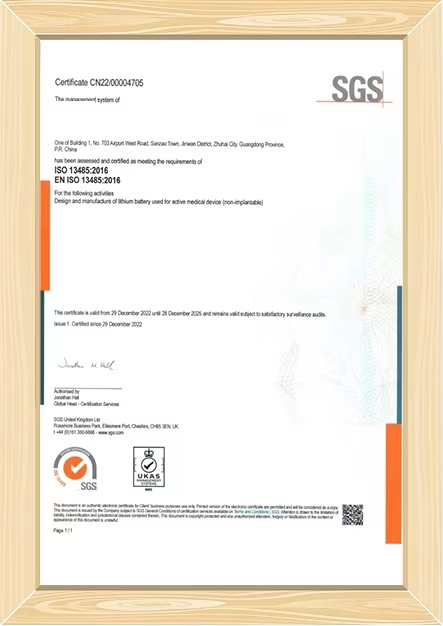
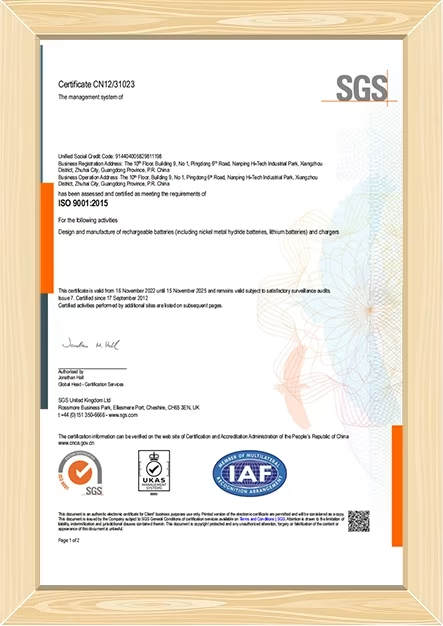
SGS Audited ISO Factory & Product Certification Credentials

ISO 13485 Medical Device Quality Management System Certificate
ISO 13485:2016 (Medical Quality)
ISO 9001 Quality Management System Certificate
ISO 9001:2015 (Quality System)
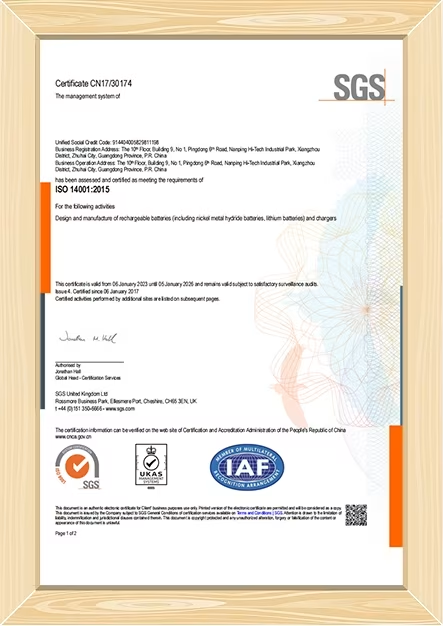
ISO 14001 Environmental Management System Certificate
ISO 14001:2015 (Environmental)
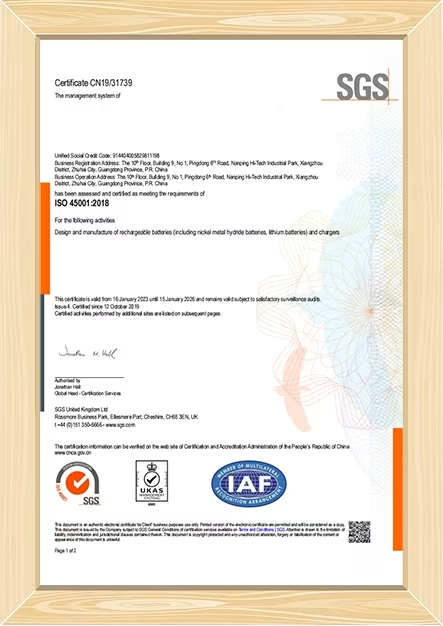
ISO 45001 Occupational Health and Safety Certificate
ISO 45001:2018 (Safety Standards)
Product Certifications UL CE RoHS UN38.3 IEC FCC
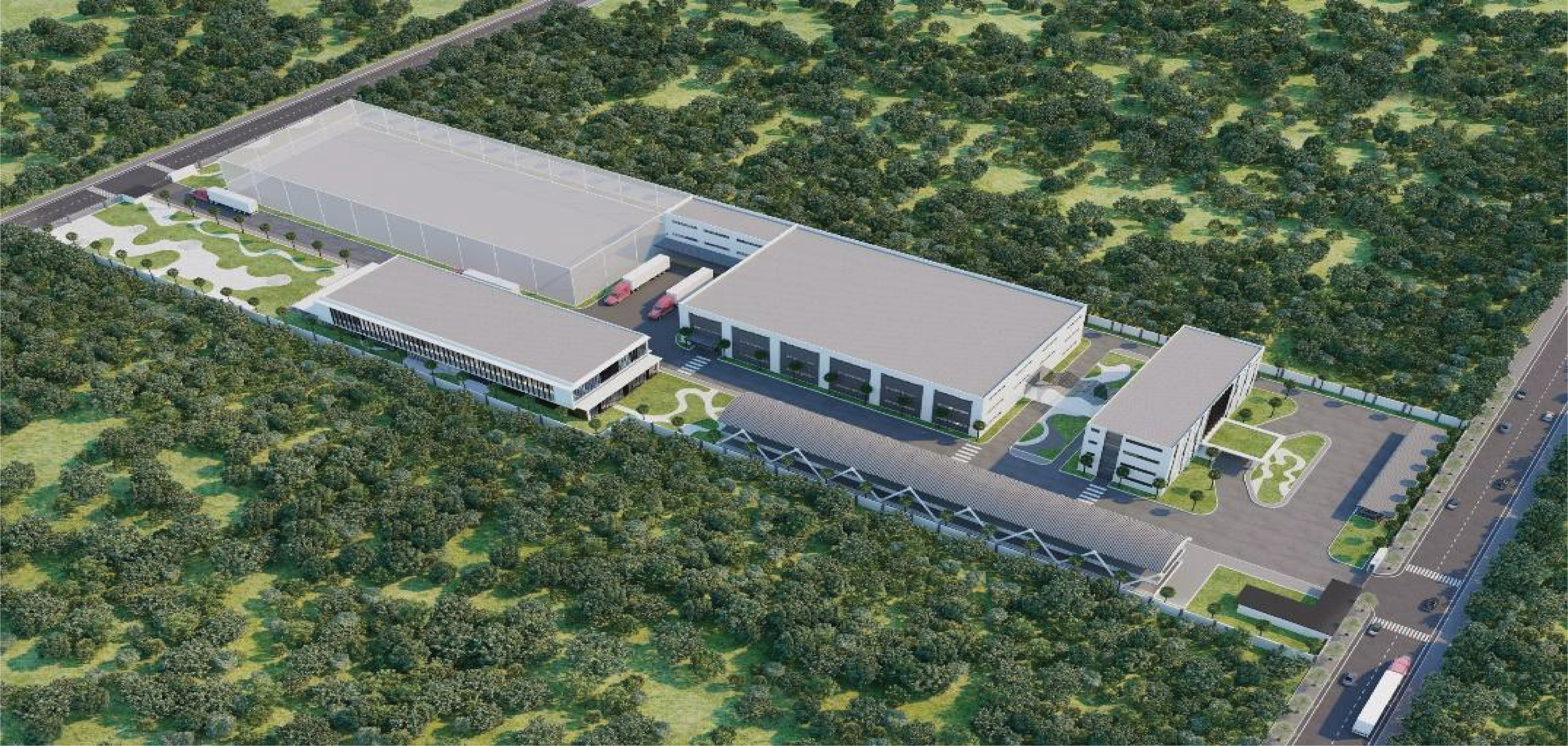
APEX Mobile Power Industrial Battery Manufacturing Campus Aerial View

Partner with China's Premier Battery Module Exporter

Looking for custom 18650/21700/4680 cylindrical lithium modules equipped with high-efficiency active equalization BMS? Consult directly with our battery design engineers today.

Inquire Now