High-density lithium battery modules, capacitive/inductive active balance equalizers, and turnkey smart BMS protection boards engineered for zero-latency UPS switching and extended cyclic life.
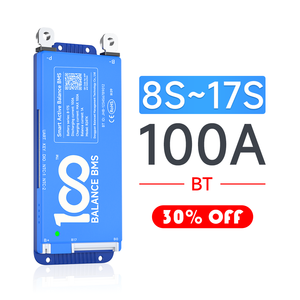
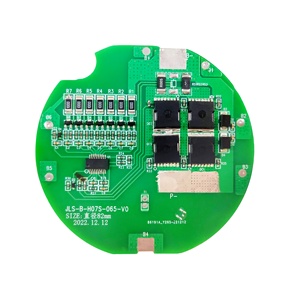
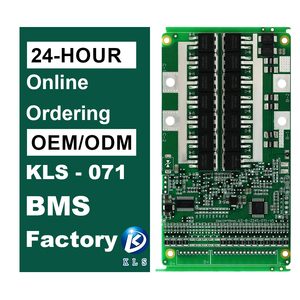
In mission-critical enterprise power infrastructure—such as hyperscale data centers, medical telemetry rooms, industrial automation controls, and telecom towers—uninterruptible power supplies (UPS) represent the first line of defense against catastrophic power interruptions, micro-outages, and grid sag events. Historically reliant on Valve-Regulated Lead-Acid (VRLA) batteries, the global industrial sector is undergoing a rapid paradigm shift toward advanced CE Certified UPS Backup Lithium Battery Packs. Engineered with high-energy-density Lithium Iron Phosphate (LiFePO4) or Nickel Manganese Cobalt (NMC) chemistry, lithium-based UPS solutions offer triple the power density, one-third the footprint, and an extended operational lifespan exceeding 10 to 15 years.
Procurement directors and chief engineers must evaluate total cost of ownership (TCO) rather than upfront capital expenditure. VRLA systems degrade rapidly under elevated ambient temperatures, requiring climate-controlled enclosures at 20°C and battery replacements every 3–5 years. Conversely, CE-certified lithium UPS packs maintain operational integrity up to 55°C, reducing cooling HVAC power consumption by up to 40% while eliminating routine battery refresh cycles.
| Technical Parameter | Legacy VRLA / AGM Battery | CE Certified LiFePO4 UPS Pack | APEX Active Balance LiFePO4 System |
|---|---|---|---|
| Energy Density (Wh/kg) | 30 - 45 Wh/kg | 140 - 170 Wh/kg | 160 - 190 Wh/kg (Optimized) |
| Cycle Life (80% DoD) | 300 - 500 Cycles | 3,500 - 5,000 Cycles | 6,000+ Cycles (Active Balanced) |
| Discharge C-Rate (Continuous) | 1C - 2C (High Voltage Drop) | 3C - 5C (Stable Curve) | 5C - 10C High-Pulse Output |
| BMS & Equalization | None (Passive String Drift) | Standard Passive Balancing (50mA) | Capacitive/Inductive 2A-5.5A Active Balance |
| Operating Temp Range | 0°C to 25°C (Strict) | -20°C to 55°C | -20°C to 60°C (Automotive-Grade) |
| Compliance Standards | Basic CE / UL | CE, IEC 62619, UN38.3 | CE-EMC, CE-LVD, ISO 13485, IATF 16949 |
The bottleneck of multi-cell series battery arrays (e.g., 16S 48V, 64S 200V, or 192S 600V UPS topologies) is the "weakest cell phenomenon." Manufacturing variations in internal resistance (IR) and capacity cause cell voltage divergence over repeated high-current charge/discharge cycles. In a standard system with passive balancing, excess energy is bled off as heat through resistors at low currents (typically 30mA to 100mA). This passive heat dissipation is dangerously inefficient for high-density UPS racks, causing localized hot spots and failing to correct severe cell imbalance during rapid zero-latency power transfers.
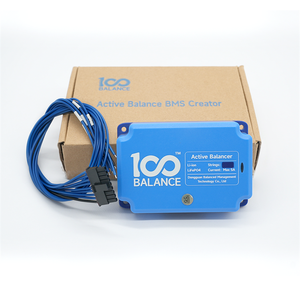
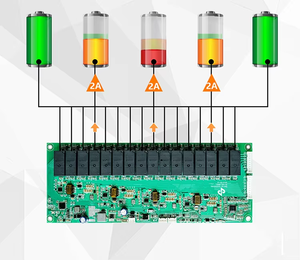
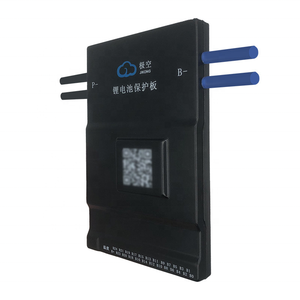
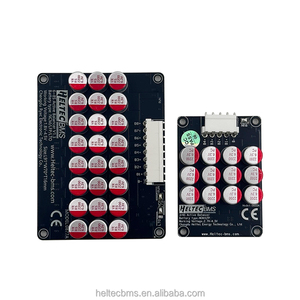
Next-generation CE certified UPS suppliers implement non-destructive dynamic energy transfer balancing using capacitive or transformer-coupled inductive architecture. Advanced active balancers—such as 5A to 5.5A high-current equalizers and JIKONG / Seplos smart BMS units featured in our recommendations—transfer energy directly from higher-voltage cells to lower-voltage cells with energy efficiency exceeding 92%.
P_loss = I_balance^2 * R_bleed (Converted entirely to unwanted heat inside enclosure)E_transfer = (V_target * I_transfer * t) * η_DC-DC (where η > 92%)Furthermore, smart BMS boards with integrated CANBUS, RS485, and Modbus communication protocols transmit real-time telemetry (individual cell voltage, temperature coefficient, SOC, SOH, and IR metrics) directly to Central Uninterruptible Power System Controllers and Enterprise Data Center Infrastructure Management (DCIM) platforms.
As global power grids face increased strain from renewable energy intermittency and AI-driven data center expansion, enterprise buyers must align their procurement strategies with four key industry trends shaping the 2025–2030 battery ecosystem:
Modern enterprise UPS systems are shifting from low-voltage 48V designs to centralized high-voltage DC bus architectures (384V to 512V DC). Higher string voltages reduce line current, dramatically cutting copper cabling losses, heat generation, and footprint within server room racks.
Regulatory enforcement across Europe, North America, and APAC demands self-extinguishing flame-retardant enclosures (UL94-V0) and rigorous testing for electrical safety under CE LVD (IEC 62619 / EN 62477-1) and EMC immunity (EN 61000-6-2 / EN 61000-6-4) to prevent RF interference with medical and communications hardware.
Future-proof UPS battery suppliers integrate IoT gateways and machine learning algorithms directly into the BMS PCBA. By analyzing subtle cell voltage drop patterns during monthly automated self-tests, the system predicts cell failure 6 months before catastrophic shutdown occurs.
While LiFePO4 remains the benchmark for energy density and safety, Sodium-ion (Na-Ion) cell chemistry is emerging for low-temperature environments (-40°C to 0°C) and cost-sensitive backup applications, providing superior thermal stability and rapid C-rate charge acceptance.
Forward-thinking enterprises are configuring backup UPS systems to perform daily Virtual Power Plant (VPP) duties—discharging stored battery energy during peak tariff hours to cut grid costs, then instantly reserving zero-latency capacity for emergency backup.
Tier-1 OEM buyers require complete supply chain transparency—from ethical lithium/cobalt extraction certificates to ISO 14001 carbon footprint audits and IATF 16949 quality control in contract manufacturing facilities.
As a specialized custom lithium battery pack manufacturer backed by over 14 years of power systems engineering, APEX Mobile Power bridge the gap between high-level client specifications and mass-scale certified production. Our global manufacturing footprint spans advanced ISO-accredited production facilities, full-turnkey SMT PCB assembly lines, and specialized lithium battery testing labs.
Independently audited and certified by SGS: ISO 9001:2015 (Quality Management), ISO 13485:2016 (Medical Device Quality), ISO 14001:2015 (Environmental Management), and ISO 45001:2018 (Occupational Health & Safety).
Over 60 dedicated hardware, software, and mechanical engineers reinvesting 8% of annual revenues into battery management technology, thermal simulation, electro-chemical modeling, and firmware optimization.
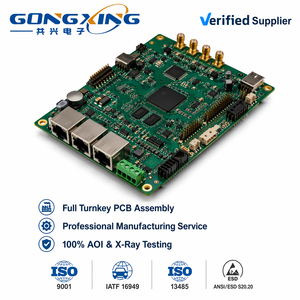
From component sourcing, high-precision surface mount technology (SMT), automated optical inspection (AOI), to ultrasonic aluminum ribbon bonding and laser spot welding—every step is controlled under strict SPC protocols.
A genuine CE Certification for industrial UPS lithium battery systems requires compliance with two mandatory European Directives: the Low Voltage Directive (LVD 2014/35/EU) certified under standards EN 62619 / IEC 62619 (safety requirements for industrial lithium secondary cells and packs) or EN 62477-1, and the Electromagnetic Compatibility Directive (EMC 2014/30/EU) under EN 61000-6-2 and EN 61000-6-4. Furthermore, for global maritime and air transport, packs must hold a valid UN38.3 test summary, drop test compliance, and MSDS paperwork.
UPS systems must deliver instantaneous high-current pulse discharge (up to 10C) upon main power failure. If cell capacities or voltages drift apart over time, the weakest cell reaches its low-voltage cutoff first, triggering the BMS to shut down the entire UPS battery string immediately. Standard passive balancing (which bleeds tiny milliamps through resistors) cannot equalize heavy cell drift under high duty cycles. Active balancing transfers up to 5.5A between cells continuously during both charge and standby states, maintaining precise voltage equilibrium (within ±0.005V) across all cells and preventing unexpected UPS trips.
In most cases, yes. Our custom OEM LiFePO4 battery modules are engineered to match standard 19-inch and 23-inch rack-mount chassis dimensions and nominal DC voltages (e.g., 48V, 192V, 384V). However, because lithium batteries have significantly lower internal resistance and charge acceptance profiles than lead-acid units, the existing UPS inverter/charger parameters (float voltage, bulk charge voltage, and temperature compensation routines) must be calibrated or connected via RS485/CANBUS to communicate directly with our Smart BMS.
Safety is built into multiple physical and electronic layers: (1) We utilize premium Grade-A LiFePO4 cells with inherently stable crystal structures that do not release oxygen up to 500°C; (2) Mechanical cell spacing with anti-vibration ceramic insulation spacers prevents thermal propagation; (3) Hardware-level dual-FET protection disconnects the circuit within 10 microseconds upon over-current or short-circuit detection; and (4) Multi-point NTC temperature sensors monitor cell terminals, power MOSFETs, and ambient air inside the casing.
For custom engineering projects, concept formulation, CAD enclosure modeling, and BMS firmware customization typically take 2 to 3 weeks. Prototyping and initial sample verification require 3 to 4 weeks. Following sample approval and CE/UN38.3 certification verification, mass production lead times generally range between 4 and 6 weeks depending on volume, cell availability, and enclosure finishing requirements.
Capacitive active balancers use high-frequency capacitor switching networks to equalize charge across adjacent cells. They excel in continuous low-to-medium differential balancing and offer compact board footprints. Inductive active balancers utilize micro-transformers to transfer energy between non-adjacent cells across the entire battery string, making them superior for high-voltage multi-series strings (e.g., 16S to 24S) with higher current differentials (up to 5A+). Our engineers assist in selecting the optimal topology based on your UPS string configuration.