APEX Mobile Power — Custom OEM Lithium Battery Solutions  |  ISO 9001 · ISO 13485 · ISO 14001 Certified  |  Engineered for Performance

CE Certified Solid-State Lithium Battery Module Factories & Factory

Global OEM/ODM Technical Whitepaper: Engineering High Energy Density, Thermal Stability & Active Balance Battery Systems for Next-Generation B2B Applications

The Paradigm Shift in Energy Storage Architecture

How CE-Certified Solid-State Battery Modules and Intelligent Active Balancing BMS Systems Are Overcoming the Physical Limitations of Conventional Liquid Electrolytes.

The global industrial and energy storage sectors stand at the precipice of a monumental technological transition. Traditional lithium-ion battery modules—relying on volatile liquid organic electrolytes—are rapidly approaching their theoretical energy density ceiling (approx. 260–300 Wh/kg) while presenting inherent thermal runaway risks under high C-rate operational stress. To address the rigorous safety, longevity, and volumetric requirements of modern B2B deployments, high-tech OEM/ODM manufacturing facilities are commercializing CE Certified Solid-State Lithium Battery Modules paired with advanced capacitive active balancing BMS platforms.

Solid-State Battery (SSB) technology replaces flammable liquid electrolytes with non-flammable solid ion conductors (such as inorganic garnet-type oxides LLZO, sulfide matrices LPS, or structured polymer electrolytes PEO). When integrated into modular industrial power packs, solid-state chemistries eliminate dendrite-induced internal short circuits, withstand operating temperatures up to 200°C without thermal degradation, and push cell-level gravimetric energy densities beyond 400 Wh/kg. However, managing multi-cell solid-state modules requires ultra-precise, continuous active cell balancing to guarantee longevity and cycle uniformity across high-voltage strings.

450+
Wh/kg Energy Density
5000+
Deep Cycle Lifespan
5.5A
Active Balance Current
100%
CE & ISO Compliance

CE Certified Solid-State & Active Balance Modules

High-precision battery management boards, equalization modules, and smart BMS solutions engineered by top-tier certified facilities for demanding commercial applications.
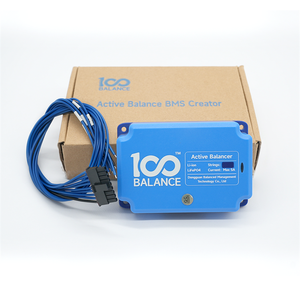
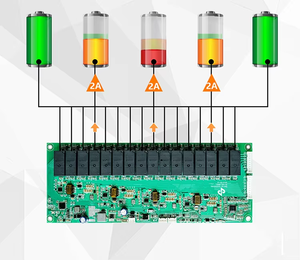
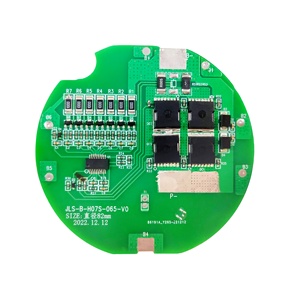
High Efficiency Active Balance Equalizer Balancing Capacitive Lifepo4 48v

5A Active Capacitive Balancer Equalizer for 48V LiFePO4 / Solid-State & NMC Cells

  • Capacitive energy transfer technology
  • 5A dynamic active balancing current
  • Supports 48V nominal module strings
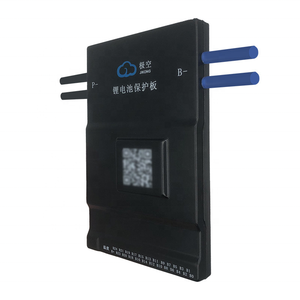
BMS 3.0 Standard Seplos Bms 3.0 Active Balancer Lifepo4 Battery

Seplos BMS 3.0 Active Balancer Board for Solid-State & Lithium Modules

  • Integrated cell protection architecture
  • Low static power dissipation (<10mA)
  • Precision voltage matching accuracy ±5mV
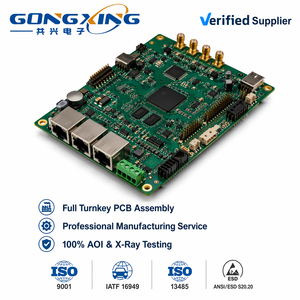
IATF 16949 Grade Smart BMS Battery Management System PCBA

Smart BMS PCBA & Active Balancing Assembly (Turnkey OEM/ODM Factory)

  • Full Turnkey SMT & DIP manufacturing
  • Automotive-grade hardware architecture
  • Custom CANbus / RS485 / Bluetooth communication
GPS / Display Ready JIKONG JK-BD6A24S15P Smart Active Balancer BMS

JIKONG JK-BD6A24S15P 150A Smart BMS with 0.6A Active Balancer (7S-24S)

  • Continuous 150A discharge rating
  • Supports 7S to 24S series cell configurations
  • Integrated LCD telemetry & GPS cloud tracking
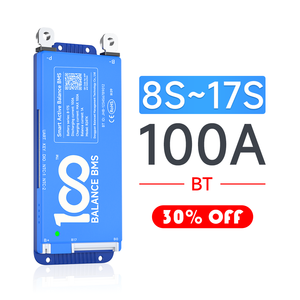
100A High Current Smart Active Balancer battery Protection Board BMS 100a 48v 16s

Smart Active Balancer Protection Board 100A 48V 16S BMS System

  • Designed for 16S 48V industrial battery banks
  • Active energy-transfer balancing engine
  • Comprehensive short-circuit and overcurrent trip
64S E-Bicycle / AGV KLS Battery Management System BMS KLS-BMS-045 64s 120A

KLS-BMS-045 64S 120A Active Balancing System in Aluminum Enclosure

  • High-voltage 64S industrial architecture
  • 2A dynamic active balance equalization
  • Ruggedized aluminum heat-sink chassis
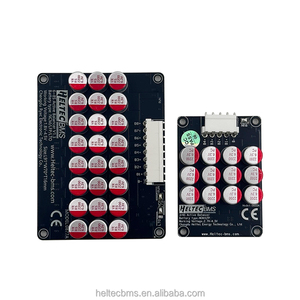
5.5A Max Transfer Heltec 4S To 21S Active Balancer 5.5A Battery Equalizer

Heltec 4S to 21S Energy Transfer Active Equalizer Module (5.5A Current)

  • Universal LiFePO4 / Li-ion / LTO / Solid-State support
  • Inductive energy transfer mechanism
  • Ultra-low operational resistance MOSFETs
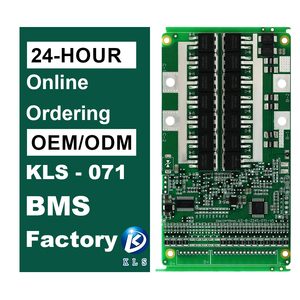
Home ESS Ready KLS Smart BMS 16S 48V 100A 150A LiFePO4 Home Energy Storage

KLSKF-071 16S 48V 100A/150A Smart BMS for Home Energy Storage Systems

  • Designed for stationary ESS storage racks
  • Supports multi-pack parallel expansion
  • Active cell voltage deviation auto-correct

Solid-State vs. Legacy Liquid Electrolyte Systems

Detailed technical breakdown comparing electrochemical behavior, thermal runaway thresholds, and active balancing demands across modern lithium module architectures.

Performance Parameter Conventional Liquid NMC/LFP Semi-Solid Electrolyte Module CE-Certified Solid-State Module
Electrolyte Medium Liquid Organic Carbonate Solvents Hybrid Polymer-Gel / Liquid <5% Solid Inorganic Oxide / Sulfide / Polymer
Gravimetric Energy Density 180 – 260 Wh/kg 300 – 350 Wh/kg 380 – 500 Wh/kg
Thermal Runaway Start Temp 130°C to 150°C 180°C to 220°C > 300°C (Non-flammable)
Operable Temperature Range -20°C to +55°C -30°C to +65°C -40°C to +85°C
Cycle Life (80% DoD @ 1C) 2,000 – 3,500 Cycles 3,500 – 4,500 Cycles > 5,000 – 8,000 Cycles
Required BMS Balancing Type Passive Dissipative (50mA-100mA) Hybrid Active/Passive High-Current Active (2A-5.5A Capacitive)
Volumetric Efficiency (Cell-to-Pack) 45% – 55% 60% – 70% 75% – 85% (Direct CTP Assembly)

Why Active Balancing is Imperative for Solid-State Modules

While solid-state cells eliminate separator degradation and fluid leakage, solid-state electrolyte interfaces exhibit micro-scale volumetric expansion during lithiation and delithiation cycles. Over hundreds of high-rate charge-discharge cycles, minor impedance variations between cells can lead to state-of-charge (SoC) divergence. Conventional passive balancing bleeds off excess energy as heat—adding unwanted thermal loads to dense battery enclosures. In contrast, capacitive active energy transfer balancers (ranging from 1.2A to 5.5A) dynamically shift excess charge from higher-voltage cells to lower-voltage cells with over 92% efficiency. This maintains string uniformity, prevents premature low-voltage cutoff triggers, and extends usable module capacity by 12% to 18% over lifetime usage.

World-Class Manufacturing Infrastructure

Leveraging 14+ years of precision engineering, state-of-the-art SMT automation, and stringent multi-stage ISO quality assurance protocols.

APEX Mobile Power Modern Battery Manufacturing Complex

End-to-End Battery Engineering & Customization

Our global manufacturing campus integrates vertical production capabilities—ranging from battery management system (BMS) software architecture and hardware SMT assembly, to mechanical structural housing design and high-voltage module laser welding.
  • 60+ Dedicated R&D Engineers spanning electrochemistry, firmware design & mechanical validation.
  • 8% Annual Revenue Reinvested directly into advanced solid-state R&D laboratories.
  • 3,000+ Completed Projects delivered to global OEMs in medical, UAV, robotics, and industrial energy fields.
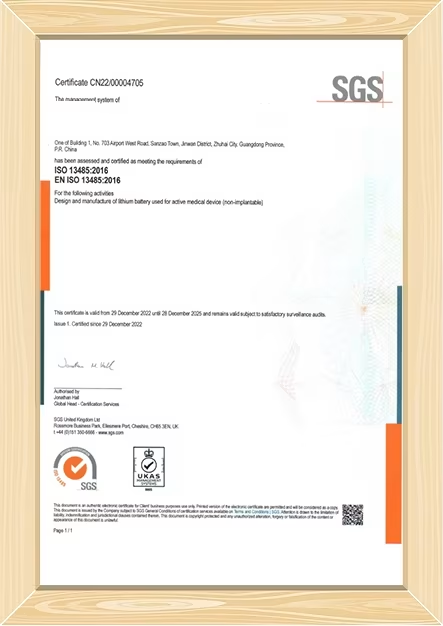
ISO 13485 Certification
ISO 13485:2016 Medical Quality System
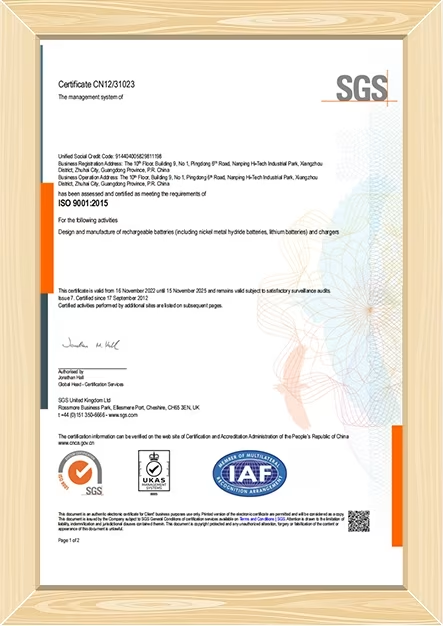
ISO 9001 Certification
ISO 9001:2015 Quality Management
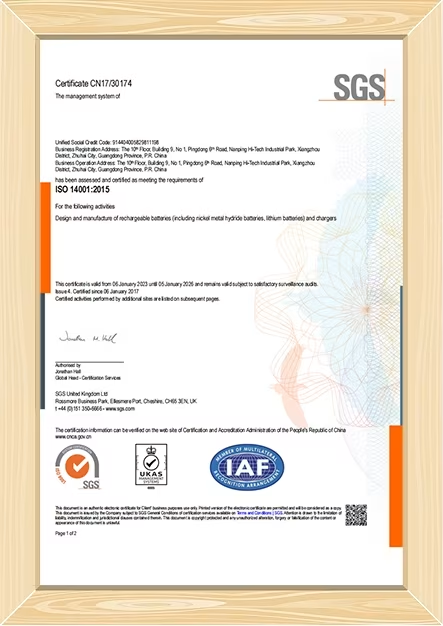
ISO 14001 Certification
ISO 14001:2015 Environmental System
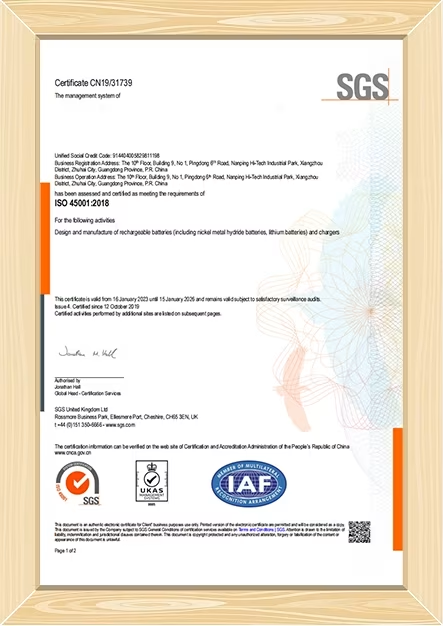
ISO 45001 Certification
ISO 45001:2018 Occupational Health
Global Battery Product Compliance Certifications: CE, UL, RoHS, UN38.3, IEC

Future Procurement Trends in Lithium Battery Modules

Key global supply chain shifts, regulatory drivers, and procurement strategies shaping international OEM battery acquisition over the next decade.

1. Mandatory CE & EU Battery Passport Compliance

Enforcement of the EU Battery Regulation (2023/1542) requires full digital transparency. Future B2B procurement will require battery modules certified to CE marking standards (EN 62619, IEC 62133-2) equipped with digital passports recording recycled content percentages, supply chain origin, and carbon footprint telemetry.

2. Shift to Cell-to-Pack (CTP) Modular Architectures

Tier-1 OEM buyers are abandoning intermediate module brackets in favor of direct Cell-to-Pack (CTP) and Cell-to-Chassis (CTC) solid-state integration. Eliminating module housing hardware improves structural energy density by 15-20% while reducing total manufacturing bill-of-materials (BOM) costs.

3. Universal AI-Driven Smart BMS Integration

Procurement contracts are prioritizing BMS solutions embedded with machine-learning algorithms. Real-time Remaining Useful Life (RUL) estimation, edge computing for thermal forecasting, and dynamic high-current active balancing prevent single-cell bottlenecking in complex enterprise battery installations.

4. Supply Chain Resilience & Multi-Geo Sourcing

Global supply chain disruptions have heightened demand for battery factories with dual-region production facilities. OEM procurement managers are partnering with suppliers that maintain automated assembly hubs across both Asia and North America/Southeast Asia to mitigate tariff impacts and logistical risks.

Technological Roadmap of Solid-State Battery Modules

Exploring the upcoming electrochemical breakthroughs, interface stabilization techniques, and ultra-high-density module designs currently undergoing industrial commercialization.

Silicon-Carbon & Lithium-Metal Anode Integration

Transitioning from pure graphite anodes to pure lithium-metal foils or high-capacity silicon-carbon (Si/C) composite anodes. This innovation increases volumetric capacity up to 1,000 Wh/L, enabling ultra-compact footprints for medical devices, UAVs, and electric aviation.

Interfacial Resistance & Pressure Engineering

Solid-solid solid-electrolyte interfaces suffer from high contact impedance. Next-generation module factories are integrating internal elastic pressure pads and atomic layer deposition (ALD) nano-coatings to maintain solid contact across thermal contraction cycles without degrading cell structure.

Ultra-Fast Charging (>4C Rate) Capability

By optimizing the ionic conductivity of sulfide-based solid electrolytes (exceeding 10⁻² S/cm), solid-state battery modules will support 4C to 6C ultra-fast charging rates (80% charge in 10-15 minutes) without the micro-dendrite formation risks present in conventional wet lithium cells.

Frequently Asked Questions by OEM & Engineering Buyers

Expert answers addressing regulatory certification, customization workflows, factory quality control, and technical specifications for solid-state battery modules.

What specific testing standards are required for a CE certified solid-state lithium battery module?
To achieve full CE certification for commercial and industrial entry into the European Economic Area, a solid-state lithium battery module must comply with the Low Voltage Directive (2014/35/EU) and Electromagnetic Compatibility Directive (2014/30/EU). Mandatory underlying testing standards include EN 62619 (safety requirements for industrial lithium batteries), IEC 62133-2 (portable battery safety), UN 38.3 (transportation safety testing covering altitude, thermal test, vibration, shock, external short circuit, and impact), and EN 61000-6-2/4 for immunity and emission standards of integrated BMS electronics.
How does solid-state module safety compare to traditional LiFePO4 and NMC modules during extreme physical abuse?
Under severe physical puncture, crushing, or nail penetration tests, traditional liquid electrolyte NMC cells experience immediate separator breakdown, causing rapid exothermic reactions, flammable gas release, and thermal runaway exceeding 800°C. Solid-state modules utilize non-flammable ceramic or solid polymer electrolytes that eliminate volatile organic solvents. Even under heavy mechanical deformation or high-voltage overcharging, solid-state cells exhibit zero open-flame ignition and minimal temperature elevation, ensuring safety for critical medical, aviation, and indoor energy storage systems.
Why is dynamic active balancing crucial for high-voltage solid-state battery packs compared to passive balancing?
Solid-state battery chemistries operate with strict voltage windows. Passive balancing bleeds off excess cell energy through resistive heat dissipation, typically limited to low currents (50mA to 200mA). This generates unwanted thermal dissipation inside sealed module enclosures. Active balancers utilize high-frequency capacitive or inductive energy transfer circuits to move balance currents up to 5.5A directly from high-voltage cells to lower-voltage cells. This non-thermal energy transfer equalizes cell voltages up to 100 times faster, maximizes total usable pack capacity, and eliminates localized hot spots.
What is the typical NRE (Non-Recurring Engineering) workflow for custom OEM battery module development?
Custom OEM battery module projects follow a structured 5-phase NRE engineering path:
  1. Requirement Specification: Definition of volumetric space, voltage/capacity specs, peak C-rates, IP rating, and communication protocols (CANopen, Modbus, SMBus).
  2. 3D Mechanical & Electrical Architecture: Thermal simulation, enclosure CAD modeling, custom PCB layout, and active BMS integration.
  3. Prototype Assembly & DFM Verification: Rapid tooling, sample pack assembly, and Design for Manufacturing review.
  4. Compliance & Qualification Testing: UN38.3, CE, IEC, and drop/vibration/thermal cycling laboratory validation.
  5. Mass Production & Quality Audit: Production line setup with 100% automated EOL (End-of-Line) testing and ISO audit signoff.
What quality management certifications should global buyers verify when auditing a battery factory?
Enterprise buyers should mandate that manufacturing facilities possess accredited third-party audit certifications (such as SGS, TÜV, or DEKRA). Essential certifications include ISO 9001:2015 for overall quality management, ISO 13485:2016 for medical device battery manufacturing, IATF 16949 for automotive-grade electronic assembly, ISO 14001:2015 for environmental compliance, and ISO 45001:2018 for occupational health and safety.
How does temperature affect solid-state lithium battery performance, and how is it managed?
At sub-zero temperatures (-20°C to -40°C), solid-state electrolyte ionic conductivity decreases slightly more than liquid electrolytes. To offset this, advanced solid-state modules incorporate embedded PTC heating films or micro-channel thermal plates managed directly by the BMS. At elevated temperatures (+60°C to +85°C), solid-state cells maintain structural integrity where liquid cells would suffer rapid gas swelling and degradation, making solid-state modules superior for high-temperature industrial tools, heavy equipment, and aerospace environments.

Partner with a Certified Solid-State Battery Factory

Direct factory OEM/ODM engineering support. Request custom battery module design, technical datasheets, CE compliance reports, or production sample quotes today.

Inquire Now