CE Certified Rechargeable Aviation Drone Battery Pack Supplier & Suppliers
Next-Generation OEM/ODM Lithium Energy Solutions, Smart BMS Integration, and Active Balancing Systems for UAVs and eVTOL Aerospace
Certified Aviation & High-Rate Drone Battery Systems
Engineered for intense discharge cycles, precision cell balancing, and uncompromised flight safety. Explore our featured line of CE-compliant rechargeable power architectures and active balance BMS components.
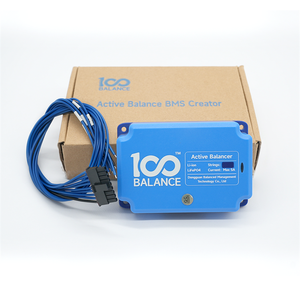
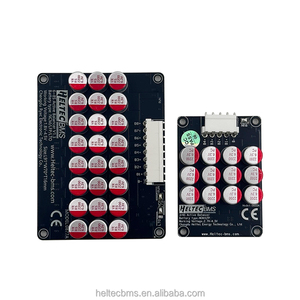
Active Balance Equalizer Balancing Capacitive Lifepo4 48v Livepo4 Cell Nmc 100balance 5A Active Balancer For Lithium Battery
Aviation Drone Energy Architectures: The Criticality of CE-Certified Lithium Battery Engineering
Unmanned Aerial Vehicles (UAVs), electric Vertical Take-Off and Landing (eVTOL) aircraft, and tactical commercial drones operate at the intersection of stringent safety standards and brutal energy density requirements. Unlike stationary storage solutions, aviation energy systems operate under continuous extreme vibrational stress, violent thermal swings (-20°C to 60°C), and severe discharge demands, often exceeding 5C to 25C pulse bursts during takeoff maneuvers. Sourcing from a certified CE certified rechargeable aviation drone battery pack supplier is not merely a regulatory checkmark—it is the baseline engineering prerequisite for mission-critical reliability and airborne asset preservation.
In high-altitude payload operations, gravimetric energy density (Wh/kg) dictates endurance, while volumetric energy density (Wh/L) determines aerodynamic efficiency. Modern lithium-ion (NMC) and Lithium Iron Phosphate (LiFePO4) chemistries custom-engineered for drone platforms must balance cell impedance, heat dissipation, and cycle longevity. Achieving European Conformity (CE) marking alongside UN 38.3 transport compliance and DO-311A aerospace guidelines demands full traceability from raw cathode powder synthesis down to the smart Battery Management System (BMS) logic gate design.
Technical Reality Check: A standard battery failure in a terrestrial device results in operational shutdown; in an aviation drone, it results in catastrophic airframe loss. Active capacitive balancing and ultra-low internal resistance cell pairing prevent voltage imbalance collapse under dynamic load spikes.
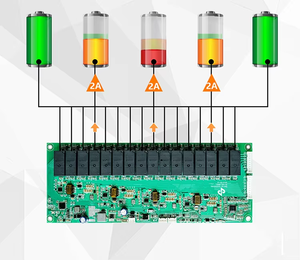
To eliminate single-point operational vulnerabilities, elite OEM suppliers integrate active capacitive cell equalizers capable of shuttling balancing currents up to 5A between series-connected cells. Traditional passive balancing dissipated excess energy as waste heat—a dangerous approach inside sealed carbon-fiber drone bays. Modern capacitive energy-transfer equalization dynamically transfers energy from higher-potential cells to lower-potential cells with over 92% efficiency, maintaining pack balance down to <5mV delta during rapid discharge cycles.
Our engineering ecosystem combines ISO-certified manufacturing precision with advanced electro-chemical research, ensuring your aerospace platform receives tailored energy solutions backed by proven tier-1 expertise.
Certified Multi-System ISO Facilities
Audited and certified by SGS, our production operates under ISO 9001:2015 (Quality Management), ISO 13485:2016 (Medical & High-Reliability Devices), ISO 14001:2015 (Environmental Management), and ISO 45001:2018 (Occupational Health & Safety).
14+ Years Aviation & Industrial Mastery
Over a decade of specialization in custom lithium battery module design, delivering over 3,000 tailored battery packs for commercial UAVs, autonomous delivery drones, robotics, and high-altitude monitoring systems across global markets.
Proprietary Active Balancing BMS Tech
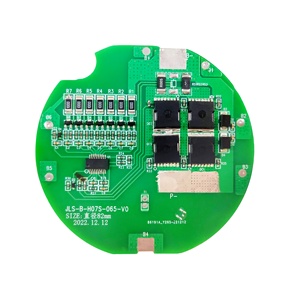
Full turnkey PCBA assembly service equipped with active balance equalizers (0.6A to 5.5A balance current), real-time telemetry logging, GPS positioning integration, and CANbus/SMBus/UART communication protocols.
High-C Discharge & Thermal Control
Deep optimization for 10C–30C high-discharge aviation demands. Featuring phase-change insulation materials, aluminum heat sinks, and cellular thermal barrier layers to stop thermal runaway propagation.
8% Revenue Reinvested in R&D
Powered by an in-house R&D team of over 60 senior engineers focusing on next-gen solid-state battery integration, sodium-ion modules, and AI-driven predictive health algorithms for battery state-of-health (SoH).
Global Regulatory Compliance
Full compliance testing provided for CE, UL 1642, UL 2054, UN 38.3, IEC 62133-2, RoHS, and MSDS documentation, allowing frictionless international deployment and air cargo logistics readiness.
Strategic B2B Procurement & Future Development Trends in Aviation Batteries
As the commercial drone industry transitions from manual visual-line-of-sight (VLOS) operations to fully autonomous Beyond Visual Line of Sight (BVLOS) logistics, the procurement criteria for B2B drone battery buyers are undergoing a fundamental shift. Procurement managers can no longer evaluate suppliers solely on upfront watt-hour costs. The global landscape demands evaluating total cost of ownership (TCO), safety lifecycle metrics, energy density roadmaps, and software telemetry intelligence.
1. Shift from Passive Protection to Dynamic Active Balancing Architectures
Historically, drone battery packs relied on rudimentary passive balancing boards that bled excess voltage off higher cells through resistive heating during charge cycles. In modern high-cell-count packs (7S to 24S, 48V to 100V platforms), passive balancing is mathematically incapable of keeping up with cell drift under high-rate discharges. Future procurement contracts increasingly specify dynamic capacitive or inductive active balancing BMS solutions capable of 2A to 5.5A equalization currents. Active balancing continuously shifts charge between cells during both charge AND flight discharge phases, effectively reclaiming lost pack capacity, extending flight times by up to 15%, and expanding overall pack cycle life from 300 cycles to over 1,000 cycles.
2. Transition to Solid-State and Semi-Solid Electrolyte Chemistries
While traditional liquid electrolyte NMC (Nickel Manganese Cobalt) lithium-ion cells dominate today's aviation market due to high initial energy density (250–280 Wh/kg), the risk of liquid electrolyte flammability remains an airborne concern. Next-generation procurement specs are aligning with semi-solid state battery modules. Semi-solid state chemistry elevates gravimetric density beyond 350 Wh/kg while eliminating free-flowing volatile organic solvents. This transition allows commercial payloads to double flight radius while vastly decreasing thermal runaway risks under penetration or structural shock events.
Modern aviation battery packs are turning into intelligent IoT endpoints. Leading B2B procurement tenders now demand smart BMS PCBA modules equipped with integrated MCU memory, CANbus/SMBus interfaces, GPS modules, and Bluetooth/LoRa connectivity. By capturing real-time cell impedance, temperature gradient curves, state of charge (SoC), and cycle count profiles, flight controllers can dynamically recalculate return-to-base (RTB) margins in mid-air. Cloud-based fleet maintenance engines leverage this telemetry to retire aging battery packs automatically before cell degradation causes mid-flight voltage dips.
4. Demand for Modular, Swappable High-Voltage Packs for Automated Docking Hubs
Autonomous drone delivery networks rely heavily on robotic ground docking stations equipped with automated battery swapping arms. Procurement trends favor standardized, modular high-voltage (12S–16S LiFePO4 / NMC) battery packs equipped with heavy-duty blind-mate connectors and anti-spark circuitry. Packs must withstand rapid mechanical insertion, fast-charging protocols (up to 4C charge rates), and immediate re-deployment without thermal accumulation.
Procurement Directive: When selecting a rechargeable aviation drone battery pack supplier, verify their capability to provide custom PCBA layouts, IP67 enclosure sealing, and automated cell-matching data reports to ensure seamless integration with automated swapping infrastructure.
Comparative Analysis: Battery Chemistries & BMS Equalization Methods for UAVs
Selecting the optimal battery composition and balancing mechanism involves evaluating flight performance trade-offs. The technical matrix below highlights the core differences across major aviation battery choices:
Chemistry / Feature
High-Rate Aviation NMC
Aviation LiFePO4 (LFP)
Semi-Solid State
Energy Density (Wh/kg)
240 – 290 Wh/kg
160 – 190 Wh/kg
320 – 400 Wh/kg
Continuous Discharge Rate
10C – 25C (Pulse up to 40C)
3C – 5C (High Thermal Stability)
5C – 15C
Cycle Life (80% DoD)
400 – 600 Cycles
2,500 – 4,000+ Cycles
800 – 1,200 Cycles
Thermal Runaway Temp
~210°C
~270°C – 300°C
> 400°C (Non-flammable)
Recommended Balancing
5A Active Balance Equalizer
0.6A – 2A Active BMS
Integrated Smart Active BMS
Primary Application
Heavy-lift UAV, Racing, eVTOL
Long-endurance Inspection, AGV
BVLOS Military & Medical UAV
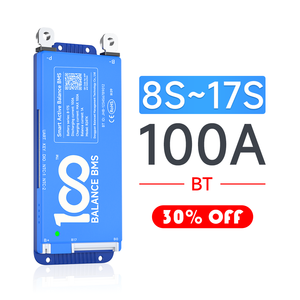
As demonstrated in the comparison matrix, while high-rate NMC provides maximum punch for payload lifting, it requires rigorous cell balancing to prevent rapid capacity degradation. Using an advanced active balancer like the Heltec 5.5A Capacitor Energy Transfer Balancer or JK Smart BMS with 150A Continuous Current and Active Balance offsets cell degradation by transferring energy directly across cells during flight, eliminating the localized heat generation associated with passive resistors.
Frequently Asked Questions (Procurement FAQ)
Expert technical insights addressing key engineering, compliance, customization, and logistics questions raised by enterprise procurement officers.
Q1: What specific certifications are mandatory for importing aviation drone battery packs into European and North American markets?
For European deployment, batteries must carry the CE marking, proving compliance with EN 62133-2 (safety requirements for portable sealed secondary cells). For air transport globally, UN 38.3 certification (including altitude simulation, thermal test, vibration, shock, external short circuit, impact, overcharge, and forced discharge) is mandatory. US markets frequently require UL 1642 (for cells) and UL 2054 (for completed packs). Our manufacturing facilities supply full testing documentation and certification reports for all OEM battery builds.
Q2: Why is Active Balancing superior to Passive Balancing in high-capacity aviation drone battery packs?
Passive balancing burns off excess energy from higher-voltage cells as heat through resistors during charging, producing minimal balancing currents (often only 50mA to 100mA). In high-capacity drone packs (e.g., 6S to 24S NMC/LiFePO4), this process generates dangerous internal heat inside sealed enclosures and takes hours. Active balancing uses capacitive or inductive energy transfer to move electrical charge from higher cells to lower cells with up to 5A+ current at over 90% efficiency. This allows real-time equalization during charge AND flight discharge, preventing early low-voltage thermal cutoffs.
Q3: Can you customize the form factor, enclosure material, and connector interfaces for unique airframe layouts?
Yes. We specialize in custom OEM/ODM solutions tailored to your airframe space constraints. We engineer custom shape geometries (curved, T-shape, multi-tiered), utilize lightweight carbon fiber or flame-retardant polycarbonate (UL94-V0) enclosures, and integrate specialized high-current connectors such as AS150, XT90-S (anti-spark), Amphenol aerospace couplers, or custom blind-mate docking plates.
Q4: How does your Smart BMS integrate with common flight controllers like Pixhawk, ArduPilot, PX4, or proprietary platforms?
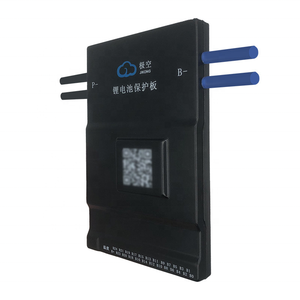
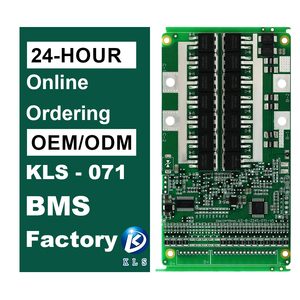
Our Smart BMS boards (such as JIKONG JK-BD6A24S15P or Seplos 3.0 series) support multi-protocol communications including CANbus (DroneCAN / UAVCAN), SMBus, UART, and RS485. This allows real-time streaming of cell-by-cell voltages, remaining capacity percentage, dynamic State of Health (SoH), temperature sensor arrays, and fault alerts directly to your flight controller telemetry log and ground control station (GCS).
Q5: What measures are taken to prevent thermal runaway propagation inside drone battery enclosures?
We employ a multi-layered thermal defense architecture: 1) Precision automated cell sorting matching internal resistance within ±0.5mΩ; 2) Aerogel thermal insulation sheets placed between individual cells; 3) Phase Change Material (PCM) heat sinks that absorb transient heat spikes during burst discharge; and 4) Smart BMS firmware that executes multi-stage current throttling before critical threshold temperatures are reached.
Q6: What is the typical Minimum Order Quantity (MOQ) and production lead time for custom aviation battery packs?
For fully custom OEM projects (requiring new tooling, custom PCBA design, and specialized enclosures), prototype samples are delivered within 4 to 6 weeks. Mass production MOQs typically start at 100 to 500 units depending on pack complexity. Standard catalog battery packs or BMS balancing boards are available with smaller MOQs and rapid dispatch capabilities.
Q7: How do extreme environmental conditions (sub-zero altitudes or high tropical heat) affect battery performance?
Cold ambient conditions increase cell internal resistance, causing voltage sag under load. For high-altitude UAVs, we incorporate integrated micro-heating elements inside the battery pack managed by the BMS, pre-warming cells to optimal operating temperatures (20°C+) before takeoff. For tropical operations, aluminum enclosure plates and heat-dissipating potting compounds ensure thermal energy is routed efficiently away from the core cells.
Q8: What testing procedures are performed on each batch before shipment?
Every single battery module undergoes 100% End-of-Line (EOL) automated testing, including: automated optical inspection (AOI) of welds, X-ray inspection of internal structure, full charge/discharge cycle capacity verification, high-current pulse testing, insulation resistance testing, and communication protocol validation. Test data records are digitally archived and linked to batch QR codes for full traceability.
Q9: What is the advantage of using capacitive active balancers over inductive active balancers?
Capacitive active balancers utilize high-frequency capacitor arrays to transfer charge based on energy differential across the entire series string, offering faster balancing response and zero magnetic interference. Inductive balancers transfer charge sequentially between adjacent cells. Capacitive systems are lighter, generate zero electromagnetic interference (EMI)—vital for keeping drone compasses uncorrupted—and achieve higher energy transfer speeds across large voltage spreads.
Q10: How do I initiate a custom battery pack engineering request with your team?
Simply click the "Contact Us" button on this page to launch an immediate technical consultation with our engineering managers. Prepare your target operating voltage (S-count), continuous/peak current requirements, dimensions, target weight, flight duration goals, and required communication protocols. Our team will provide an initial concept review and preliminary quote within 24–48 hours.
Summary: Partnering with a Verified Aviation Battery Manufacturer
The rapidly expanding unmanned aviation sector demands power components built without compromise. From high-altitude reconnaissance UAVs to urban eVTOL passenger prototypes and agricultural sprayers, battery system integrity dictates mission success. By pairing certified lithium chemistry configurations with state-of-the-art active balancing BMS technology, tier-1 drone manufacturers ensure maximum flight range, operational safety, and extended battery lifecycle return on investment.
As a specialized CE certified rechargeable aviation drone battery pack supplier backed by over 14 years of OEM expertise, 60+ in-house engineers, and SGS-audited ISO 9001/13485/14001/45001 manufacturing facilities, we deliver power solutions built to survive the harshest atmospheric conditions. Collaborate with our technical team today to convert complex energy demands into streamlined, certified aviation power systems.
Ready to Engineer Your Custom Aviation Power System?
Connect directly with our senior battery engineers to discuss custom pack geometries, BMS active balancing specifications, and global CE/UN38.3 certification support.