APEX Mobile Power — Custom OEM Lithium Battery Solutions  |  ISO 9001 · ISO 13485 · ISO 14001 Certified  |  Engineered for Performance
ISO 9001 & ISO 13485 Certified Engineering

CE Certified Low-Temperature Lithium Battery Pack Factory & Exporter

Industrial Sub-Zero Energy Storage Solutions (-40°C to +60°C) Integrated with Smart Active Balancing BMS Technology for OEM/ODM Applications Worldwide.

Flagship Low-Temp OEM Battery Modules & Active BMS Systems

Explore our CE-certified active balancing power management cards and specialized low-temperature LiFePO4 / NMC energy storage modules tailored for extreme cold operations.
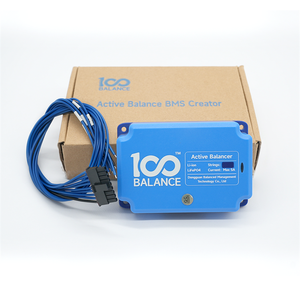
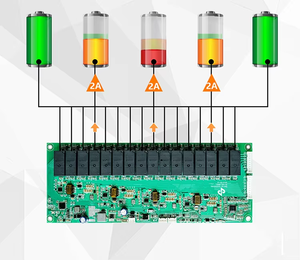
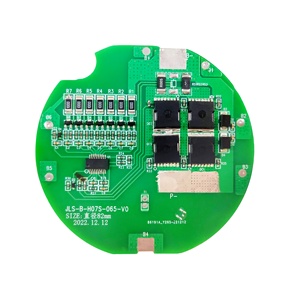
Active Balance Equalizer Balancing Capacitive Lifepo4 48v
Active Balance Equalizer Balancing Capacitive Lifepo4 48v Livepo4 Cell Nmc 100balance 5A Active Balancer
  • Balance Current: 5A Continuous
  • Battery Type: LiFePO4 / NMC / LTO
  • Sub-Zero Temp Operating Range
Contact Us
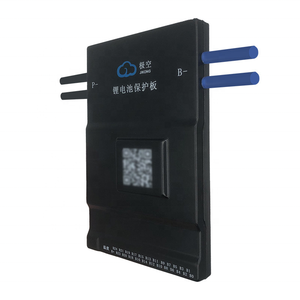
Seplos Bms 3.0 Active Balancer Lifepo4 Battery
Seplos Bms 3.0 Active Balancer Lifepo4 Battery Active Balancer Lithium Battery Protection Board
  • Smart Telemetry Protocols
  • Over-Current & Thermal Cutoff
  • High Accuracy Cell Equalization
Contact Us
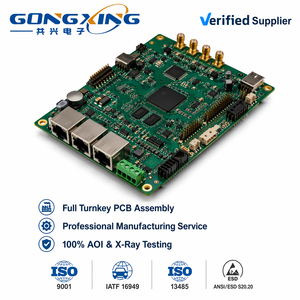
Smart BMS PCBA Active Balancing Board
Smart BMS Battery Management System PCBA | Active Balancing Board | Turnkey Assembly Service
  • Compliance: IATF 16949 / CE
  • Multi-Channel Active Balancing
  • Integrated Temperature Sensors
Contact Us
JIKONG Smart Active Balancer BMS
0.6A Smart Active Balancer 150A BMS 7S-24S JIKONG JK-BD6A24S15P Li-ion LiFePO4 BMS with GPS/Display
  • Supported String: 7S to 24S
  • Discharge Rating: 150A Peak
  • Remote GPS & LCD Monitoring
Contact Us
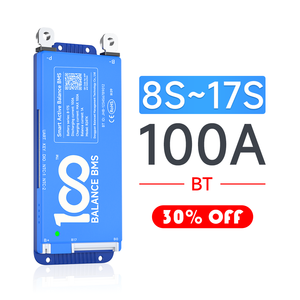
Smart Active Balancer 100a 48v 16s Lifepo4 BMS
Smart Active Balancer Battery Protection Board Battery Management System 100A 48V 16S LiFePO4
  • Nominal Voltage: 48V (16S)
  • Rated Load: 100A Continuous
  • Cold Climate Threshold Logic
Contact Us
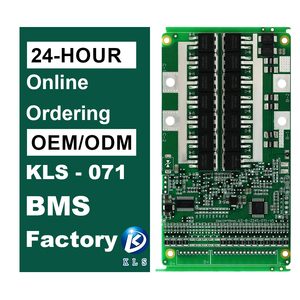
KLS Battery Management System BMS 64s 120A
KLS Battery Management System BMS KLS-BMS-045 64S 120A 12V LiFePO4 Electric Bicycle Active Balancer
  • High Series Count: Up to 64S
  • 2A Aluminum Energy Transfer
  • IP67 Heat-Dissipating Casing
Contact Us
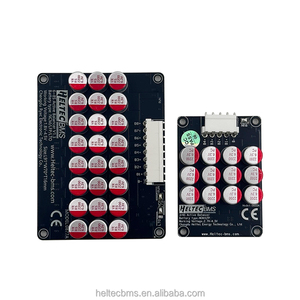
Heltec Active Balancer Battery Equalizer
Heltec 4S To 21S Active Balancer 5.5A Battery Equalizer LiFePO4 LiPo LTO Energy Transfer Capacitor
  • Balance Current: 5.5A Max
  • Range: 4S - 21S Universal
  • Energy Transfer Efficiency: >95%
Contact Us
KLS Smart BMS 16S 48V 150A Home Energy Storage
KLS Smart BMS 16S 48V 100A 150A LiFePO4 Home Energy Storage Battery Management System Active Balance
  • Application: Industrial ESS / Off-Grid
  • High Power Output: 150A Peak
  • Integrated Active Equalizer Board
Contact Us

Electrochemical Dynamics of Sub-Zero Lithium-Ion Batteries

Operating rechargeable lithium-ion battery chemistry in extreme cold environments (-20°C to -40°C) presents profound electrochemical challenges. In standard lithium iron phosphate (LiFePO4) or nickel manganese cobalt (NMC) cells, sub-zero conditions trigger exponential increases in internal cell impedance. This phenomenon is primarily driven by three electrophysical bottlenecks:

1. Solvation Sheath & SEI Resistance

At sub-freezing temperatures, the desolvation energy barrier of lithium ions ($Li^+$) at the Solid Electrolyte Interphase (SEI) rises drastically. $Li^+$ ions struggle to shed their solvent shells, reducing charge-transfer kinetics at the electrode-electrolyte interface.

2. Electrolyte Viscosity Elevation

Conventional carbonate solvents (EC/DMC/EMC) experience severe viscosity gains below -10°C. Ionic conductivity drops precipitously from $\sim 10 \text{ mS/cm}$ at room temperature down to less than $0.1 \text{ mS/cm}$ at -30°C, causing severe polarization.

3. Anodic Lithium Plating Risks

Forced fast-charging below 0°C without intelligent thermal management forces negative electrode potential below $0\text{V}$ versus $Li/Li^+$. This initiates metallic lithium dendrite formation, threatening internal short circuits and permanent thermal runaway risks.

Engineering Information Gain: Solvation Chemistry & Internal Heating Solutions

APEX Mobile Power overcomes cold-temperature degradation through proprietary **low-viscosity fluorinated carboxylate co-solvents** paired with **intelligent internal PTC self-heating film architectures**. By utilizing smart active balance BMS boards (such as capacitive 5A equalizers), our battery packs precondition their internal core to +10°C before engaging high-current charge cycles, enabling up to **85% capacity retention at -30°C** and complete protection against dendritic lithium growth.

-40°C
Extreme Operational Limit
85%+
Capacity Retention at -30°C
5A
Active Balancing Current
3,500+
Deep Freeze Life Cycles

Low-Temperature Chemistry Performance Comparison

Selecting the optimal battery formulation requires evaluating energy density, discharge efficiency, and safety profiles across low-temperature parameters. Below is a engineering data analysis matrix comparing standard chemistry configurations against APEX Mobile Power's customized Low-Temp solutions.

Chemistry Configuration Temp Threshold Discharge Capacity (-20°C) Discharge Capacity (-40°C) Charge Safety (-20°C) Cycle Life (0°C to -30°C) Primary OEM Target Application
Standard Commercial LiFePO4 -10°C to +55°C < 45% 0% (Inoperable) High Risk (Plating) 500 Cycles Standard Indoor Energy Storage
APEX Custom Low-Temp LiFePO4 -35°C to +60°C 82% 55% Safe (Smart Heating) 2,500+ Cycles Telecom Towers, Arctic Solar Storage
Standard NMC (811 / 622) -20°C to +60°C 60% < 20% Moderate Risk 800 Cycles Standard EV, Power Tools
APEX Specialized Low-Temp NMC -45°C to +55°C 90% 72% Safe (Internal BMS Control) 2,000+ Cycles Aviation UAVs, Defense Robotics
Next-Gen Low-Temp Sodium-Ion (Na-Ion) -40°C to +60°C 88% 78% Extremely Safe 3,000+ Cycles Cold-Chain Logistics, Sub-Zero AGVs

Enterprise OEM/ODM Engineering Supremacy & Global Factory Footprint

As a senior global exporter and manufacturer (operating under APEX Mobile Power), our production ecosystem is engineered to support high-reliability OEM/ODM mandates. We bridge advanced R&D with scalable global supply chains.
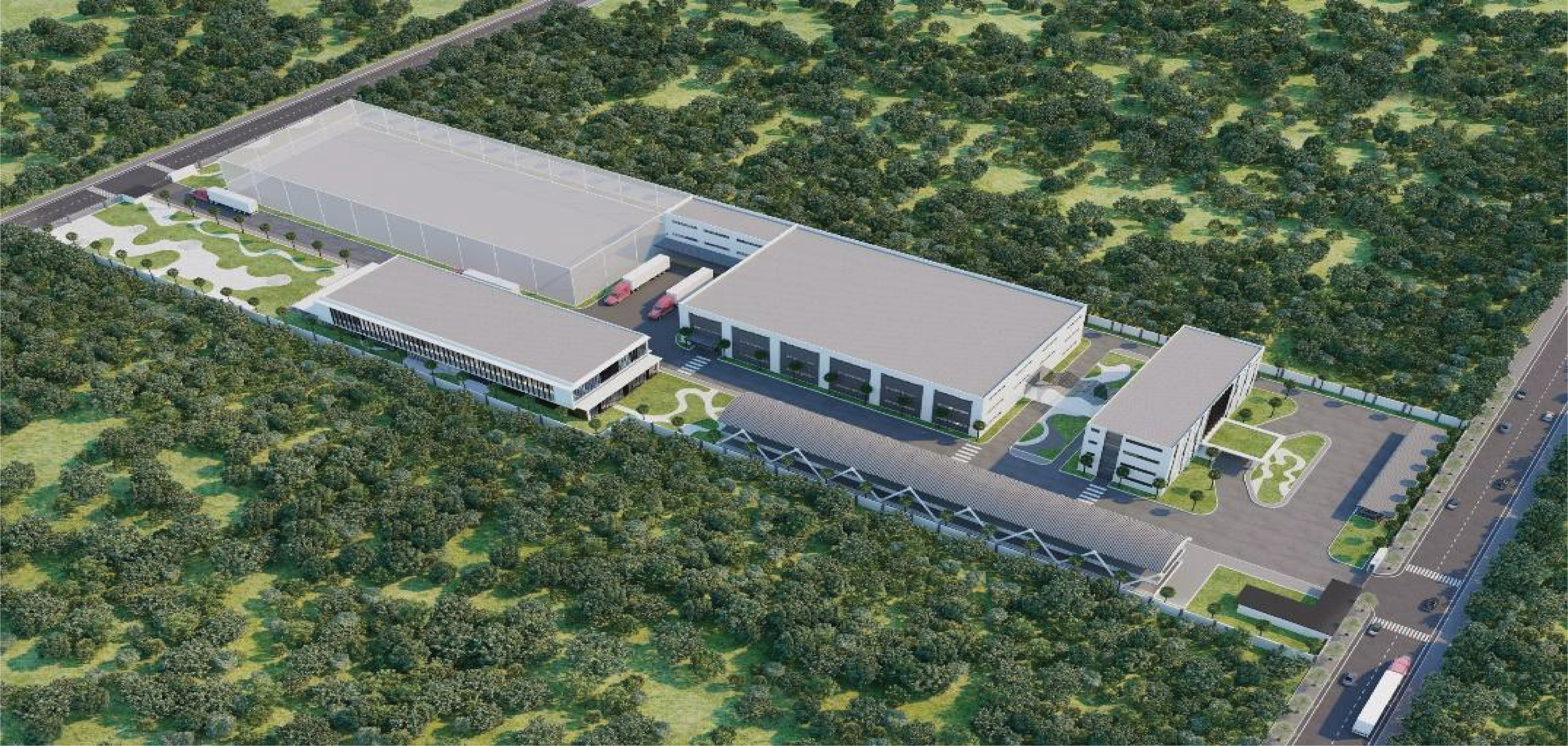
APEX Mobile Power Manufacturing Facility

Vertical Integration & Precision Manufacturing

Our manufacturing complex houses automated cell-sorting lines, high-speed ultrasonic aluminum wire bonding, and laser-welding robotics. Every low-temperature battery pack undergoes rigorous thermal cycling stress tests, drop testing, and 100% end-of-line (EOL) automated electronic validation.

  • 14+ Years Specialization: Dedicated engineering in lithium battery systems and power management.
  • 60+ In-House R&D Staff: Electrochemical specialists, hardware circuit engineers, and embedded software developers.
  • 8% Revenue Reinvestment: Annual commitment to next-gen sub-zero electrolyte and smart BMS balancing innovation.
  • 3000+ Global OEM Projects: Successfully delivered to medical, industrial, robotic, and energy infrastructure sectors.
Schedule Technical Consultation

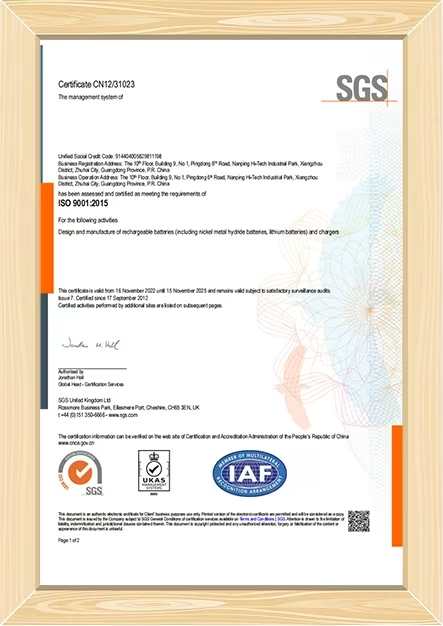
SGS-Audited Factory Certifications

Our global operations strictly adhere to international quality management systems independently audited by SGS, UKAS, and IAF.
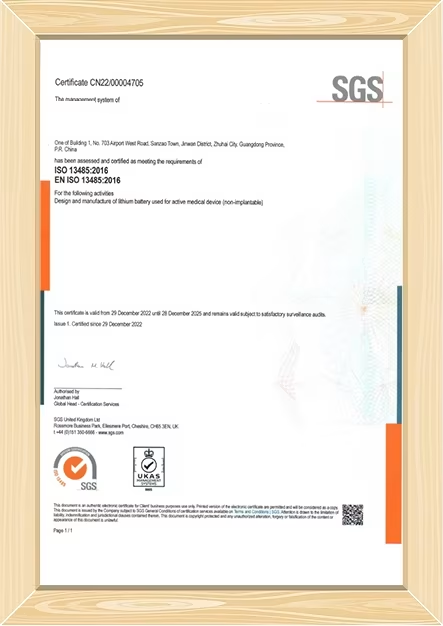
ISO 13485 Medical Device Certification
ISO 13485:2016
Medical Device Quality
ISO 9001 Quality Management Certification
ISO 9001:2015
Quality Management
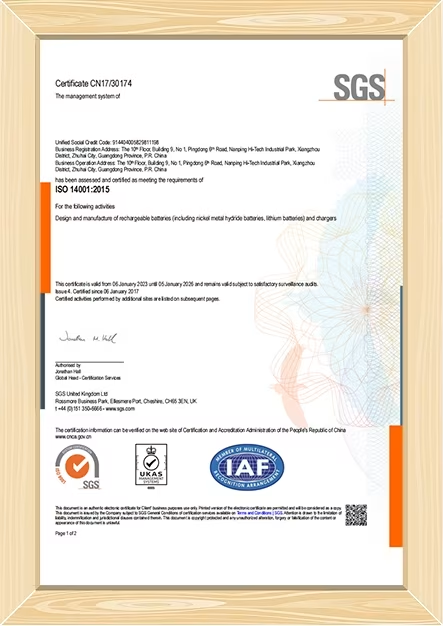
ISO 14001 Environmental Management Certification
ISO 14001:2015
Environmental System
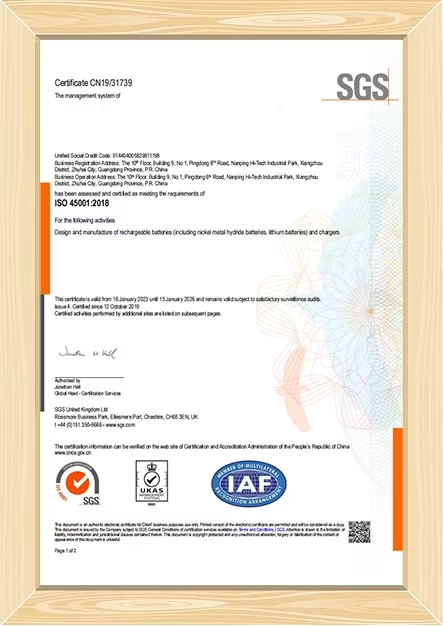
ISO 45001 Health Safety Certification
ISO 45001:2018
Occupational Health

Future Procurement & Technology Trends in Low-Temperature Battery Engineering

As global industries expand into polar defense, high-altitude UAV operations, cold-chain automation, and sub-zero renewable energy grids, B2B procurement specifications are evolving rapidly. Procurement buyers and systems integrators must align with four structural trends over the coming decade:

1. High-Current Active Balancing Dominance

Passive balancing energy dissipators (which waste energy as heat) are being phased out in multi-series high-capacity packs. High-efficiency 5A to 15A capacitive/inductive active balancing BMS boards are becoming mandatory to preserve total pack capacity when individual cell capacities drift under severe thermal gradient stresses.

2. Rise of Sodium-Ion (Na-Ion) Cold Chemistries

Sodium-ion batteries exhibit superior low-temperature performance down to -40°C due to lower solvation energy barriers compared to lithium. B2B buyers are increasingly sourcing hybrid LiFePO4/Na-Ion packs for stationary cold-storage backup installations to reduce material costs while guaranteeing sub-zero startup.

3. Stringent CE & UN38.3 Rev. 7 Compliance

Regulators in Europe and North America require complete compliance validation under CE, UN38.3 (Transport Safety), UL1642, and IEC 62133-2. Low-temperature packs must prove structural immunity against thermal runaway propagation caused by sub-zero lithium plating during rapid charge/discharge testing.

4. IoT Telemetry & Cloud-Based BMS Diagnostics

Modern low-temperature packs require real-time state-of-health (SOH) telemetry. Integrating CANbus, RS485, SMBus, and GPS/4G cloud connectivity into the BMS board allows fleet operators to monitor sub-zero cell impedance variations remotely, preventing catastrophic cold-weather failures.

Frequently Asked Questions (FAQ) — Low-Temp Lithium Battery Procurement

Answers to common technical, compliance, and custom manufacturing questions from OEM procurement managers and systems engineers.

Q1: What specific requirements must a low-temperature lithium battery pack satisfy for CE certification?
CE certification for low-temperature lithium battery packs requires compliance with both the **Electromagnetic Compatibility (EMC) Directive 2014/30/EU** and the **Low Voltage Directive (LVD) 2014/35/EU** or **Radio Equipment Directive (RED)** if wireless telemetry is present. Specifically, under standards such as **EN 62133-2**, the pack must demonstrate structural stability, electrical insulation integrity, and thermal safety under extreme freeze-thaw cycles without leakage, cell swelling, or internal short-circuiting.
Q2: How does internal heating technology prevent battery degradation when charging below 0°C?
Charging lithium cells below 0°C without preheating forces metallic lithium to plate onto the graphite anode instead of intercalating. APEX Mobile Power's custom packs utilize embedded **polyimide PTC heating elements** governed by the Smart BMS. When an external charger is connected in sub-zero conditions, the BMS directs incoming current exclusively to the internal heating circuit until the battery core reaches a safe threshold (e.g., +5°C to +10°C). Only then does the BMS open the main charging MOSFETs, completely eliminating lithium plating risk.
Q3: Why is 5A Active Balancing critical for multi-series (16S / 24S / 64S) low-temperature LiFePO4 packs?
In cold environments, internal resistance variances between individual cells are amplified. Passive balancing circuits (typically limited to 50mA–200mA) dissipate tiny amounts of energy as heat, which is utterly insufficient for large capacity packs (100Ah–300Ah). A **5A Capacitive or Inductive Active Balancer** dynamically transfers energy from higher-voltage cells to lower-voltage cells across the entire series string with >95% efficiency. This prevents premature low-voltage cutoffs of weaker cells in freezing weather, maximizing usable capacity.
Q4: What is the typical custom OEM design lifecycle, NRE cost, and Minimum Order Quantity (MOQ)?
Our standard OEM engineering flow includes: 1) Initial Requirements Review & Thermal Modeling (1–2 weeks), 2) BMS Circuit Board & Enclosure Prototyping (3–4 weeks), 3) UN38.3 & CE Certification Testing (4–6 weeks), and 4) Mass Production Ramp. Non-Recurring Engineering (NRE) fees depend on enclosure tooling and BMS customization complexity. Minimum Order Quantity (MOQ) for standard active balancing BMS boards starts at 50 units; custom low-temperature battery packs typically start at 100 units depending on capacity.
Q5: How are Class 9 Dangerous Goods shipping logistics handled for global export?
All battery shipments are fully compliant with **IATA Dangerous Goods Regulations (Air)** and **IMDG Code (Sea)**. Every exported model comes with certified **UN38.3 test reports**, **MSDS (Material Safety Data Sheets)**, and **Drop Test Certification (1.2m)**. Packs are packaged in UN-rated heavy-duty fiberboard cartons with individual cell isolation and thermal insulation to prevent short circuits during global transit.
Q6: Can APEX Mobile Power manufacture medical-grade low-temperature lithium battery solutions?
Yes. APEX Mobile Power holds official **ISO 13485:2016 Certification** for the contract manufacturing of active medical device power systems. We engineer custom battery packs for cold-chain organ transport containers, portable field medical monitors, and mobile cold-storage equipment requiring strict traceability, risk management (ISO 14971), and medical-grade safety cutoffs.

Partner with a World-Class Low-Temp Lithium Battery Factory

Need custom sub-zero battery packs, active balance BMS boards, or turnkey OEM/ODM manufacturing? Contact our senior engineering team today to review your project specifications and request a competitive factory quotation.

Contact Us